
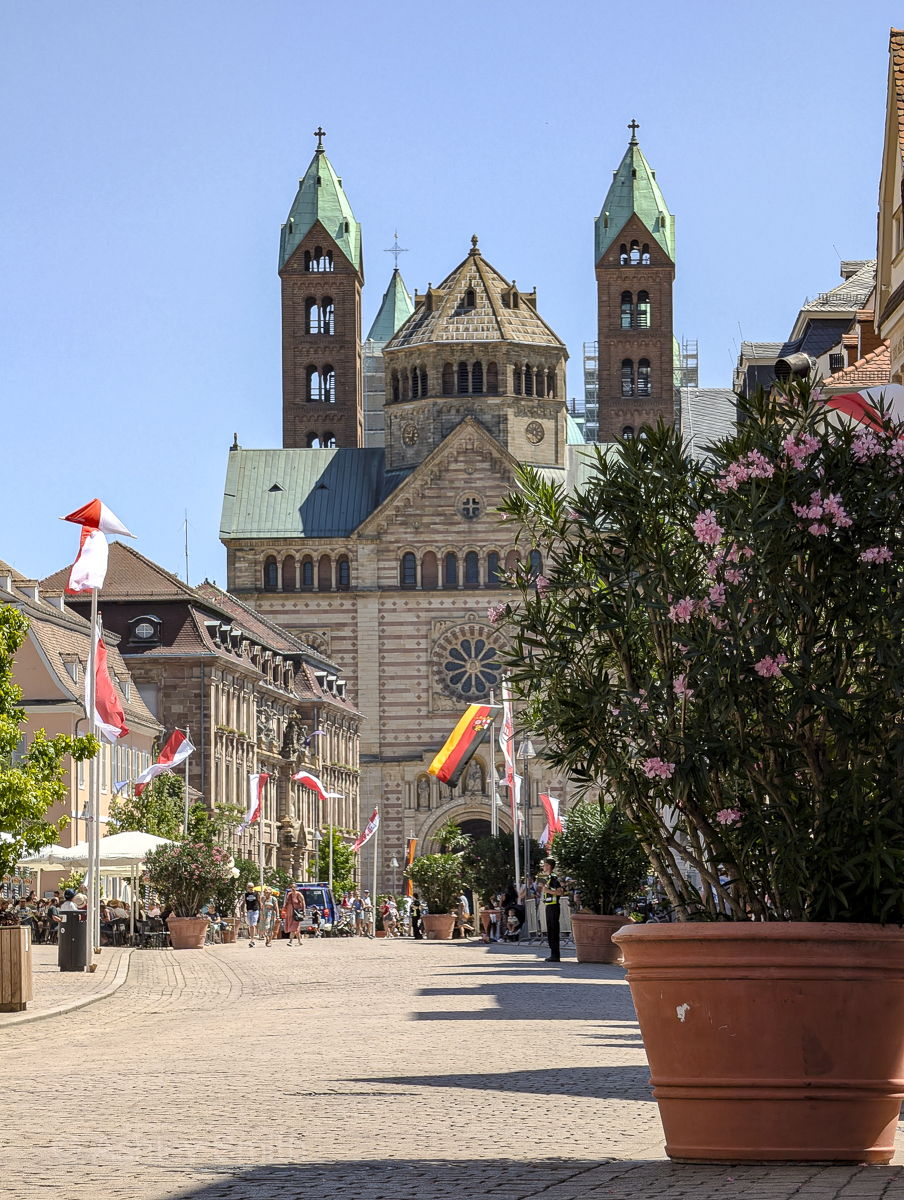
The relatively small town of Speyer is one of Germany’s oldest cities. Founded by the Romans more than a thousand years ago, it has a long and storied history. Thankfully however, because it lacked any significant military installations, it survived World War II virtually unscathed.
If you’re looking for a great side trip from places like Frankfurt or Stuttgart, or to attend a fun event like the city’s famous pretzel festival, definitely consider a visit to Speyer. And while you’re here, be sure to check out this handful of sites dedicated to the area’s WWII history.
World War II in Speyer
Because Speyer lacked any significant military infrastructure, it was never a priority target for Allied bombings. As a result, the city survived the war pretty much completely intact. The most significant damage occurred on March 23, 1945 when retreating German troops blew up the bridge over the Rhine River to slow down the swiftly advancing Allied troops.
The Holocaust in Speyer
Much of Speyer’s long history revolves around the city’s Jewish community. While once a vibrant and growing Jewish cultural hub, the rise of National Socialism in Speyer quickly put an end to that. By the end of World War II, the Nazis had completely wiped out Speyer’s entire Jewish population.
On the evening of November 9-10, 1938 (otherwise known as Kristallnacht), Nazi zealots destroyed Speyer’s synagogue and yeshiva (religious school) and vandalized its Jewish cemetery. While some of the town’s Jews managed to escape to places like the Switzerland, the United States, and Australia, most of those who stuck around were deported to internment camps (like Gurs in France) and, ultimately, Auschwitz.
Speyer’s Jewish sites
In 2021, Speyer was designated a UNESCO World Heritage Site for a second time thanks to its ShUM sites—a collection of historical Jewish sites in the towns of Speyer, Worms, and Mainz.
In addition to the few sites I mention in this post, you can also check out:

Map of WWII sites in Speyer
This map contains all the Speyer WWII sites I mention in this post. To save this map: Click on the star ⭑ next to the map’s title to save in your Google Maps. To use this map: When you get here, open Google Maps on your phone, click “Saved” at the bottom, then click “Maps.”
Speyer WWII sites
Speyer wasn’t a major hub of activity during World War II, but there are still a few interesting museums and memorials you can see here. They are:
1. Technik Museum
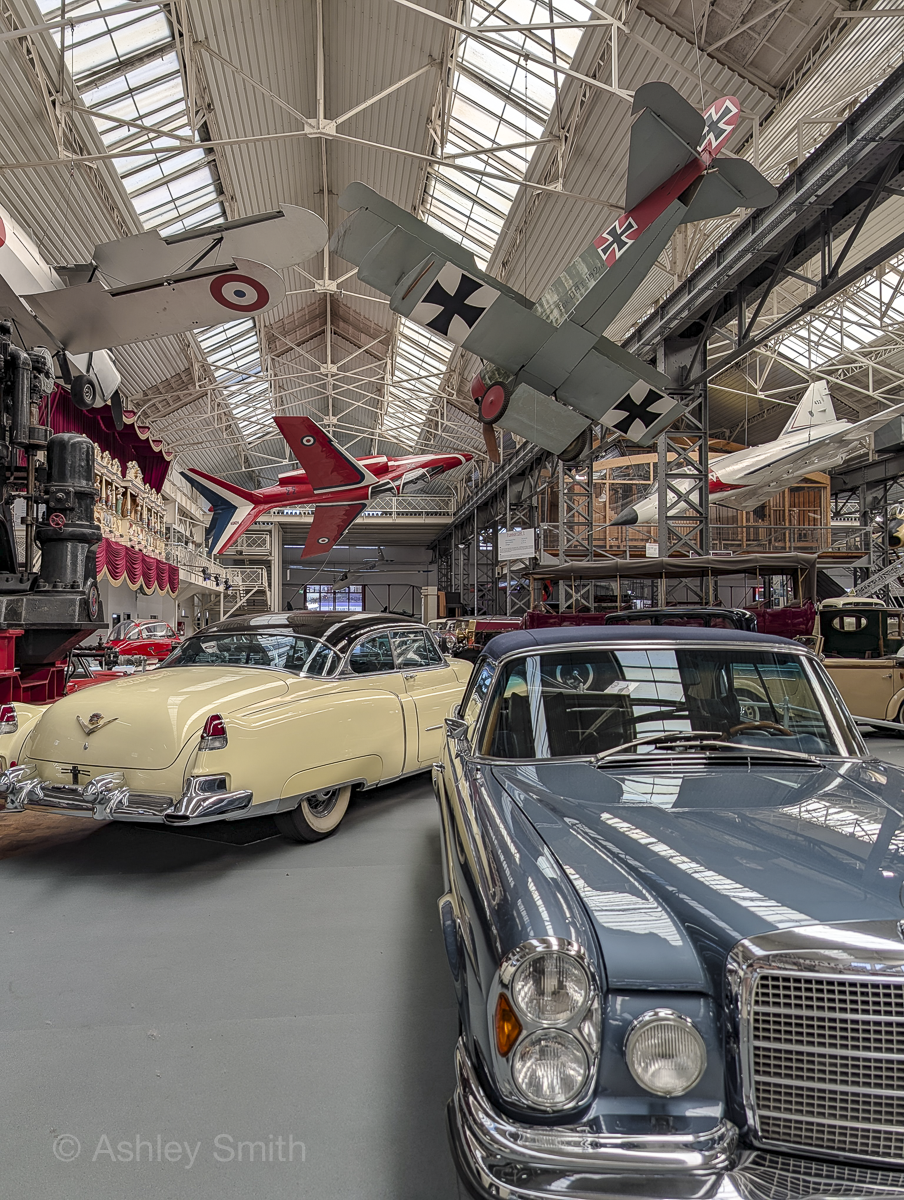
The Technik Museum is far and away Speyer’s pride and joy (and you’ll see why when you get here). This place is absolutely massive and contains thousands upon thousands of artifacts that showcase the history of technology and transportation.
The museum’s enormous collection includes all kinds of historical vehicles, trains, planes, boats, bikes, carousels, and beyond. You name it; there’s probably an example of it here. This museum is truly massive and could fill a good 3-4 hours of your day if you let it.
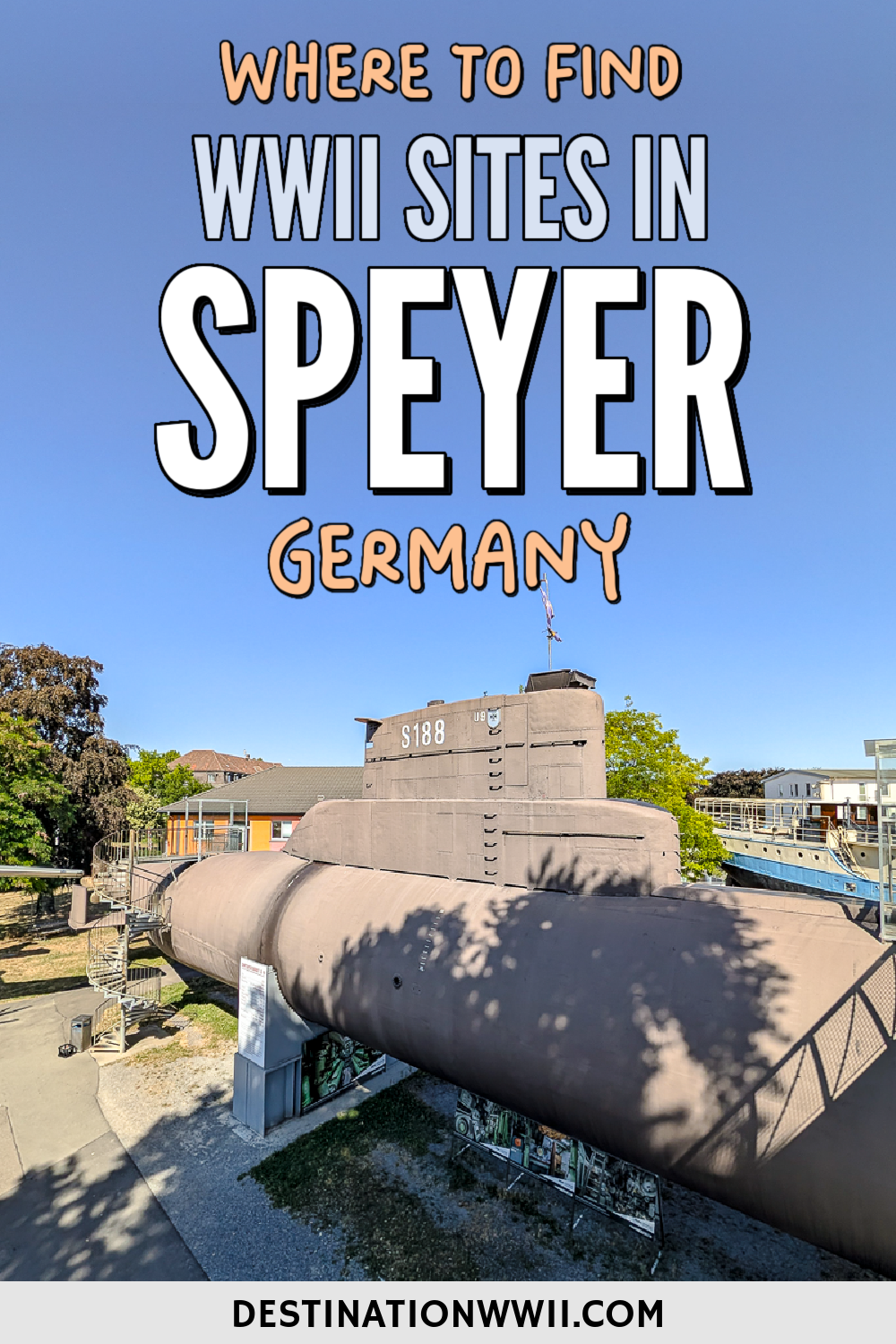
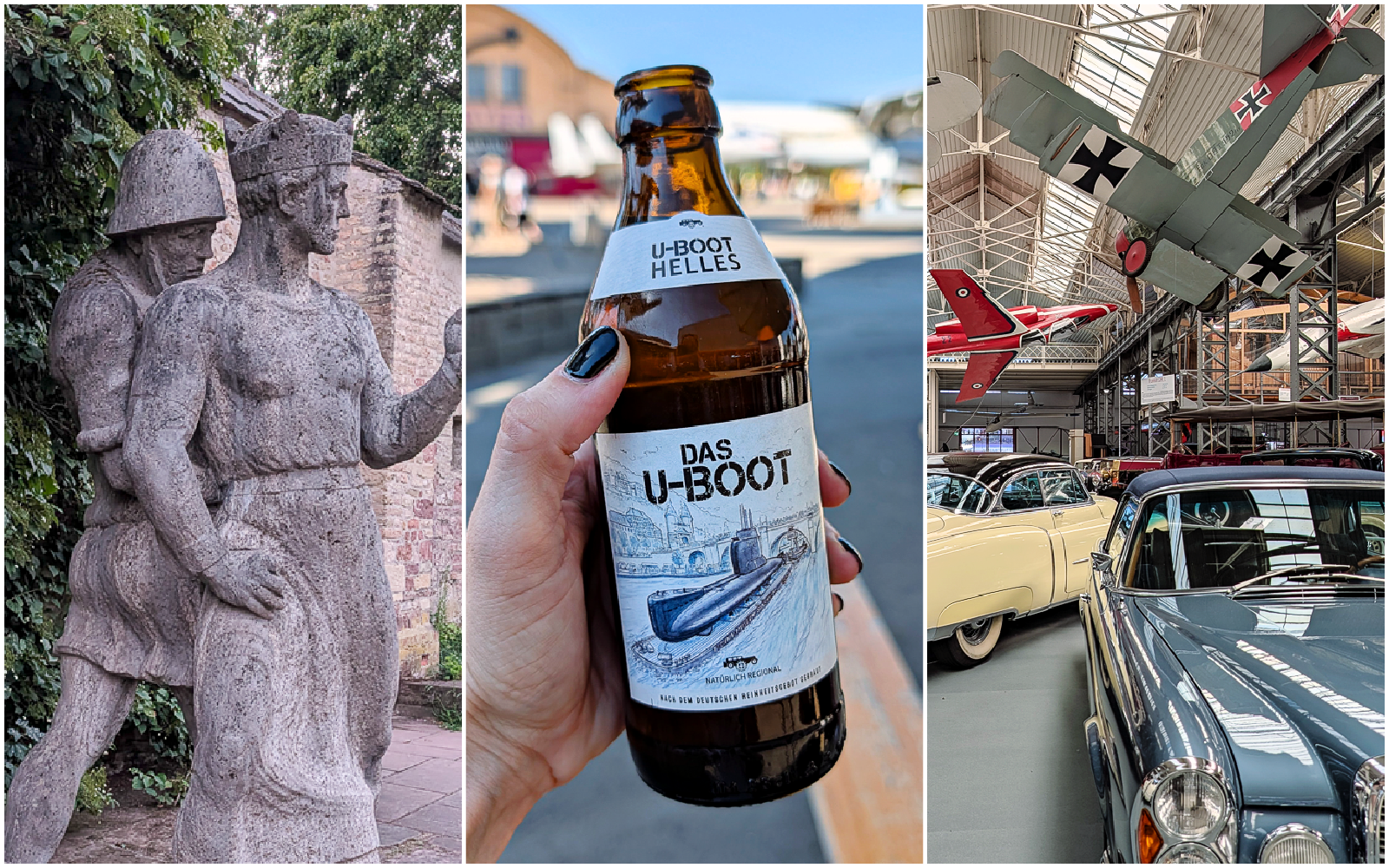
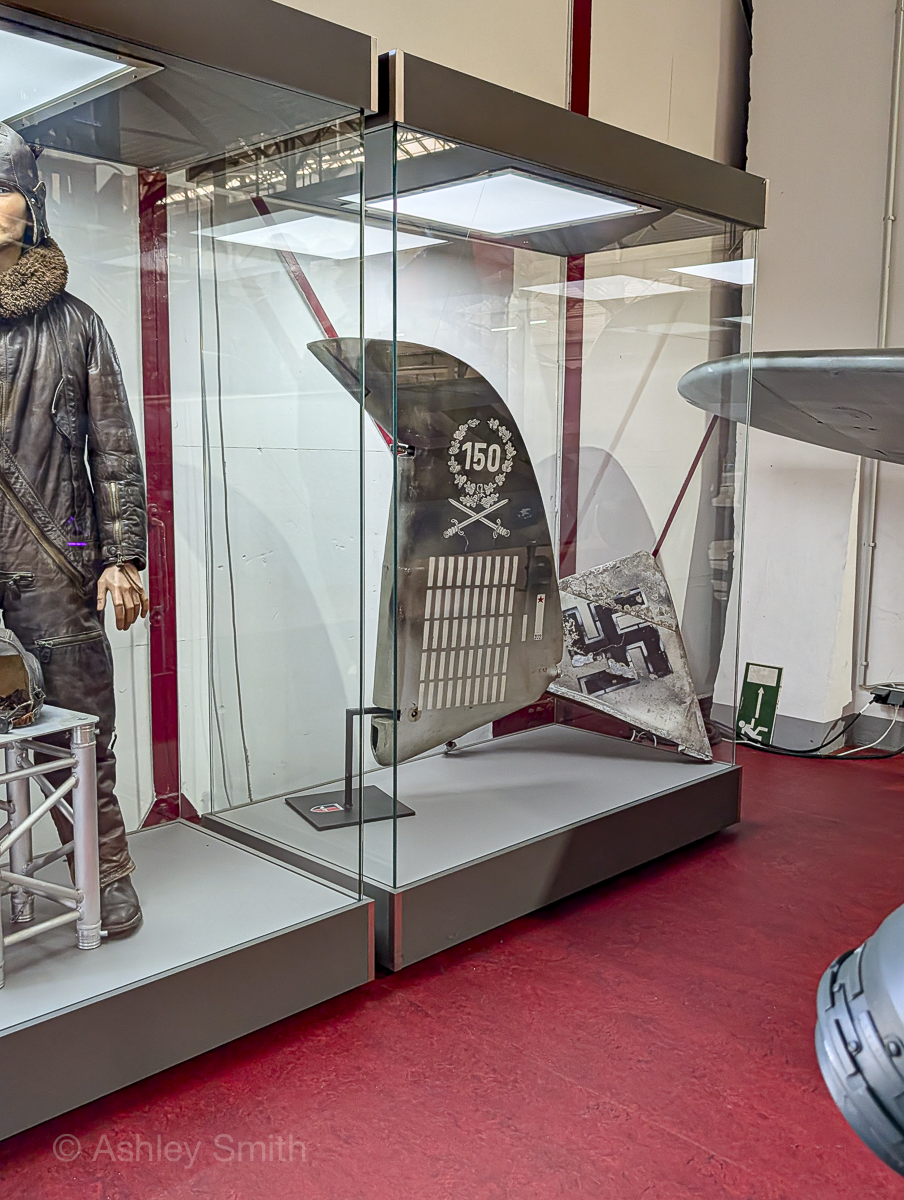
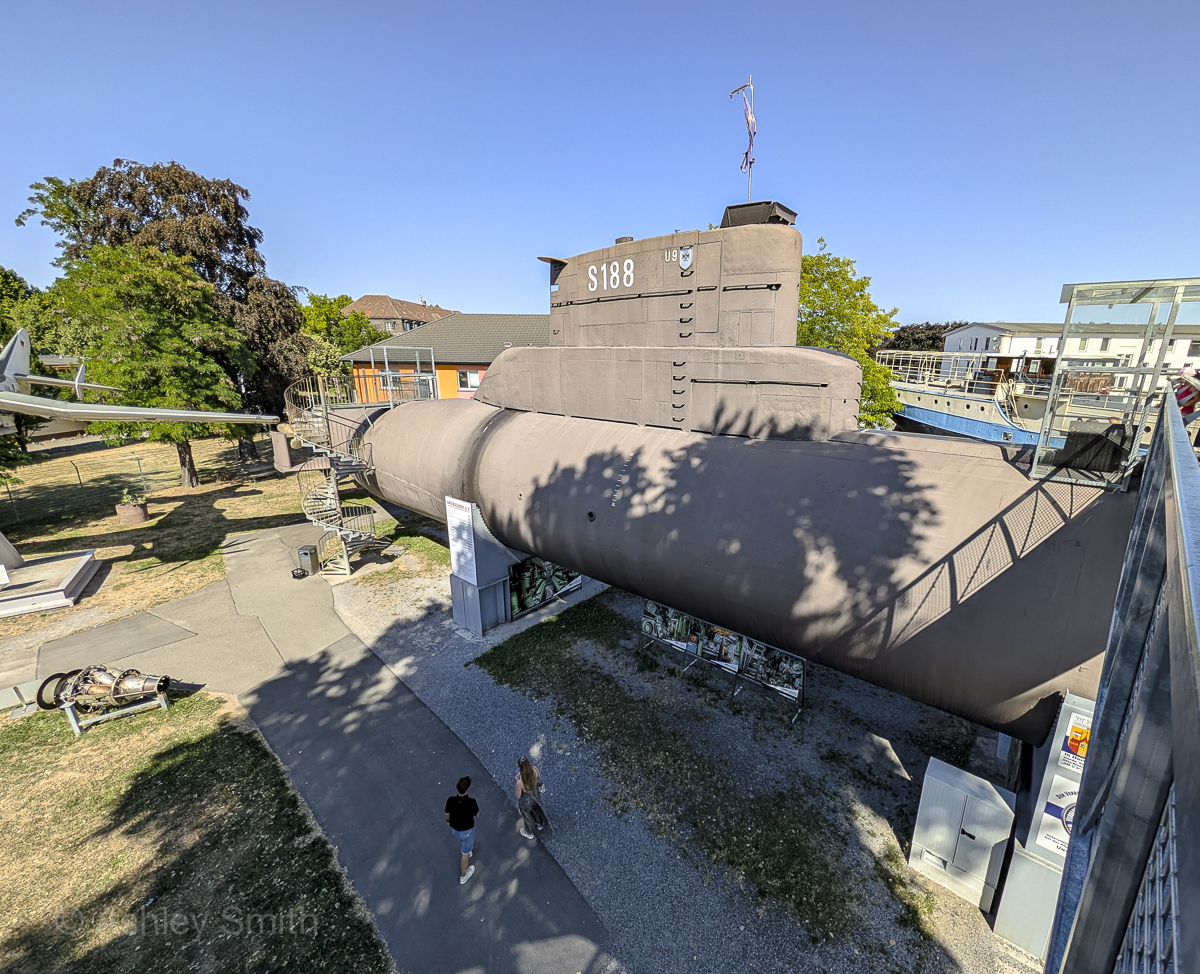
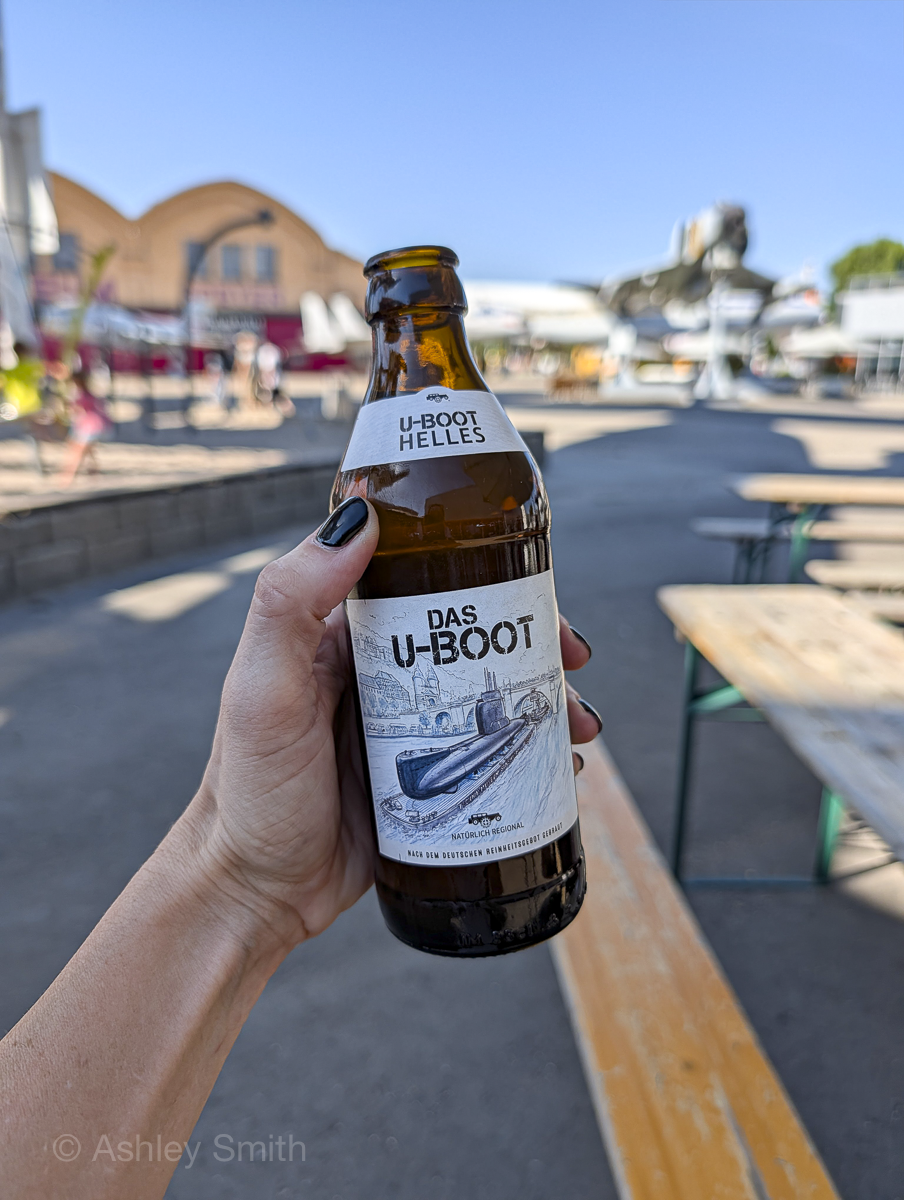
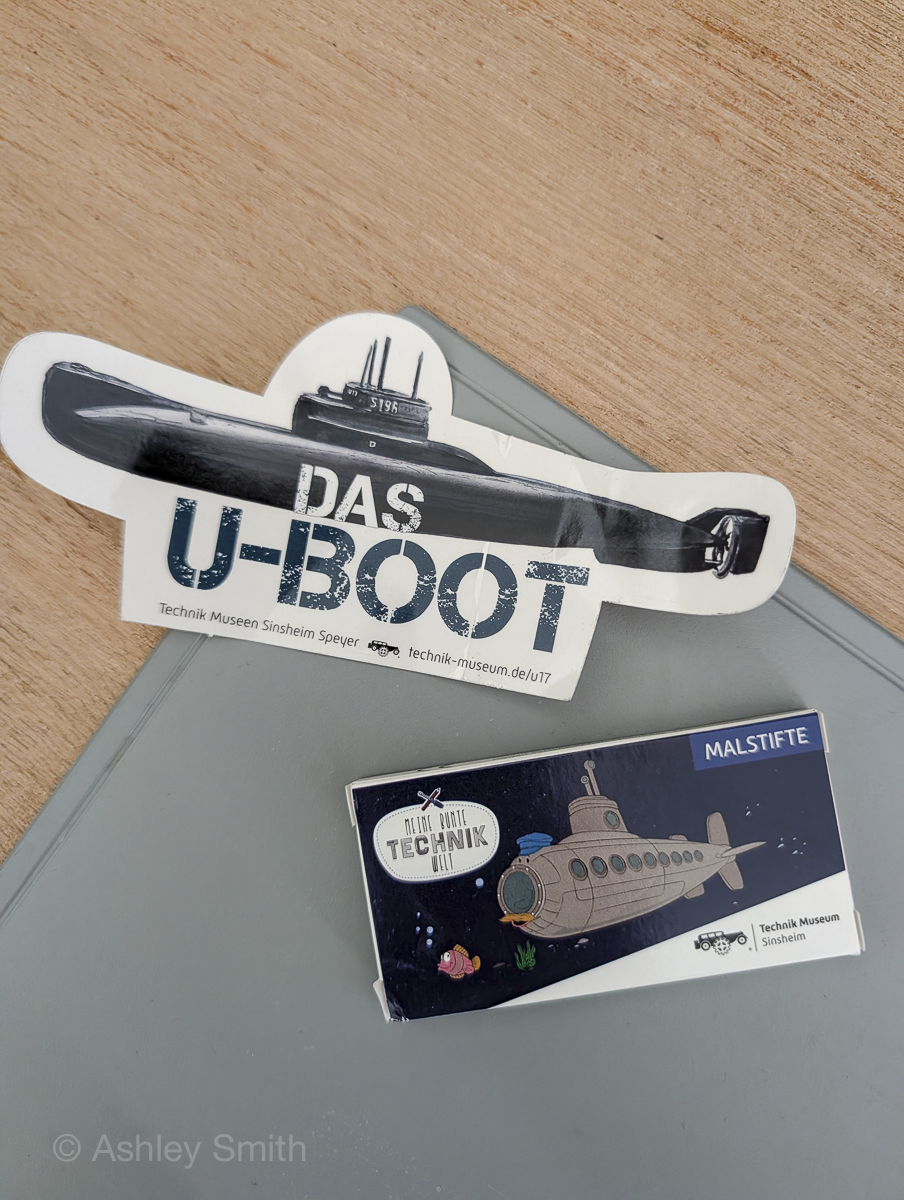
For our specific purposes, you’ll be able to see several WWII-era planes, cars, uniforms, and other artifacts. But the museum’s favorite piece is definitely their German U-Boot. Full disclosure: This is not a WWII-era U-boat, but I still think it’s worth checking out since it’s still not that far off in terms of what you can see inside. And you can go inside. (Just prepare for intense heat and very tight spaces in the summer.)
Pro tip: Admission is half price after 3pm. (And it doesn’t close until 6pm so you’ll still have plenty of time to see a lot.)
2. Memorial to the Deportation of Speyer Jews
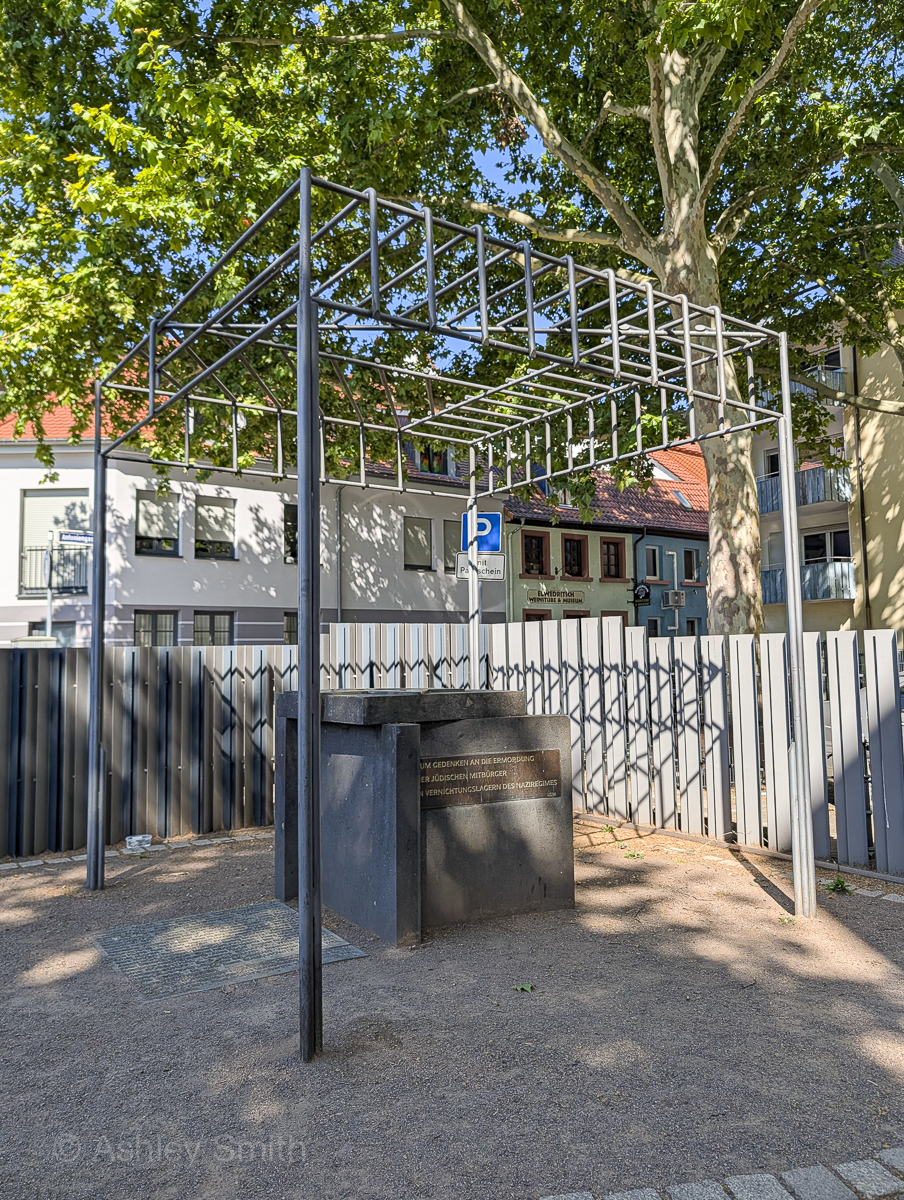
Just off Maximilianstraße (the main thoroughfare), you can visit the Memorial to the Deportation of Speyer Jews. (In German: Mahnmal für die deportierten Juden Speyer) Carved from basalt lava, this large block also contains a piece of the floor from the original synagogue that was destroyed during the Kristallnacht riots.
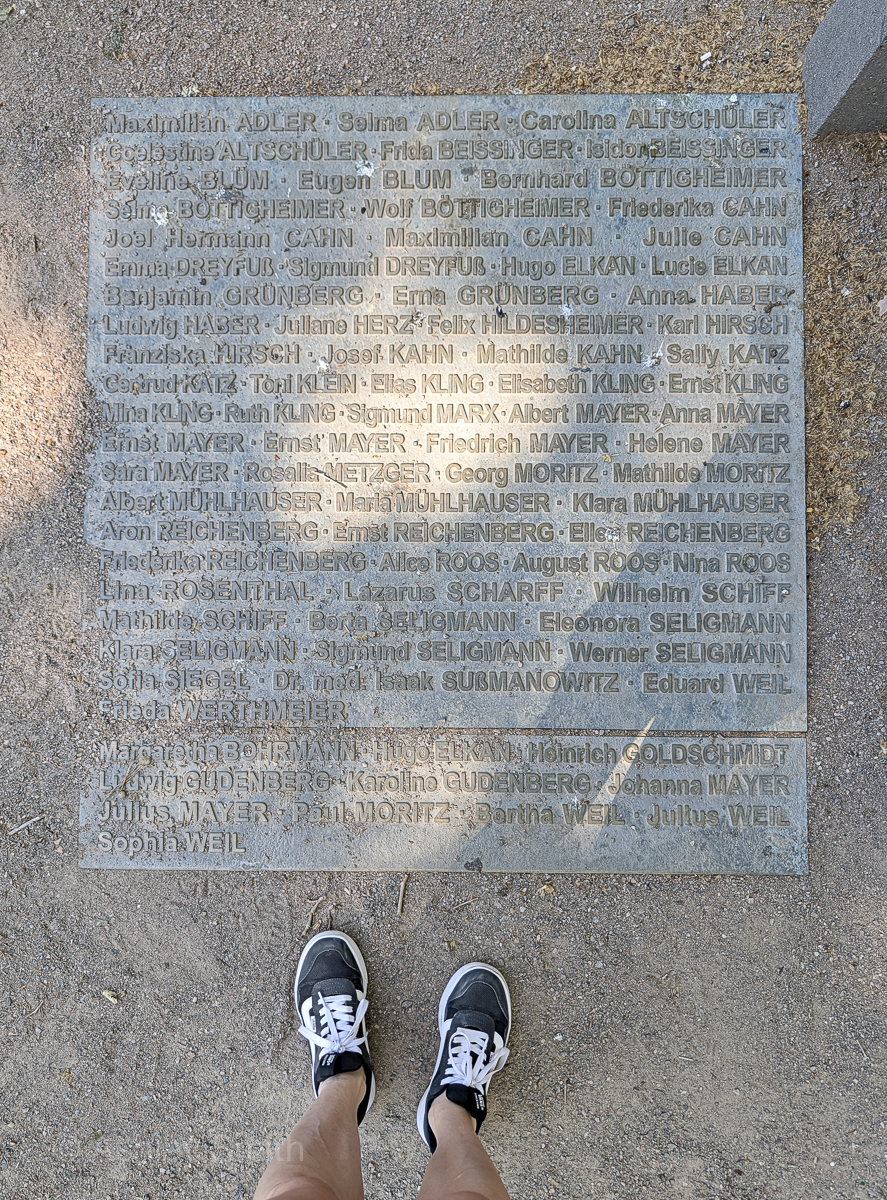
The memorial was unveiled in pieces beginning in 1978 and appeared in its current form in 2020. The plaque on it reads (in German): “In memory of the murder of our Jewish fellow citizens in the Nazi regime’s extermination camps.” On the ground next to it is a bronze plaque containing the names of the town’s Jewish victims.
3. Stumbling Stones
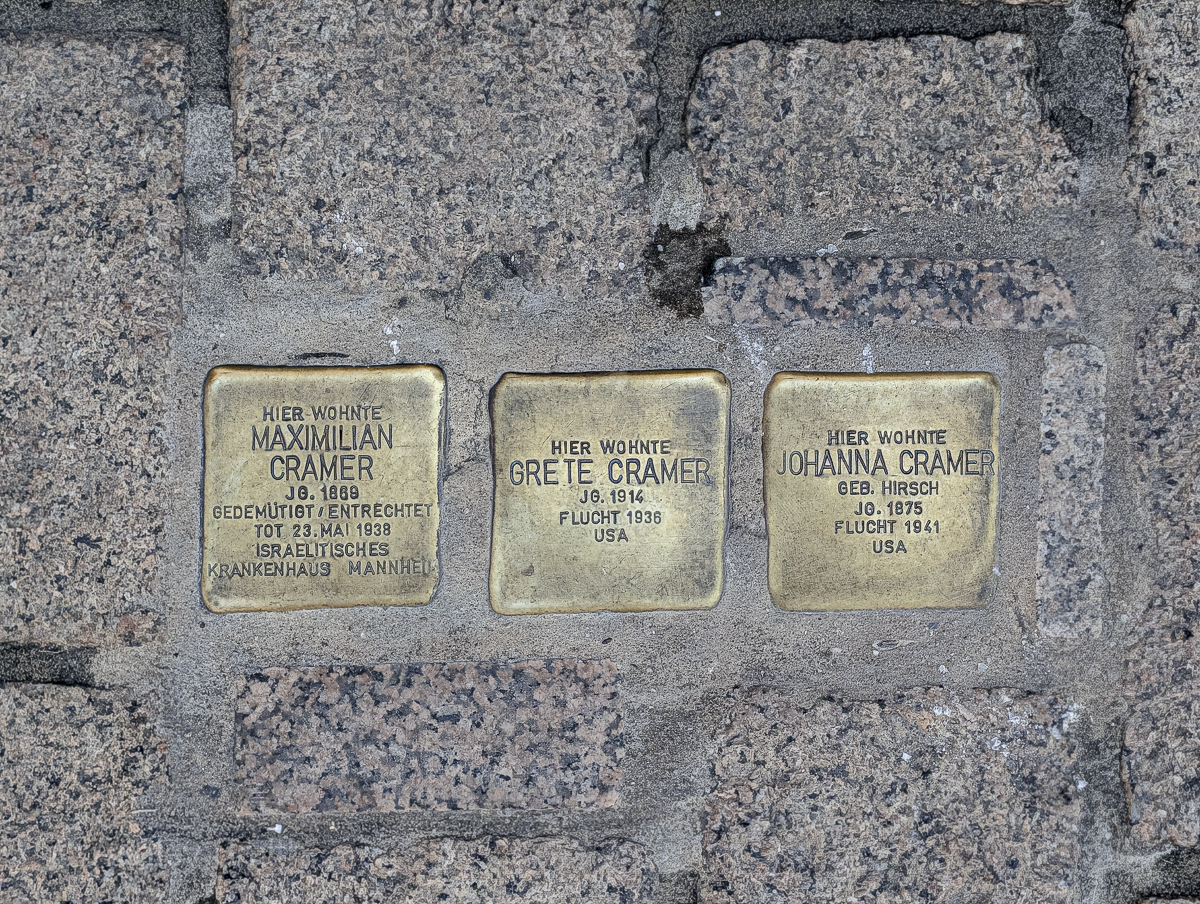
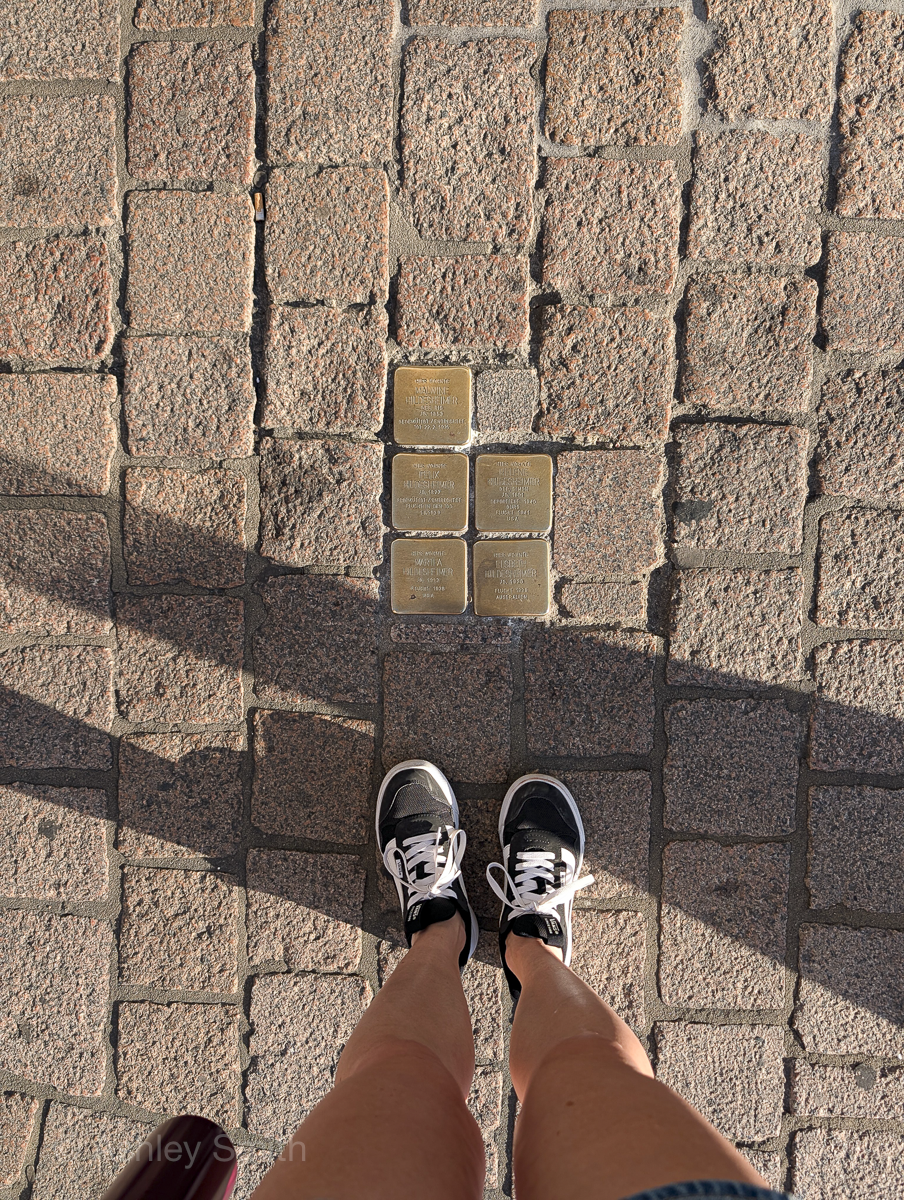
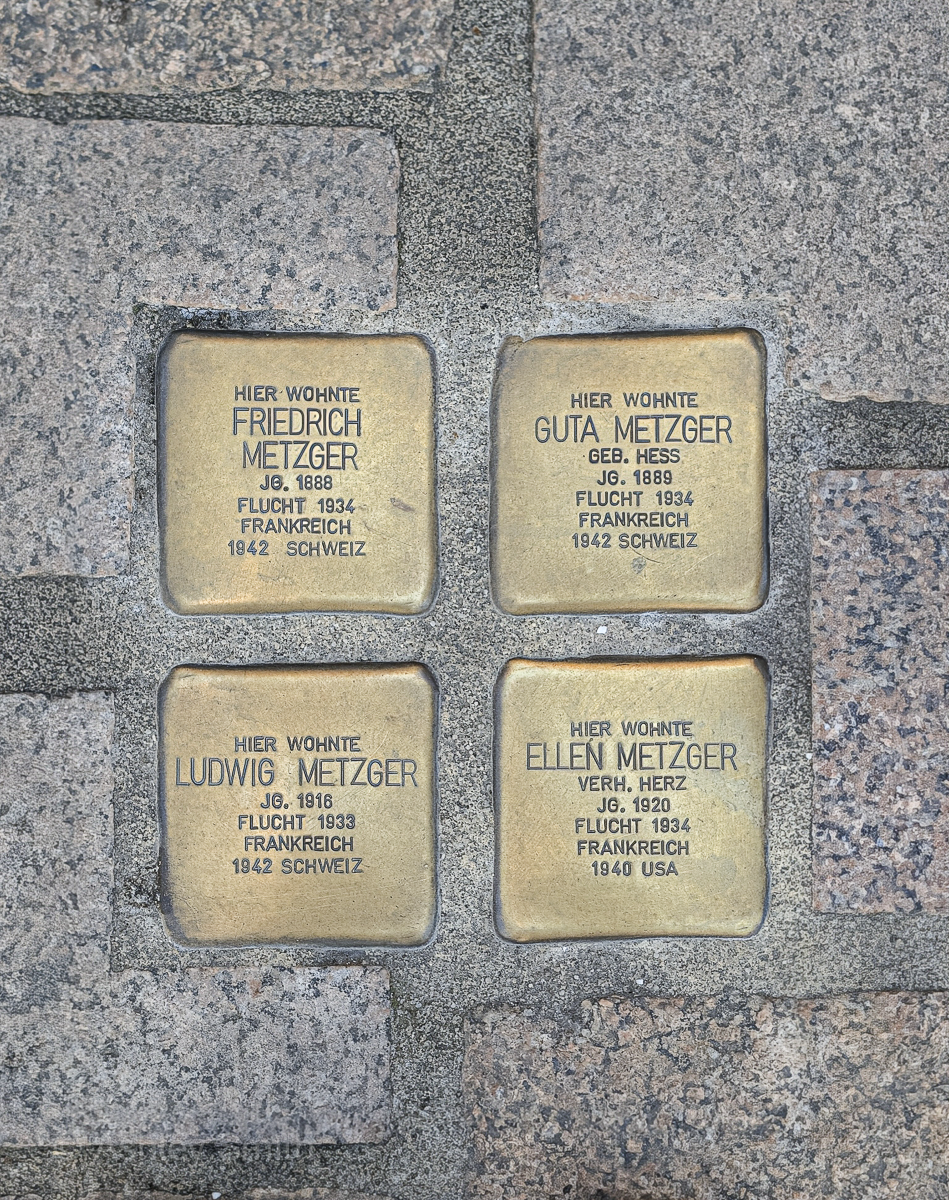
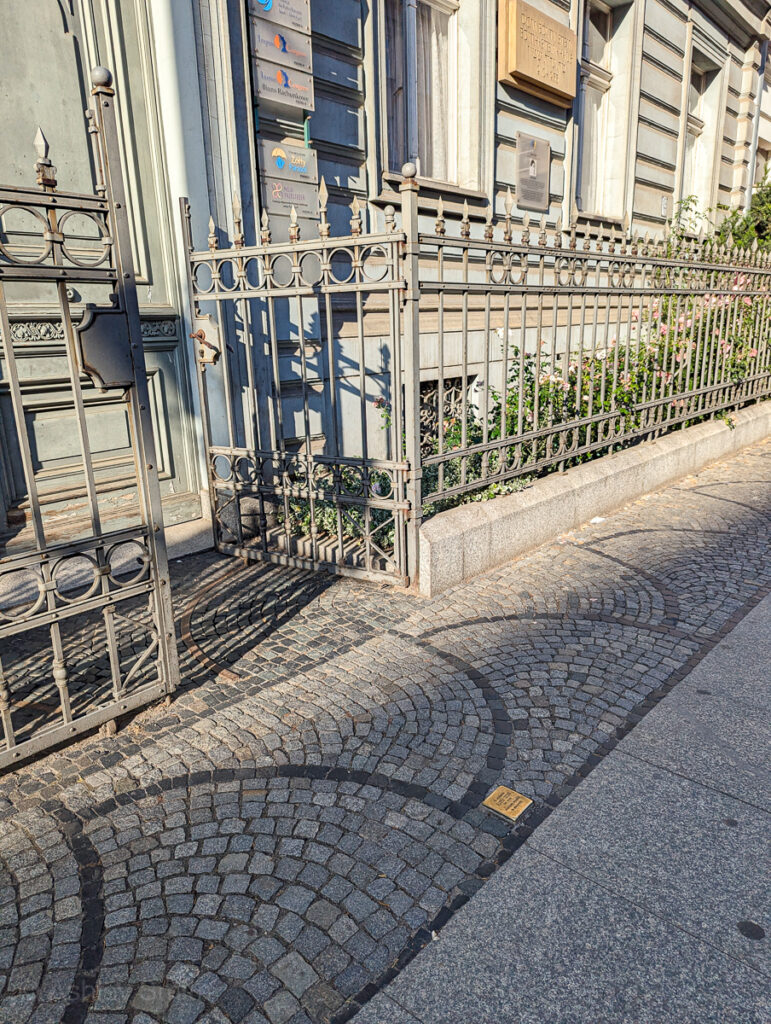
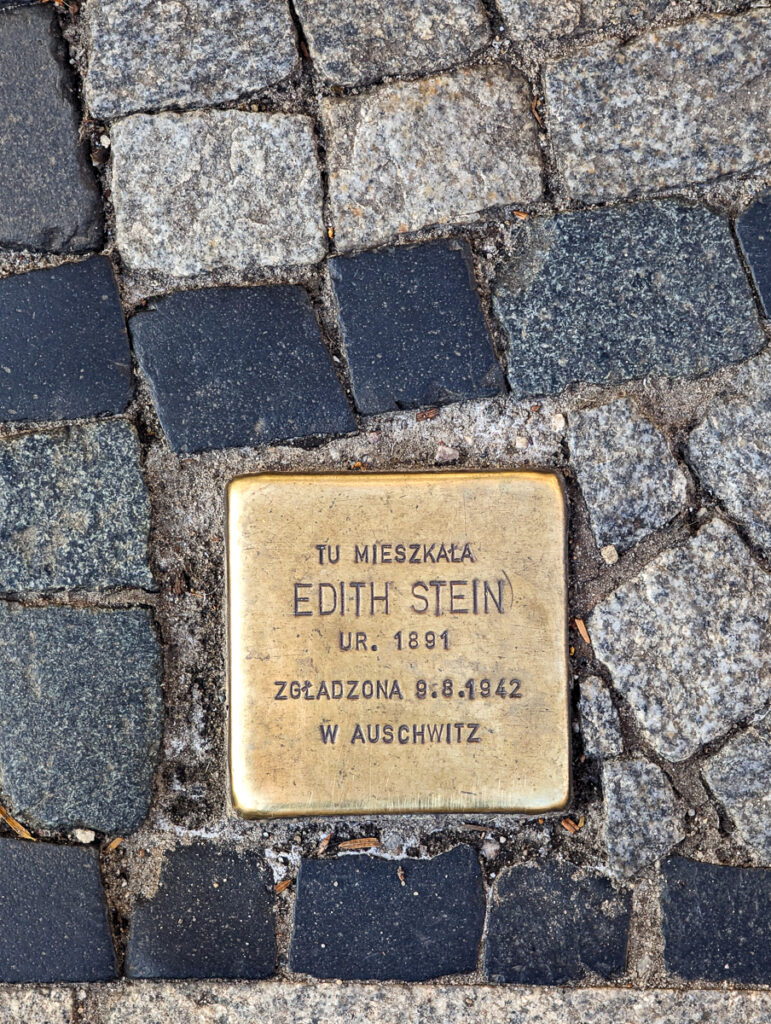
Given the events mentioned above, obviously Speyer is filled with stumbling stones (Stolpersteine in German). These are small brass cobblestones placed in the ground outside a Holocaust victim’s last known residence (or other such place where they last felt free). They typically contain the person’s name and birthdate along with their fate and death date (if known).
I’ve marked a few of them on the map above, but keep your eyes peeled as you walk around town and you’re sure to see several of them. You can find the full list of Speyer stumbling stones along with personal biographies here.
For much more on the topic of Stolpersteine check out my guide to Europe’s stumbling stones here.
4. Antikenhalle (war memorial)
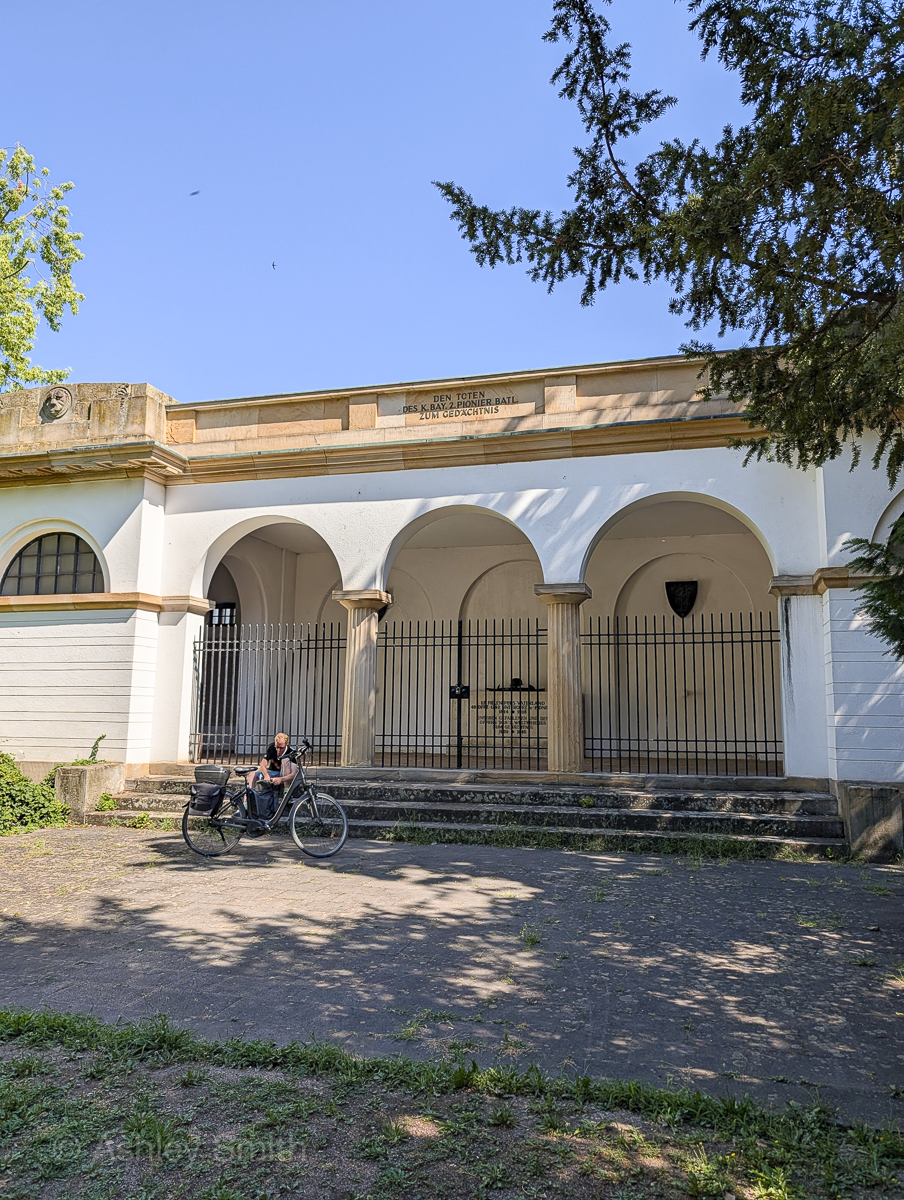
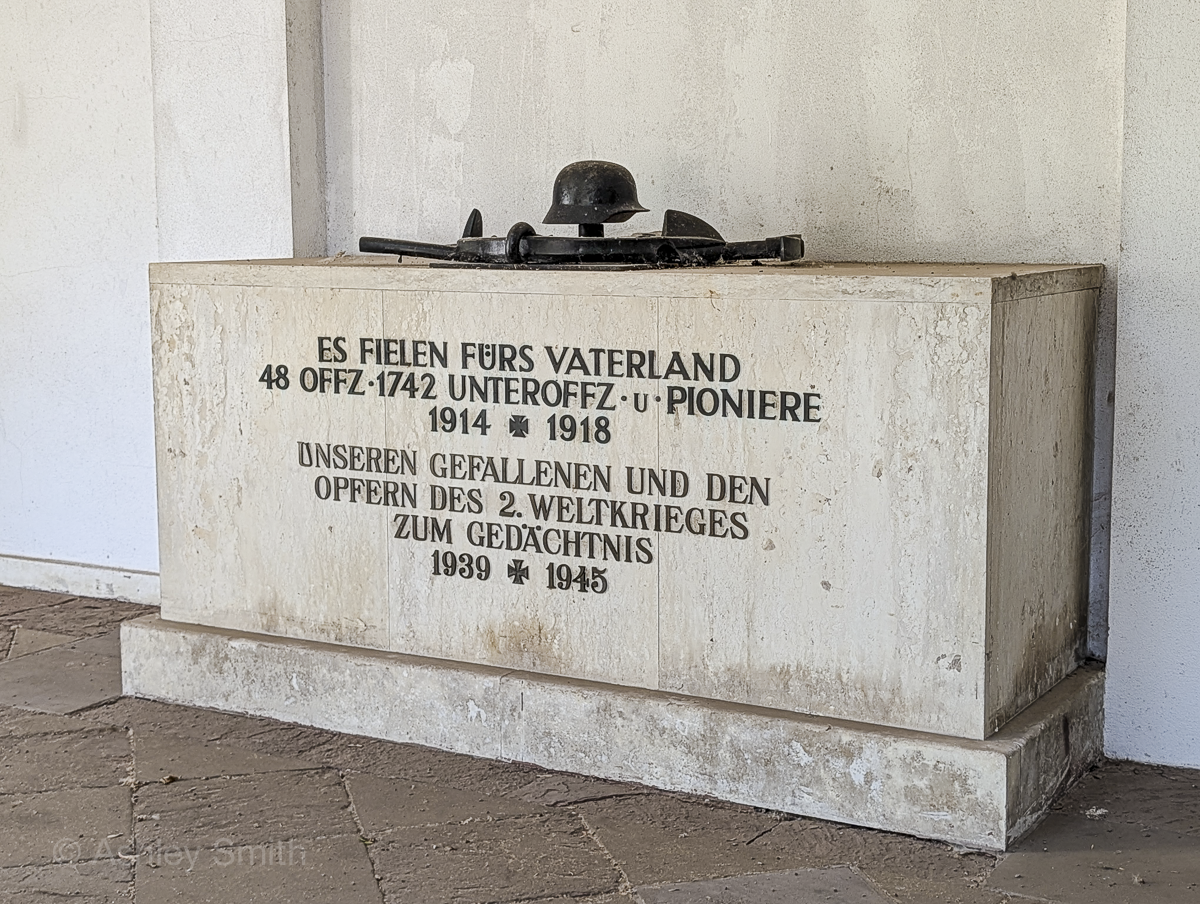
Behind the town’s main cathedral at the end of Maximilianstraße hides a small white building. This is the Antikenhalle (“Hall of Antiquities”) and it serves as the town’s memorial to its war dead. It was originally built in 1826 to house historical artifacts, but now contains memorials to those Germans who fought and died in both World Wars I and II.
The memorials sit behind an iron gate under three arches. The official website of the Pfalz region says the memorial is open to visitors at all times, but I don’t think they actually mean inside the gate, which I’m pretty sure stays locked. (Most likely, they simply understand how revolting it is to have a memorial to dead Nazis in a town valued for its Jewish history.)
5. Edith Stein Memorial
A block away from the Antikenhalle stands a memorial to Edith Stein—a German philosopher-turned-Catholic nun who died in the gas chambers at Auschwitz. Stein was born into a Jewish family (Poland 1891) but converted to Catholicism in 1922. As the treatment of Jews in Germany quickly degraded, she was eventually sent to a monastery in the Netherlands for safety. On August 2, 1942, the local Gestapo rounded up all Catholics of Jewish origin and deported them to Auschwitz-Birkenau for extermination.
After being baptized as a Catholic, Stein taught at the Dominican nuns’ school here in Speyer from 1923 to 1931. She actively spoke out against the Nazi regime and even petitioned the Pope to do so as well. Soon after, her teaching license was revoked in accordance with the “Law for the Restoration of the Professional Civil Service“—a long-winded way to say the Nazis forced all “non-Aryans” to “retire.”
After the Nazis occupied the Netherlands in May 1940, she knew what fate awaited her and thus began training for life inside a concentration camp by forcing herself to endure cold and hunger. She was first deported to the Westerbork concentration camp where she was miraculously offered an escape plan by a Dutch official, but refused.
Stein was beatified as a martyr by Pope John Paul II on May 1, 1987. She became Saint Teresa Benedicta of the Cross when he then canonized her 11 years later. The memorial to her in Speyer was dedicated in 1993 and stands on the bridge over which she often walked.
6. “Salien Emperors” statues
One key fact you need to know about Speyer is that its main cathedral also holds a UNESCO World Heritage Site designation. This massive church is not only 1,000 years old, but also one of the most important Romanesque monuments from the Holy Roman Empire. For nearly 300 years, this was the chief burial place for German emperors and kings. So naturally, the Nazis wanted to take it for themselves.
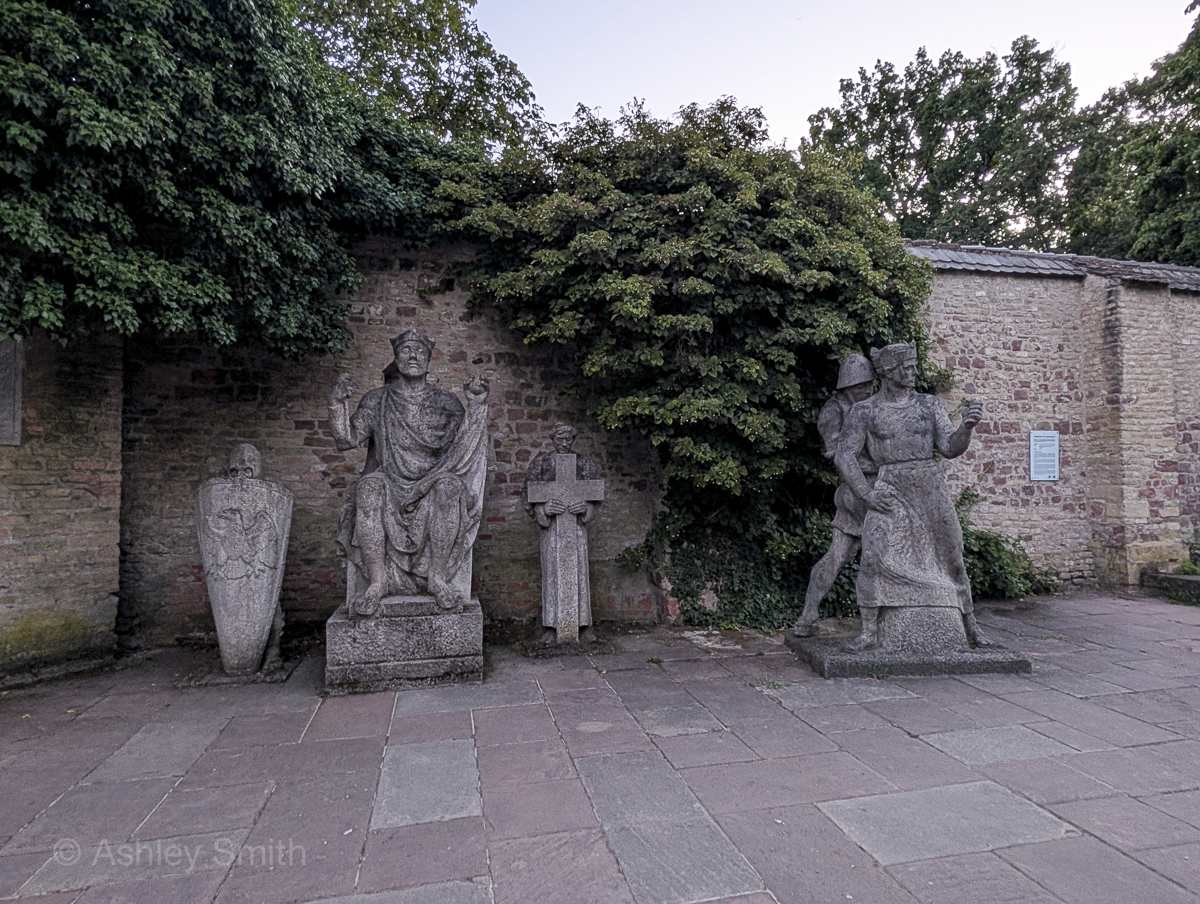
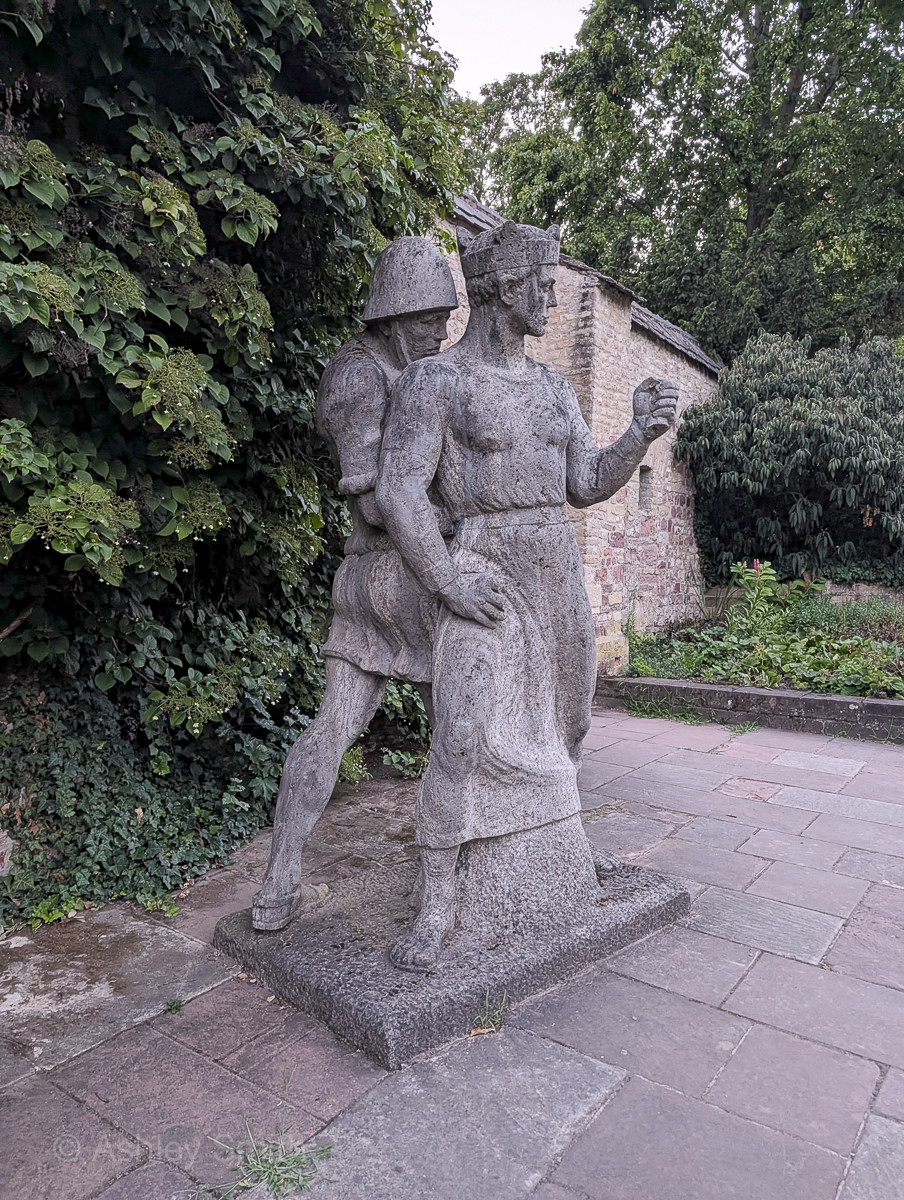
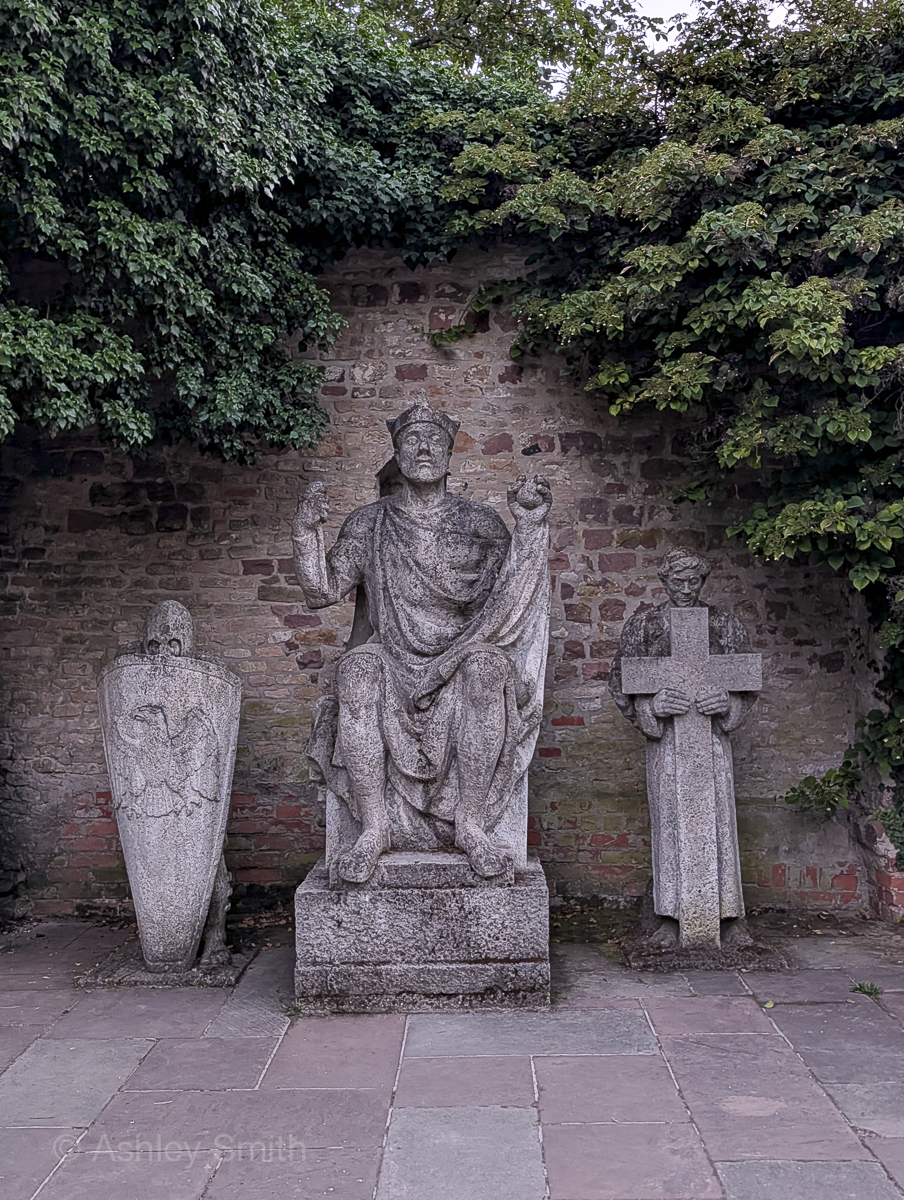
Thanks in large part to Nazi architect Albert Speer, the Nazis had planned on appropriating it for use as a “national shrine.” Part of that conversion included the commission of a set of statues to adorn the cathedral’s entryway. You can see those statues today outside the church in the garden. (In German: Skulpturengruppe “Salische Kaiser”)
These sculptures were officially commissioned by Nazi Reich Minister Wilhelm Frick whose greatest hits also include participating in Hitler’s Beer Hall Putsch and co-authoring the 1935 Nuremberg Laws. They were completed in 1940 by sculptor Ludwig Cauer, a fellow Nazi Party member who had been included in the Gottbegnadeten-Liste—a list of “God-gifted” artists created by propaganda minister Joseph Goebbels.
The sculptures
The group of statues includes four central figures and some accompanying pieces. They represent:
- Emperor Conrad II (and his wife), the man who originally commissioned the cathedral
- Emperor Henry III, seen sitting between a warrior and a priest
- Emperor Henry IV, seen trying to take the imperial crown from Pope Gregory VII (who is depicted as a wolf)
- Emperor Henry V, holding the Concordat of Worms (a treaty of sorts between the emperors and the Pope) with a soldier whispering in his ear
I had no idea these statues existed until I just happened to walk by them in person. The first thing I noticed was what looked like a Nazi soldier that had been inserted into a game of “one of these things is not like the other.” I assumed the emperor statues were really old, and the Nazi was just a more recent addition. (For propaganda purposes obviously.) Thankfully, there’s an easily-translatable information sign on the wall behind them. The real story is actually much more interesting.
If you ask me, the weirdest part of it all is the second-to-last line where they say these Nazi statues (commissioned by a convicted war criminal executed at Nuremberg) were brought out of storage and displayed in the church garden in the hopes of attracting tourism. (And I repeat: …to the city valued for its Jewish history, where the Nazis exterminated the entire Jewish population during WWII.) But perhaps that’s a discussion for another day. Presumably over a couple of U-Boot beers.
7. Kursk park (Platz der Stadt Kursk)
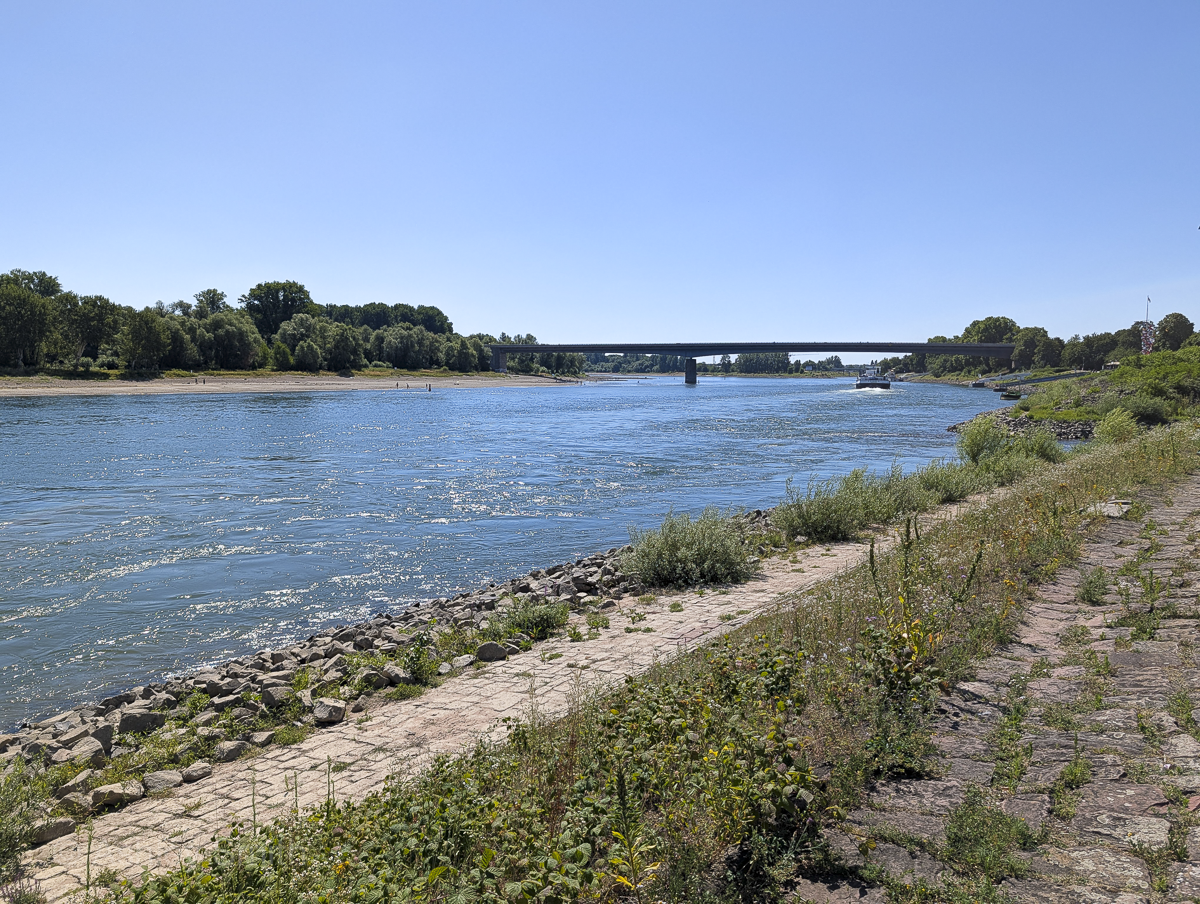
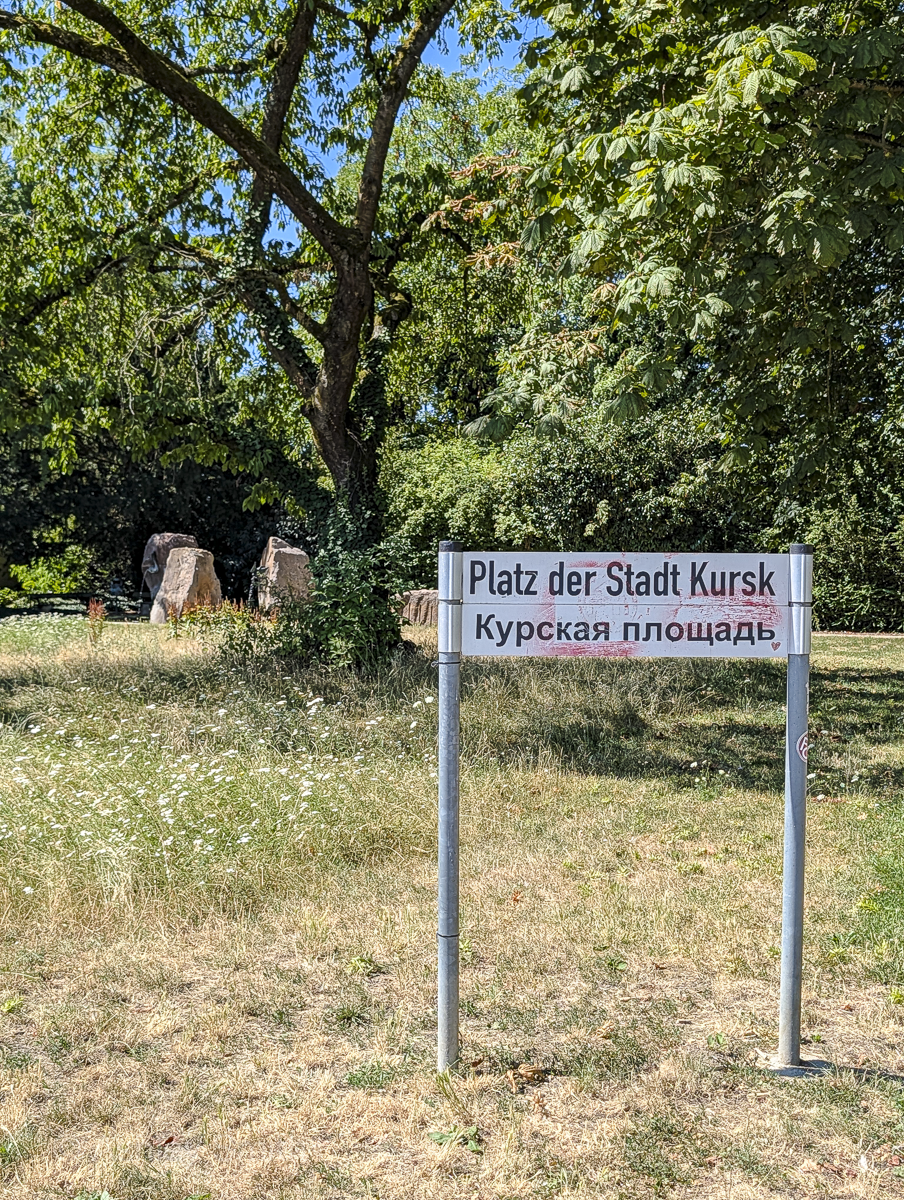
Lastly, something that’s only remotely related, but still worth mentioning. If you take a walk down to the Rhine River (which I recommend), there’s a good chance you’ll pass by the Platz der Stadt Kursk.
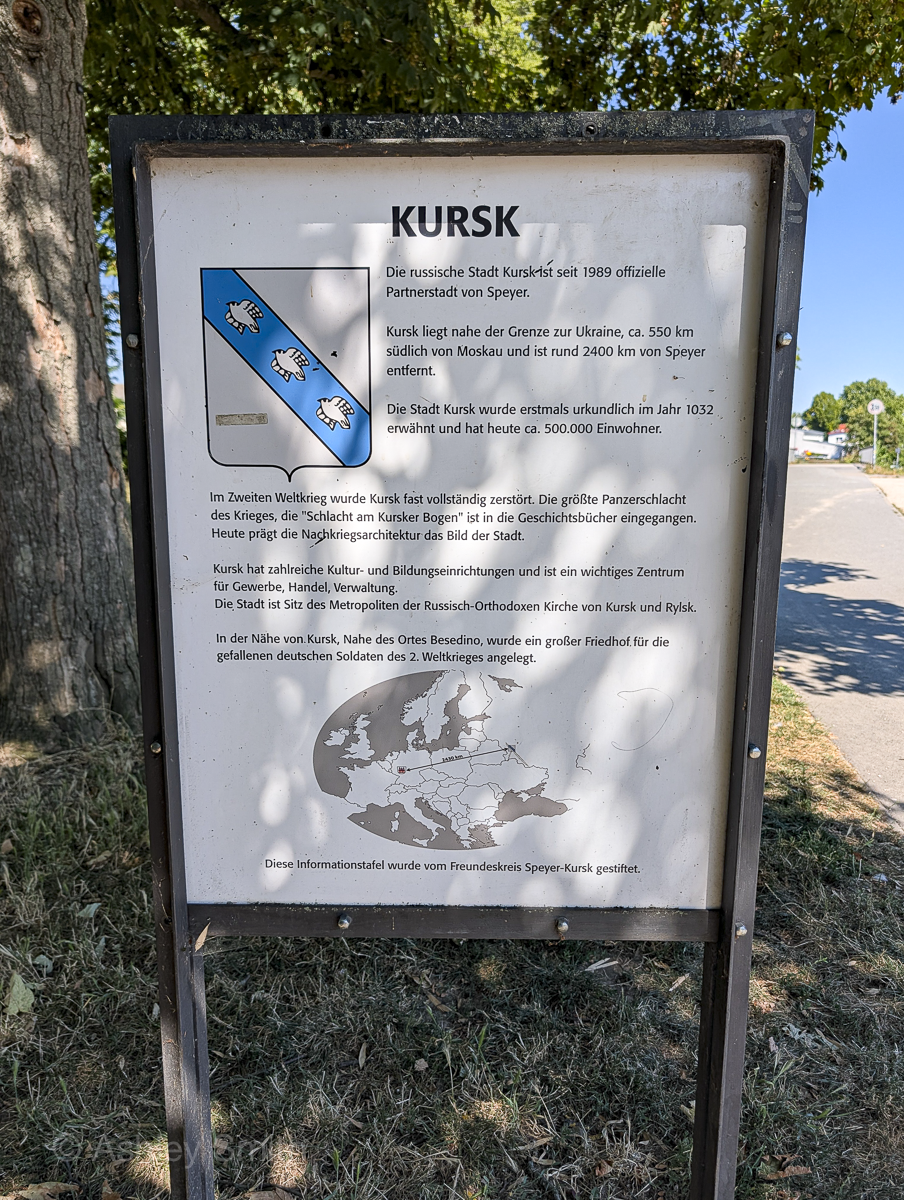
Even though its name implies it’s much bigger, the “Kursk City Square” is actually just a small green space with a simple informational sign and a stone fountain. But just the word “Kursk” on the sign would make any WWII history buff do a double take. The Battle of Kursk was a hugely significant World War II battle and remains the largest tank battle in history.
So why is this sign here? Because in 1989, Speyer and Kursk (in present-day Russia) became sister cities (or “twin cities” as they call them). And, according to the sign, there’s a large cemetery near Kursk dedicated to German soldiers who were killed there in the battle. (But why exactly they partnered up remains a mystery to me.)
Where to stay in Speyer
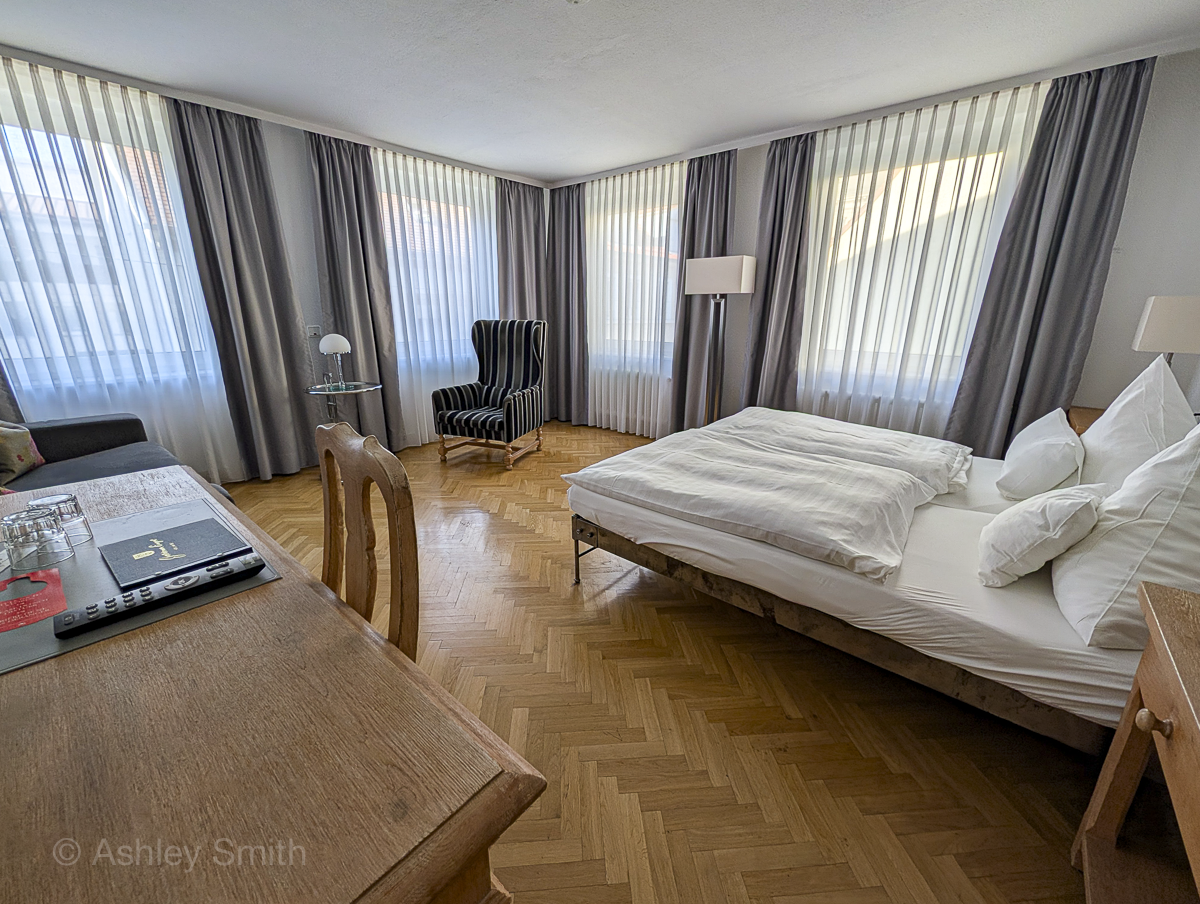
Speyer has several great hotels to choose from, but I personally stayed at the Hotel Goldener Engel. The location is perfect and I was able to walk everywhere I wanted to go. My room and bathroom were huge, the air conditioning was luxurious, and the staff was so friendly. Book your room at the Hotel Goldener Engel here.
If that one doesn’t work out for you, here are some other Speyer hotels I’d look at:
- Hotel Domhof – Beautiful modern rooms, excellent reviews, its own beer garden, free private parking on-site.
- Hotel Residenz am Königsplatz – More great reviews, located in a quieter area but still walkable to pretty much everything.
- Hotel zum Kaiserdom – Exceptional reviews, air conditioning, right outside the town’s cathedral and walkable to everywhere.
Check out all other Speyer hotels here.
What else to do in Speyer
Speyer is pretty small but offers some more fun and interesting things to see and do (besides visit WWII sites). I won’t cover them all here, but you can check out my post on what to do in Speyer here with all the details.
More info for your visit to Germany
- Hotels: Find great places to stay on Booking.com (my go-to). Expedia and Hotels.com are worth checking too. VRBO is best for apartment rentals.
- Rental cars: Check out the best rental car deals here.
- Local tours & activities: Check out all the great local options from Viator and Get Your Guide here.
- Don’t forget a Germany guidebook and this must-have Germany customs and culture guide.
- Want more? See all my Germany posts here.
Like this post? Have questions about visiting any of the WWII sites in Speyer? Let me know in the comments below. Thanks for reading.

Save this info, pin this image: