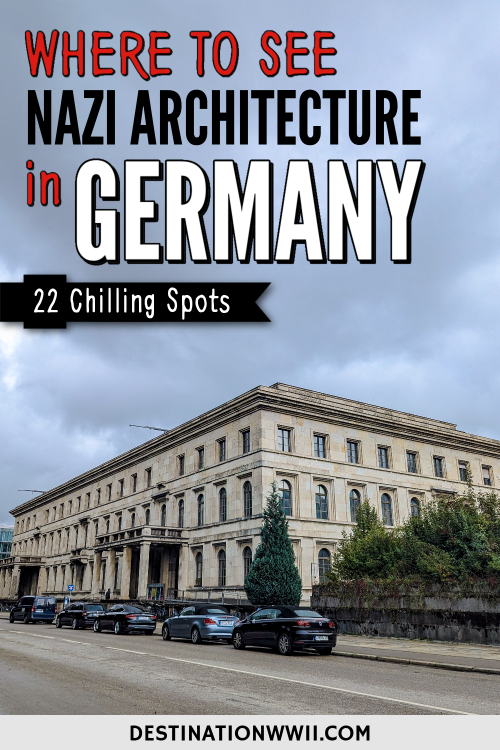

When it comes to the Third Reich, everything was intentional and nothing was left to interpretation. One area where this is more than obvious is in Nazi architectural design. Drawing on the aesthetics of past empires, the Nazi regime prudently designed its buildings to project certain ideological attributes and evoke strong emotions. And much of it still stands today.
Want to see some of this stuff for yourself? Though the Third Reich experiment has (thankfully) ended and much of its infrastructure has been (duly) leveled, there are still tons of structures that have survived for one reason or another. This post will show you where you can find some of these preserved examples of Nazi architecture around Germany. Enjoy!
Need to know: Nazi architecture still exists in places like Poland and Austria too, but this post focuses just on the buildings you can see in Germany. Also, even though places like concentration camps are technically “Nazi architecture,” this post deals only with civic buildings and the like.
The Nazi architecture style
Nazi architects favored styles that implied power and strength. They emphasized heavy materials, sharp lines, uniformity, and absolutely no character whatsoever, with a nod to ancient Greek and Roman design (pandering to Hitler’s obsession with classical antiquity). The results are about as brash and hostile as you can get which is par for the course of the Nazi brand. (Personally, I find them hideous. My face makes a very specific look of disgust whenever I pass one.)
Ruin Value
The Nazis also favored another architectural aspect that they called “ruin value.” Basically, believing their Third Reich would last 1,000 years, the Nazis designed their buildings in such a way that they would eventually look good as ruins. (The core concept here was to construct buildings out of strong natural materials that could stand the test of time…and bombs.) Nazi architect Albert Speer claimed to have invented this idea which Hitler, obsessed with his legacy, naturally adored.

Hitler’s love of the ruins concept was rooted in the idea that future leaders would be able to draw on these buildings for inspiration. Just like Mussolini in Rome jumpstarted the idea of a modern Roman Empire, so would future German leaders be able to rekindle the Nazi spirit even in distant millennia.
As much as I love to belittle Hitler and his narcissistic tendencies, I’m afraid he’s got a point here. As you’ll see in this article, tons of these overbearing Nazi structures still exist today and will probably continue to exist for a very long time. Most of them are still in use in some form or fashion. Many survived bombings that left everything around them in ruins.
Some have been deliberately ruined which have then been allowed to remain so long as they serve as a cautionary tale. Will they always serve this purpose? Or will they one day be looked upon again with reverence? Who’s to say. Either way, it’s hard to look at these buildings and not think of their original purpose or who put them there.
Berlin as ‘Germania’
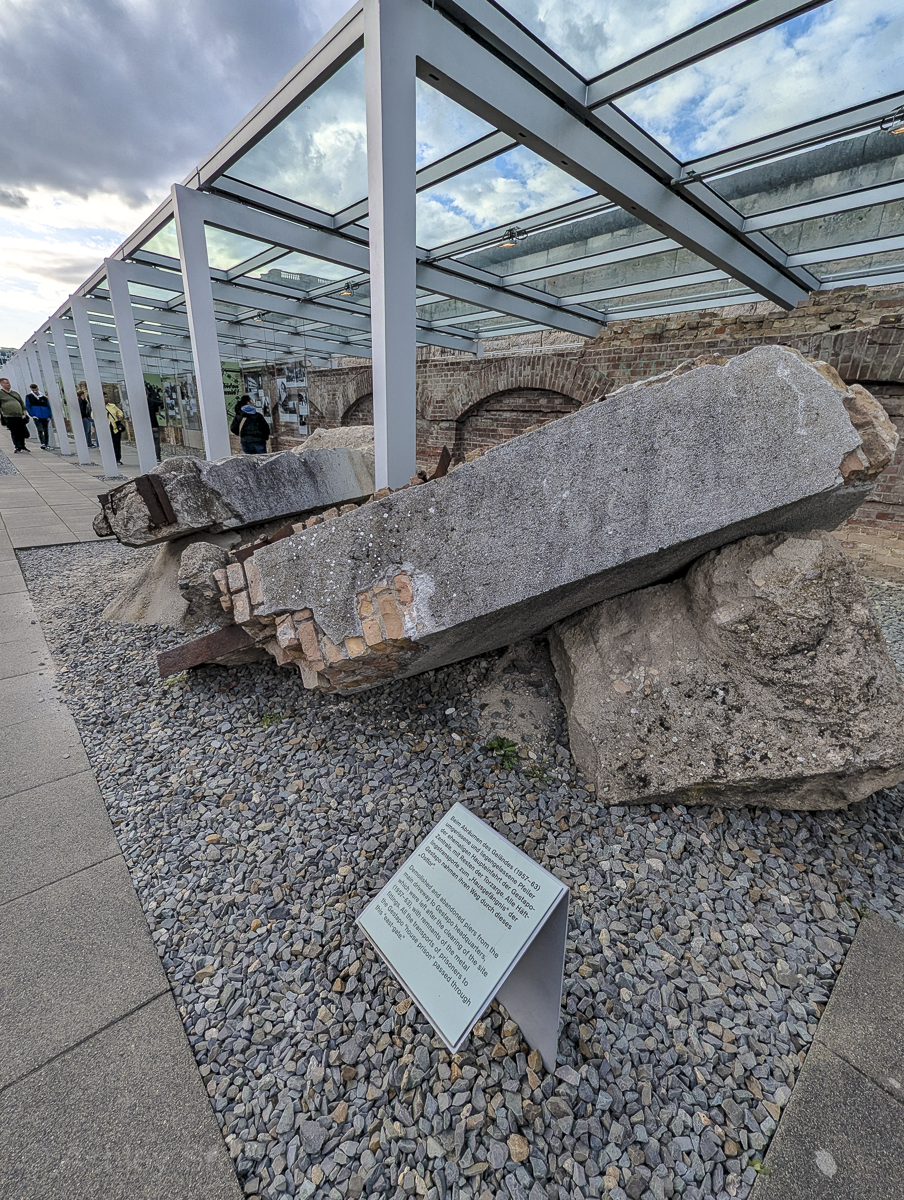
One particular architectural project Hitler obsessed over was the transformation of Berlin. Driven by unrestrained megalomania, Hitler yearned to rebuild Berlin into a grand city worthy of being the capital of the “Great Germanic Reich,” following the Nazi regime’s sure victory and subsequent world domination. He put his loyal buddy Speer in charge of designing this new city.
Unfortunately for Hitler, only a few of his planned projects were actually completed before the ongoing war put a pause on progress. But what few pieces went up you can still see today, if you know where to look. And once you know what to look for, you’ll be able to spot it anywhere.
‘Germania’ fundamentals
The basis of Germania was just as you’d expect from a self-important psychopath:
Building Germania
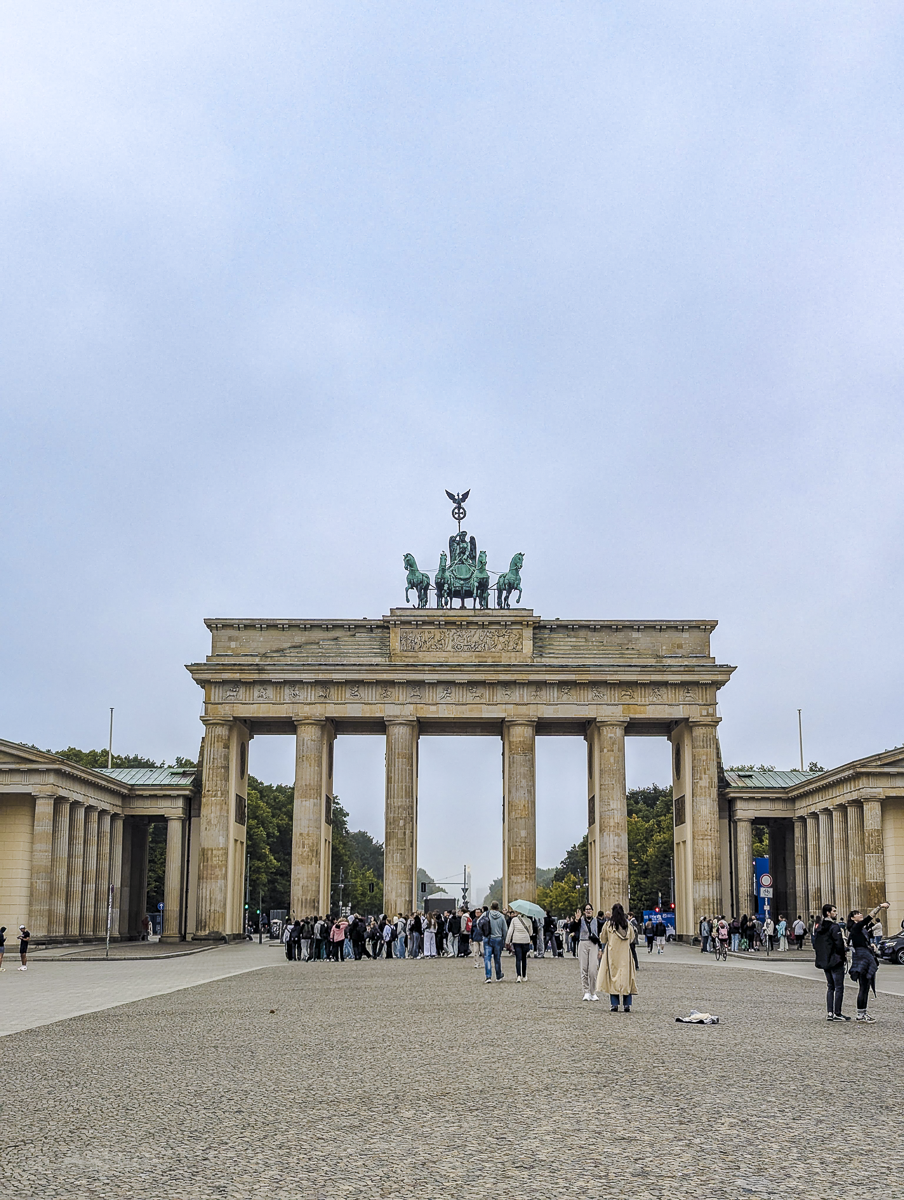
And just like ancient Rome, Germania was to be built on the backs of Jewish slaves. This plethora of imposing buildings and structures required obscene amounts of both labor and raw materials, which is where a large faction of the Nazi concentration camp system came in.
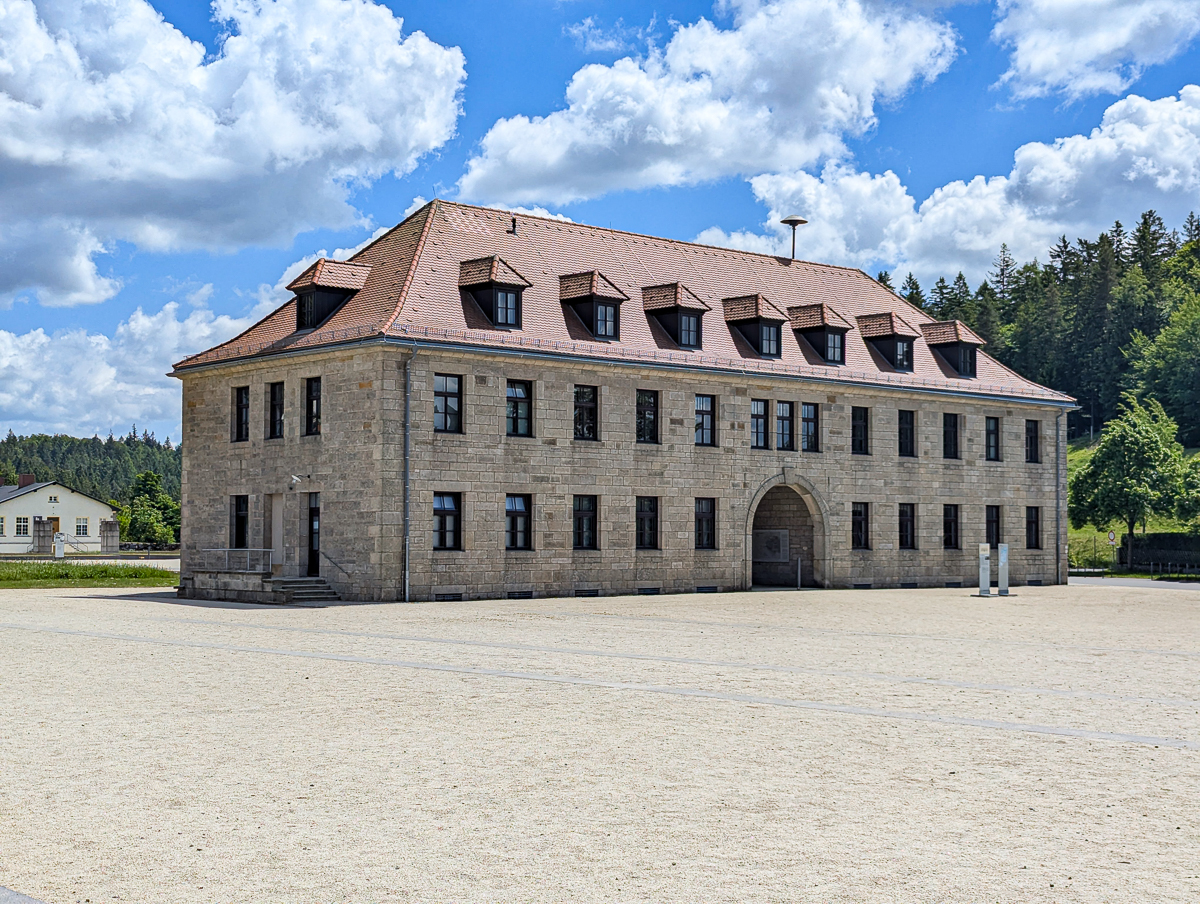
With this in mind, the Nazis built several concentration camps next to quarries—camps like Flossenbürg and Mauthausen for example. At these camps, prisoners were literally worked to death breaking and hauling rocks out of quarries in every type of weather, on very little sustenance, in inadequate clothing, and through all manner of illness.
Hitler’s desire for big ugly buildings killed tens of thousands of slave laborers. This doesn’t even include the 130,000+ POWs forced to actually build them. Quite a legacy, indeed.
The main hubs for Nazi architecture
There are three main hubs of still-standing Nazi architecture in Germany where you can find several preserved examples. (But there are still several more examples scattered all over.) They are:
- Berlin – Nazi Party headquarters; official government capital of the Third Reich; future capital of the “Great Germanic Reich” after its makeover into ‘Germania.’
- Munich – Birthplace of the Nazi Party; where Hitler got his political start; early Nazi headquarters.
- Nuremberg – Nazi propaganda headquarters where they held their massive propaganda rallies; where the Nazi persecution of Jews “officially” began.
All three of these cities still have a great deal of Nazi architecture left, some you can visit and some you can’t. Almost all of them are still in use today either as private residences, governmental buildings, or museums. Some remain in limbo and some are already ruins. (And very ugly ones, at that.)
Where to see Nazi architecture in Germany
This map contains all the examples of Nazi architecture I mention in this post. To save this map: Click on the star ⭑ next to the map’s title to save in your Google Maps. To use this map: When you get here, open Google Maps on your phone, click “Saved” at the bottom, then click “Maps.”
Where to see Nazi architecture in Berlin
Now that you know what to look for, here are a few places around Berlin where you can see these historical relics for yourself. For more information on these and other interesting WWII sites in Berlin, click that link.
1. Federal Ministry of Finance
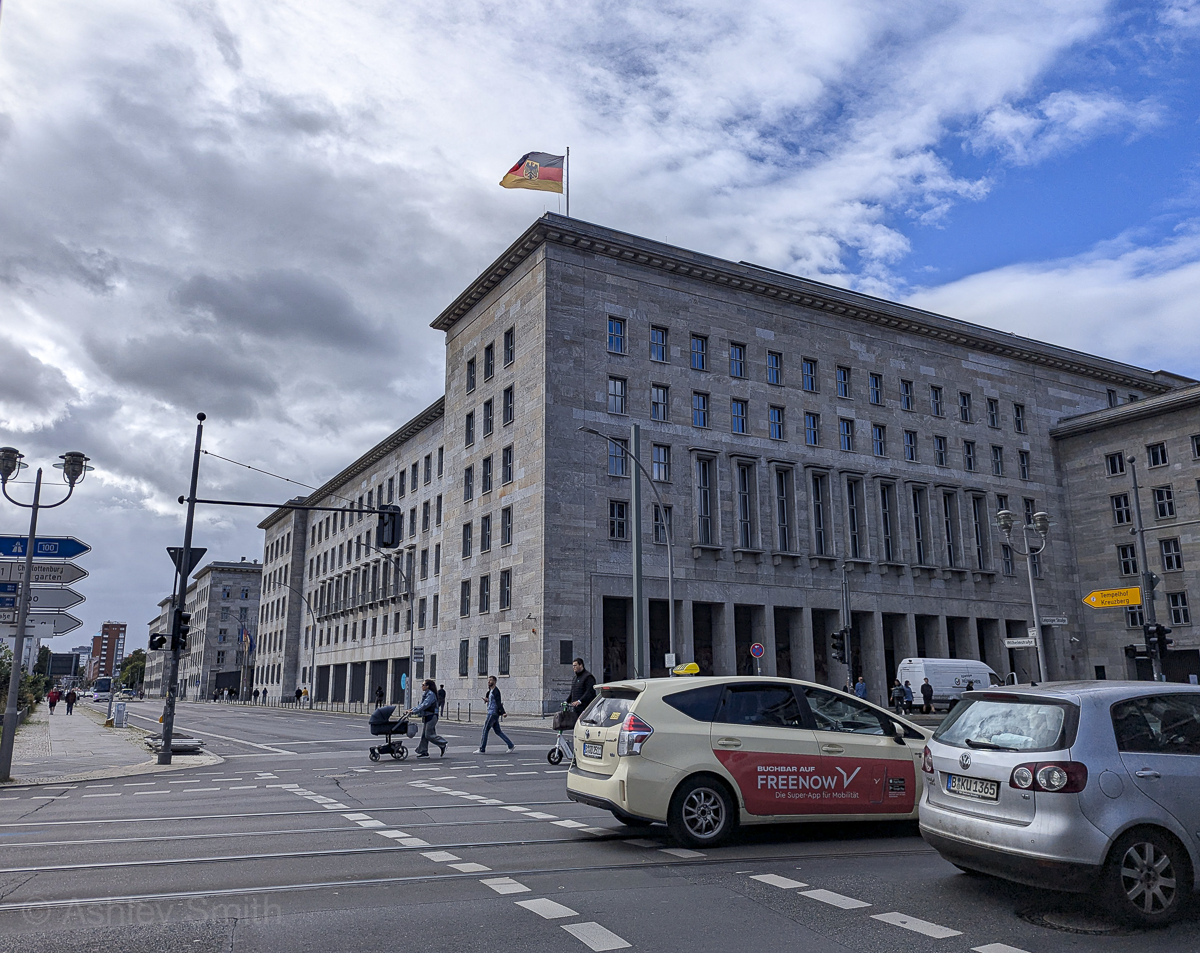
The building that houses the Federal Ministry of Finance today originally served as the headquarters for Nazi Germany’s Ministry of Aviation. It spans an entire city block and, at the time of its construction in 1935, was considered the largest office building in Europe.
With its signature block design and complete lack of originality, this building is the epitome of the Nazi architecture style. (Tell me it doesn’t look like a prison.) It allegedly required stone from 50 quarries to build.
2. Olympic Stadium
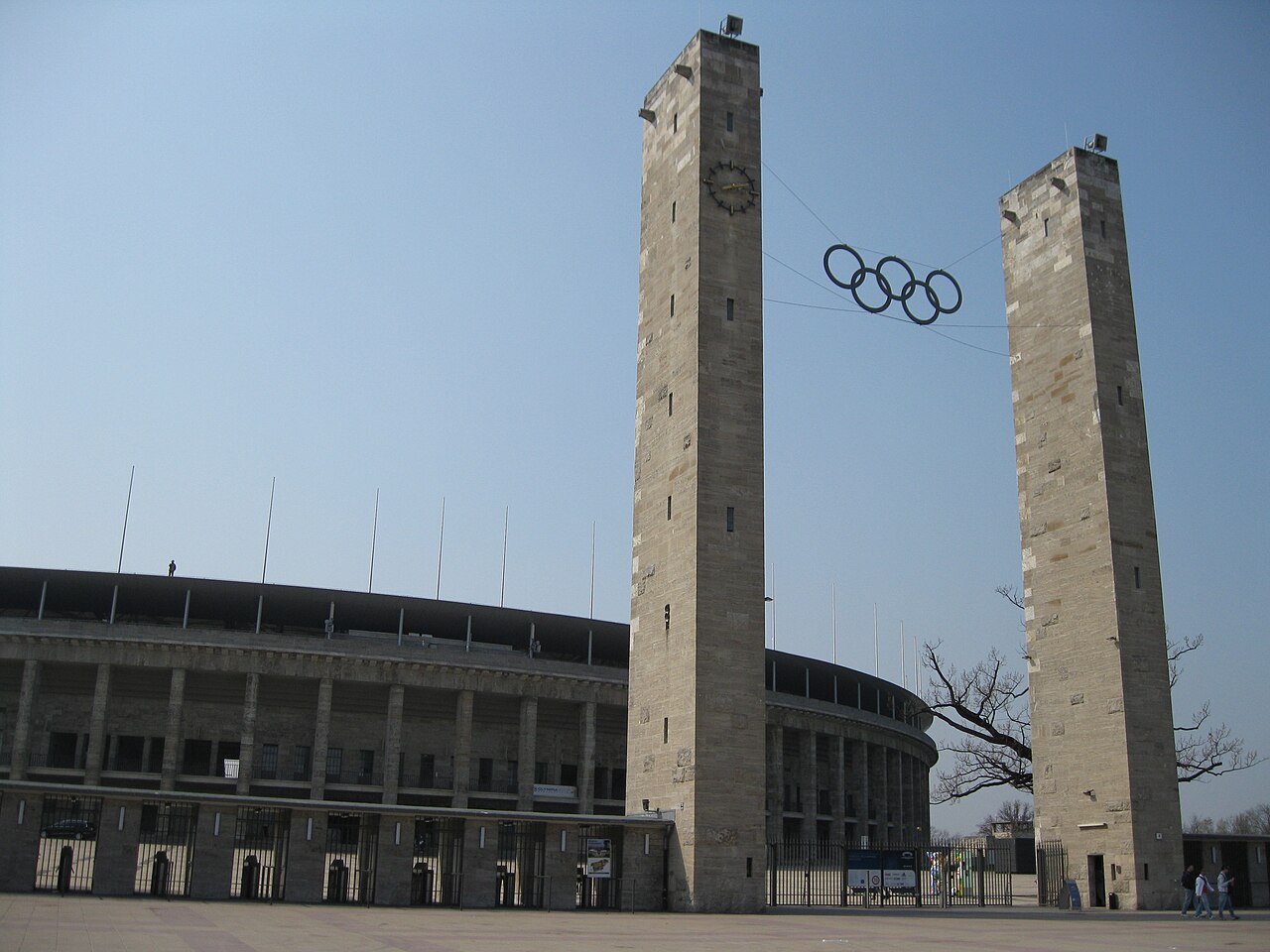
One of the most famous examples of Nazi architecture in Berlin is Olympic Stadium. It was commissioned by Hitler himself for the 1936 Summer Olympics because he needed a gigantic propaganda house for his gigantic propaganda event, after all.
At its completion in 1936, it has a capacity of 110,000 spectators. (It has since been renovated and now only holds space for around 75,000.) It features the standard Nazi block design, the standard Nazi Colosseum-wannabe motif, and a large bell tower.
Minus the bell tower, Berlin’s Olympic Stadium survived the war intact. It’s still used for sporting events and other purposes today and even hosted an NFL game in 2025. Be sure to sign up for one of the guided tours where you can see many of its original features.
3. Templehof Airport
Constructed between 1936 and 1939, Berlin’s Templehof Airport is another classic example of Nazi architecture. Like everything else on this list, it strays not even an inch from the usual prison-like block design and semi-circular shape.
Spearheaded by the Reich Air Ministry, this was to be a massive “world airport” that would also host Luftwaffe air shows and other events. However, the start of World War II took precedence and construction was never fully completed. During this time, it became a forced labor facility for arms productions instead.
After the war, it fell under the jurisdiction of the US Army who began repairs and reopened it to civilian air traffic in 1951. It was eventually closed as an airport for good in 2008 but has continued to host trade fairs, music festivals, and other such events. You can also take guided tours to learn more about the building’s history. Read more about Templehof’s architecture here.
4. Japanese and Italian embassies
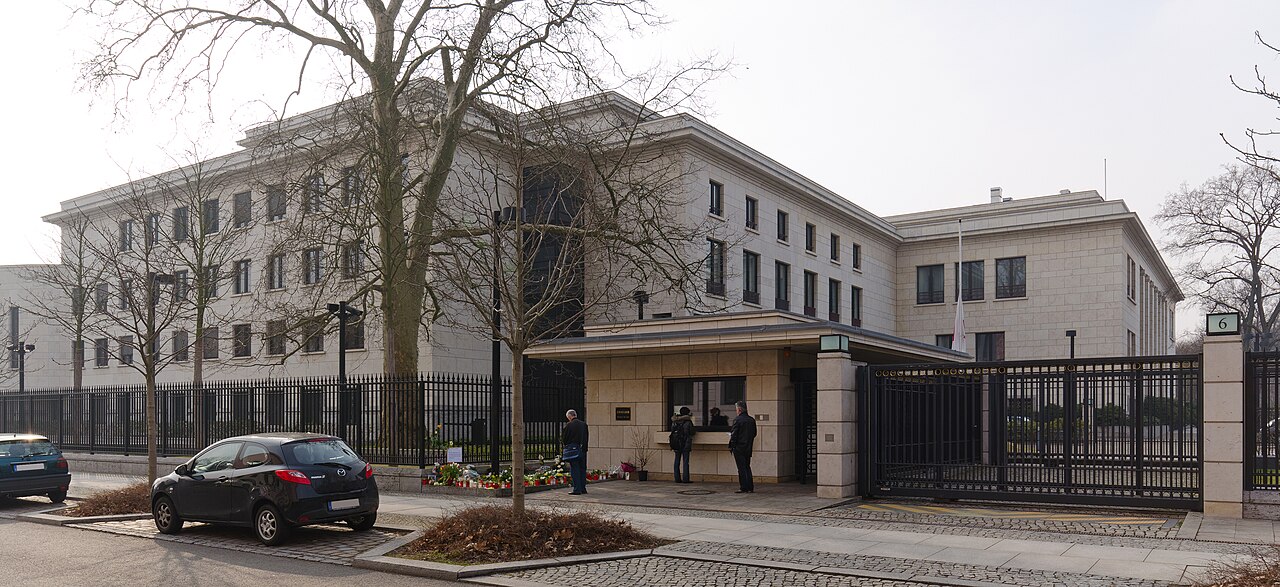
As Nazi Germany’s relationship with axis buddies Japan and Italy grew, Speer designed a new diplomatic quarter in Berlin’s Tiergarten district in which to house their embassies. This is still the home of the Japanese and Italian embassies today.
These buildings were constructed between 1938 and 1942 in the customary Nazi architecture style. Japan’s embassy resembles all the other Nazi buildings—fortress-like block design, sharp angles, big columns.
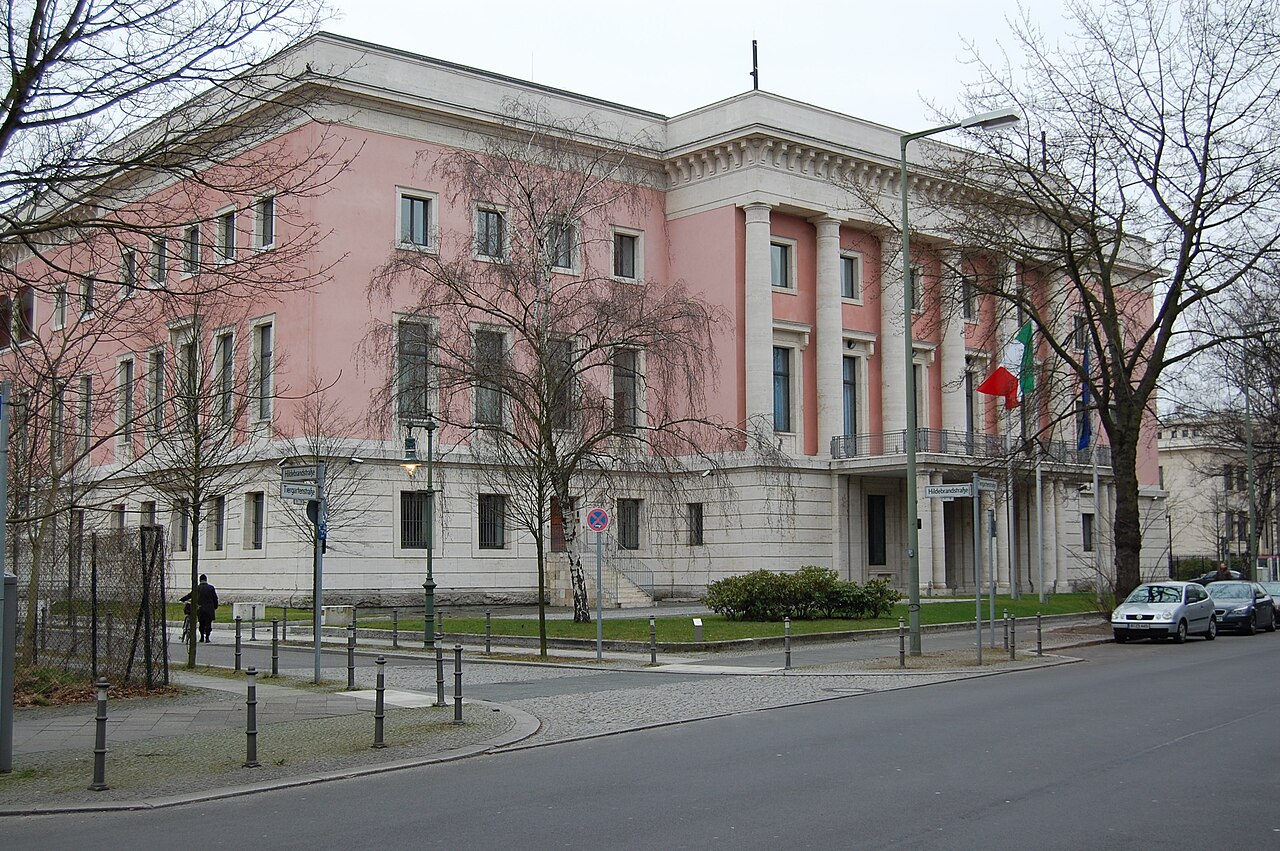
Italy’s, however, actually varies from the typical style to be more representative of Italy. Instead, this one looks more like a Nazi fortress had a baby with an Italian palazzo—pink façade, Roman travertine, fancy marble, and elaborate fountains. The pink exterior, according to the building’s renovating architect, helps to separate the building from its fascist origins by taking away the “heaviness.” (The Nazi bones are undeniable though.)
Both buildings were heavily damaged during the war and only scantily used afterwards. It wasn’t until the late 1980s that both were restored and put back into official use.
Other examples of Nazi architecture in Berlin
Now that you know what to look for, it’ll be easy to spot these kinds of buildings around Germany’s capital. Here are a few more examples you might come across:
5. Berlin Messe – Built as a massive exhibition and propaganda complex in the 1930s; still used as an exhibition and convention center today.
6. Fehrbelliner Platz – Look for the horseshoe-shaped buildings surrounding the Fehrbelliner Platz U-bahn station that originally served as administration buildings for the Nazi regime.
7. Ernst-Reuter-Haus – Designed by Albert Speer to mark “Germania’s” East-West Axis; originally constructed to house the headquarters of the German Association of Municipalities (who still uses it today).
8. Julius Leber Barracks – Barracks complex built for the Luftwaffe between 1936-1939; later used as an assembly camp for deporting Jews.
When you’re ready to visit Berlin, be sure to check out my friend Matti at toursofberlin.com – Berlin’s BEST historical tour guide. He offers several Third Reich and WWII-focused tours, and even has a Berlin architecture tour too! Tell him I sent you when you book and he’ll give you a little discount off your tour. 🙂
Where to see Nazi architecture in Munich
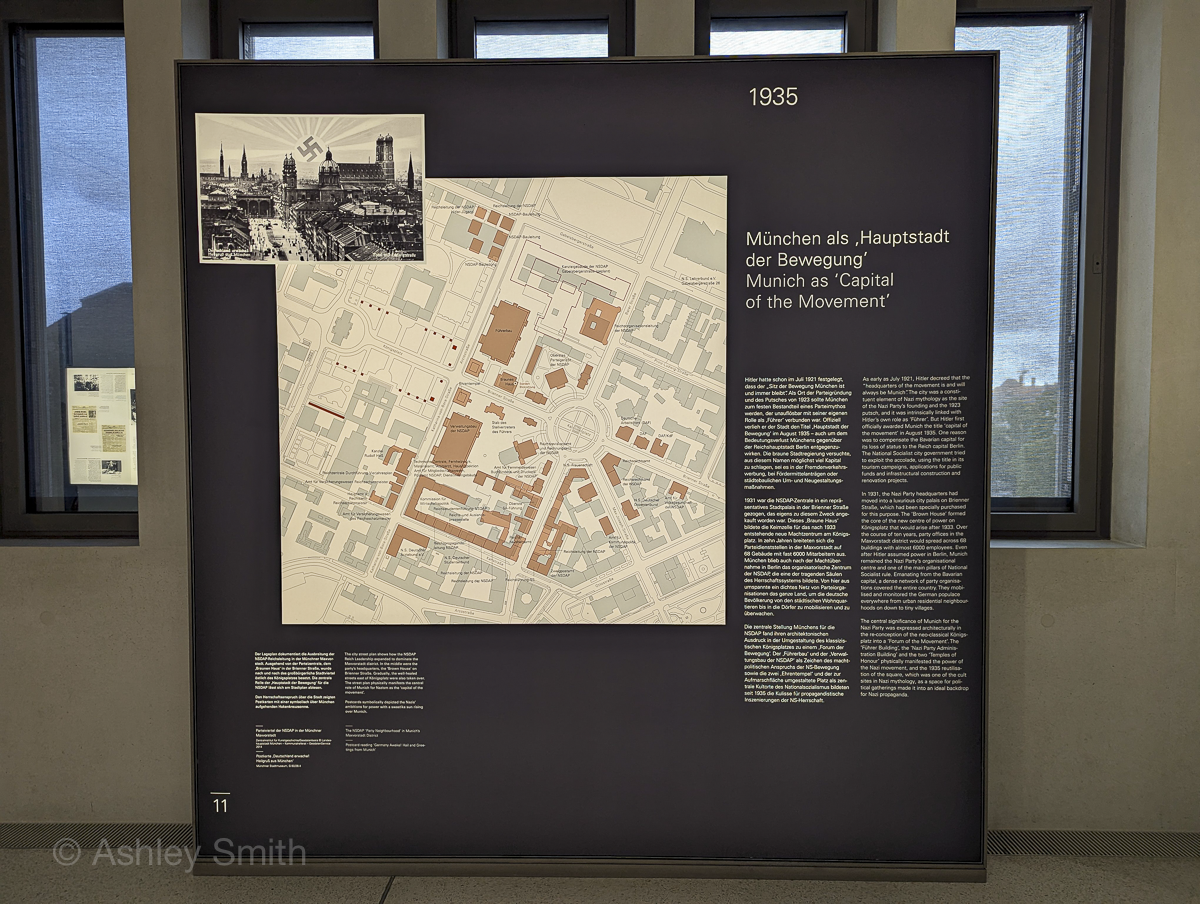
Munich, Germany is the city where Hitler rose to power and thus became the birthplace, headquarters, and command center of the early Third Reich. As such, the “Capital of the Movement” is filled with still-standing examples of Nazi architecture. For more information on these and other interesting WWII sites in Munich, click that link.
9. University of Music and Theater
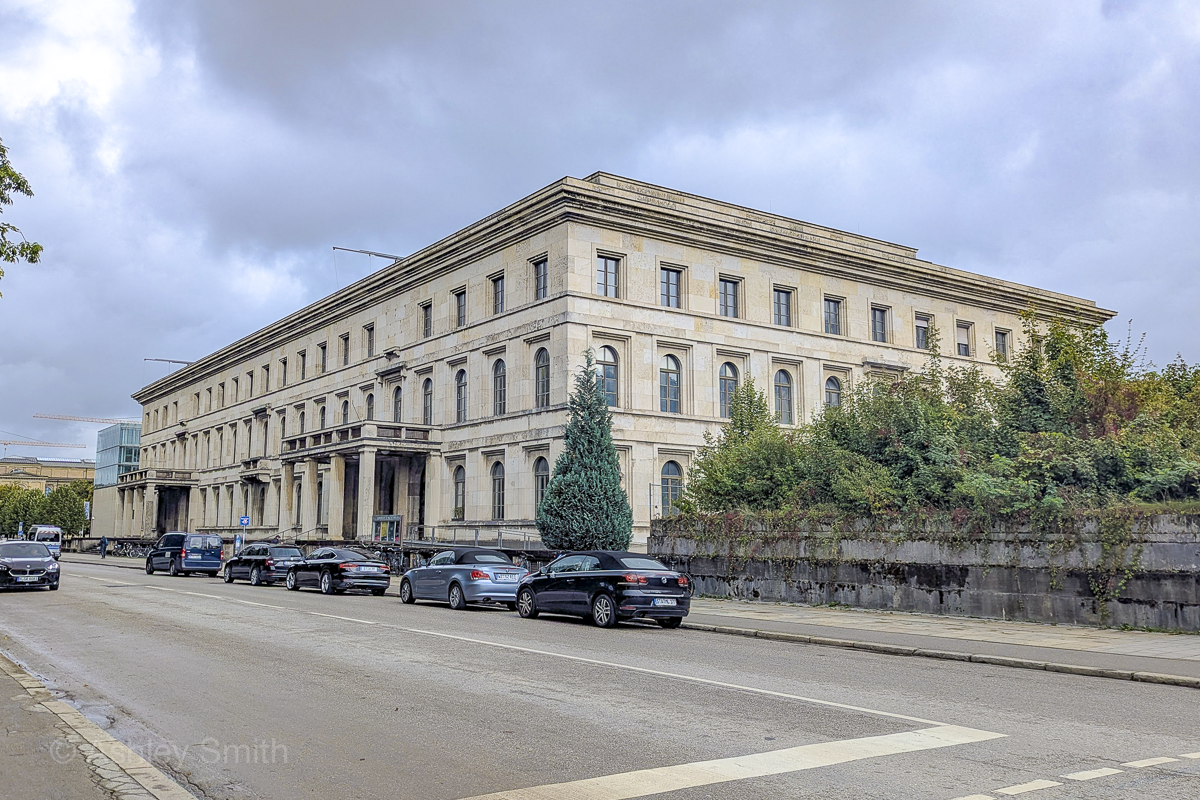
Munich’s premier performing arts school is actually housed inside the former Führerbau—Hitler’s official office. One of the many historically significant things that took place here was the signing of the Munich Agreement in 1938.
This building was just one in a collection of administrative sites in what ultimately became the Nazi Party District near Königsplatz. The former Führerbau backs up to what was once known as the “Brown House” but is now the home of the NS-Documentation Center museum (which I highly recommend).
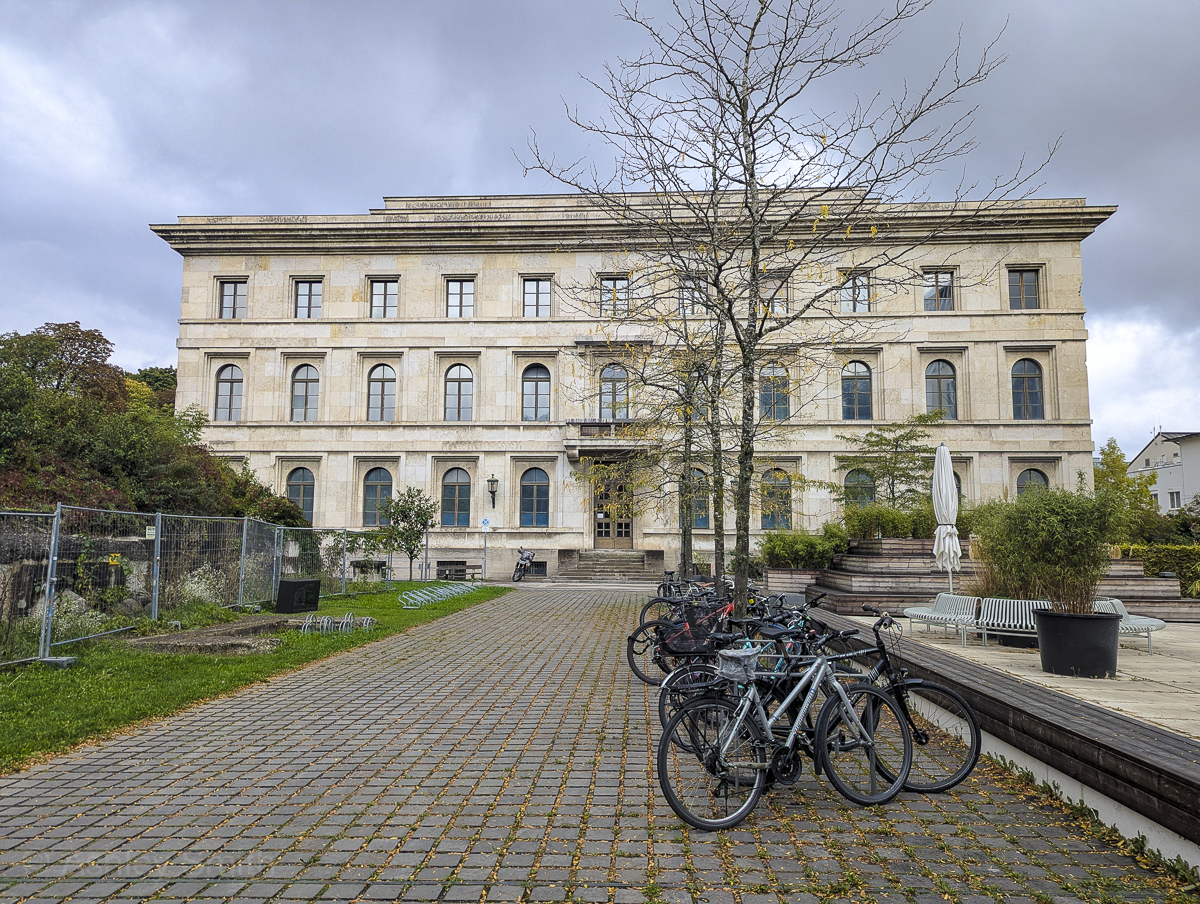
10. Central Institute of Art History
Just down the street from the Führerbau is the Central Institute of Art History and the Museum for Casts of Classical Sculptures. As you’ll see, it looks just like the Führerbau and every other Nazi building in this post. In the 1930s, this building was a general NSDAP administration building that housed treasury and personnel departments among others.
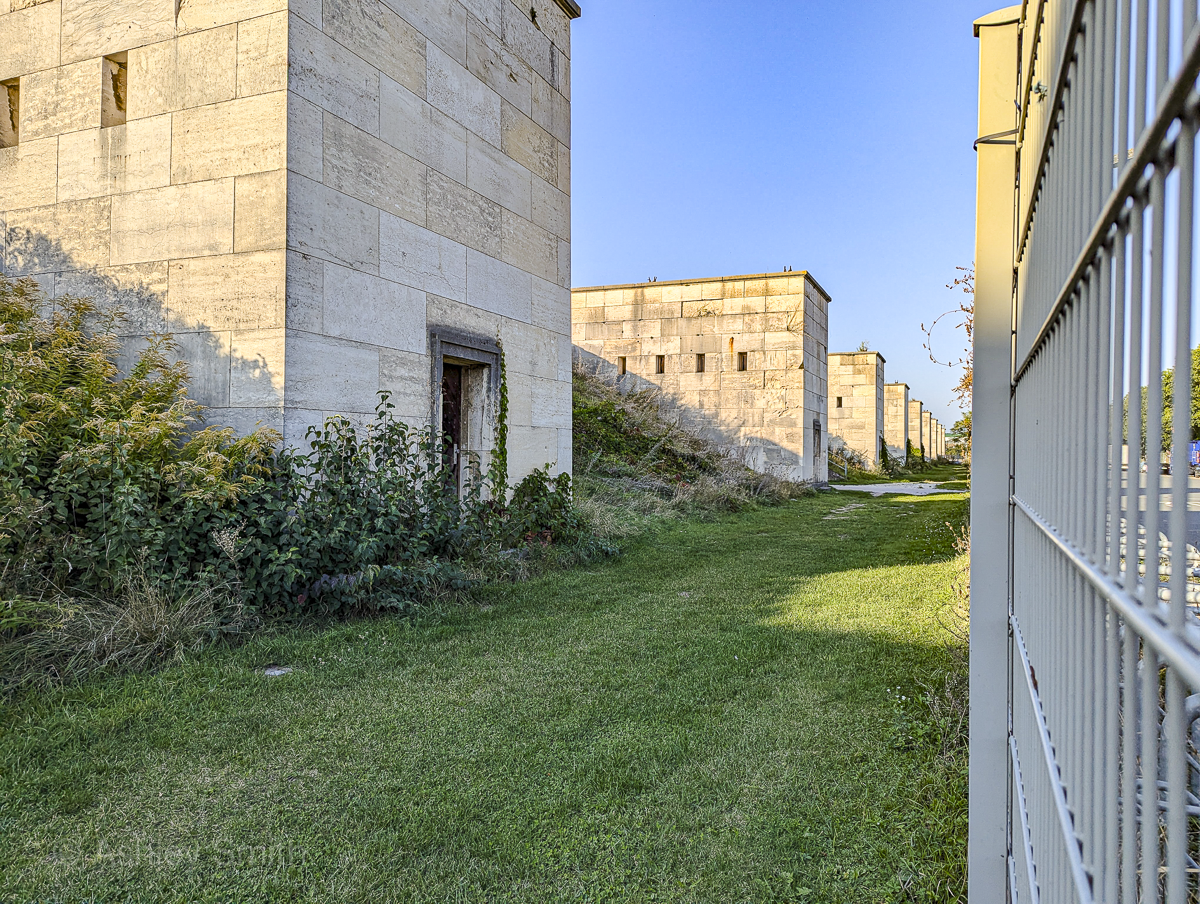
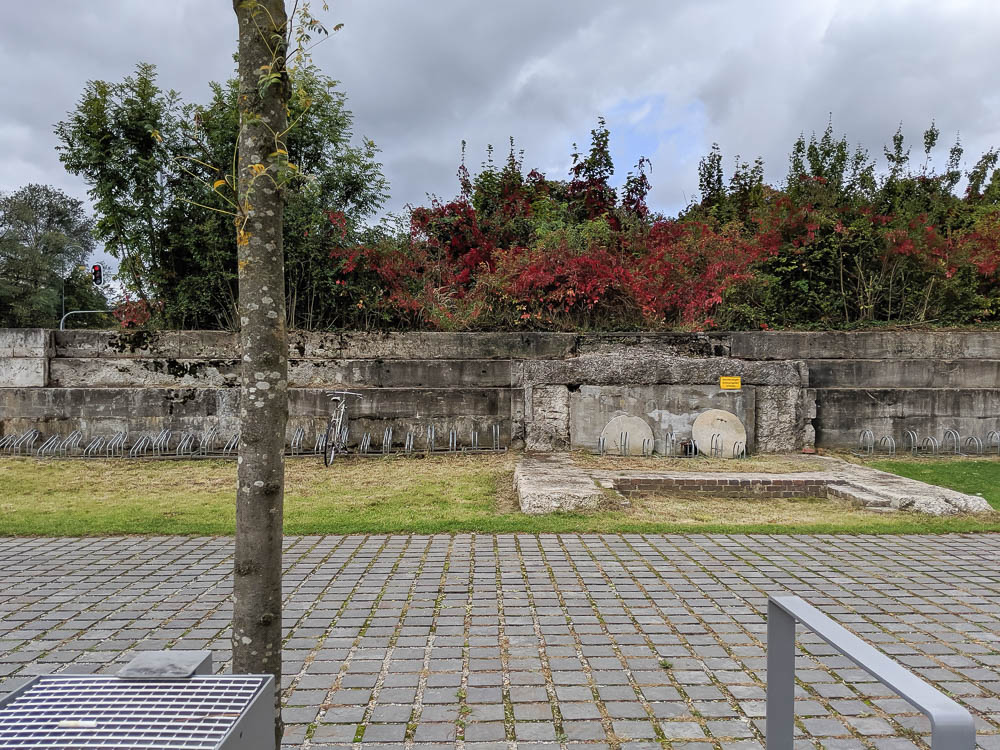
The two grassy square-shaped areas on the corners between these two buildings are where the Nazi Party’s two “Temples of Honor” once stood. These were built to honor the 16 “martyrs” who were killed in Hitler’s failed coup in 1923. On the orders of US General Dwight D. Eisenhower, the two structures were blown up in 1947, but you can still see their ruins today.
11. Haus der Kunst
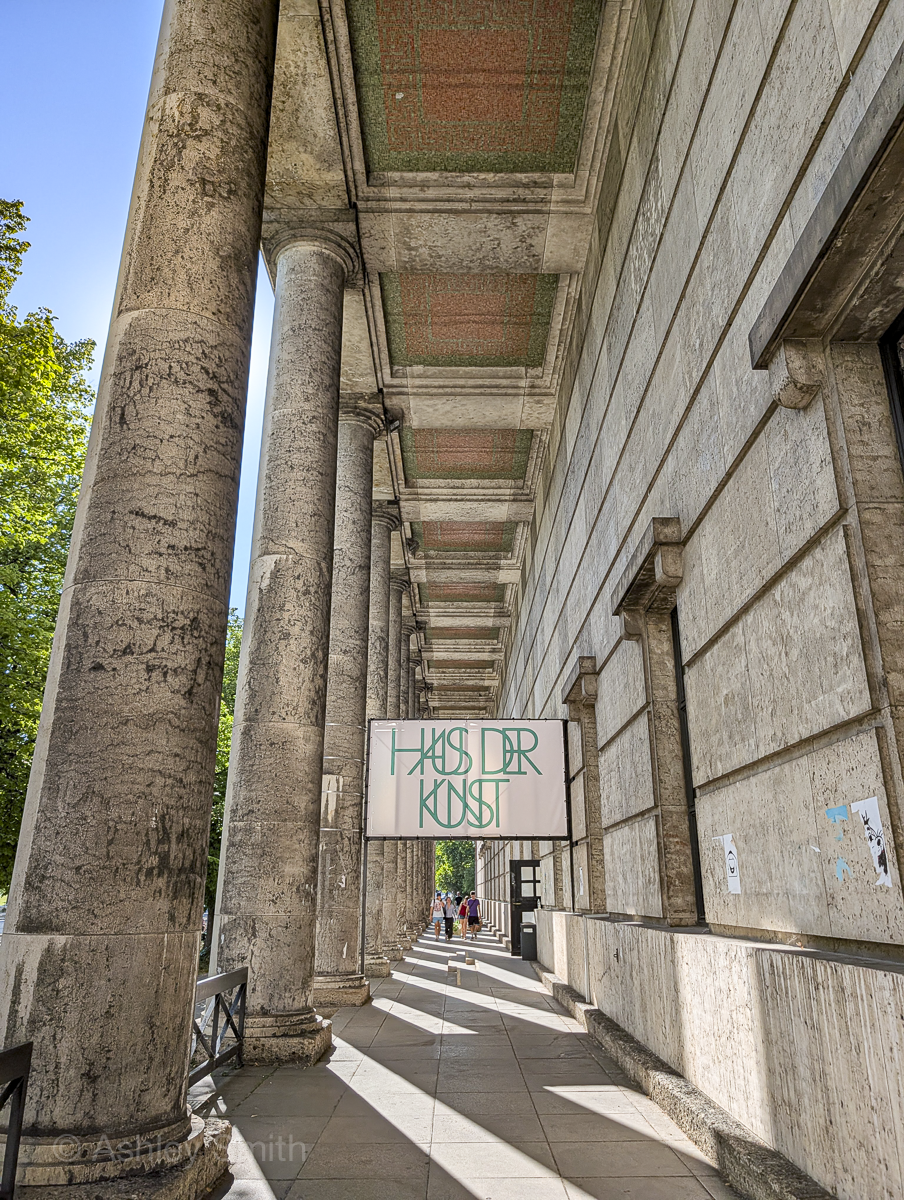
The “House of German Art” was one of the Nazis’ first major architecture projects and actually the only one fully dedicated to art they ever completed. Same architect as the previous two buildings, ergo, the same exact look.
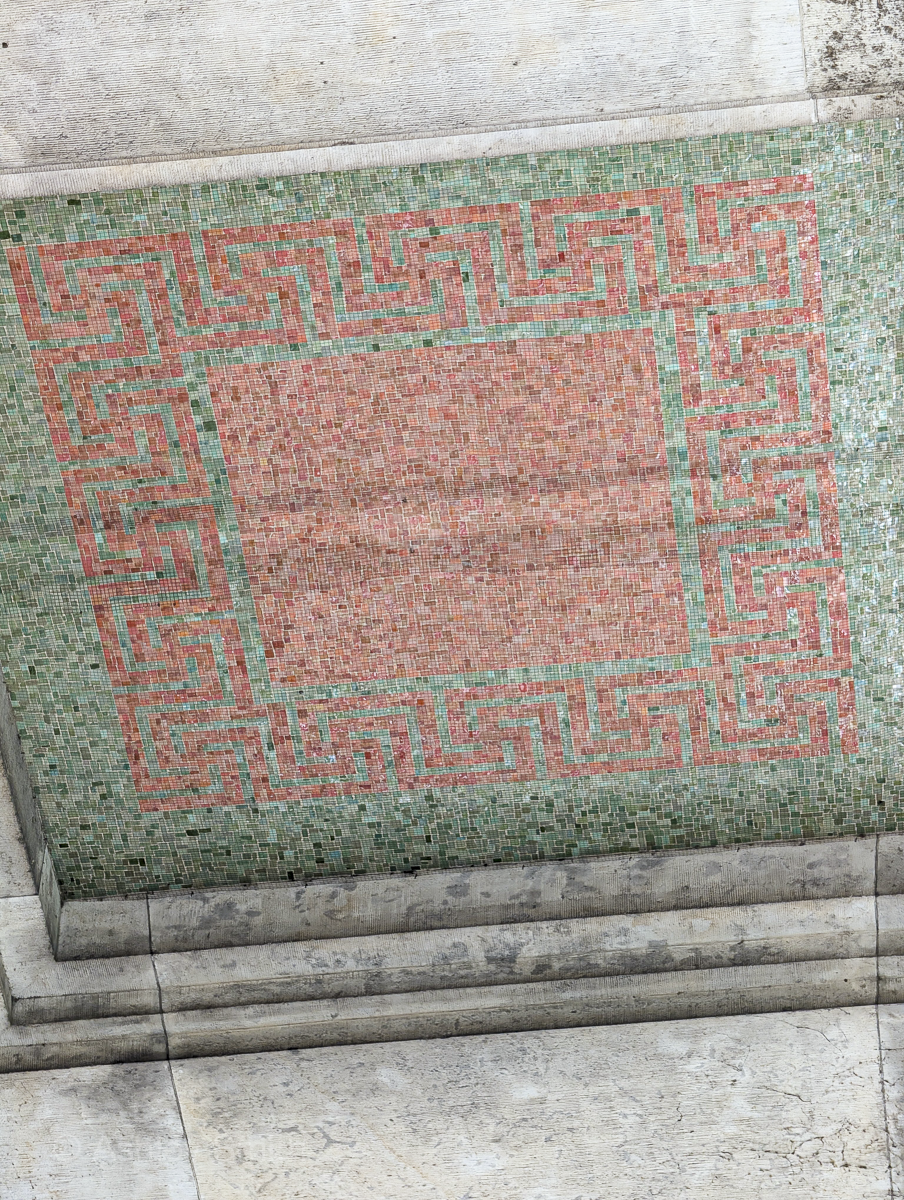
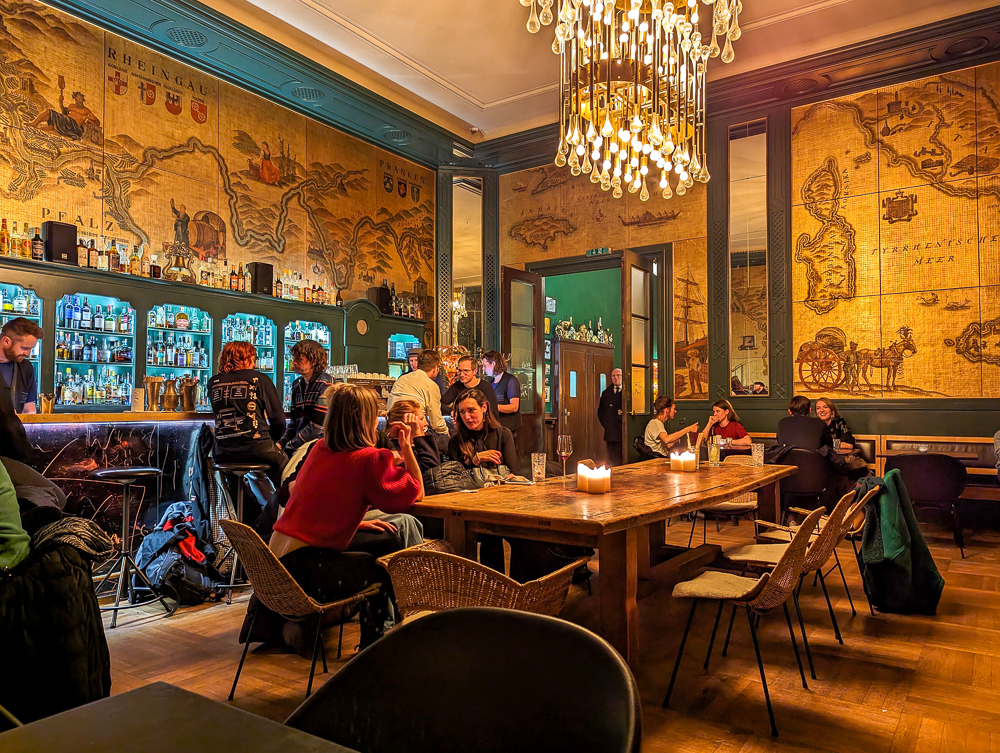
The Haus der Kunst is still an art museum today and has retained much of its original design (and some regrettable features under its portico). Head inside to the Golden Bar to see some unique Nazi-era murals too.
12. Munich Customs Office
Built as the Regional Finance Office from 1938-1942, this massive building complex occupies nearly an entire city block. The only thing distinguishing this from all the other Nazi structures is the pinkish-orange color. You can still see two of the original reichsadlers above the entrances.
13. Air raid shelters
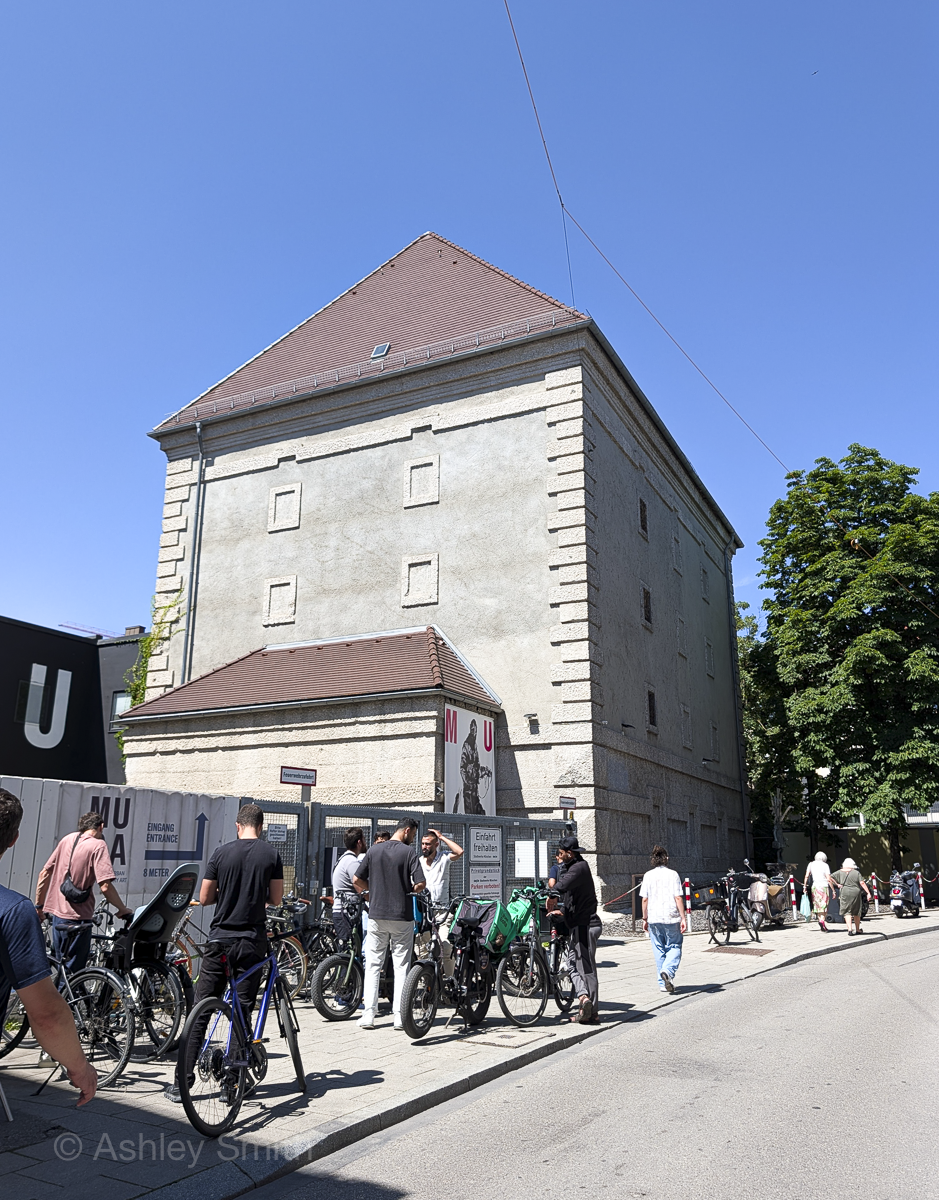
Hiding in plain sight are a handful of Nazi-era air raid shelters that are now used for other purposes like art galleries. The walls of these structures are more than 4-feet thick (with ceilings 6-feet thick) which explains a lot about how they survived the war.
Where to see Nazi architecture in Nuremberg
As the chosen location for their many massive propaganda rallies, Nuremberg also still has some surviving Nazi architecture you can see, ruined or otherwise. For more information on these and other interesting WWII sites in Nuremberg, click that link.
14. Kongresshalle
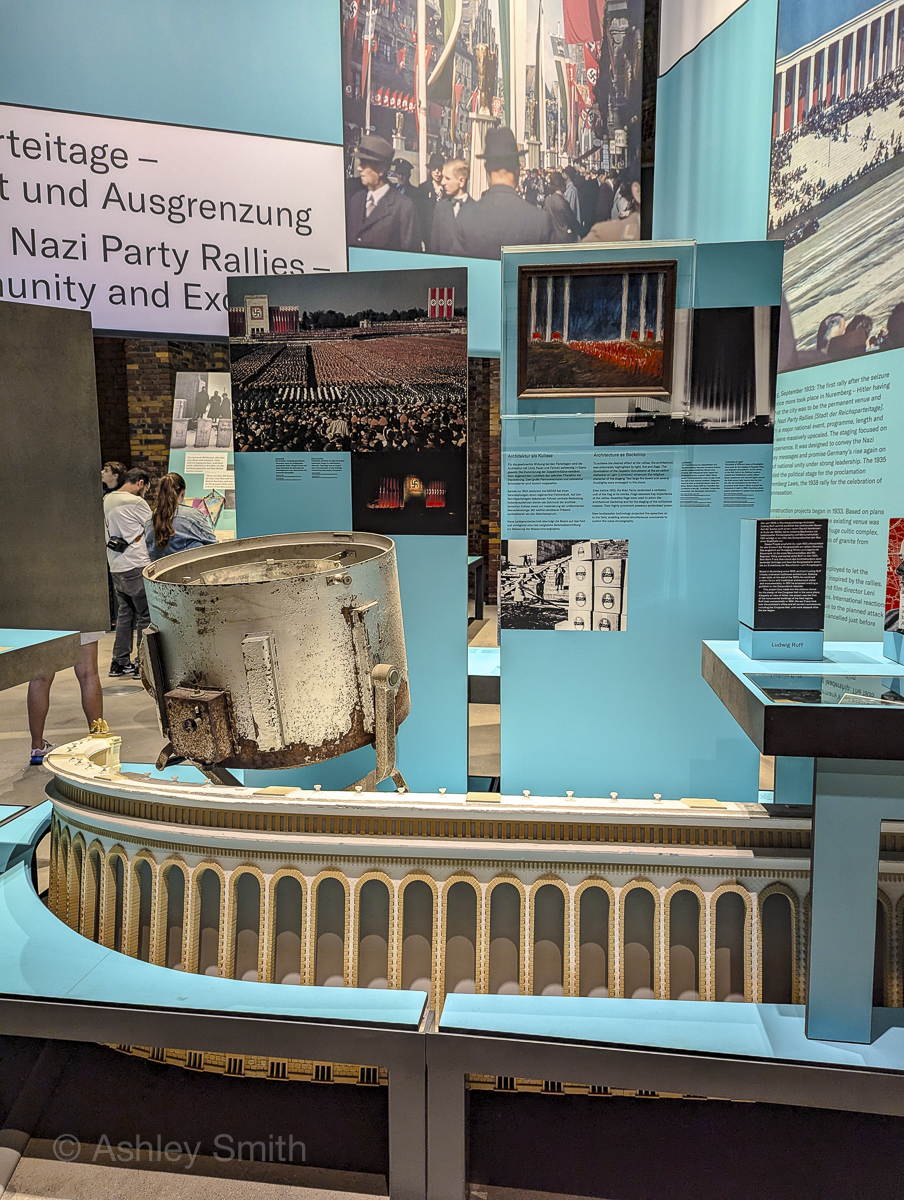
Over at the sprawling area known as the Nazi Party Rally Grounds, look for the giant Colosseum-esque structure behind the lake. This is the Kongresshalle, originally intended as the Grounds’ “centerpiece.” It was never usably completed and has sat mostly abandoned ever since, though a new historical exhibition is currently being planned for the space.
You currently can’t go into the Kongresshalle, but you can visit the new Documentation Center museum which is attached. However, while construction on the Kongresshalle is ongoing, they have provided a small viewing platform from which to see the structure from the inside.

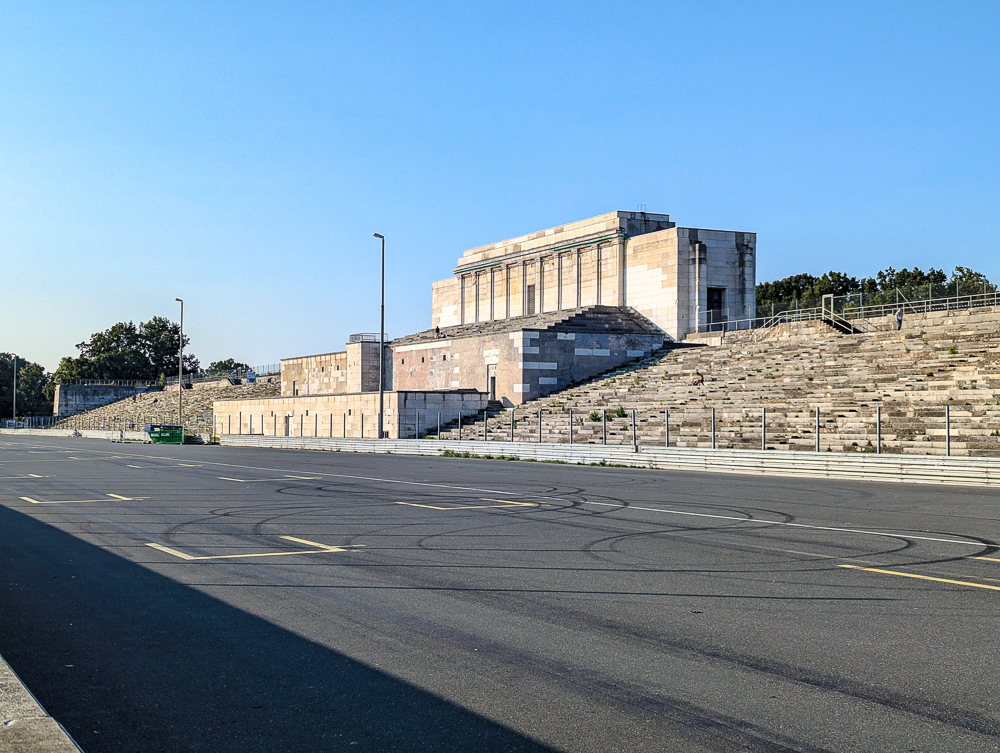
15. Zeppelinfeld / Grandstand
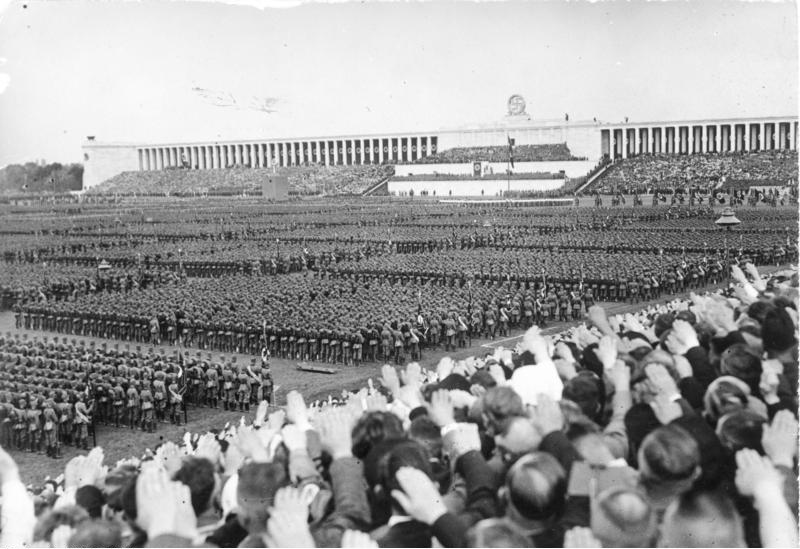
On the other side of the lake from the Kongresshalle you can visit the former Nazi Grandstand at the Zeppelinfeld. It was from a platform up here that Hitler would preach his fascist rhetoric to tens of thousands of followers.
At the time, this grand structure was meant to exude massive power, strength, and influence and serve as a formidable backdrop to these rallies. It also served as the setting of filmmaker Leni Reifenstahl’s infamous Nazi propaganda film Triumph of the Will. (But my favorite scene is the one where US troops blow it up at the end of the war.)
16. Nazi Burger King
On the other side of the railyard behind the Zeppelinfeld is a weird and rare site—an original Nazi-built structure that’s now a Burger King. Constructed from 1937-1939, the building originally served as a power station. Today, it’s the home of the Whopper. But what’s particularly interesting is that you can still see the outline of the Nazi eagle on its eastern façade.
Other places to see Nazi architecture in Germany
Besides these three major Nazi hubs, there are several other places around Germany where you can find examples of Nazi architecture. Here are a few to look out for:
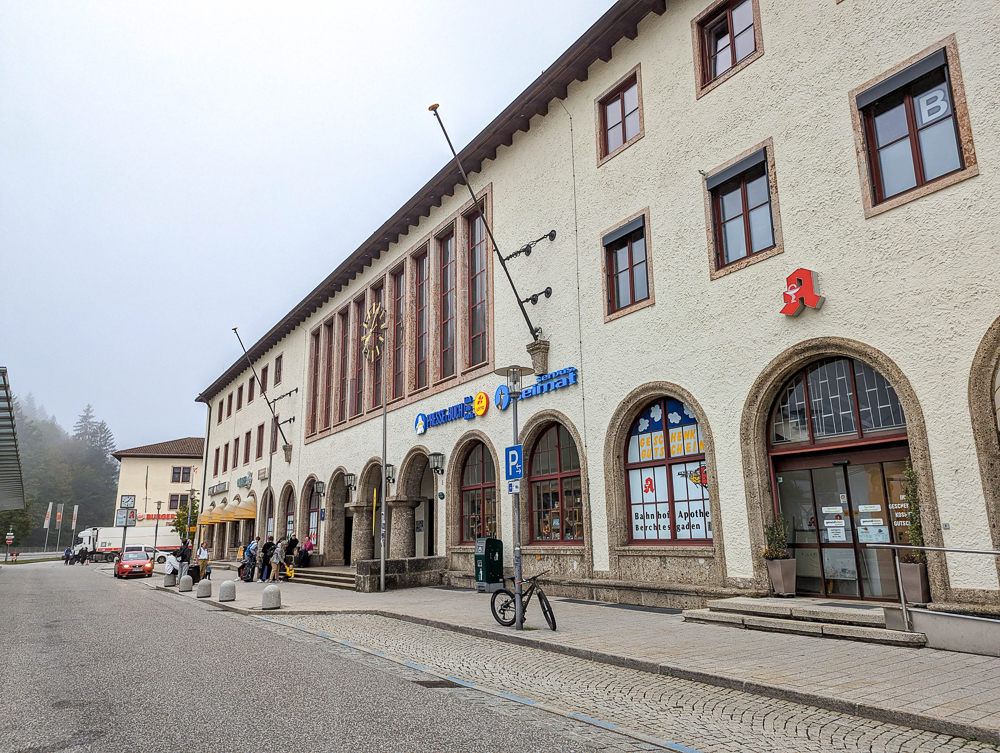
17. Berchtesgaden Hauptbahnhof
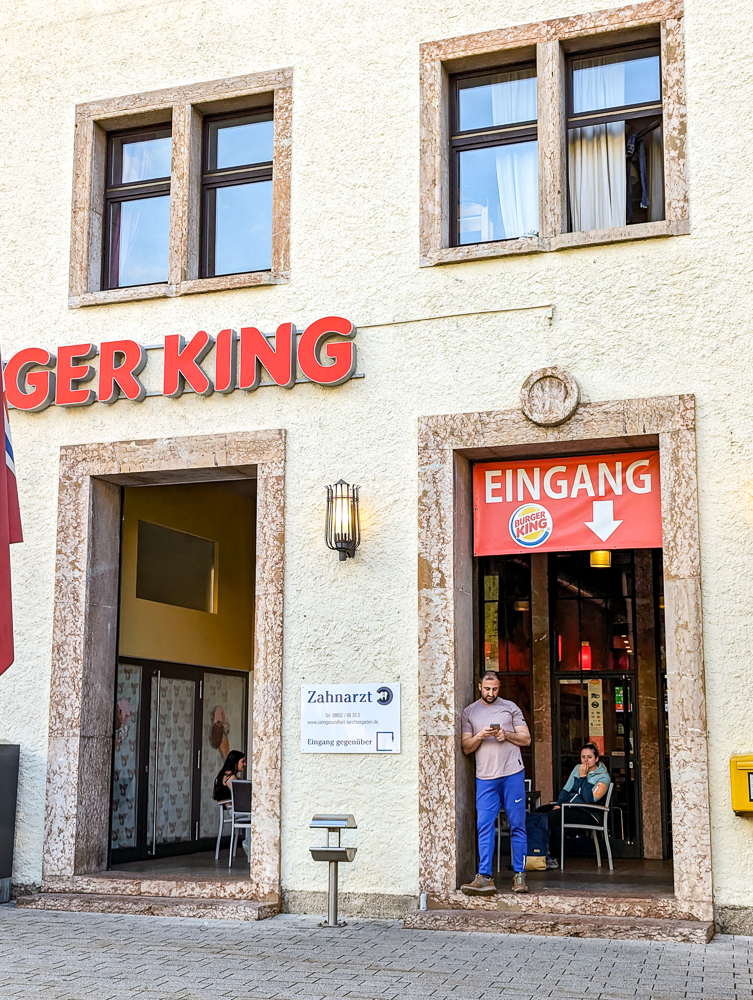
And speaking of Nazi structures that are now Burger Kings, I bring you the Berchtesgaden main train station. Desiring a train station more befitting of a fascist dictator, Hitler ordered the existing train station be replaced. The station you visit today was reconstructed according to Nazi aesthetics and reopened in 1940.
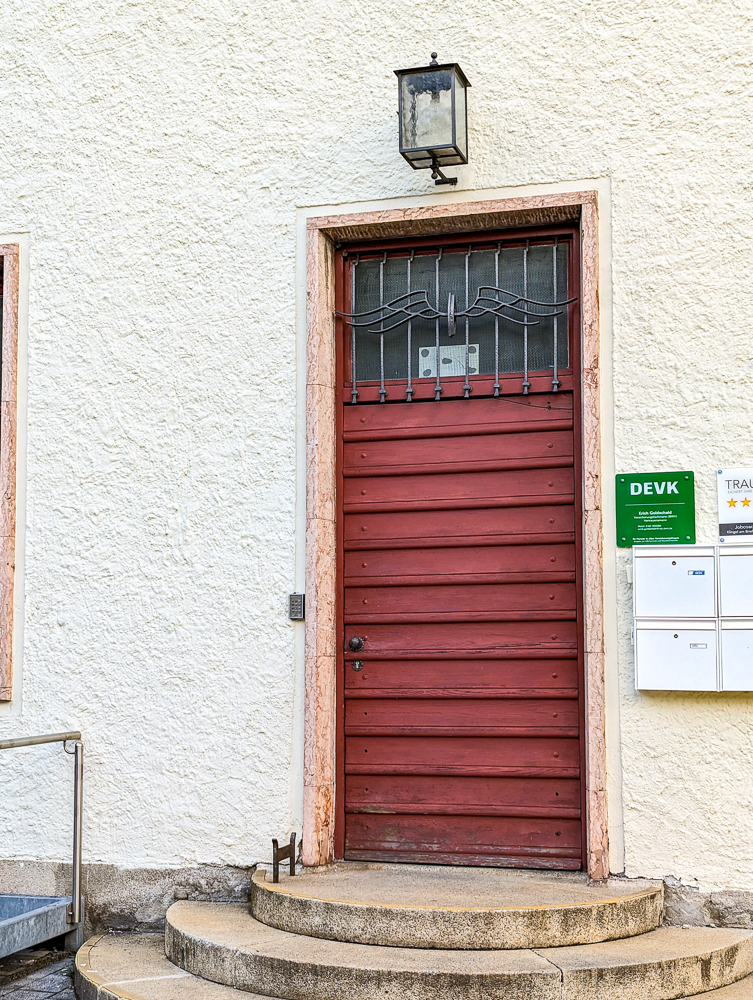
Its history is obvious when you look at it. The flag poles are the original ones that used to hold the swastika flags, and you can see where some of the door frames used to hold swastika and eagle insignia. Specifically, the one leading into the Burger King. (For more on this and the other interesting WWII sites in Berchtesgaden, click that link.)
18. Eagle’s Nest – Berchtesgaden
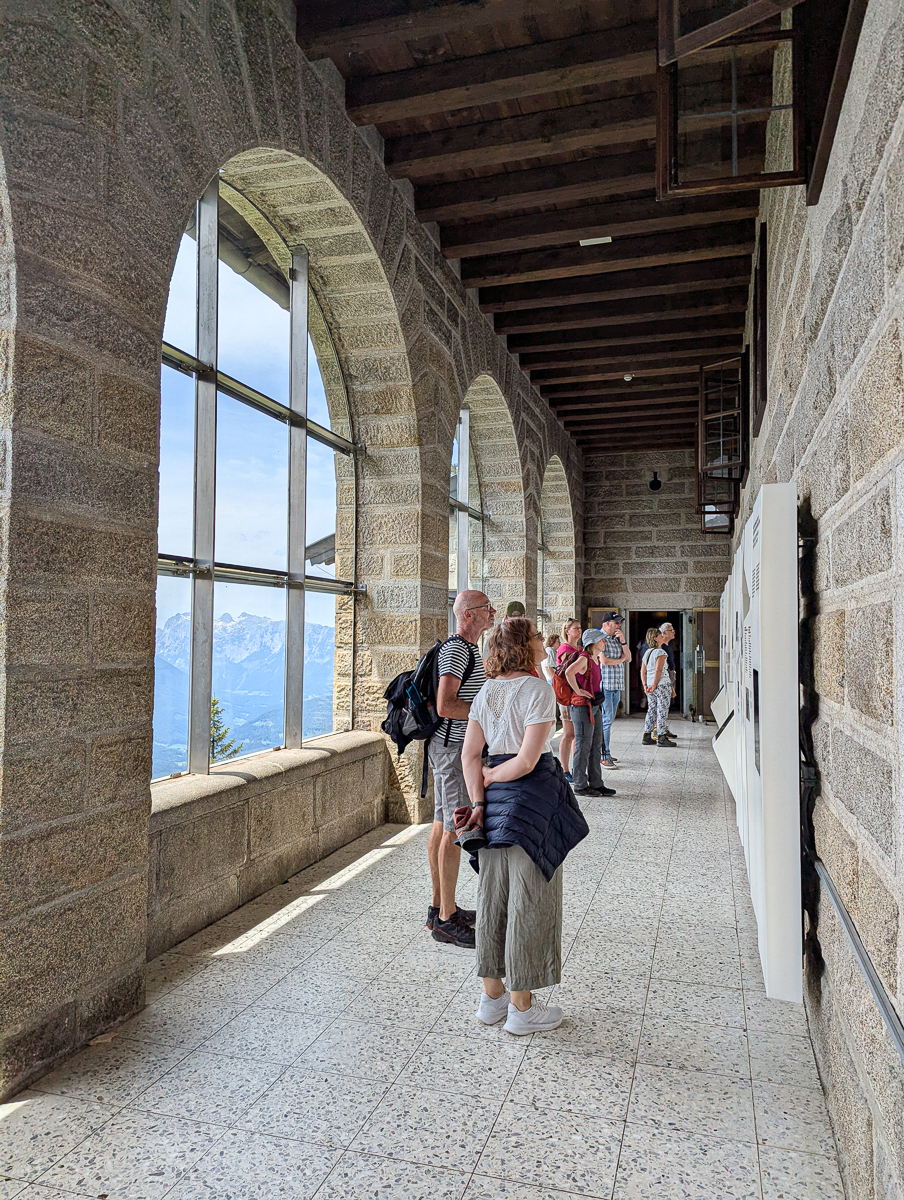
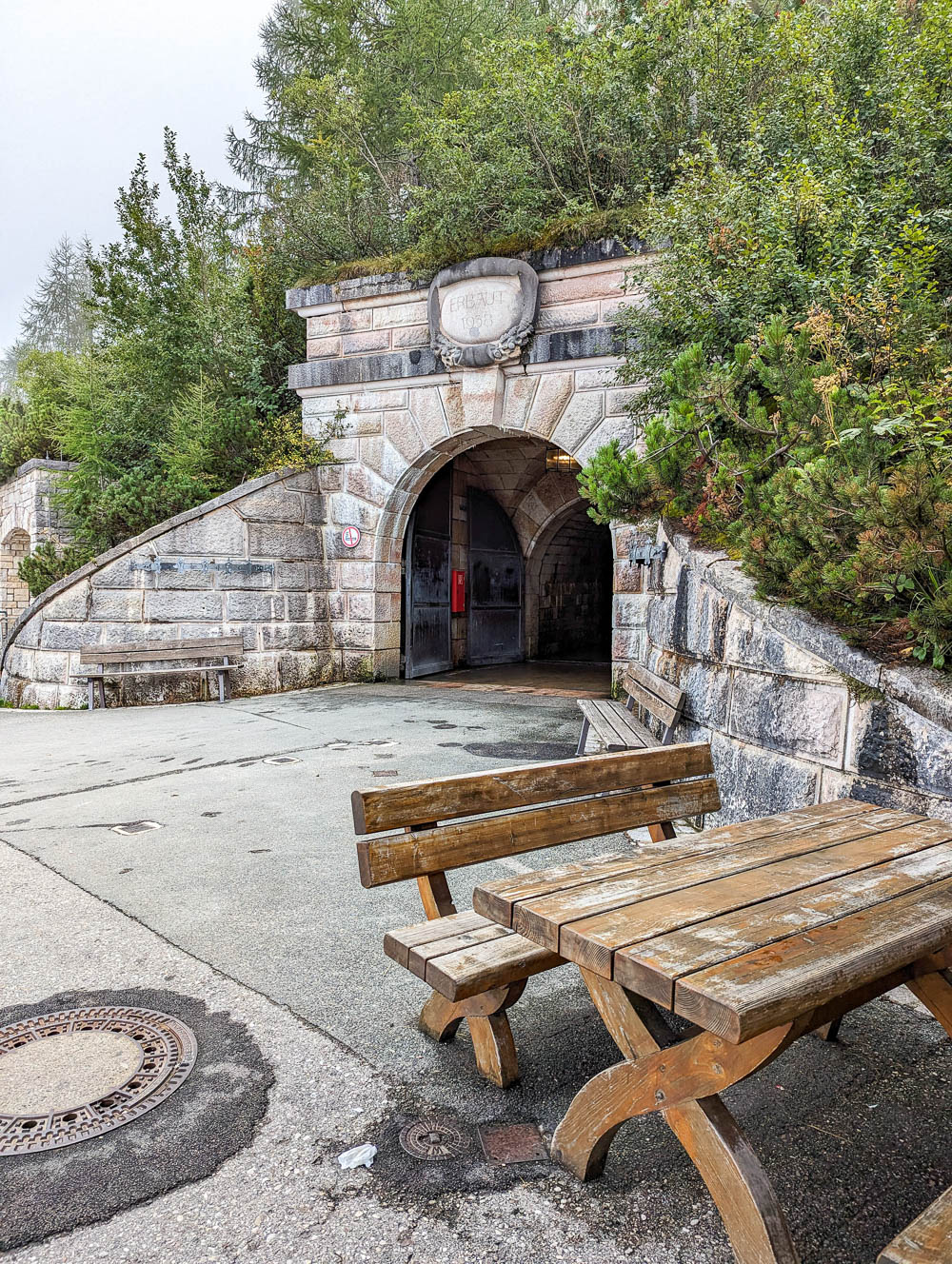
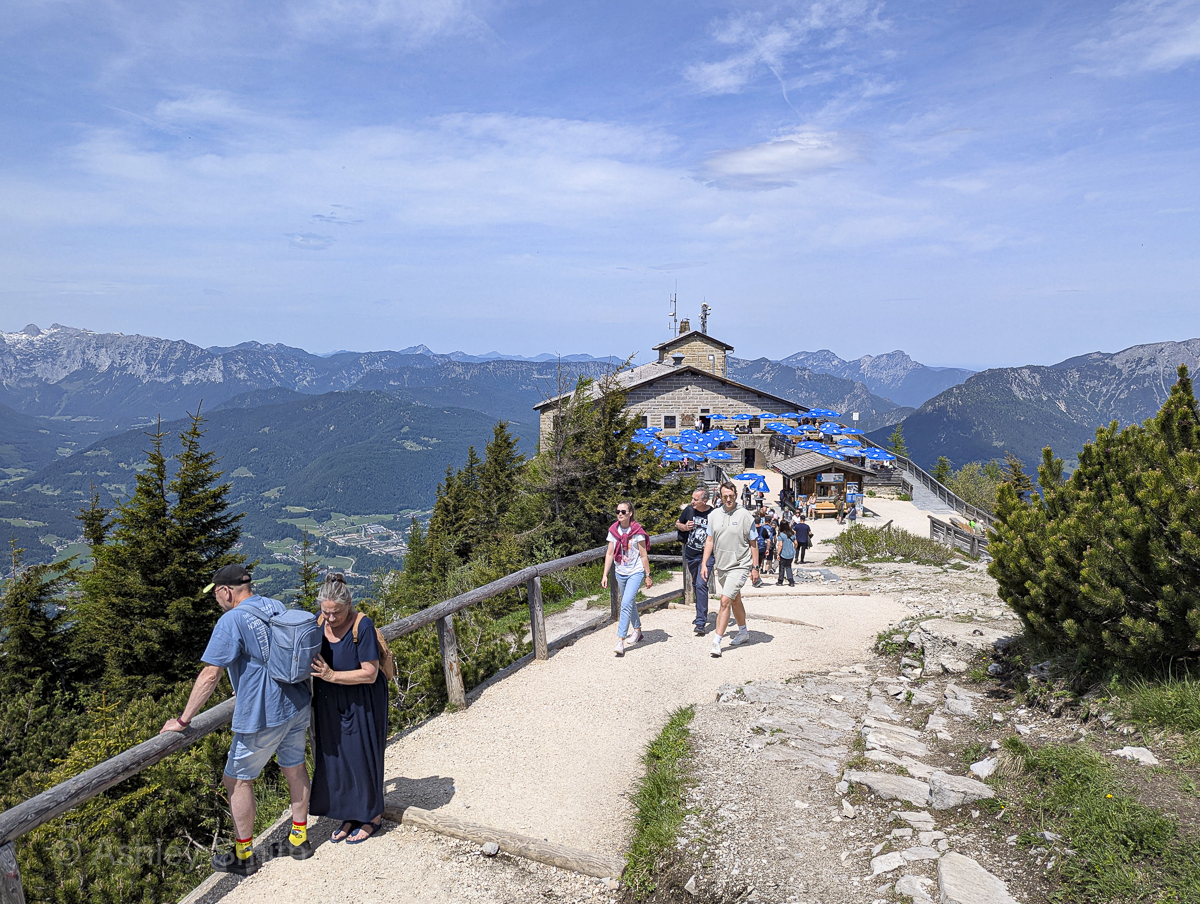
High above the train station in Berchtesgaden is the famous Eagle’s Nest—Hitler’s mountaintop retreat that’s now a wildly popular tourist attraction. (Chances are you’ll start your trip to the top at the Berchtesgaden Hbf.)
In terms of Nazi architecture, the Kehlsteinhaus is a much smaller and less imposing structure, but still about as soulless as you can get. It was built between 1938-1939 as a “retreat” of sorts for important meetings and social events and basically just showing off how much money and power the Nazis had. For (much) more information about visiting the Eagle’s Nest, click that link.
19. Thingstätte – Heidelberg
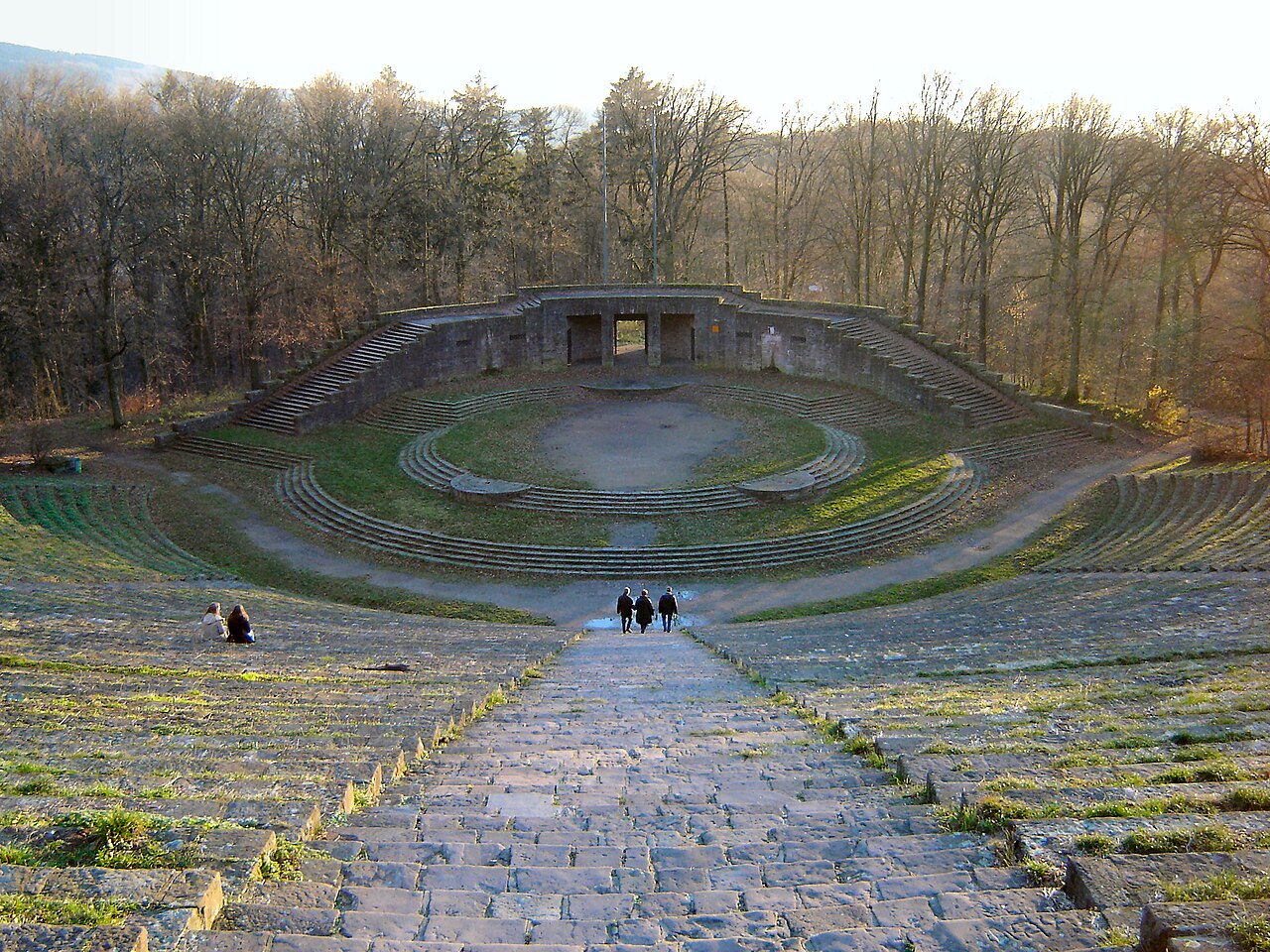
The Thingstätte is an outdoor amphitheater/festival space built between 1934-1935 deep in the woods just north of Heidelberg. It played a major role in the Nazis’ “Thing” movement—a propaganda movement championed by none other than Joseph Goebbels.
The ancient Germanic term Thing refers to a kind of popular assembly. This term has long been used throughout history, but like they always do, the Nazis hijacked it for their own propaganda use. Heidelberg’s Thingstätte was used for propaganda plays, Reich festivals, and just generally as a “sacred” site for the practice of Nazi “faith.” Over the decades it has since been used for outdoor concerts and festivals but otherwise sits empty.
20. Hamburg Bunker
Originally built as a command bunker and flak tower during the war, the enormous Hamburg Bunker is now a hotel with retail and entertainment space and restaurants. Though the interior of this repurposed building is now completely modern, its block-like exterior design can’t hide its Nazi past. (You can see modern photos of it here.)
21. Prora Resort – Rügen Island
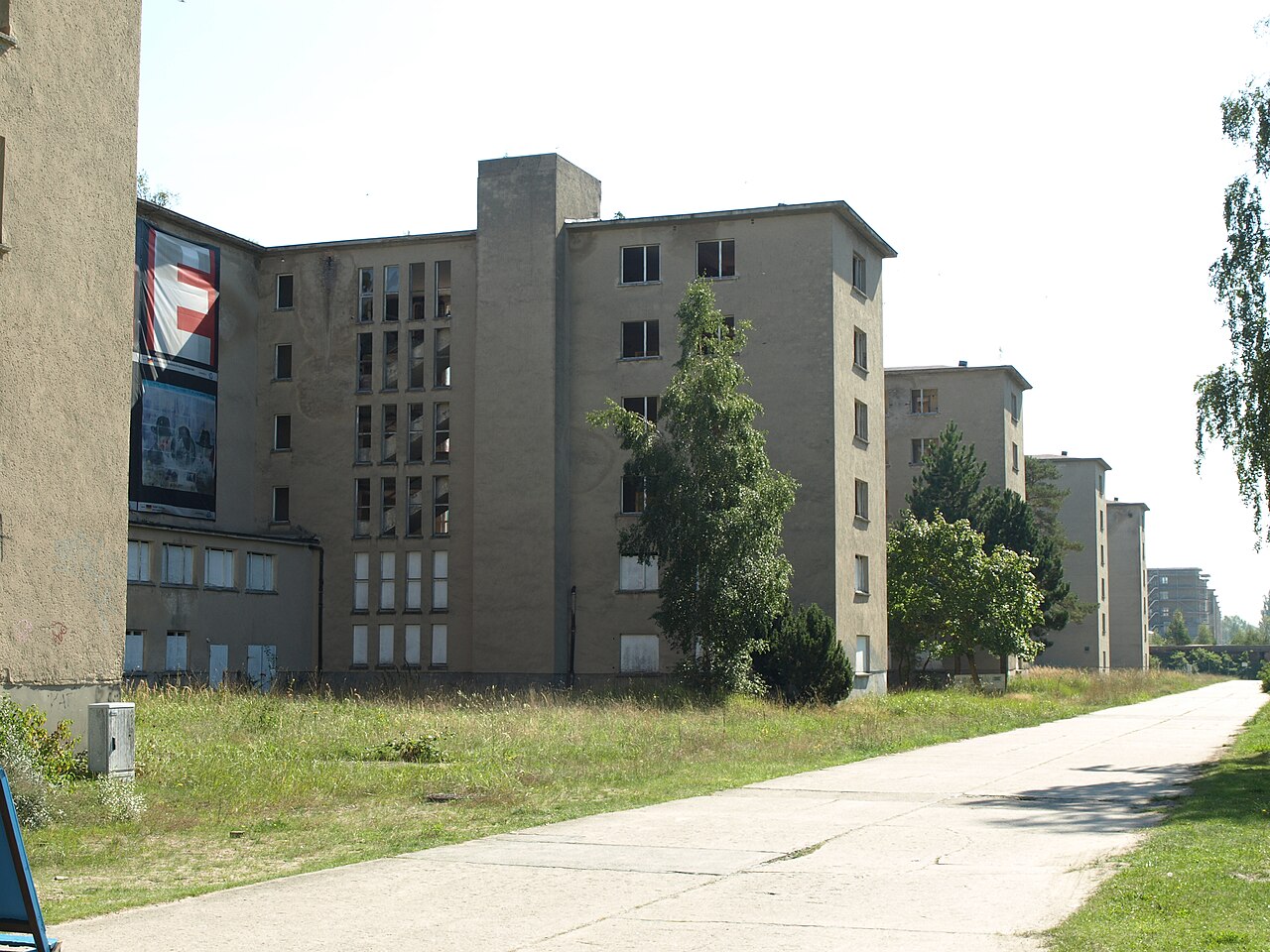
In the far northeastern corner of Germany is the island of Rügen. And on that island is a Nazi megastructure intended as a vacation resort for the “Strength Through Joy” program. It consists of eight identical prison-like buildings along the waterfront of the Baltic Sea. Today, it’s used as private apartments, vacation rental properties, and a youth hostel.
With trade unions banned in Nazi Germany, the NSDAP initiated the “Strength Through Joy” program. This Nazi propaganda organization aimed to inspire German workers (to put the benefit of the Nazi nation above themselves) and rewarded them for their dedication. By participating in this program, they could earn access to leisure activities, vacations, cruises, and other special privileges. And if you think this actually sounds like a great idea, well then I’ve got a bridge to sell you.
22. Ordensburg Vogelsang
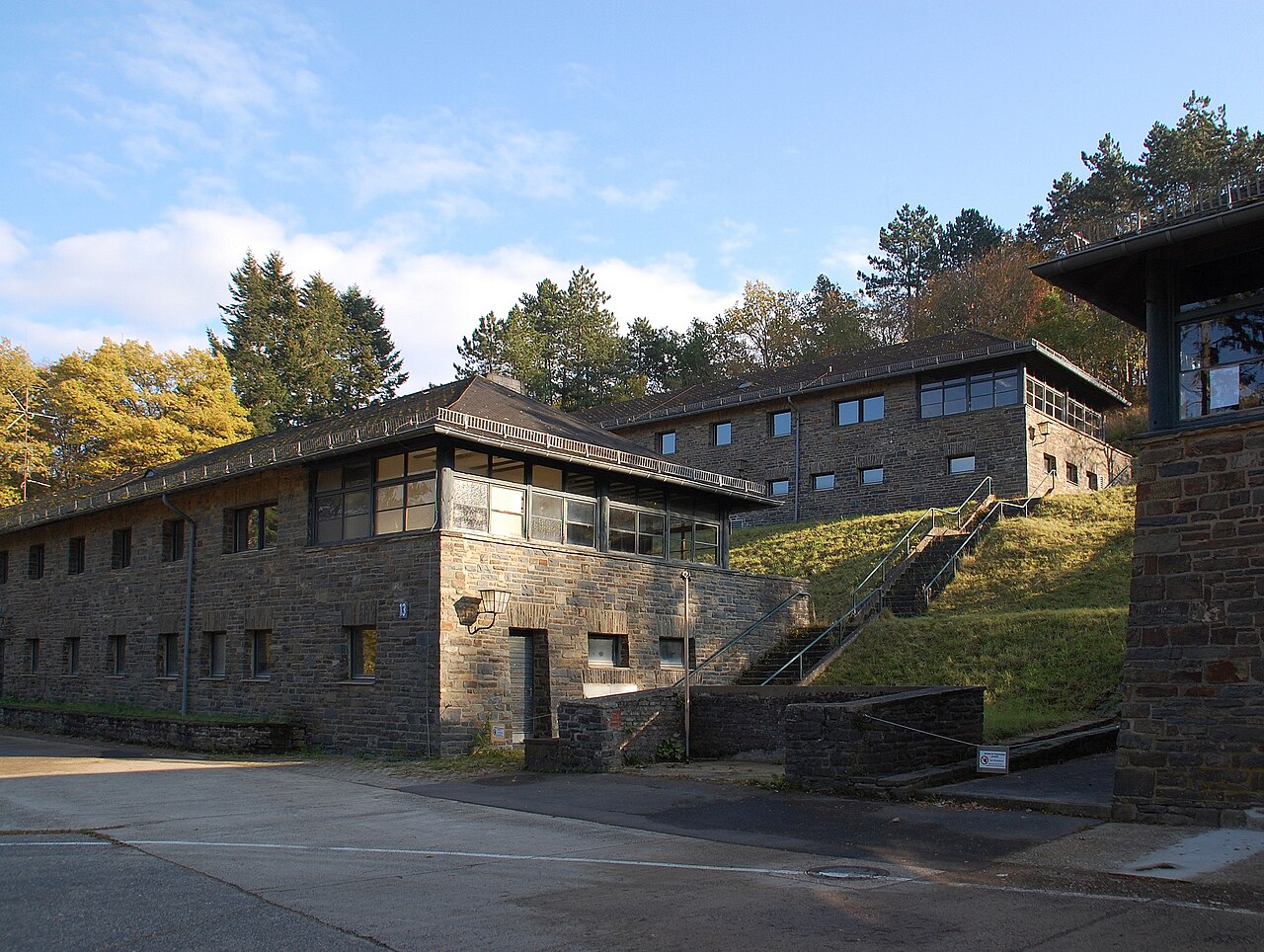
And on the far western border of Germany lies the Ordensburg Vogelsand—a former Nazi educational “camp” complex. It was to contain teaching areas, a huge library (the “House of Knowledge”), sports facilities, sleeping quarters, and more. The whole thing had a real Hitler Youth boot camp quality to it.
Construction on the complex was halted at the outbreak of war and what was built was damaged in bombings, but much of it remains intact today. After the war, it was used as a military training facility but was eventually turned over to civilian use. Today, it houses a visitor center and exhibition as well as the administrative office for the national park.
Recommended reading & watching
If you’re interested in learning more about Nazi architecture, here are some great books and documentaries to check out:
Books about Nazi architecture
Documentaries about Nazi architecture
More info for your trip to Germany
- Hotels: Find great places to stay on Booking.com (my go-to). Expedia and Hotels.com are worth checking too. VRBO is best for apartment rentals.
- Rental cars: Check out the best rental car deals here.
- Local tours & activities: Check out all the great local options from Viator and Get Your Guide here.
- Don’t forget a Germany guidebook and this must-have Germany customs and culture guide!
- Want more? See all my Germany posts here.
Like this post? Have questions about visiting any of the Nazi architecture sites? Let me know in the comments below. Thanks for reading!

Save this info, pin this image: