
I started writing this post on WWII sites in Malta as a general interpretation that would follow my standard formula for such posts. But after getting into the writing bit, I’ve realized there are just way too many to discuss in one single post. Malta may be way under your radar as far as World War II destinations go, but I can assure you that what this tiny island nation lacks in size, it more than makes up for in historical sites.
As a remedy, I’ve decided to break this post up into more easily digestible chunks for you. While this post does cover the many Malta WWII sites you can visit, I’m also working on posts for each of these distinct topics so I can go into more detail for each of them. (I’ll update this post with these links as I publish them, so make sure to subscribe below so you don’t miss them!) In the meantime, enjoy this breakdown of some of the interesting WWII sites you can visit in Malta.
Special shoutout to the Malta Tourism Authority for hosting me and guiding me around these fascinating islands so I could bring all their WWII history to you! As always, all opinions, content, and photos are mine.
Malta during World War II
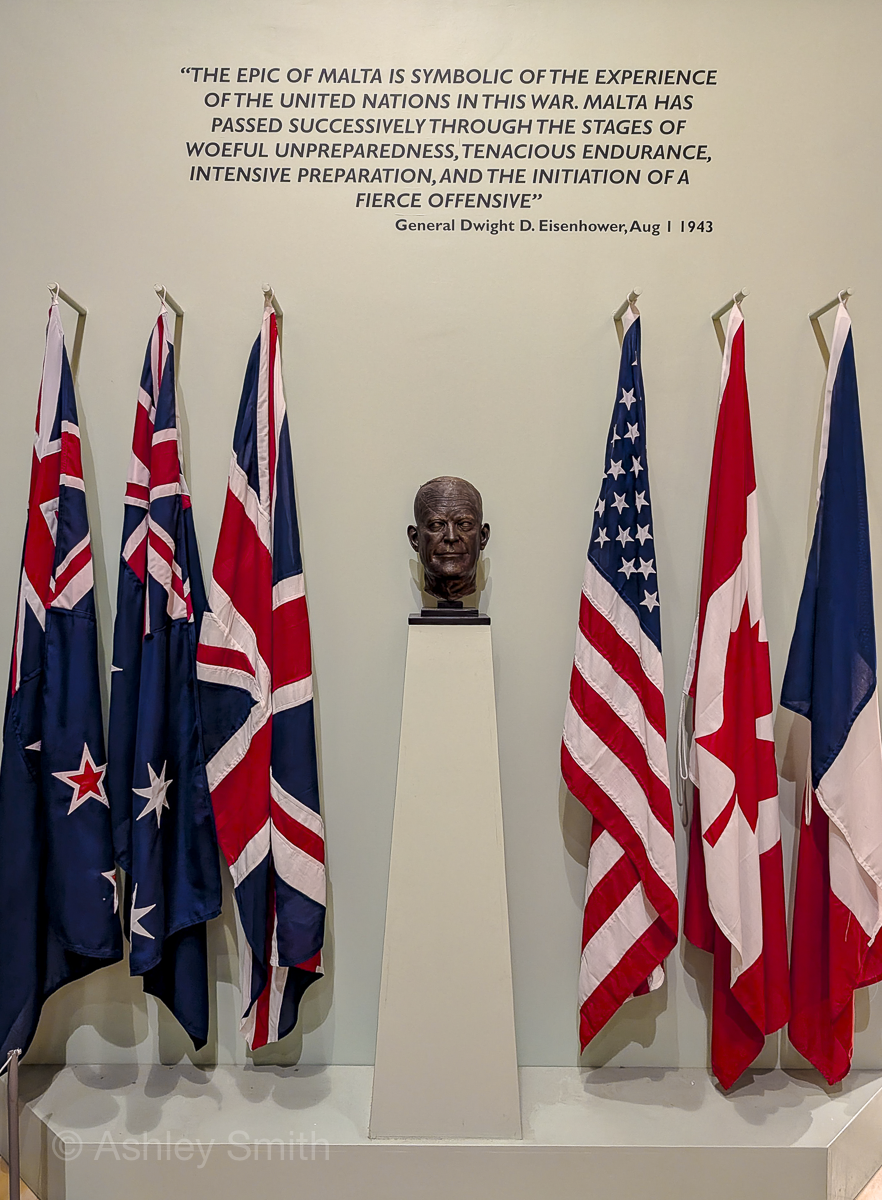
Small though it is, Malta occupies an invaluable location in the Mediterranean—between Europe and Africa to the north and south, and Gibraltar and Alexandria to the west and east. As a result, Malta (a British colony at the time) played a strategically critical role during World War II. This role is best summed up by its distinction as an “unsinkable aircraft carrier.”
From Malta, both the British Royal Air Force and the Royal Navy could launch raids against Axis enemies in North Africa, Italy, the Mediterranean, and well beyond all three. Malta quickly grew as a headquarters for the British armed forces and remained so until 1979 (even though Malta gained its independence in 1964).
The Siege of Malta
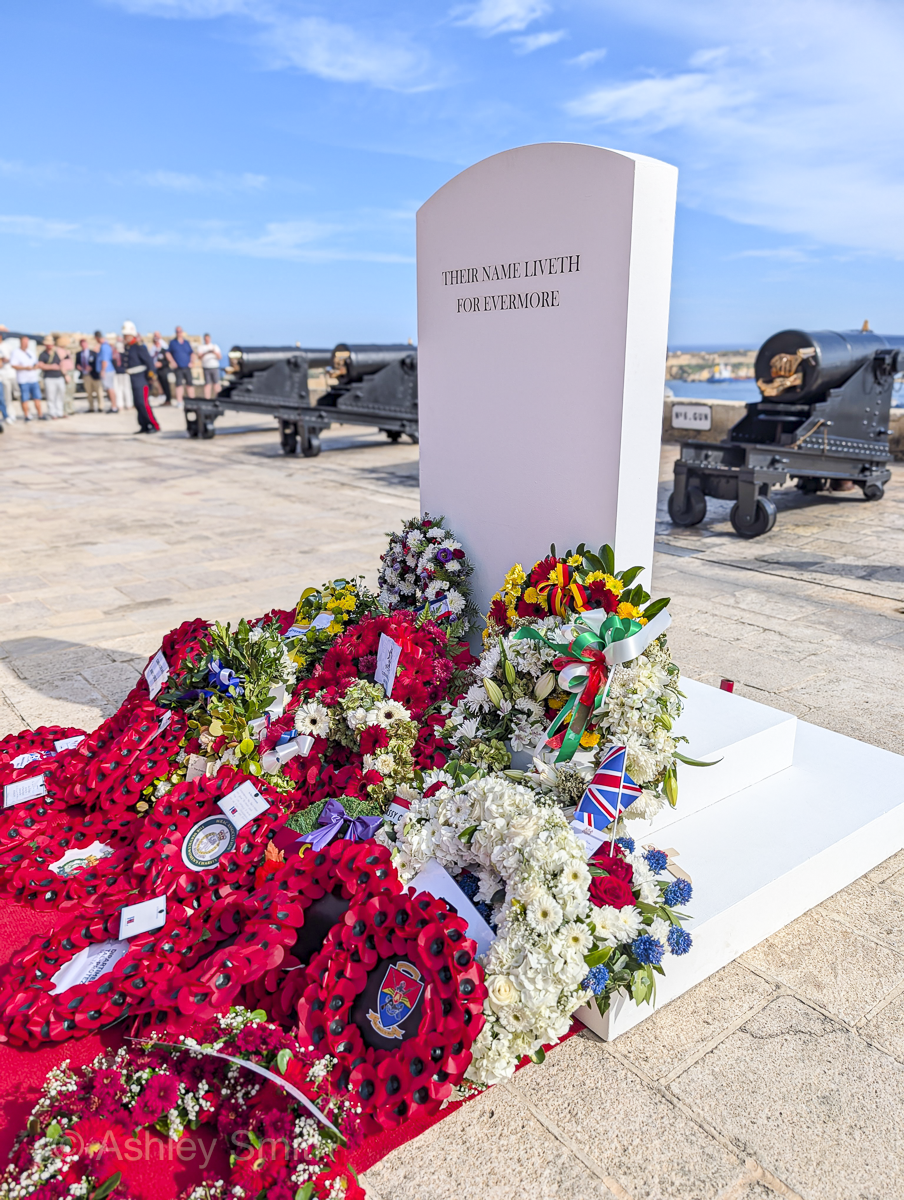
Given its critical importance, Malta became the target of relentless bombing raids by Italian and German forces from the get-go. Starting on June 11, 1940 (the very day after Germany and Italy declared war on France and Great Britain) and lasting until November 1942, these 3,300+ air raids became known as the “Siege of Malta.” (That’s around 4 bombing raids per day for more than 2 years, mind you.) As you’ll quickly learn while exploring the WWII sites here, Malta became the most bombed country of World War II. (And it’s only 122 square miles in size!)
The Axis goal was to bomb Malta (and starve everyone on the island) to a point where resistance became impossible and they could seize the strategically valuable island. They pounded Malta with more than 15,000 TONS of bombs during these two years, but the Brits held their ground. So well, in fact, that they were even able to launch offensive strikes against the Axis from Malta as well.
As the same time, the war in North Africa required as much air support from the Luftwaffe as possible, depleting Axis forces over Malta. British victories at El Alamein in Egypt, Morocco, and Algeria meant Germany and Italy no longer had access to the airfields necessary for bombing Malta.
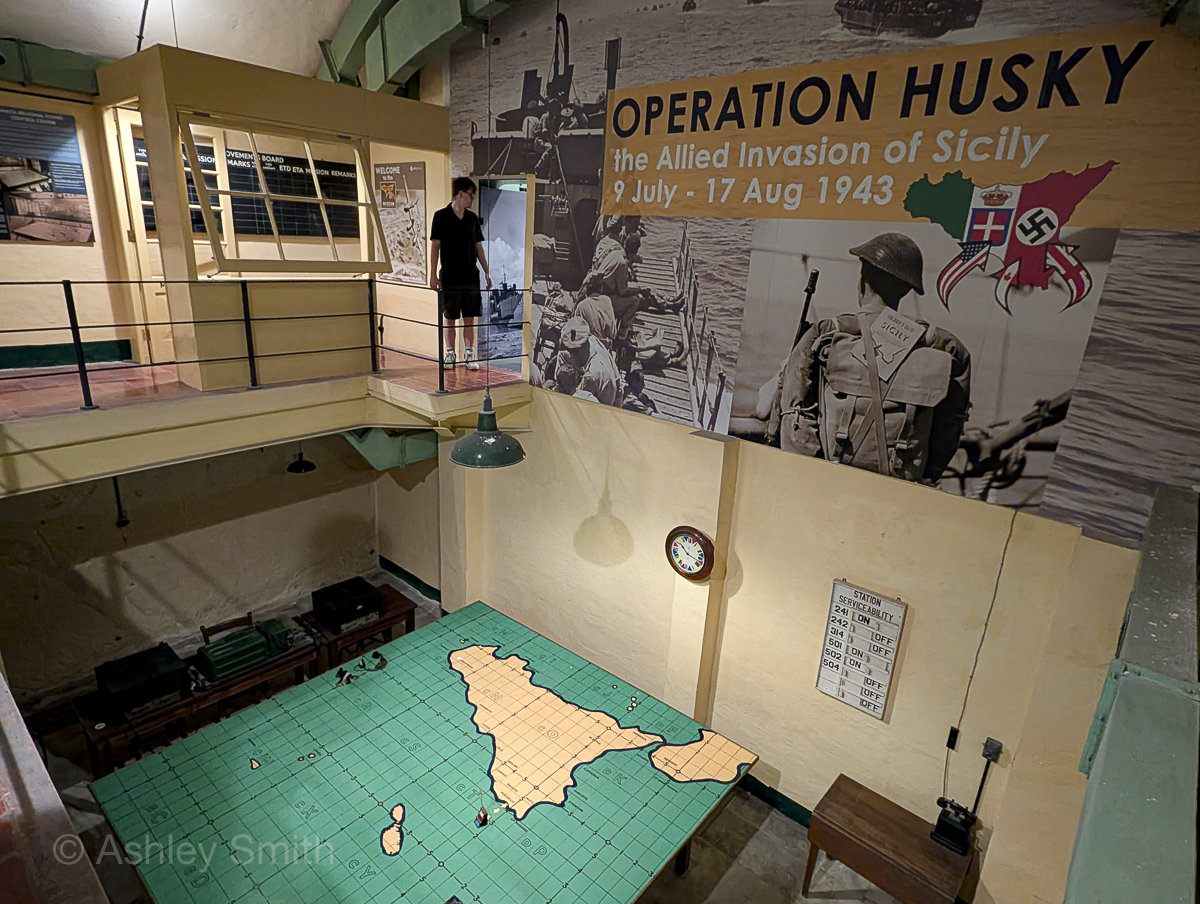
Operation Husky
Being the “unsinkable aircraft carrier” that it was, Malta also served as the base from which the Allies would launch Operation Husky (the invasion of Sicily).
As the invasion that would pave the way for the Allies to enter mainland Europe, Operation Husky was of immeasurable importance. This would be the first invasion directly into an Axis country and one that would eventually remove Italy from the equation entirely.
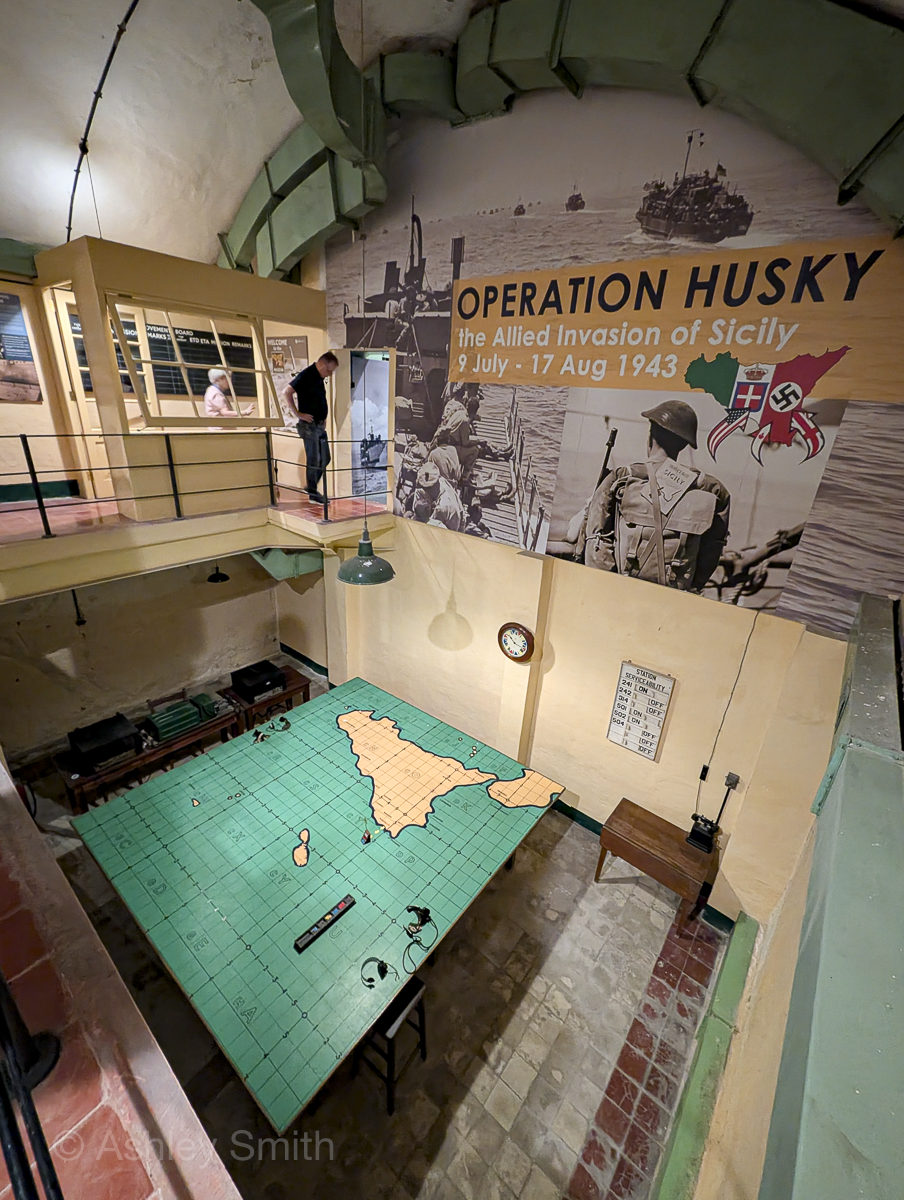
On the night of July 9/10, 1943, the Allies (led by Great Britain and the United States), launched simultaneous air and amphibious invasions of Sicily. They used a network of underground tunnels and offices in Malta (today known as the Lascaris War Rooms) as their invasion headquarters.
Not even two months later, Axis troops began to evacuate the island, just as Italy’s fascist dictator Benito Mussolini was being stripped of power and arrested. And by August 17, the Allies could claim victory in Sicily. Less than a month later, the Allies would invade mainland Italy at Salerno.
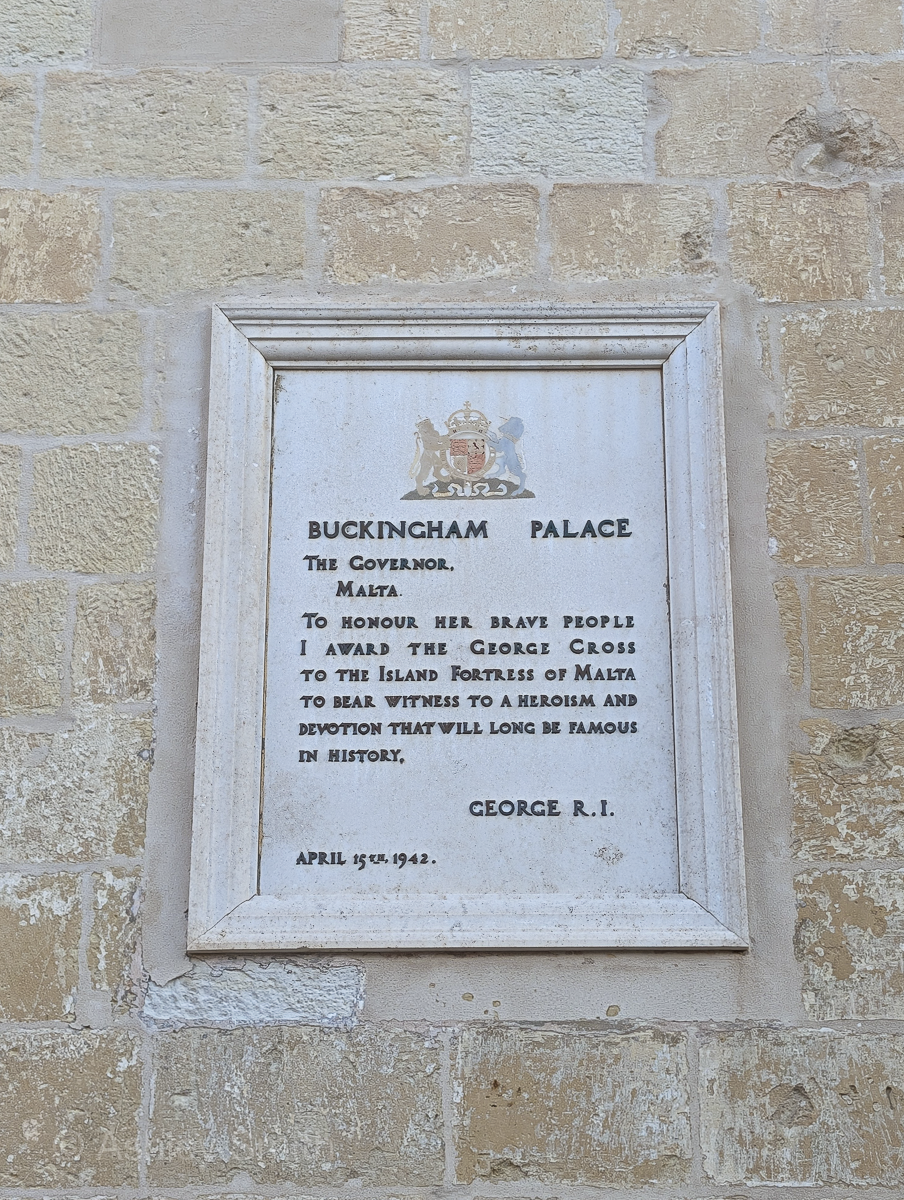
The George Cross
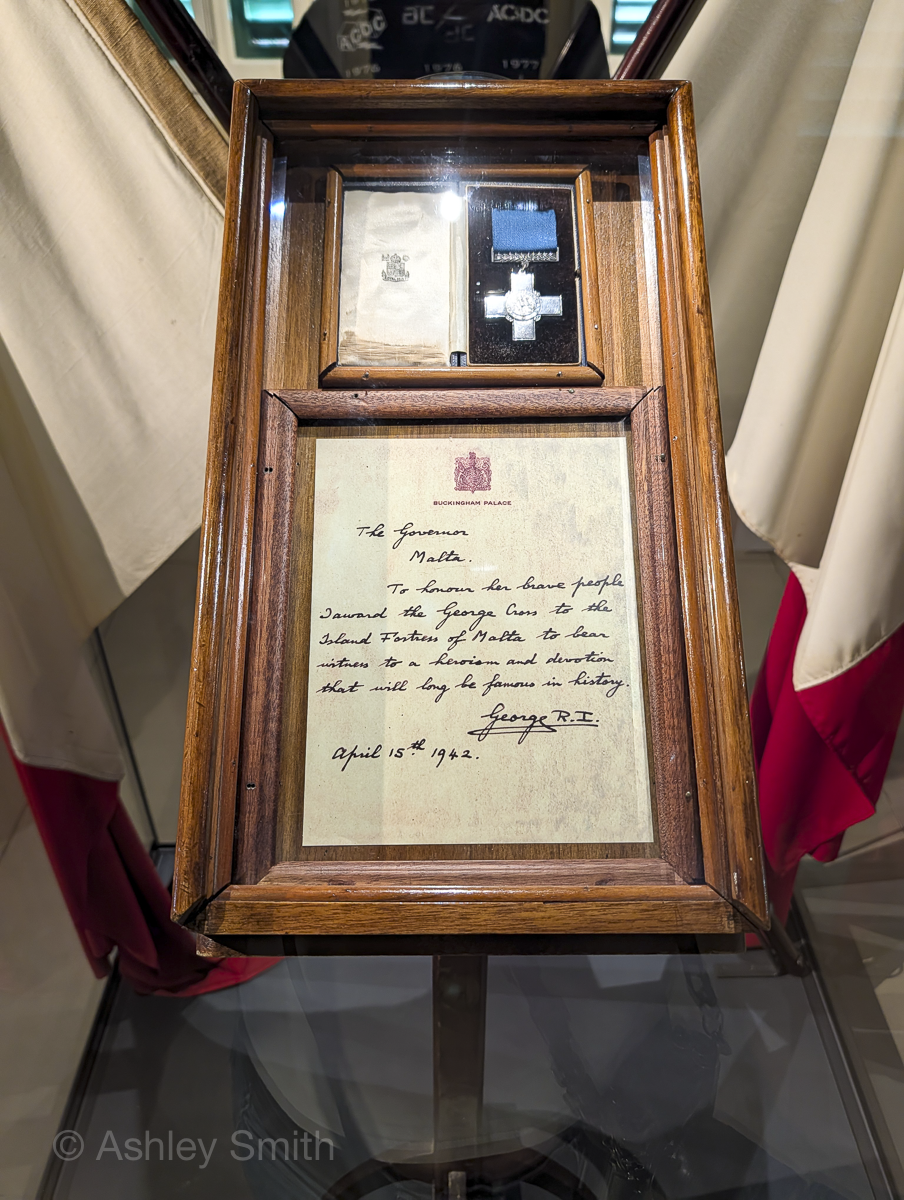
In April 1942, King George VI of Great Britain awarded the island of Malta the distinguished George Cross in recognition of the courage and resilience of the Maltese people during the Siege of Malta. The George Cross is awarded for “acts of the greatest heroism or of the most conspicuous courage in circumstances of extreme danger.” [source] (Though the George Cross is not a military recognition, getting one would be like a U.S. Army soldier receiving the Medal of Honor. In other words, it’s a big deal.)
As a British colony, Malta didn’t really have its own flag before World War II. Instead, it used a version of the Union Jack with some other insignia. Beginning in 1943, the newly-awarded George Cross was “unofficially” integrated into a new flag for Malta. When Malta became independent in 1964, it officially adopted the new flag design with the George Cross.
Fun fact: The George Cross is typically only awarded to individuals. Only three times in history has it been awarded to a “collective.” (These are the other two.)

Map of WWII sites in Malta
This map contains all the Malta WWII sites I mention in this post. To save this map: Click on the star ⭑ next to the map’s title to save in your Google Maps. To use this map: When you get here, open Google Maps on your phone, click “Saved” at the bottom, then click “Maps.”
WWII museums in Malta
Many of Malta’s WWII sites include in situ museums where the majority of your learning experience happens at the original historical location itself. With that in mind, here are a handful of excellent WW2 museums you can find at these sites in Malta.
1. National War Museum
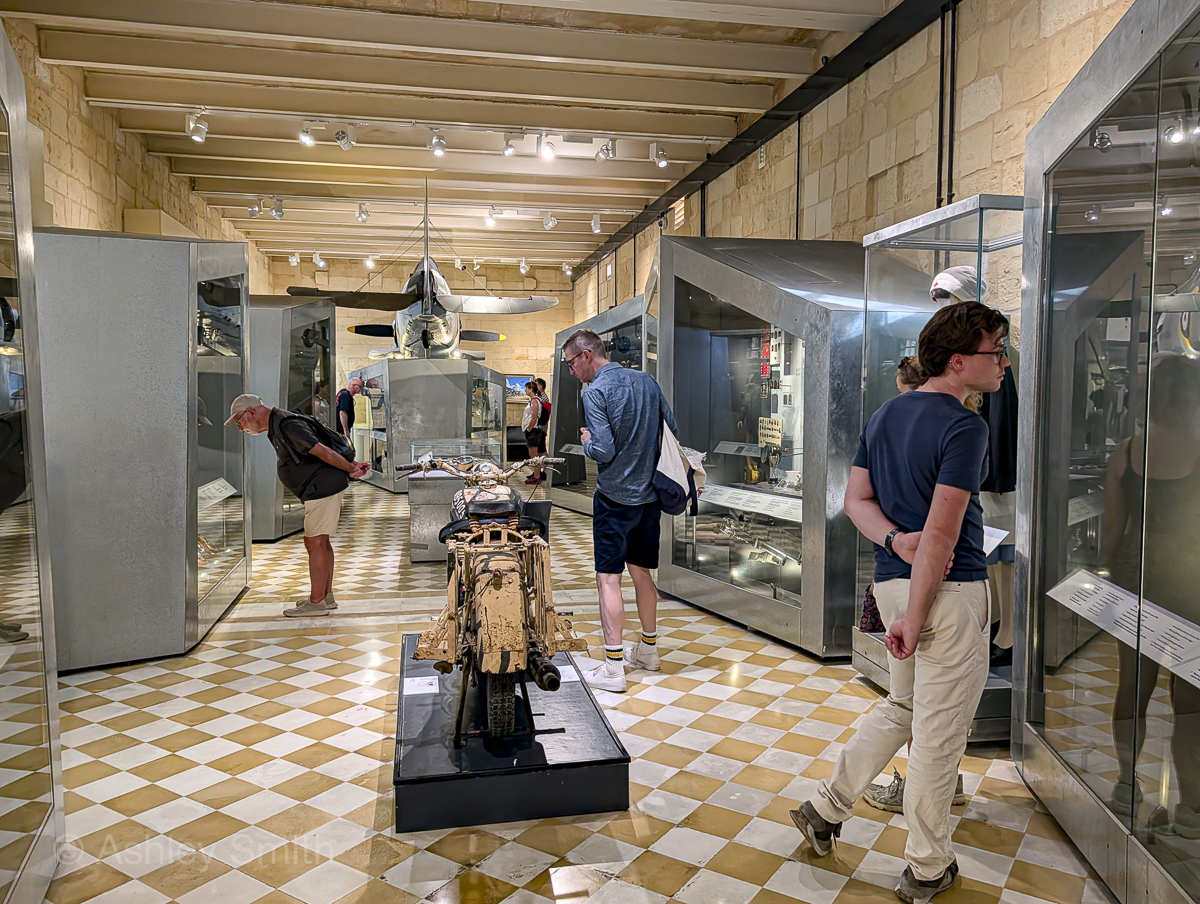
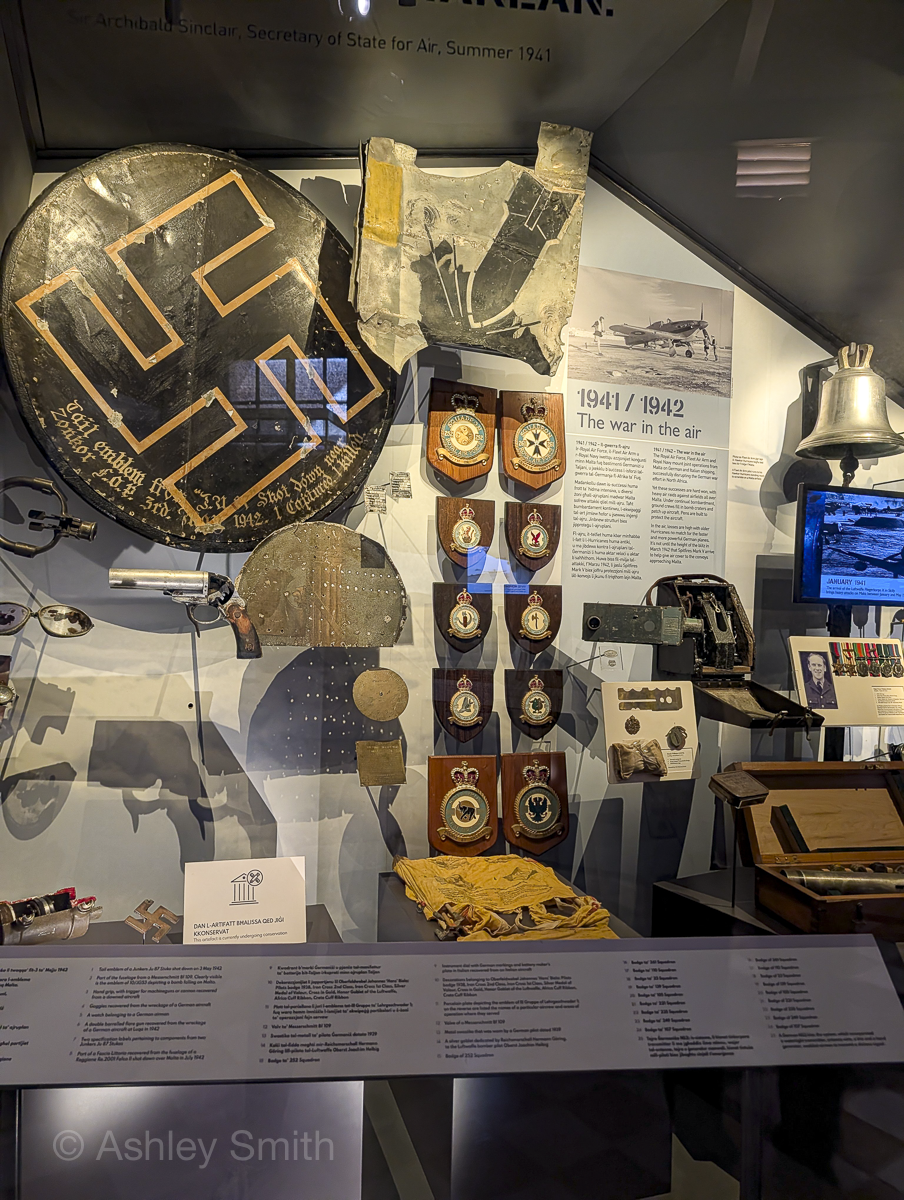
Located at Fort St. Elmo in Valletta is the National War Museum. Besides the massive fort itself (which we’ll get too in a minute), you can also explore the museum’s seven sections that cover Malta’s military history from the Bronze Age up through Malta’s accession into the European Union (2004). The largest and most comprehensive of these are the two buildings that cover World War II.
Among the many artifacts in these exhibits, the most notable items you shouldn’t miss include:
- The actual George Cross awarded to Malta by King George VI
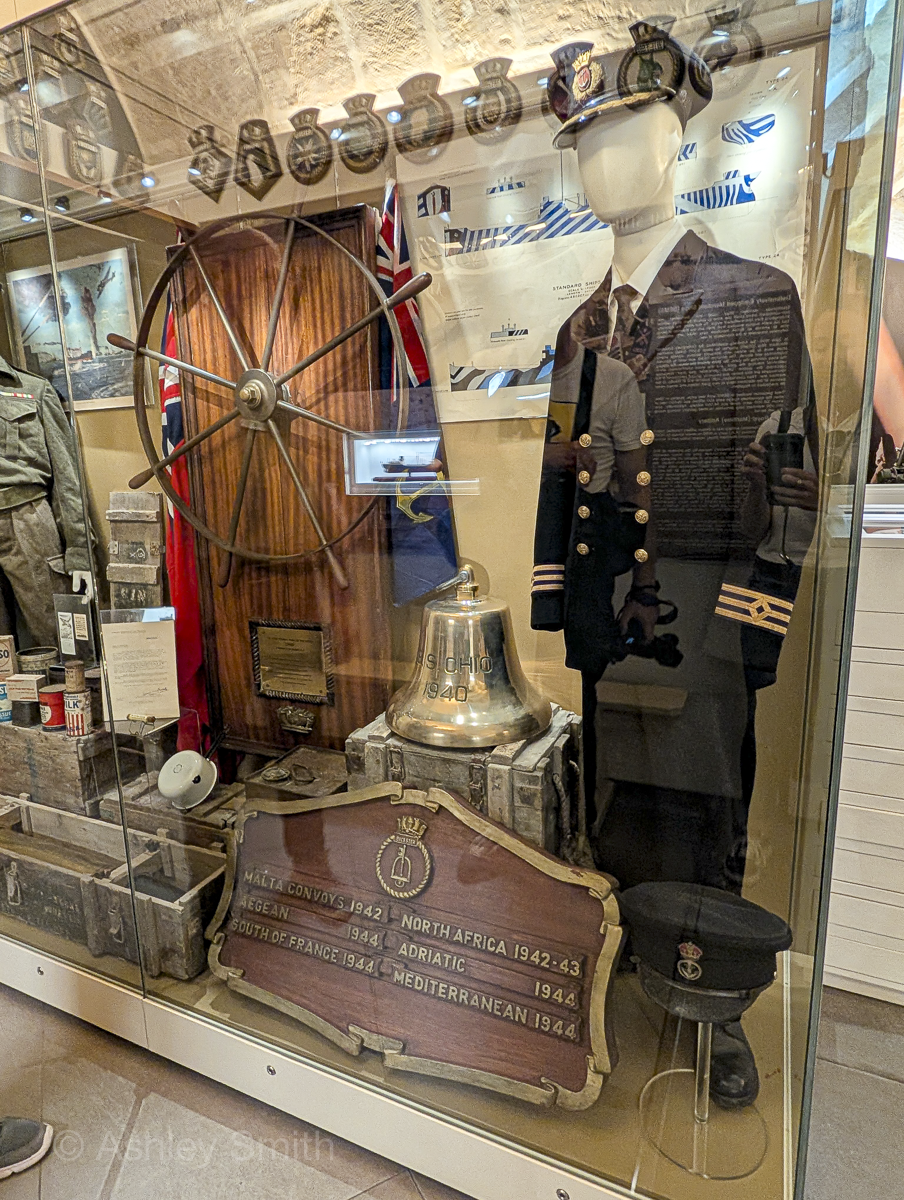
- Artifacts from the SS Ohio
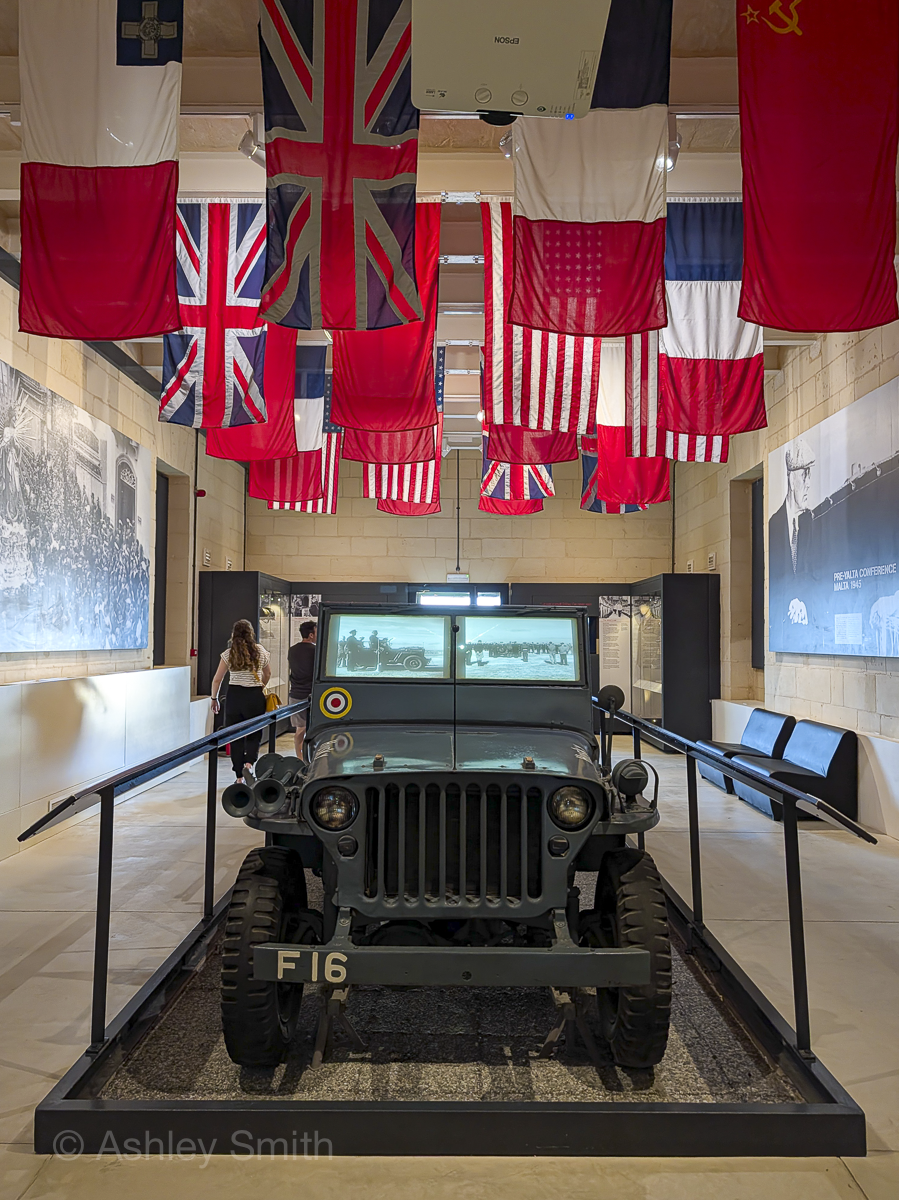
- Willys Jeep used by U.S. President Roosevelt during his visit to Malta in 1943
- The Gloster Sea Gladiator “Faith”—the only surviving WWII biplane from Malta’s fighter plane unit
2. Lascaris War Rooms
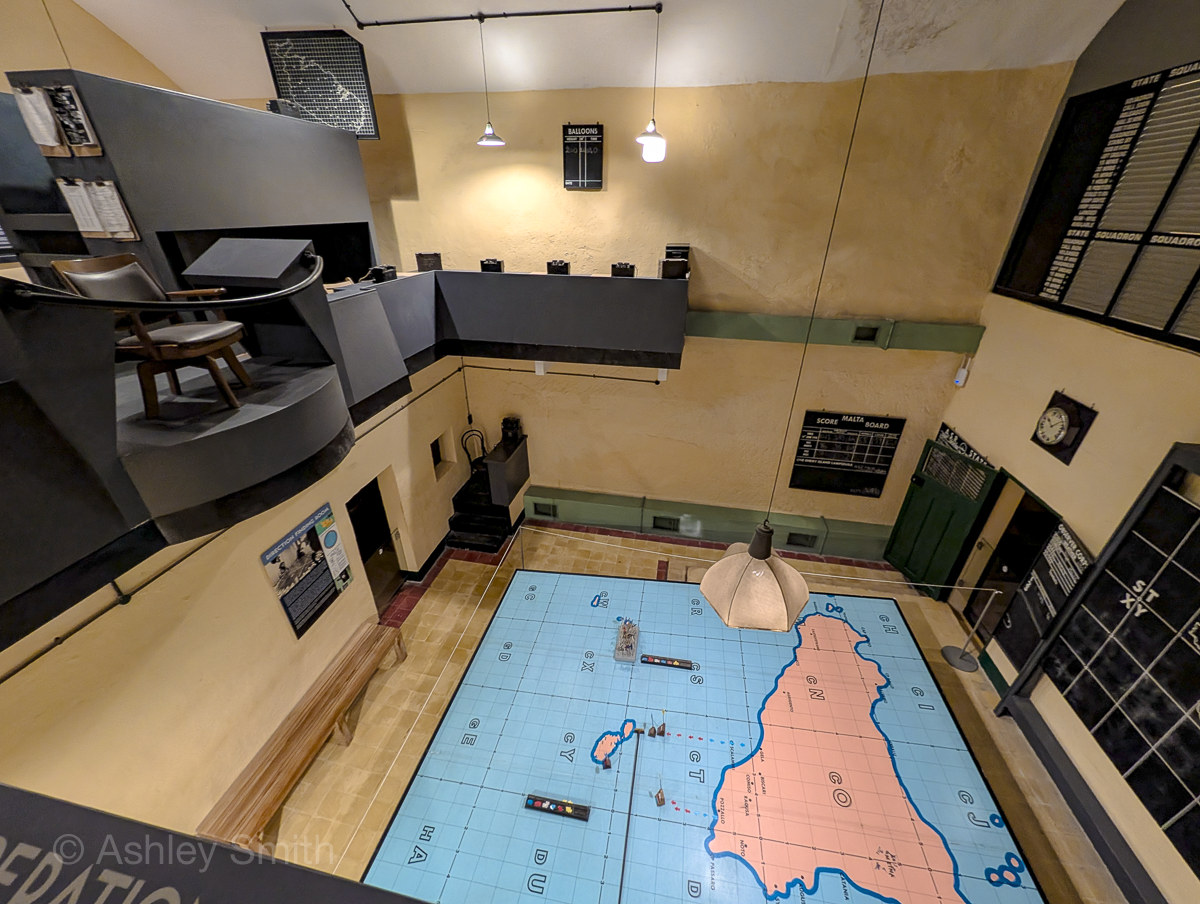
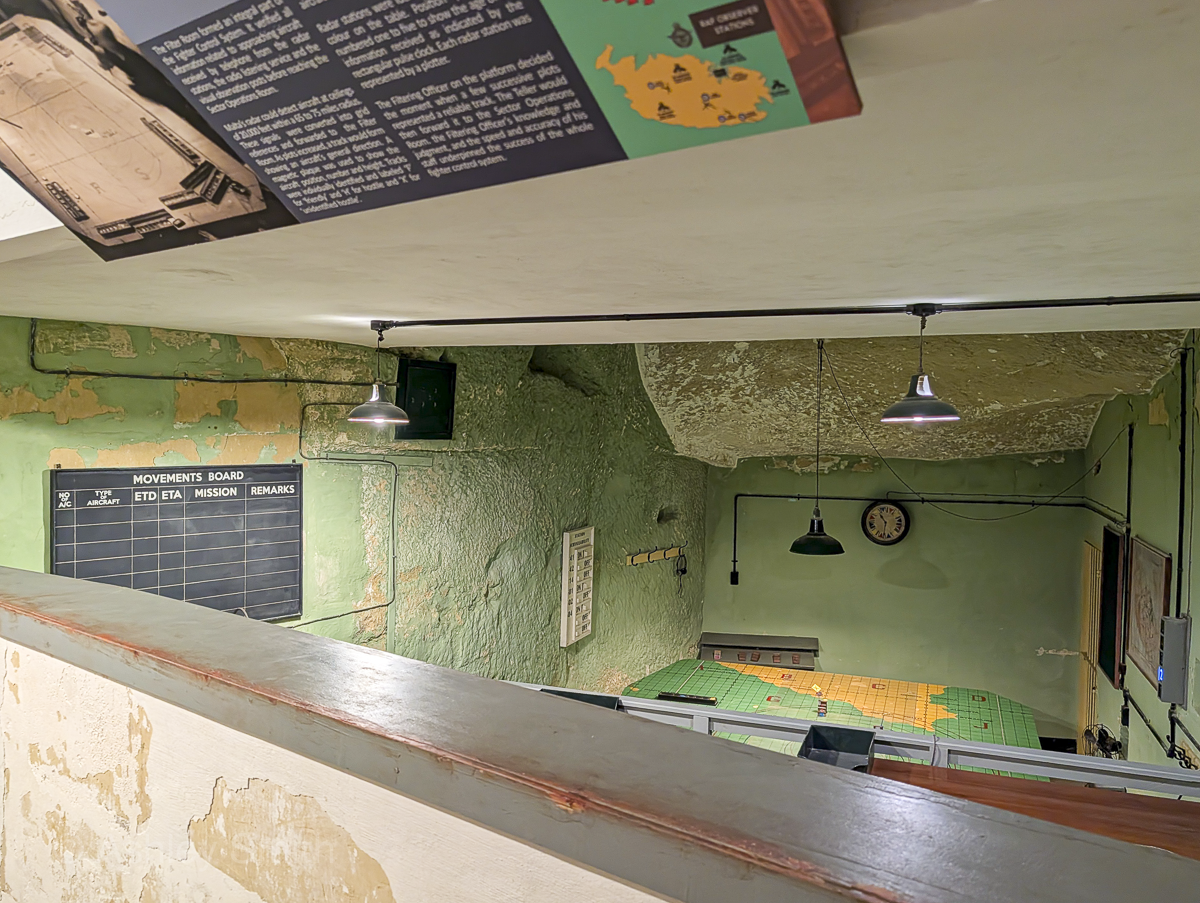
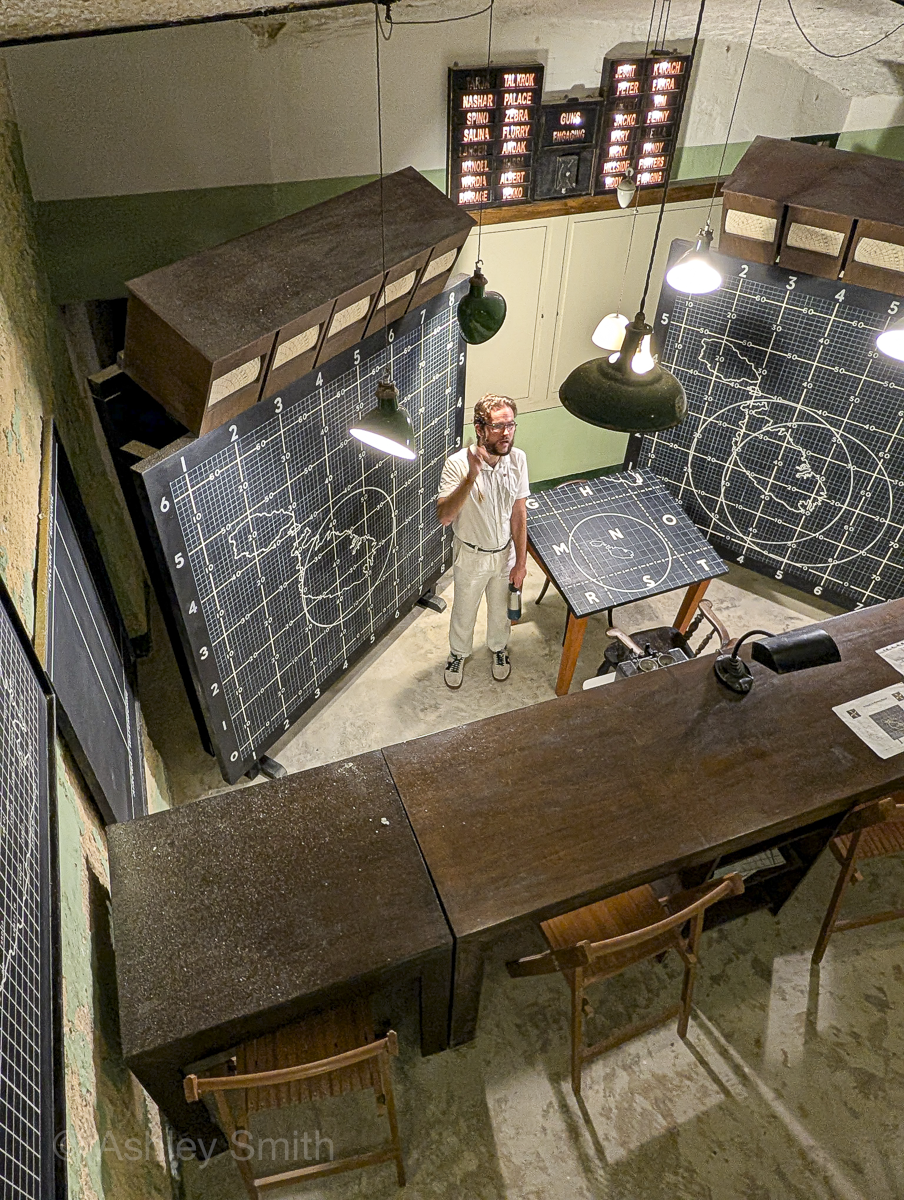
Dubbed “Malta’s best kept secret,” the Lascaris War Rooms are located deep underneath the popular Upper Barrakka Gardens. It was from this network of tunnels and underground offices that the British military successfully defended Malta from Axis forces and from which it launched offensive Mediterranean campaigns like Operation Husky. (If you’ve been to the WWII sites in London, you can think of these as Malta’s “Churchill War Rooms.”)
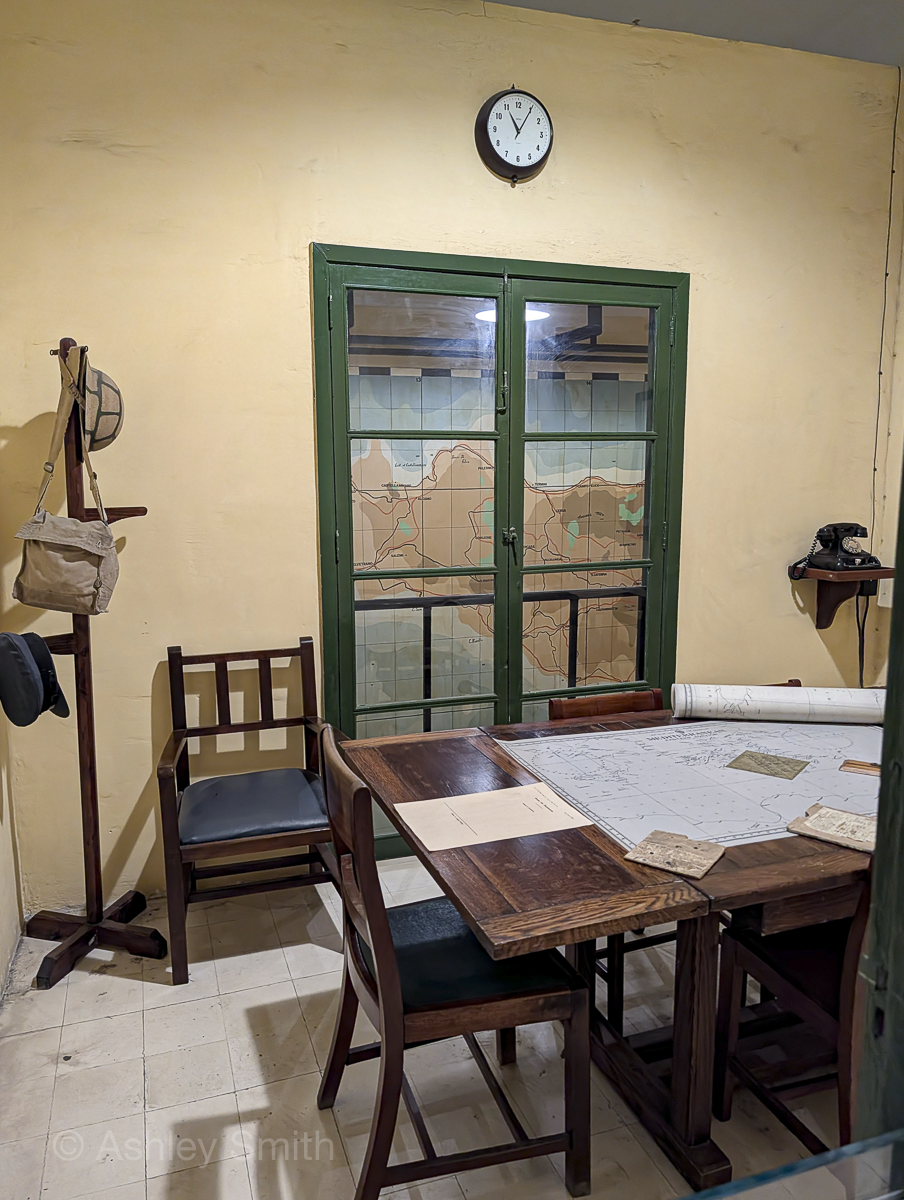
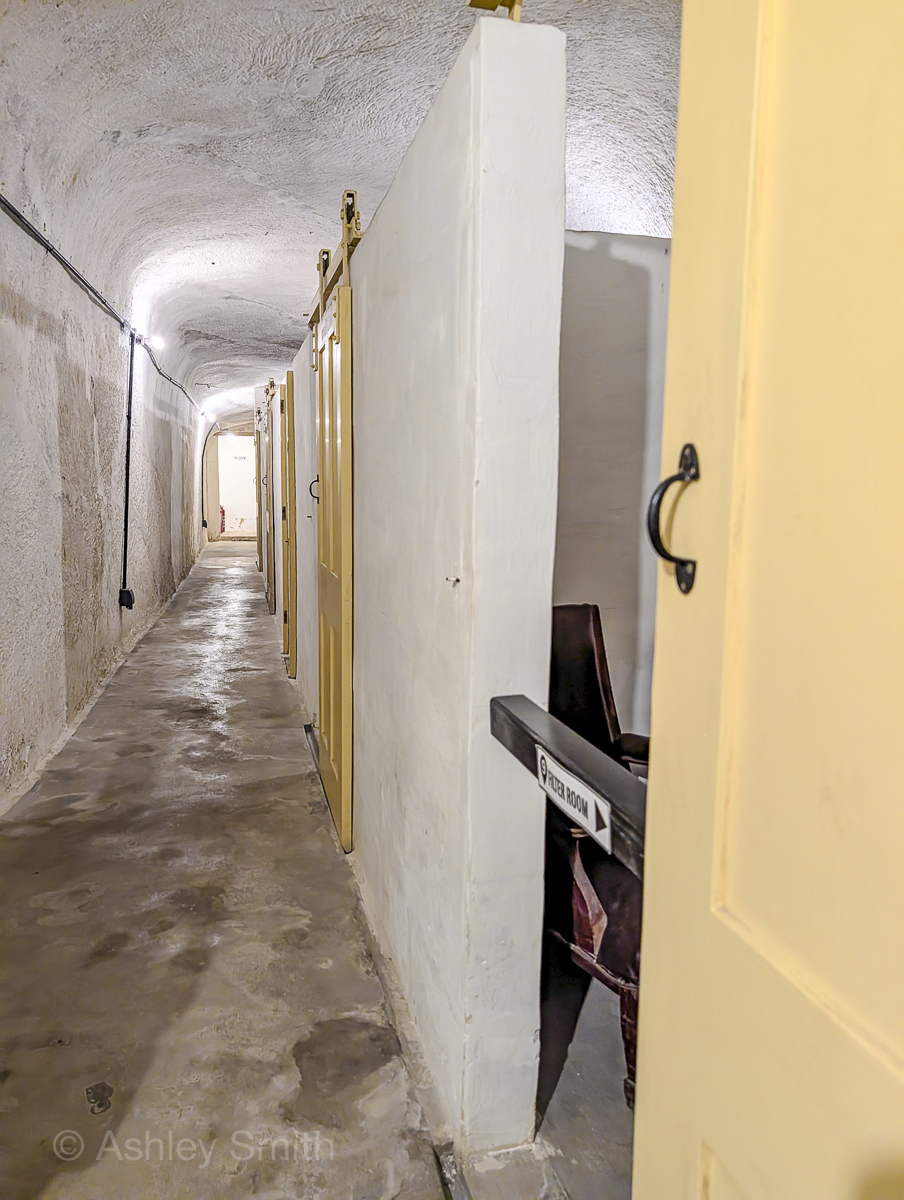
You’ll be able to visit the many offices, map rooms, and communications centers used during the war. Most of them have been arranged to look the same way they did back then. There are several informative exhibits on Britain’s war operations with tons of original historical artifacts.
The Lascaris War Rooms are lauded as one of the most complete and best-preserved examples of this kind of facility, and I’d have to agree. Join the guided tour and you’ll get to learn all about how the war was conducted from this very spot, even if you can’t completely understand all of it.
3. War HQ Tunnels
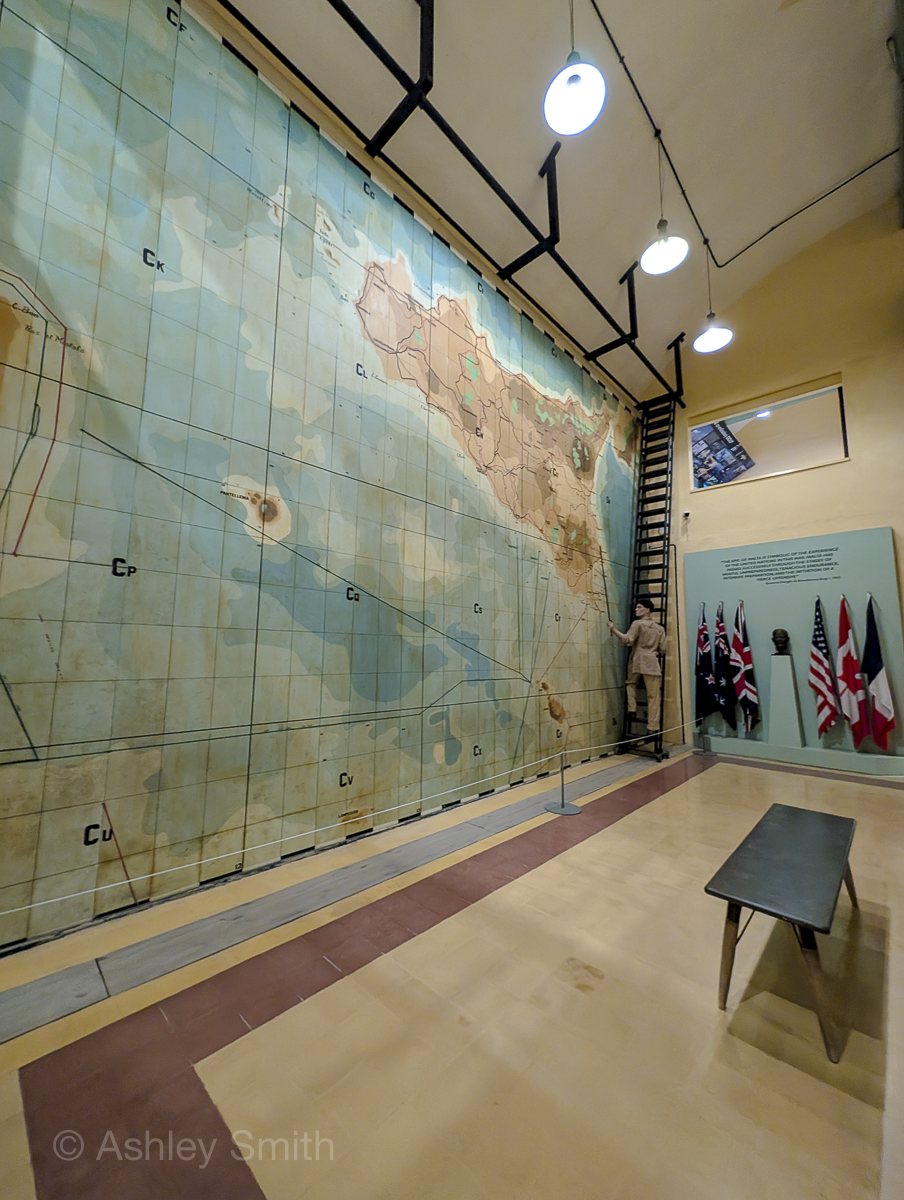
Much like the Lascaris War Rooms, the War HQ Tunnels are a network of tunnels and rooms that served as the British Combined War Headquarters during the war. Spread across 35,000 square meters underground are cypher rooms, an anti-aircraft gun operations room, naval operations rooms, radio communications centers, and more. There are also some really cool original World War II maps you can check out up close.
4. Operation Husky Museum
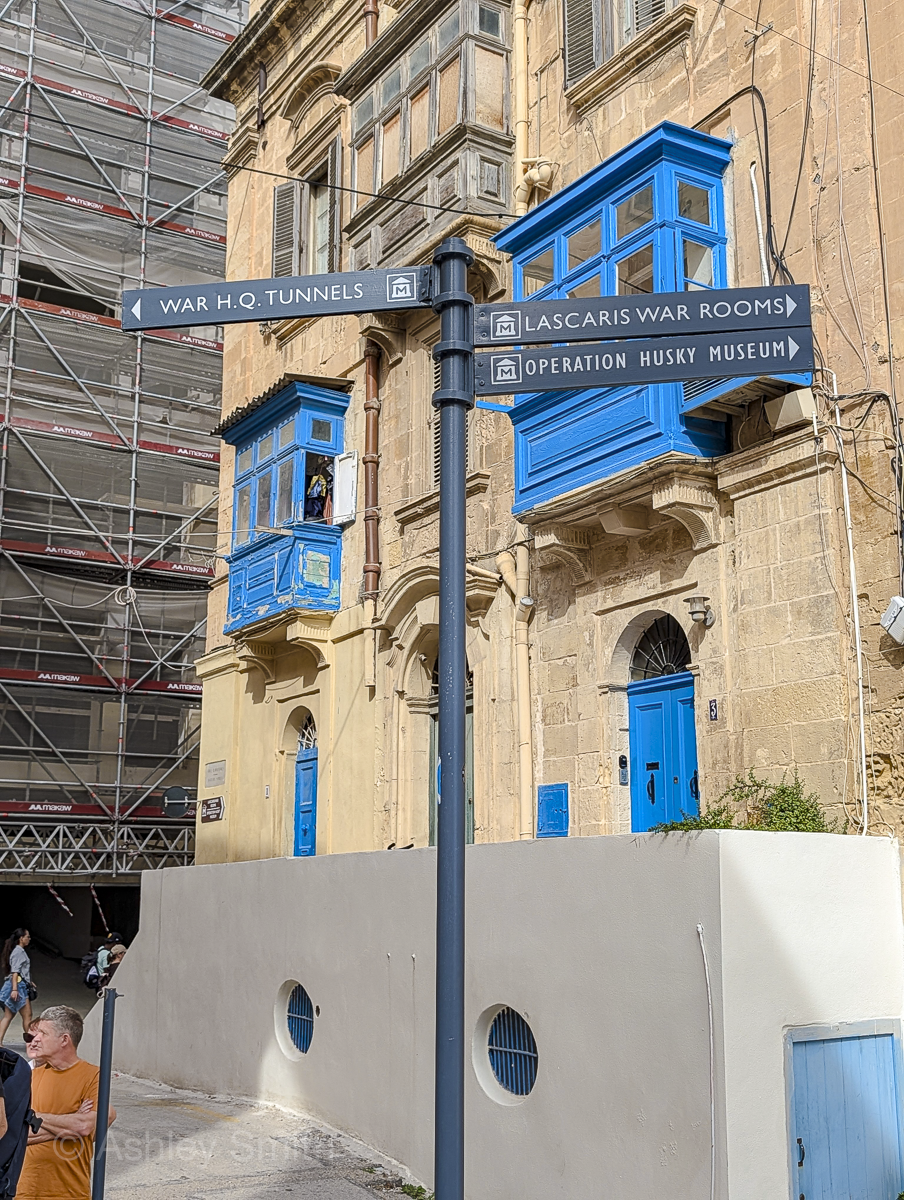
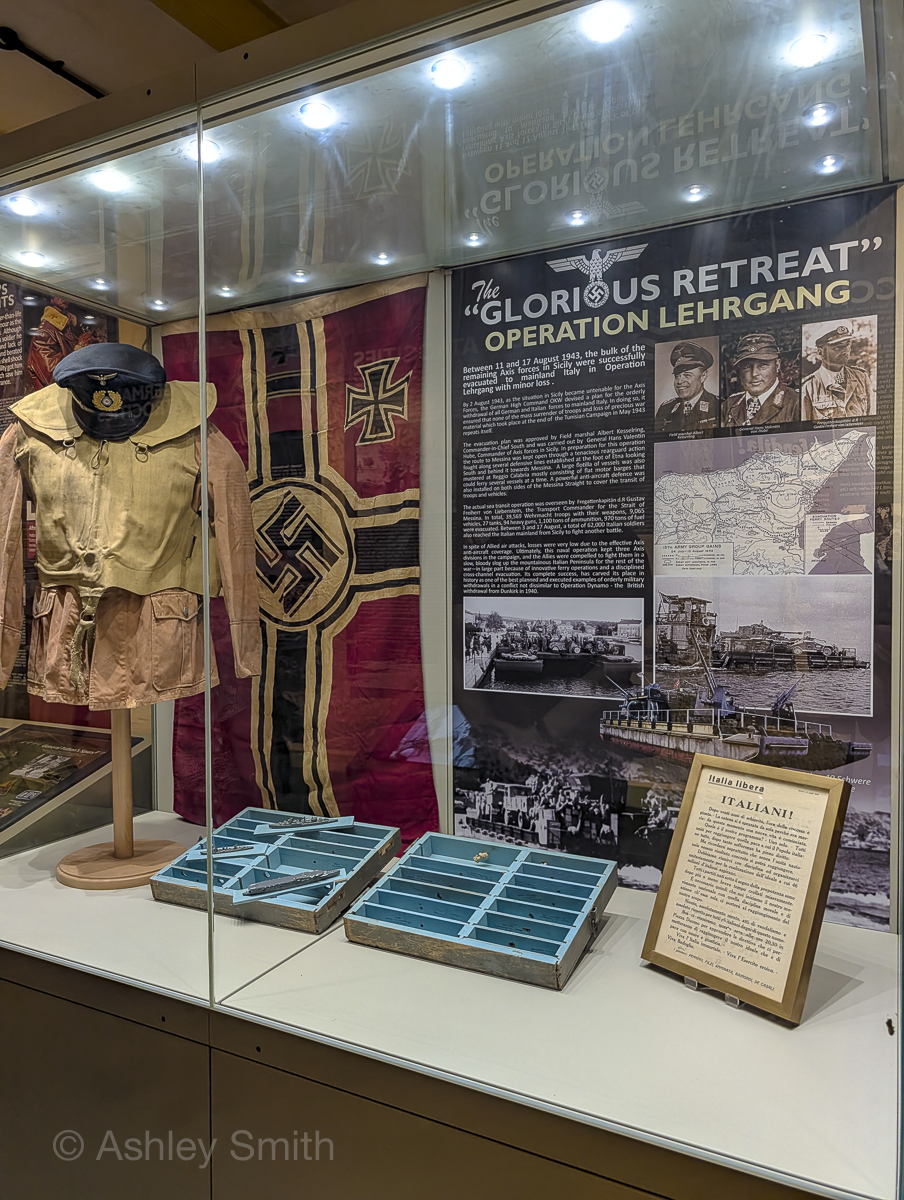
Within the Lascaris War Rooms is another museum entirely which focuses on Operation Husky—the invasion of Sicily in 1943. Until the D-Day invasion in Normandy a year later, Operation Husky had been the largest amphibious operation of the war.
You’ll get a detailed description of the planning, execution, and aftermath of Operation Husky and get to see even more fascinating original artifacts here at the invasion’s operational headquarters. Admission to the Operation Husky museum is included with your ticket to the Lascaris War Rooms.
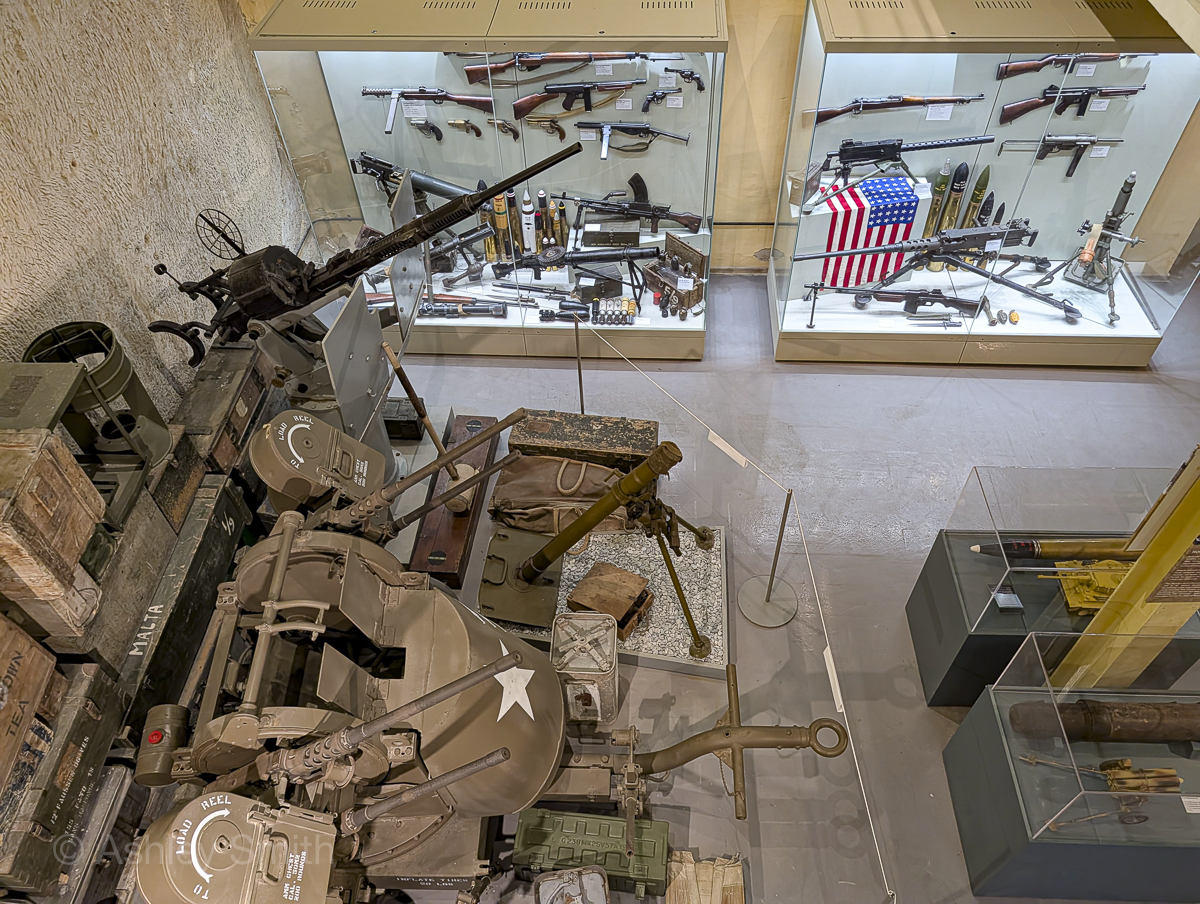
5. Malta at War Museum
Located within some of the city’s 17th-century fortifications, the Malta at War Museum focuses on Malta’s role in World War II as a whole. It includes a small museum with informative displays and excellent artifacts as well as an underground air raid shelter network (which I talk about below).
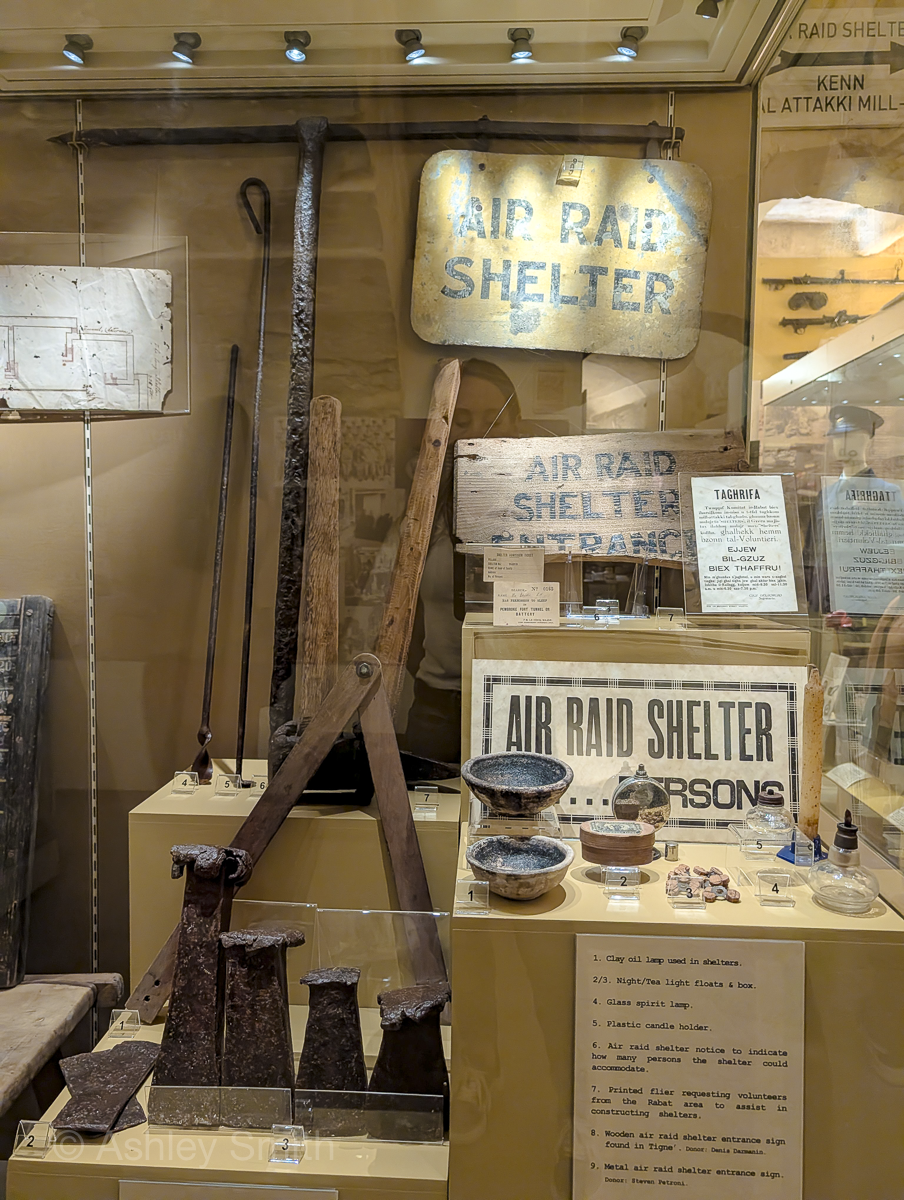
The actual museum part covers topics like civilian life during the war, air raid shelters, the island’s military defenses, and much more. You can also see some cool artifacts like a Rediffusion speaker from the naval dockyard, an anti-aircraft searchlight, and the original bell and wheel from the SS Ohio (a brand-new addition as of November 2026).
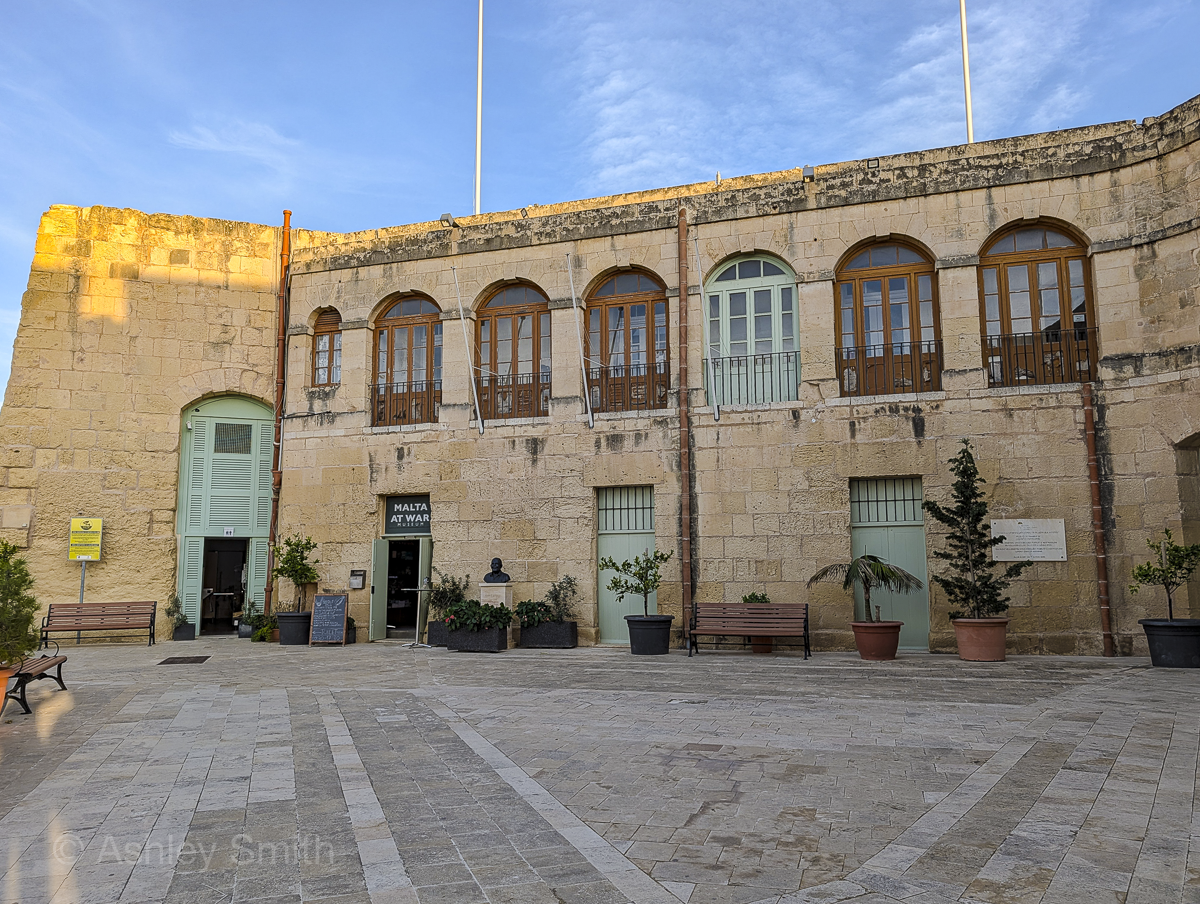
6. Malta Aviation Museum
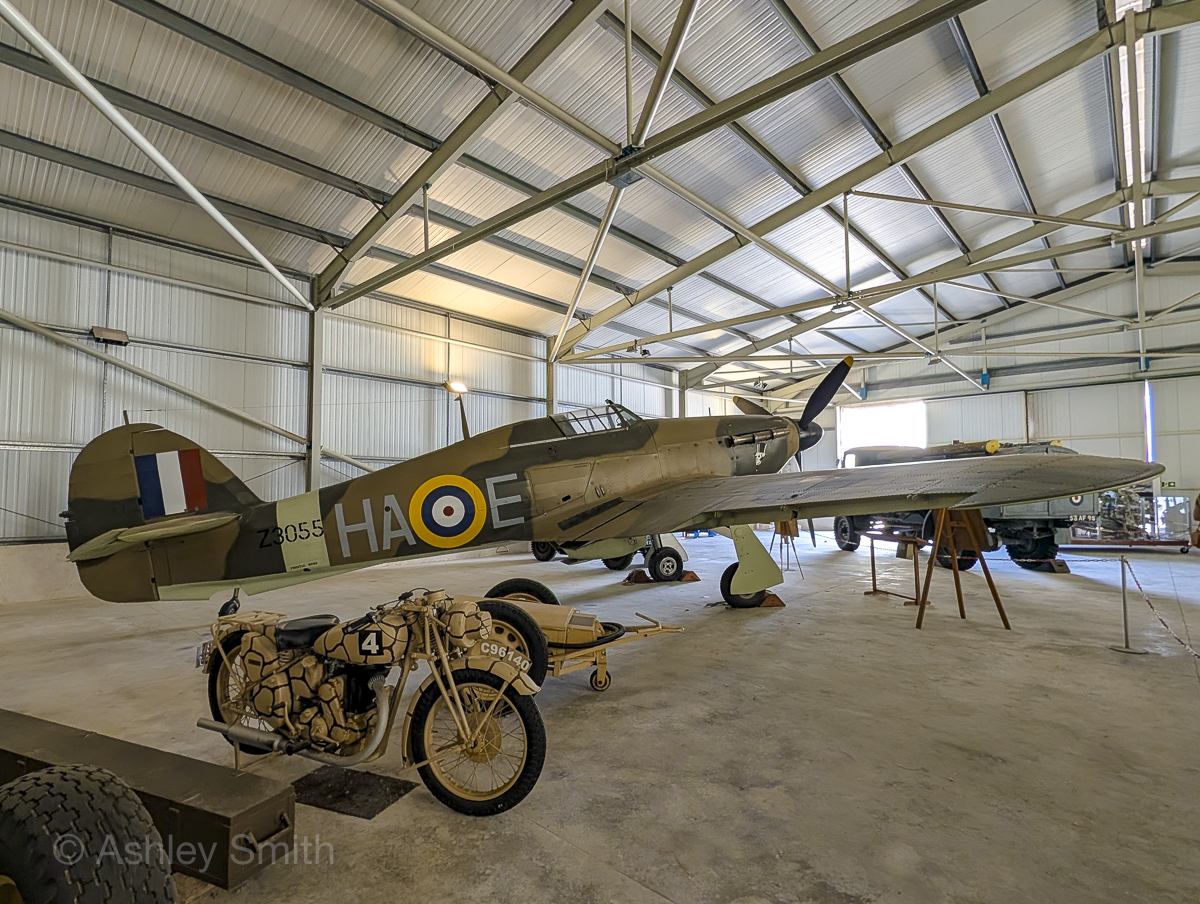
The air war was a major aspect of both Malta’s offensive and defensive strategies during World War II. At the Malta Aviation Museum, you can see several kinds of aircraft that made victory possible. Within two large hangars, you can see:
- Supermarine Spitfire MKIX
- Hawker Hurricane IIA
- Douglas C-47
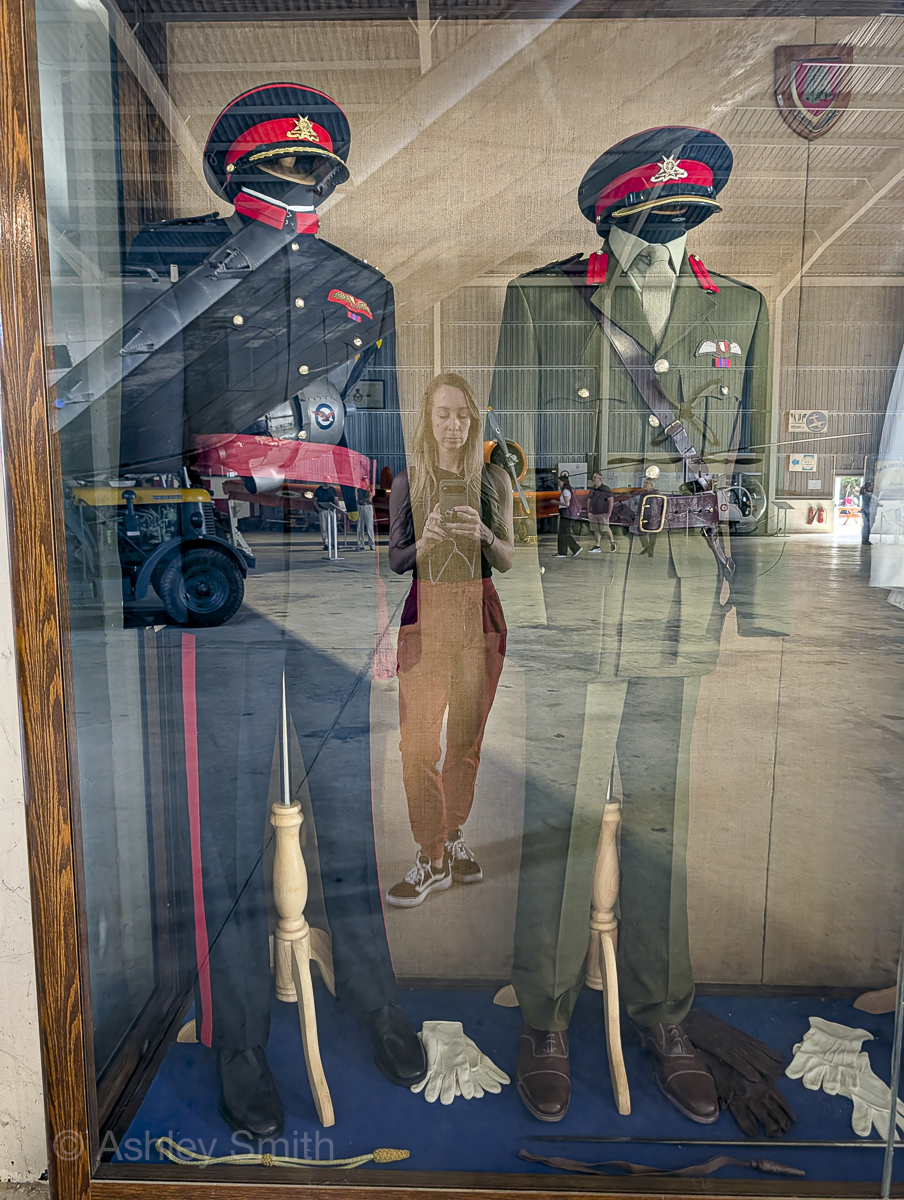
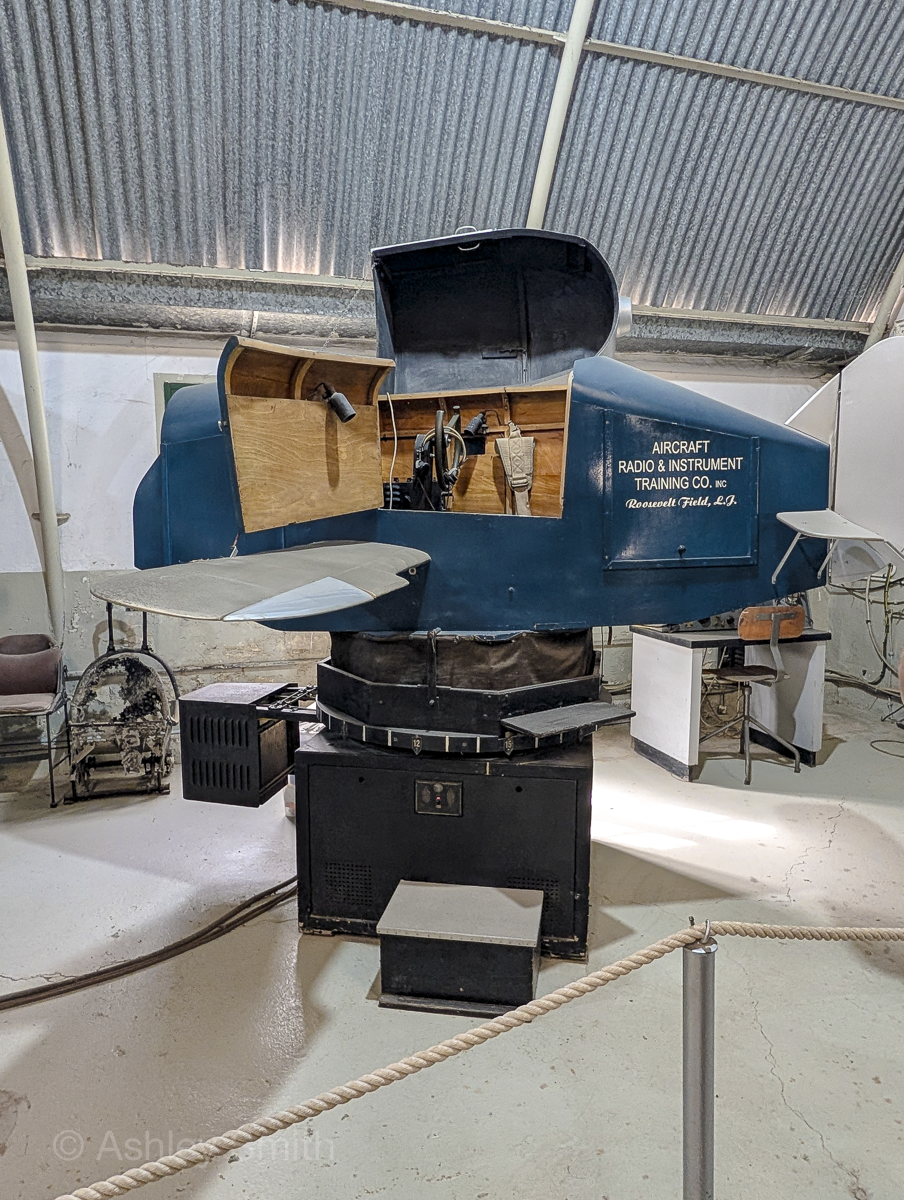
- And several other artifacts like uniforms and vehicles, historical photographs, and tons more aircraft
You can also visit their restoration area and watch as they actively work on historical aircraft restoration projects.
WWII forts you can visit in Malta
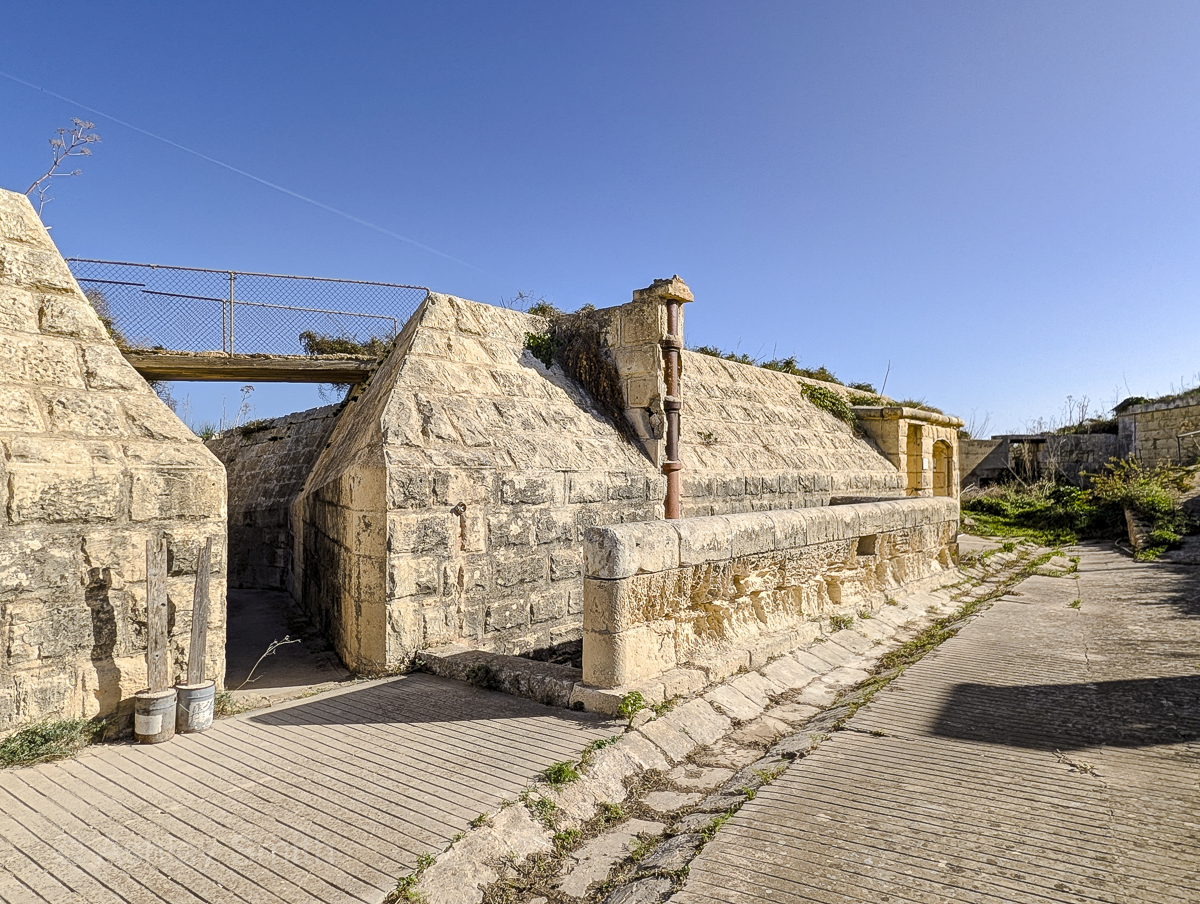
With a military past that goes back centuries, Malta is filled to the brim with military fortifications. (A standout feature in almost every skyline photo of Malta and from any angle.) And though nearly all of these were built prior to the 20th century, the vast majority of them were retrofitted for use during World War II.
Some of Malta’s historic forts are open to the public and some aren’t. Some have been diligently preserved and others have fallen into ruin. I have a more detailed post on Malta’s WWII forts in the works, but here’s a brief sampling of some you can visit in the meantime.
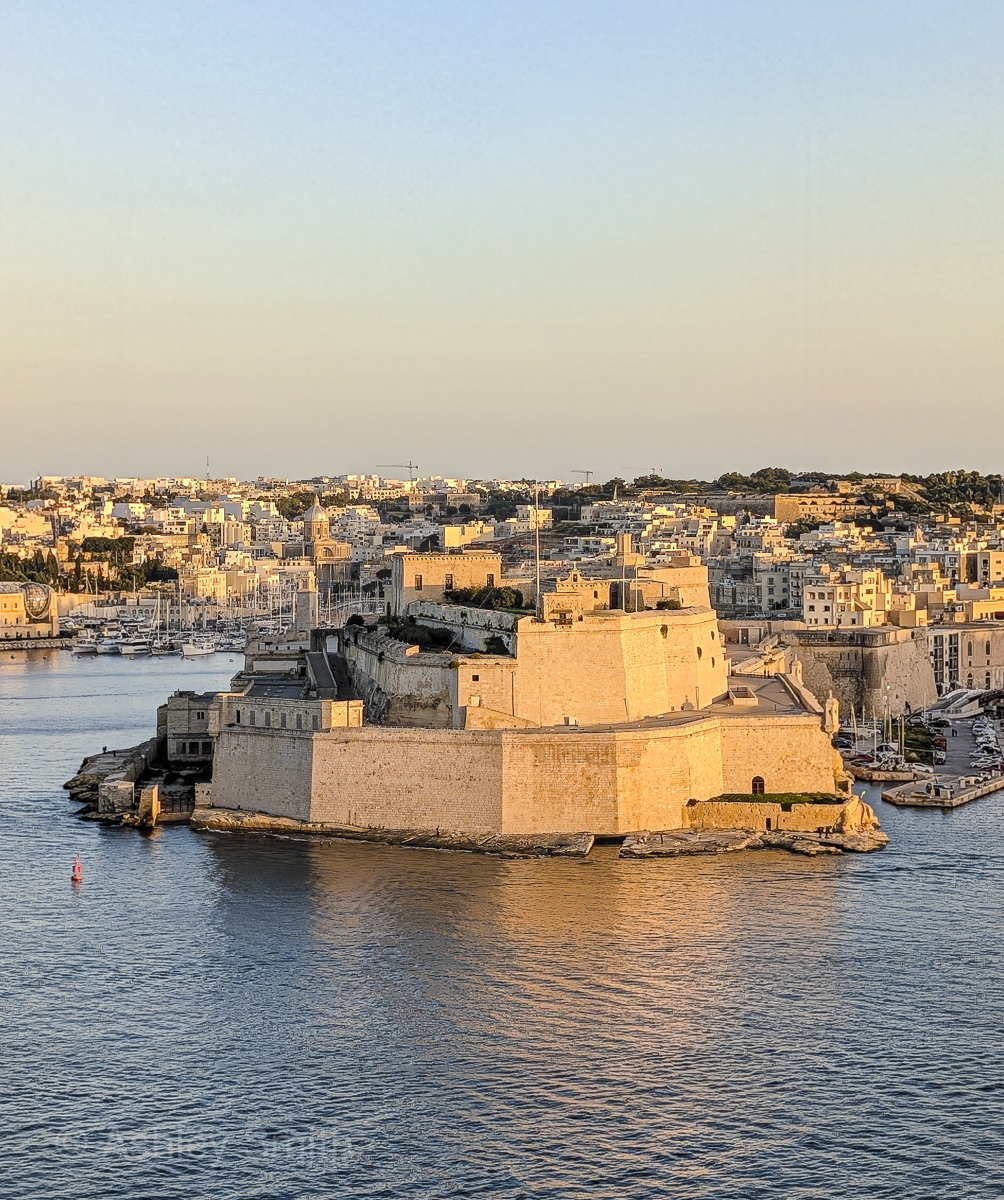
7. Fort St. Elmo
Located on Valletta’s northeast peninsula, Fort St. Elmo is also the home of the National War Museum mentioned above. It was built first as a simple watchtower in 1488 and then expanded into a full-fledged fort in the 1550s.
On June 11, 1940, Fort St. Elmo became the site of the first aerial bombing in Malta during the Second World War. During the war, the fort served as a radar facility, a coastal battery, and the headquarters of the Royal Malta Artillery unit. Clearly, it played a critical role in the defense of Malta.
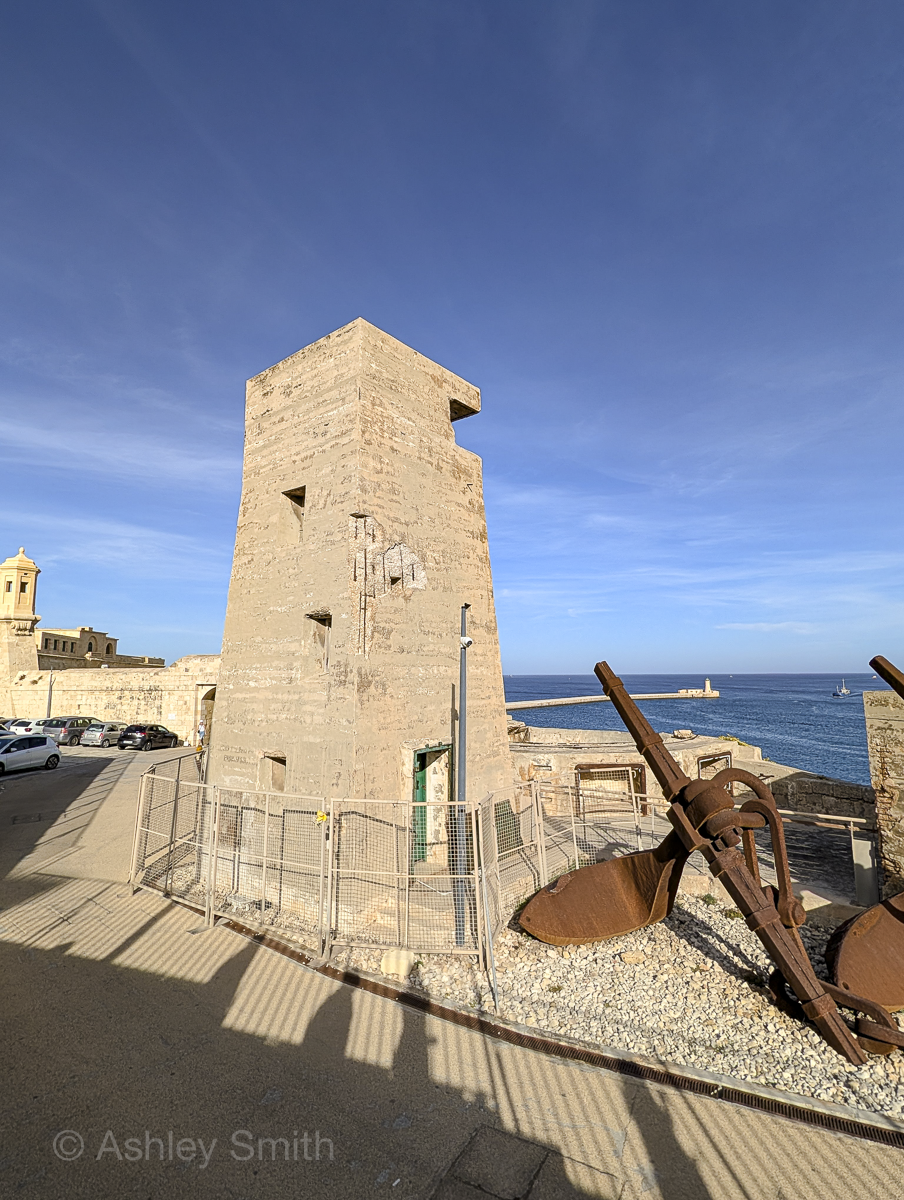
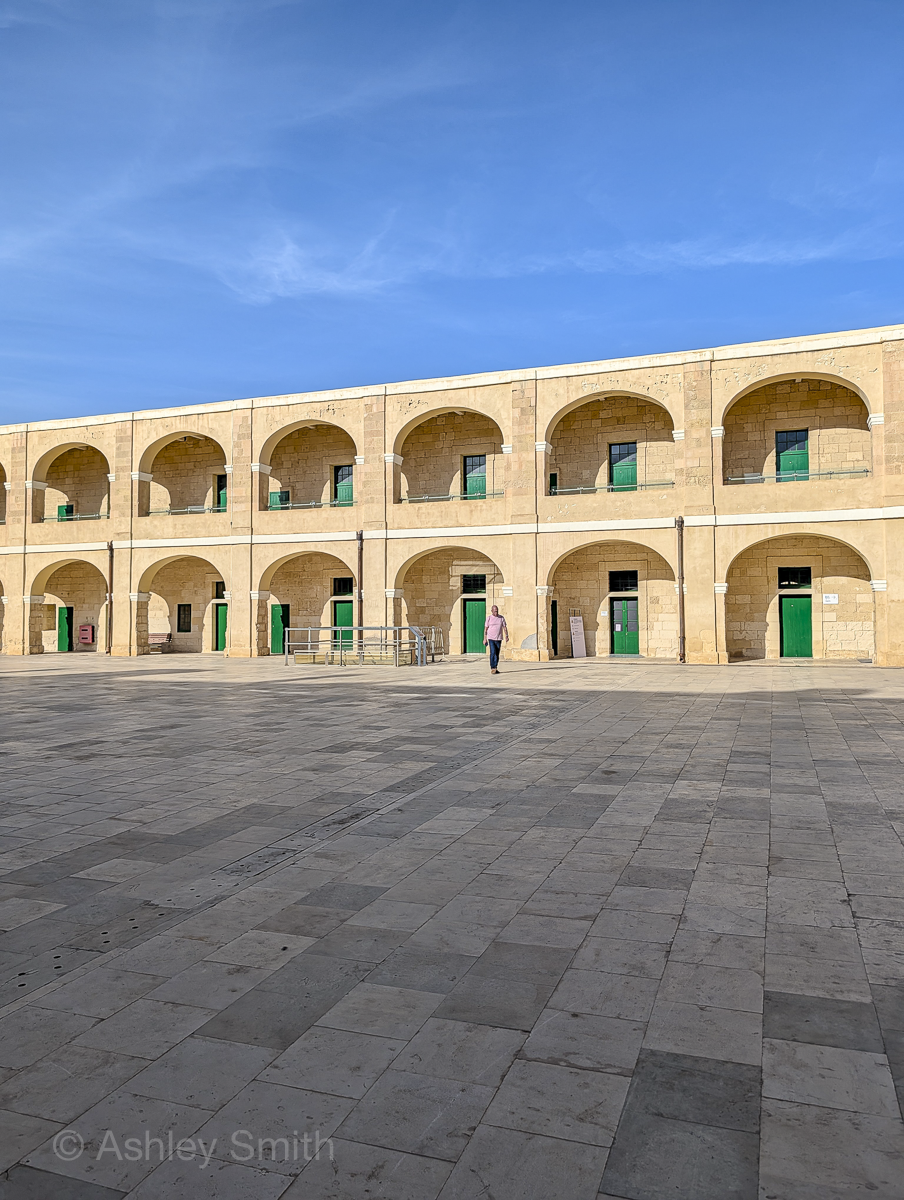
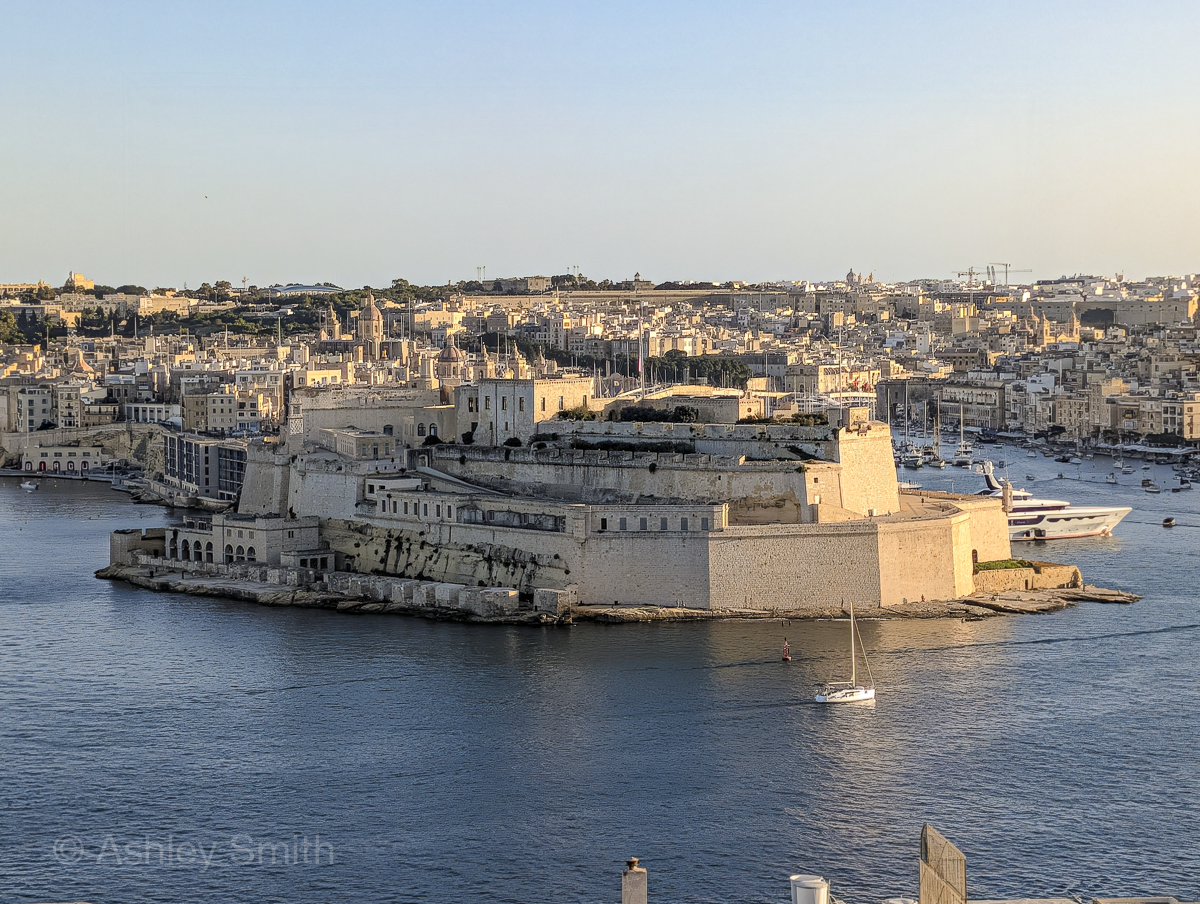
8. Fort St. Angelo
Looking across the Grand Harbor from Valletta and Fort St. Elmo you’ll get a fantastic view of our next WWII fort—Fort St. Angelo. Originally built in the 1530s as a headquarters during the Great Siege of 1565, it served as the Mediterranean base for the Royal Navy during World War II.
Fort St. Angelo is huge and wonderfully-preserved. You can visit the interpretation center to learn all about it, then wander the fort with an available audio guide.
9. Fort Madalena
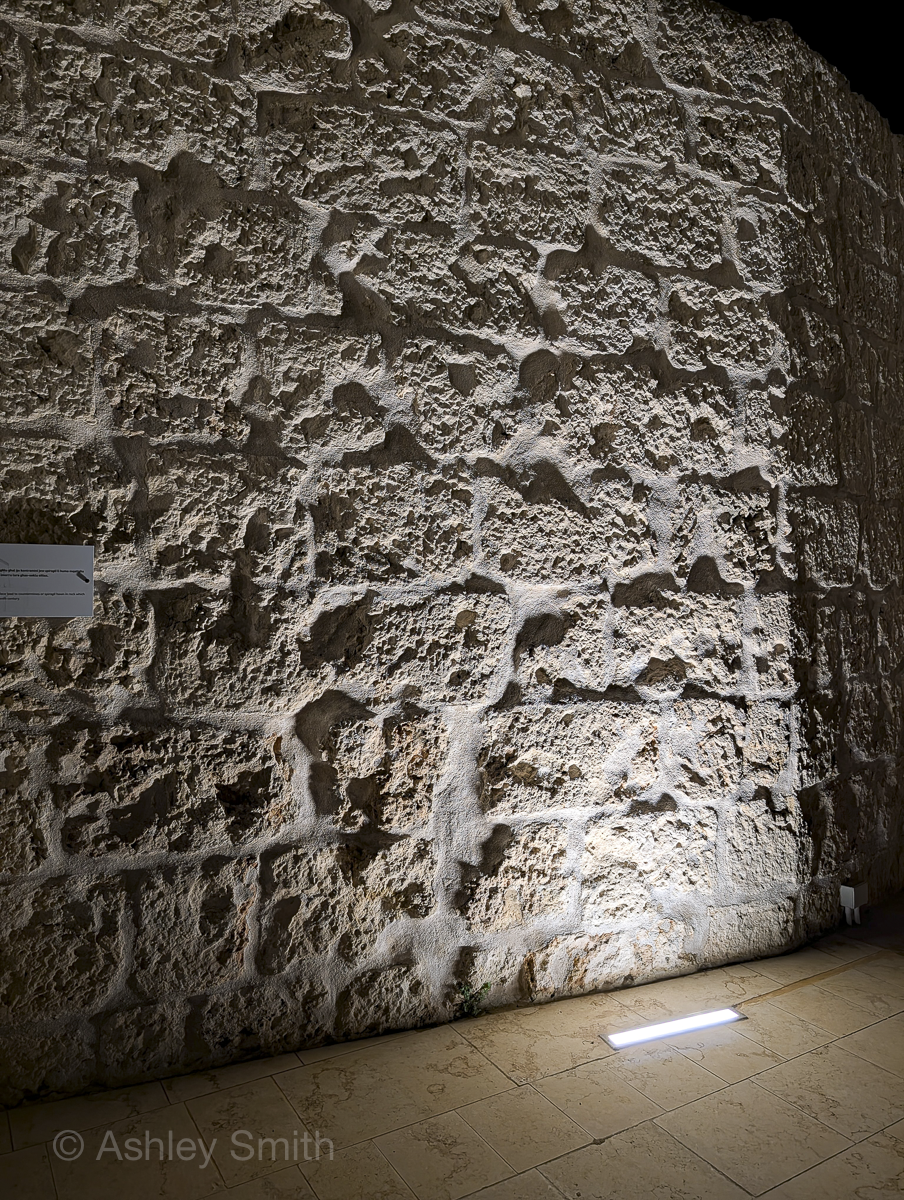
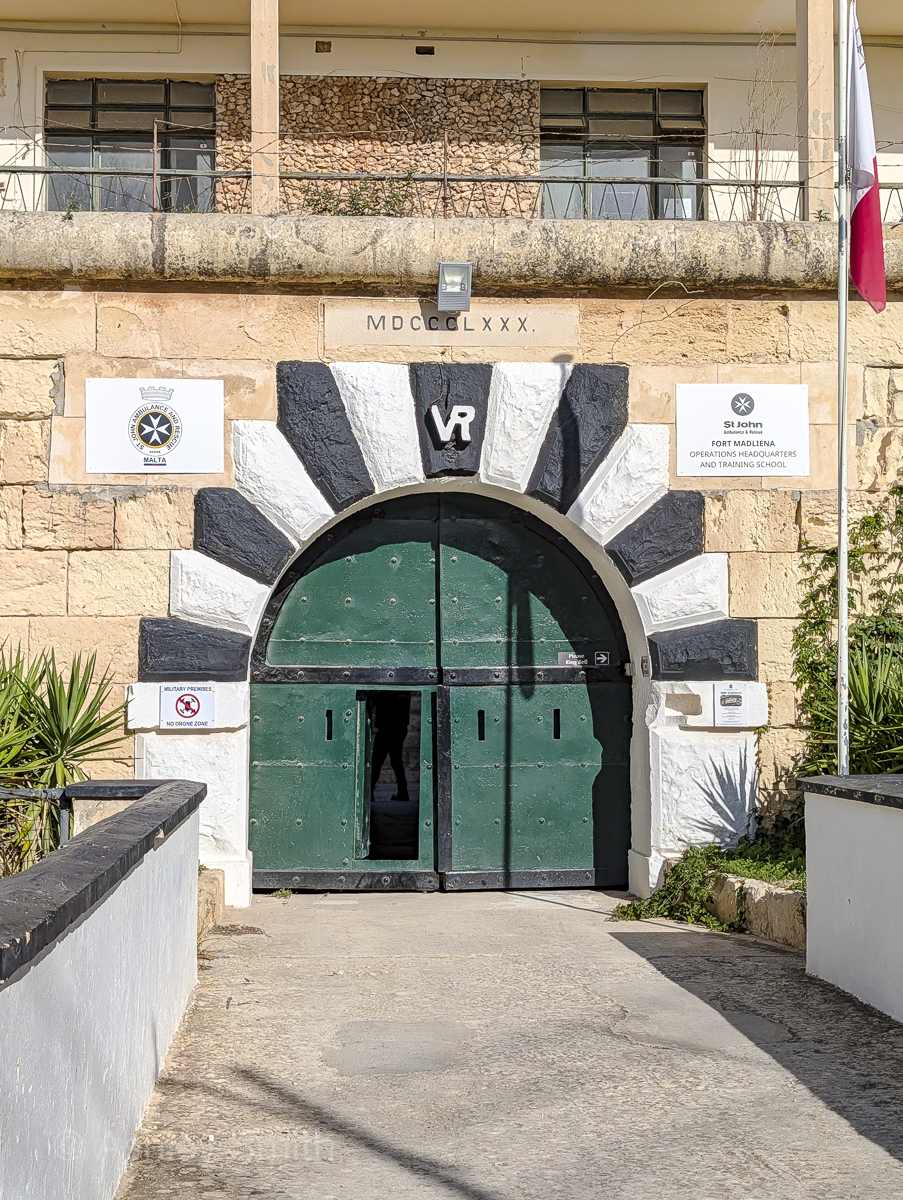
Built by the British in the late 1880s, Fort Madalena served as both land and sea defense and as Malta’s main radar station during WWII. Today, the St. John Rescue Corps uses it as a headquarters and training school.
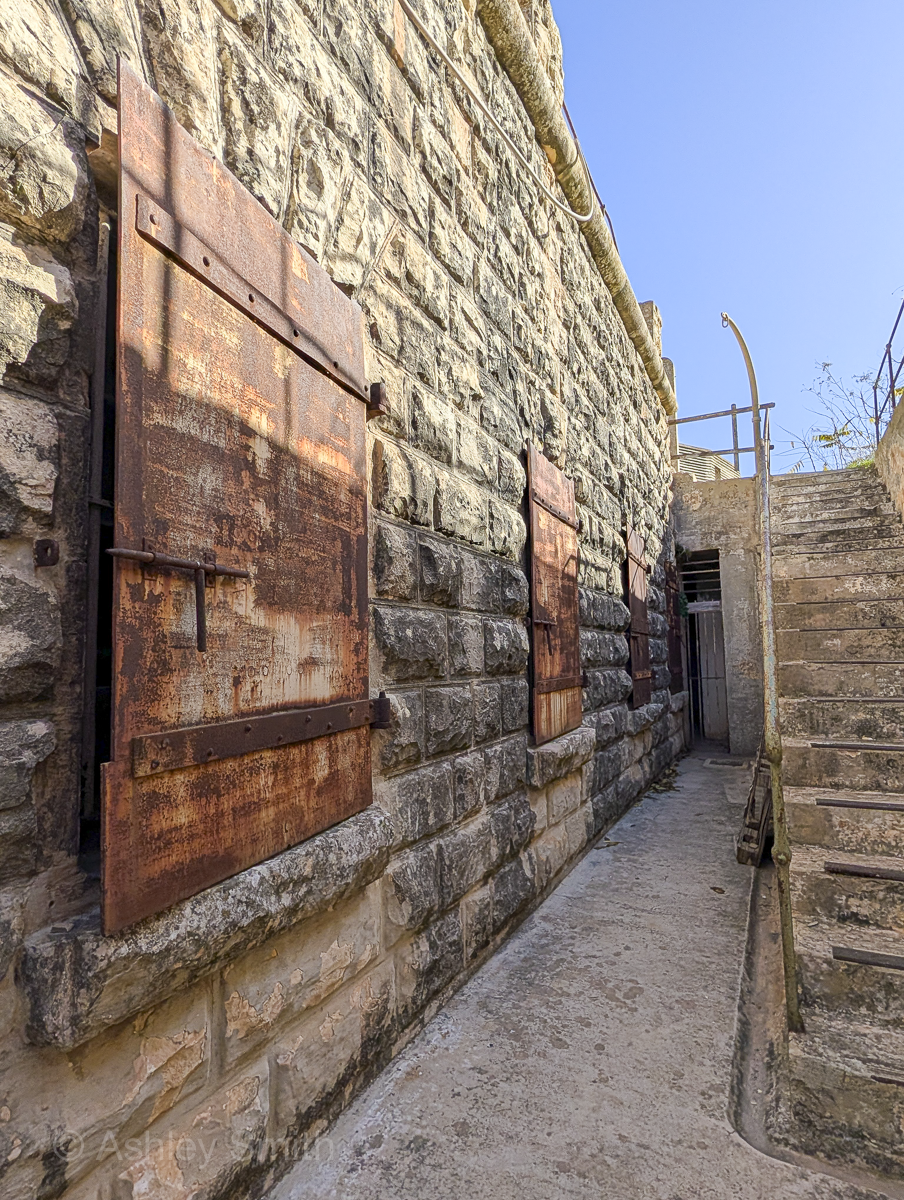
Since Fort Madalena has not been preserved as a visitor attraction, it’s been largely left in ruins (though volunteers continuously work on its upkeep and improvement). Even though it’s in a bit more of a “raw” state, there’s still a lot of interesting stuff to see and learn about here. The fort is open to the public on Saturdays (with the exception of holidays) and by appointment for groups.
10. Fort Campbell
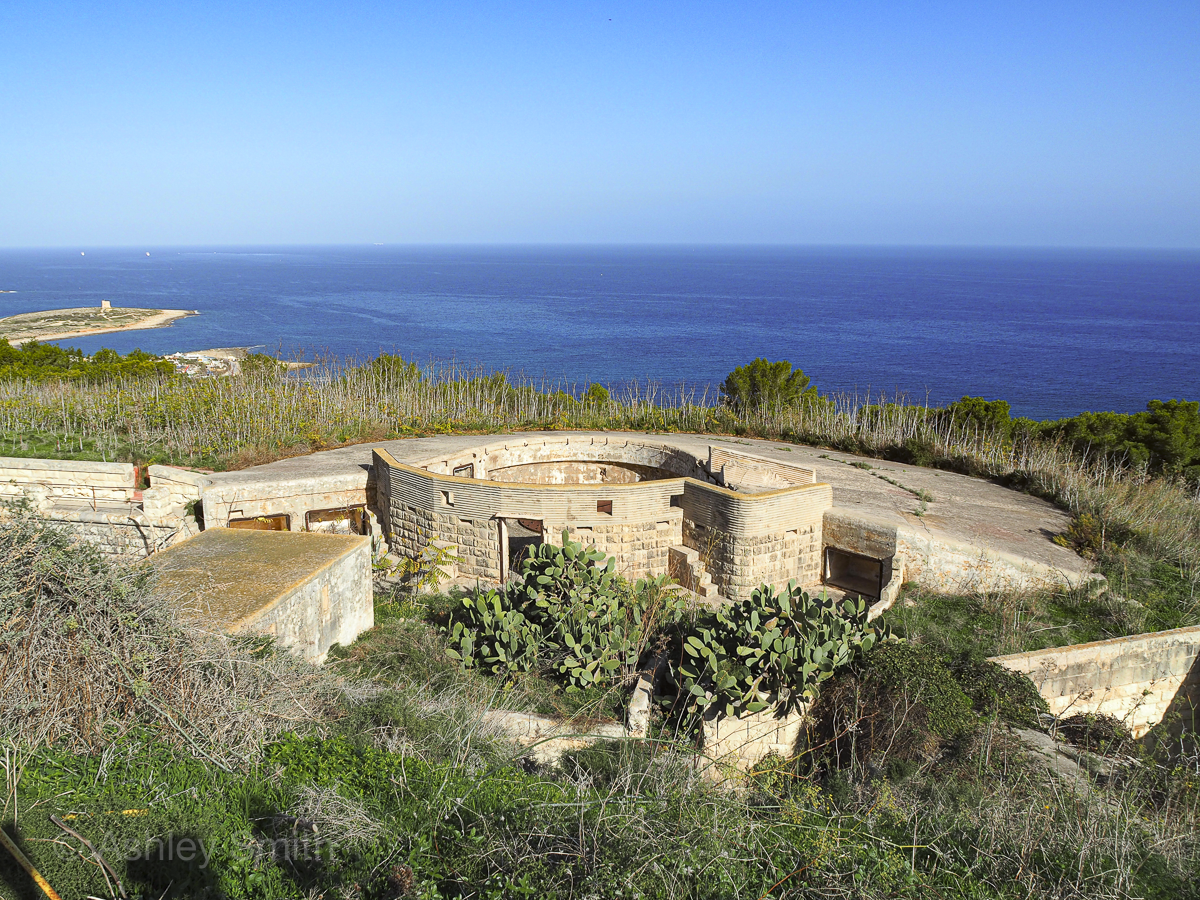
Fort Campbell is another of Malta’s WWII forts that has been left as-is since the British military moved out in the 1970s. Compared to the others, this one’s just a baby having been built in 1937-38 specifically in response to the growing threat of war in Europe.
Fort Campbell has been, unfortunately, completely left in ruins and is not officially open to the public. However, as of March 2026, restoration efforts are officially underway. In the meantime, visit the abandoned site with caution as structures continue to deteriorate and no measures have yet been taken to ensure visitor safety.
WWII air raid shelters in Malta
Some of the most fascinating WWII sites you can visit in Malta are its vast networks of underground air raid shelters. Because Malta was indeed the “most bombed country of WWII,” civilians needed safe places to shelter during the bombing raids. And there’s a seemingly endless number of these shelters you can visit here.
Some of these networks are simple with only tunnels and small rooms. Others are more complex with even hospitals, kitchens, and birthing rooms inside. Some have electricity and some don’t. But they all tell some truly terrifying and unforgettable stories.
I highly recommend visiting both a private shelter and a public one to compare. Either way, you really only need to choose one or two of these since they’re all very similar. (I’ll have more background on these in an upcoming post about Malta’s WWII air raid shelters.)
11. Casa Rocca Piccola
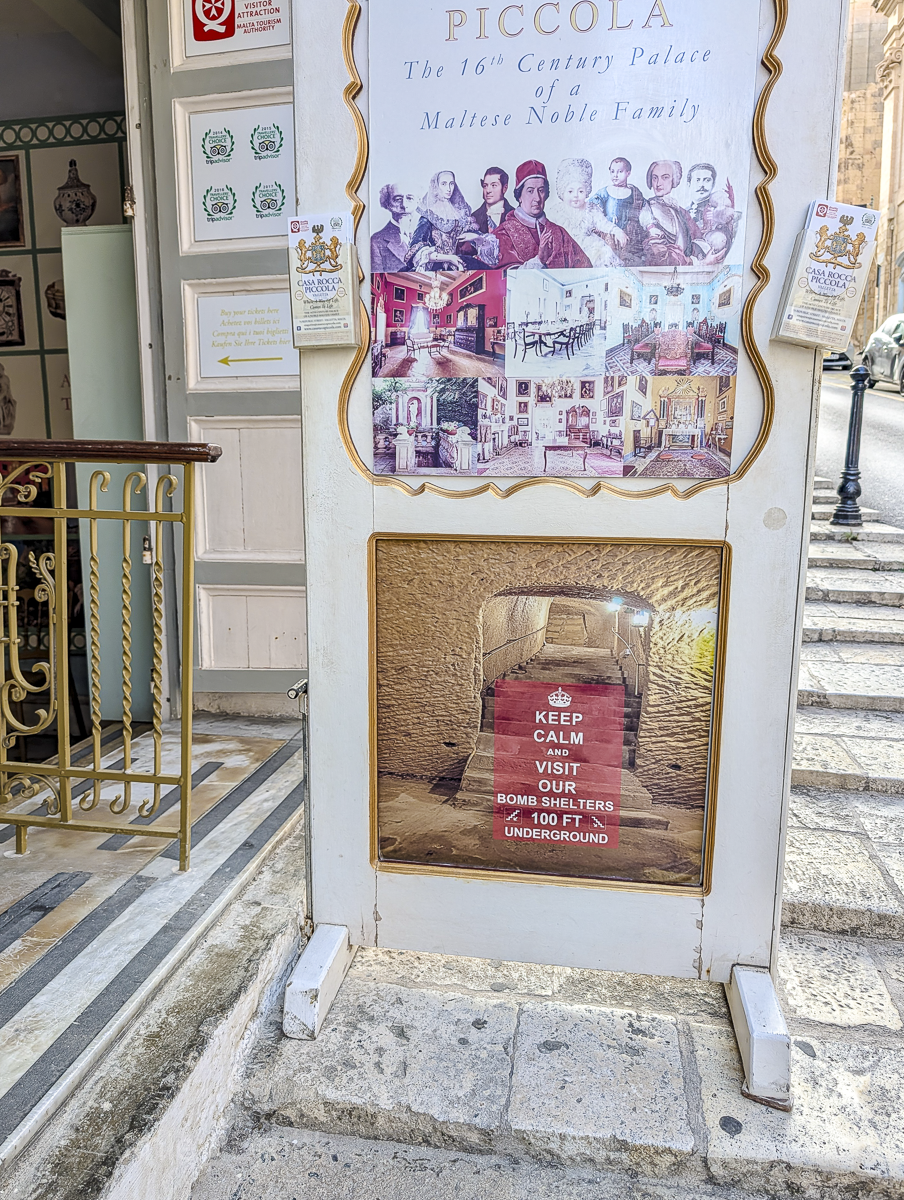
The bomb shelter beneath Casa Rocca Piccola perfectly exemplifies a privately-owned WWII air raid shelter. Casa Rocca Piccola is a beautiful 16th-century palazzo owned by a wealthy noble family, which just means they could afford to have their own bomb shelters constructed.
12. Couvre Porte Shelters
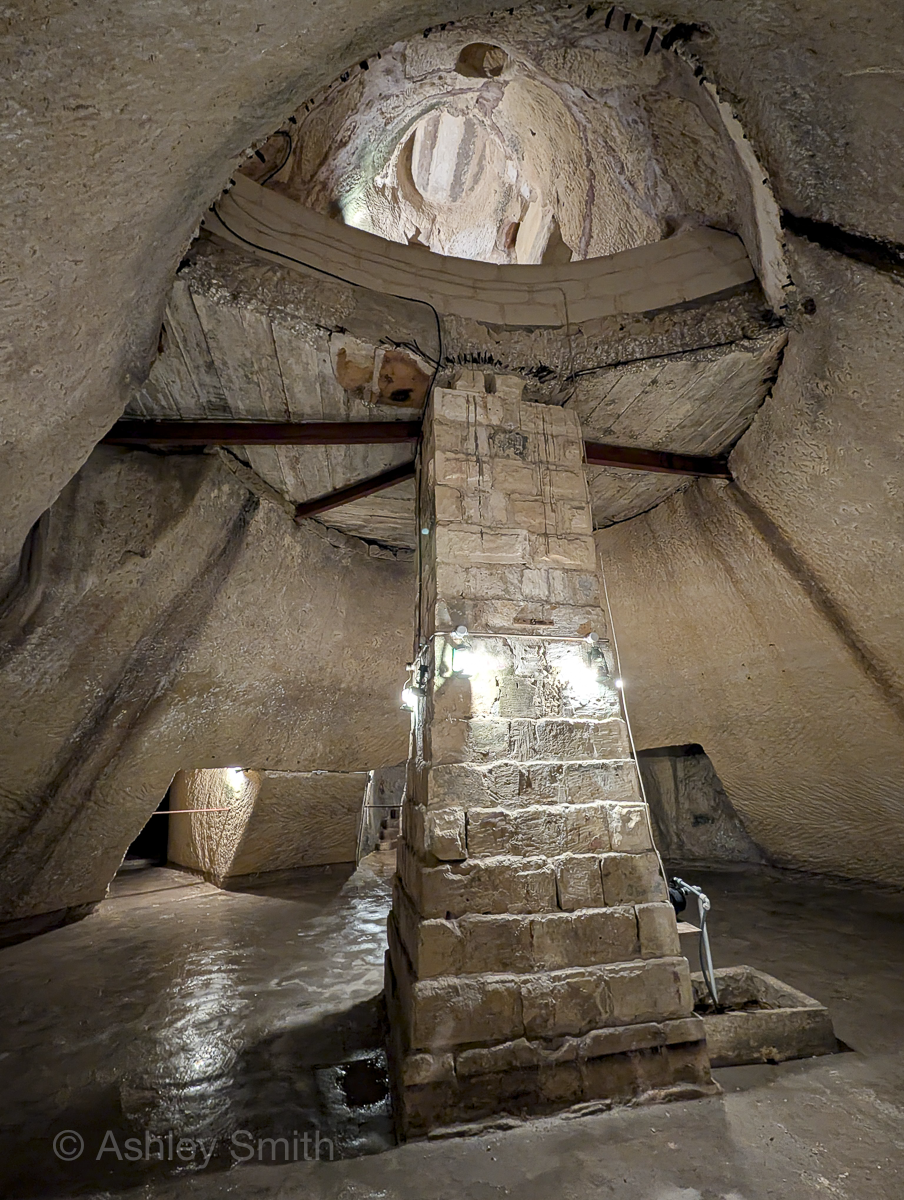
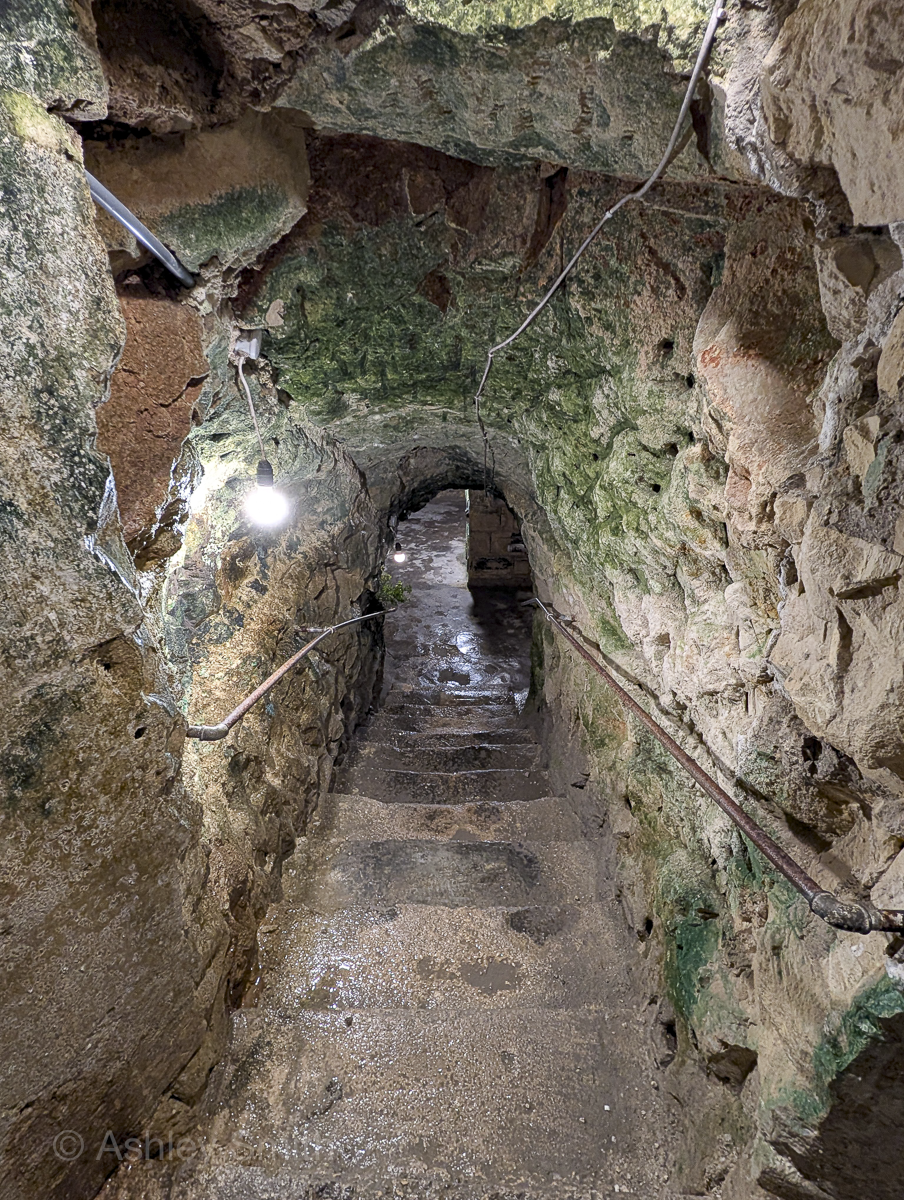
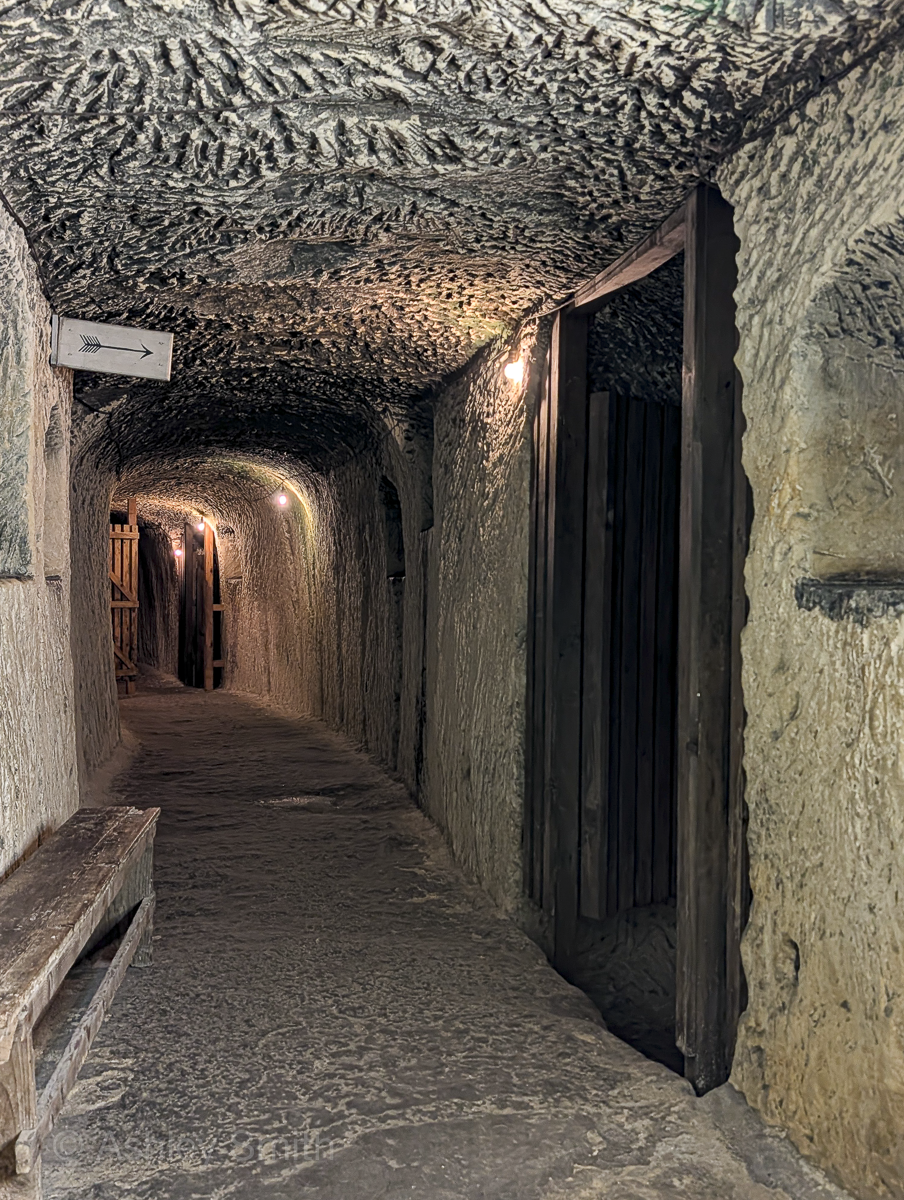
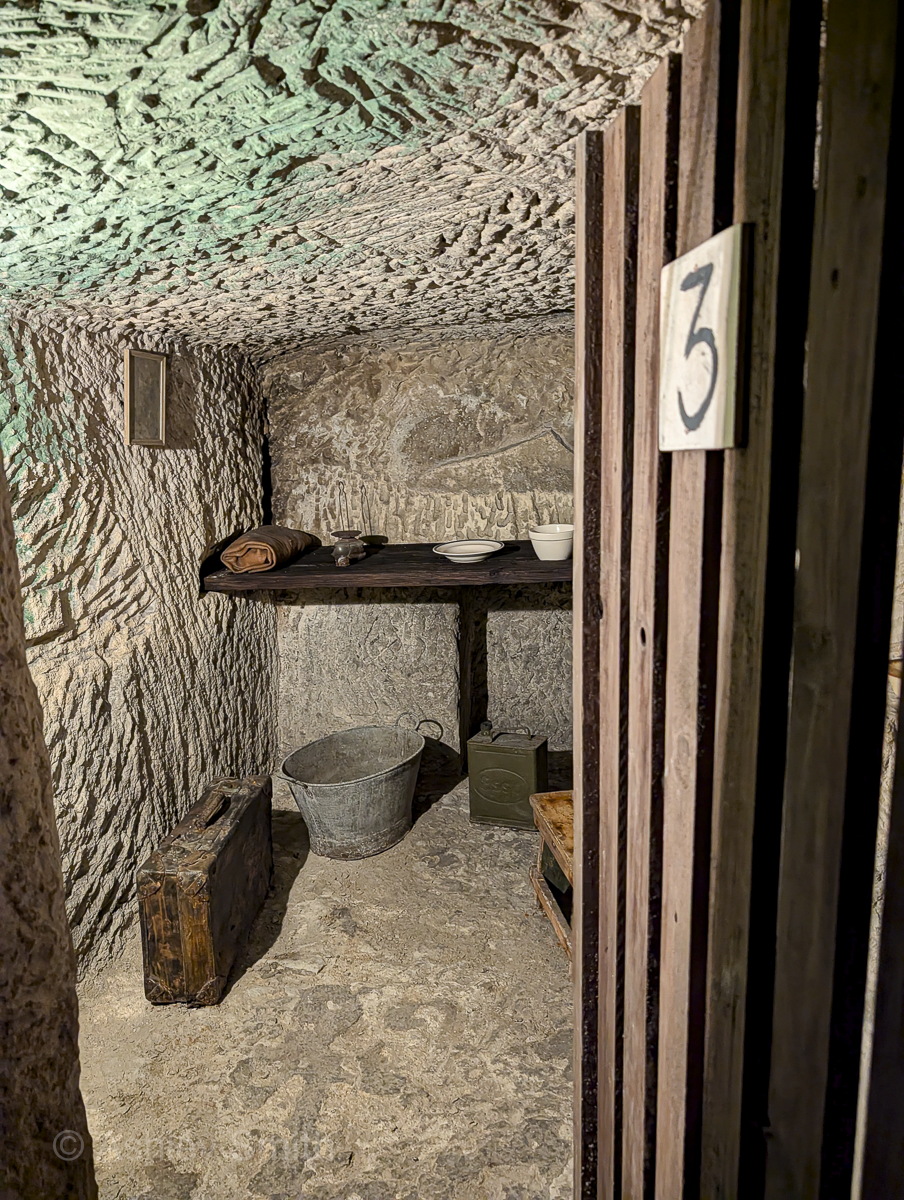
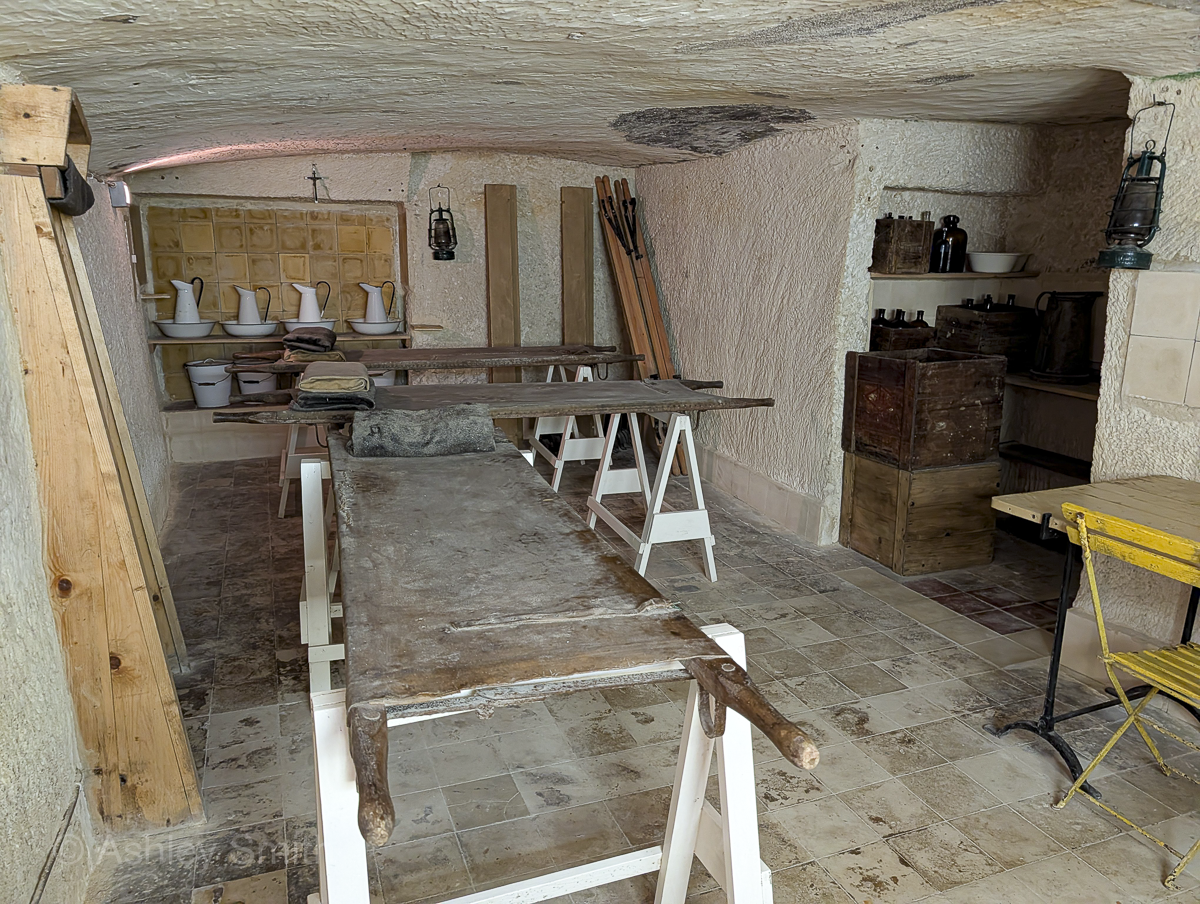
The Couvre Porte shelters are the air raid shelters deep beneath the Malta at War Museum. This was the most detailed of all the shelter networks I’ve visited. It has a hospital and birthing room, communal and private dormitories, and more. (They also have the most passionate tour guide in Malta.)
This is an excellent spot to learn about the complexity of these shelters, see many recreated rooms, and get a good idea of how these tunnels were hand-carved.
13. St. Peter’s Galleries
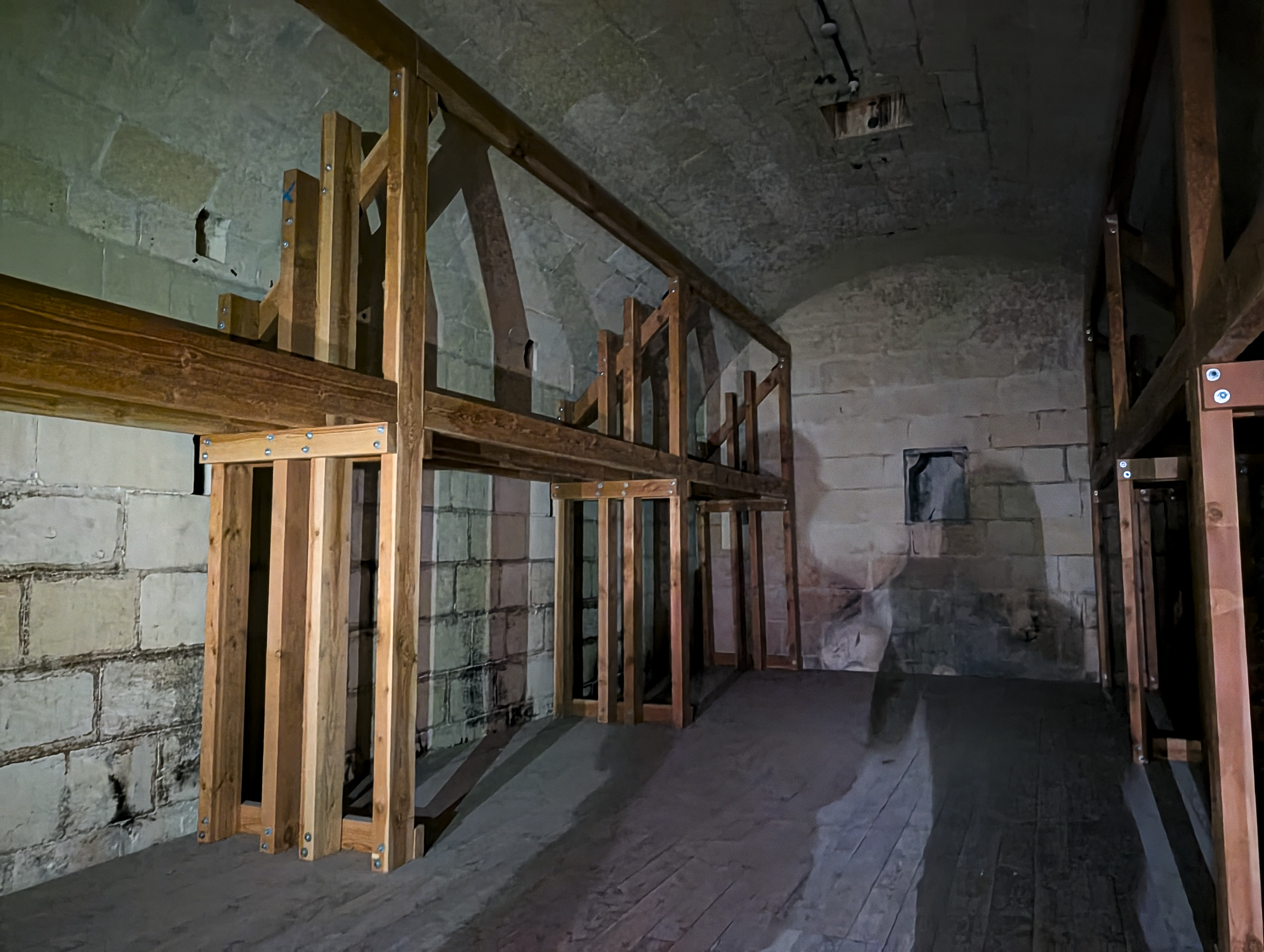
If you’ll be visiting the War HQ Tunnels and/or Lascaris War Rooms, you should definitely take the guided tour of the St. Peter’s Galleries as well. Constructed hastily during the war, they were abandoned in 1943 and only rediscovered in 2009. These are mostly on the larger side (as far as WWII air raid shelters go) and do an excellent job of explaining the various methods used to create tunnel systems like these.
14. Underground Valletta
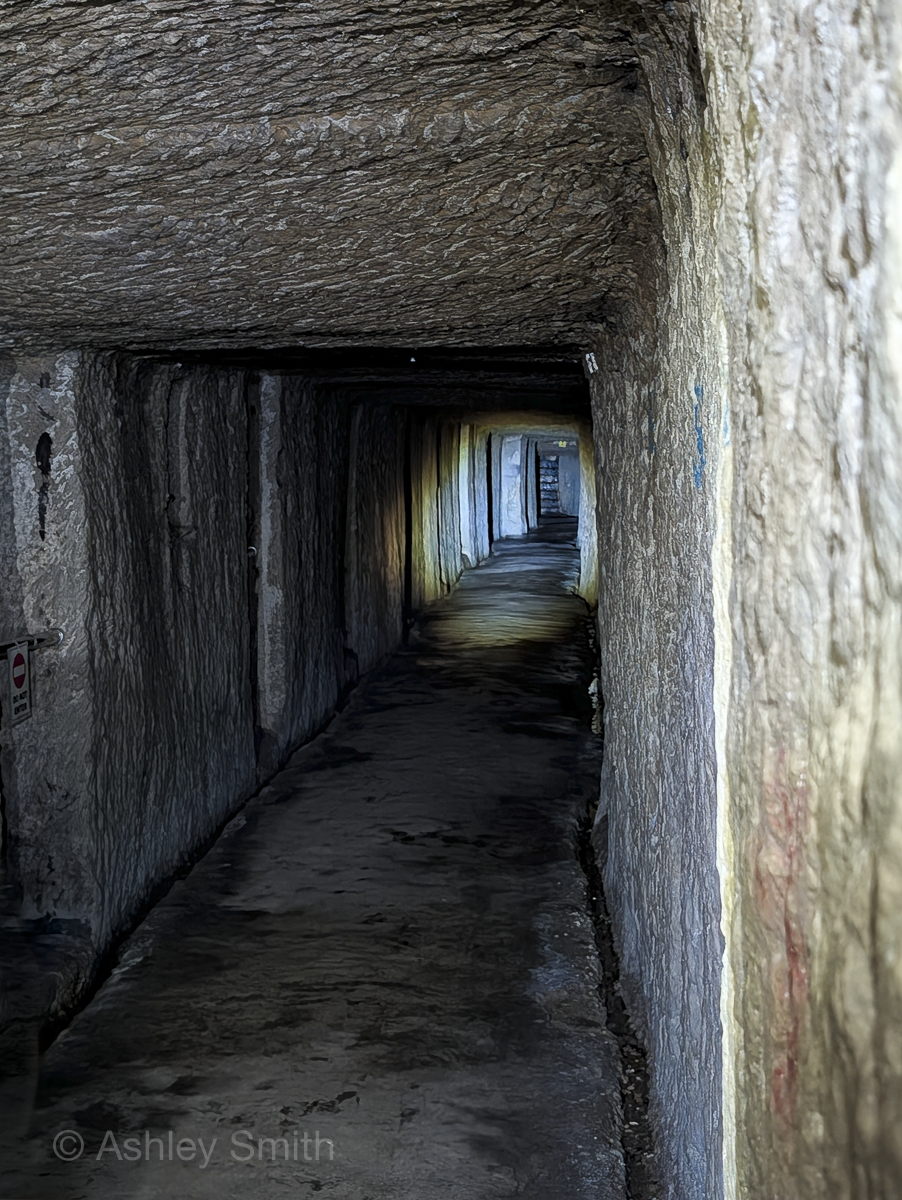
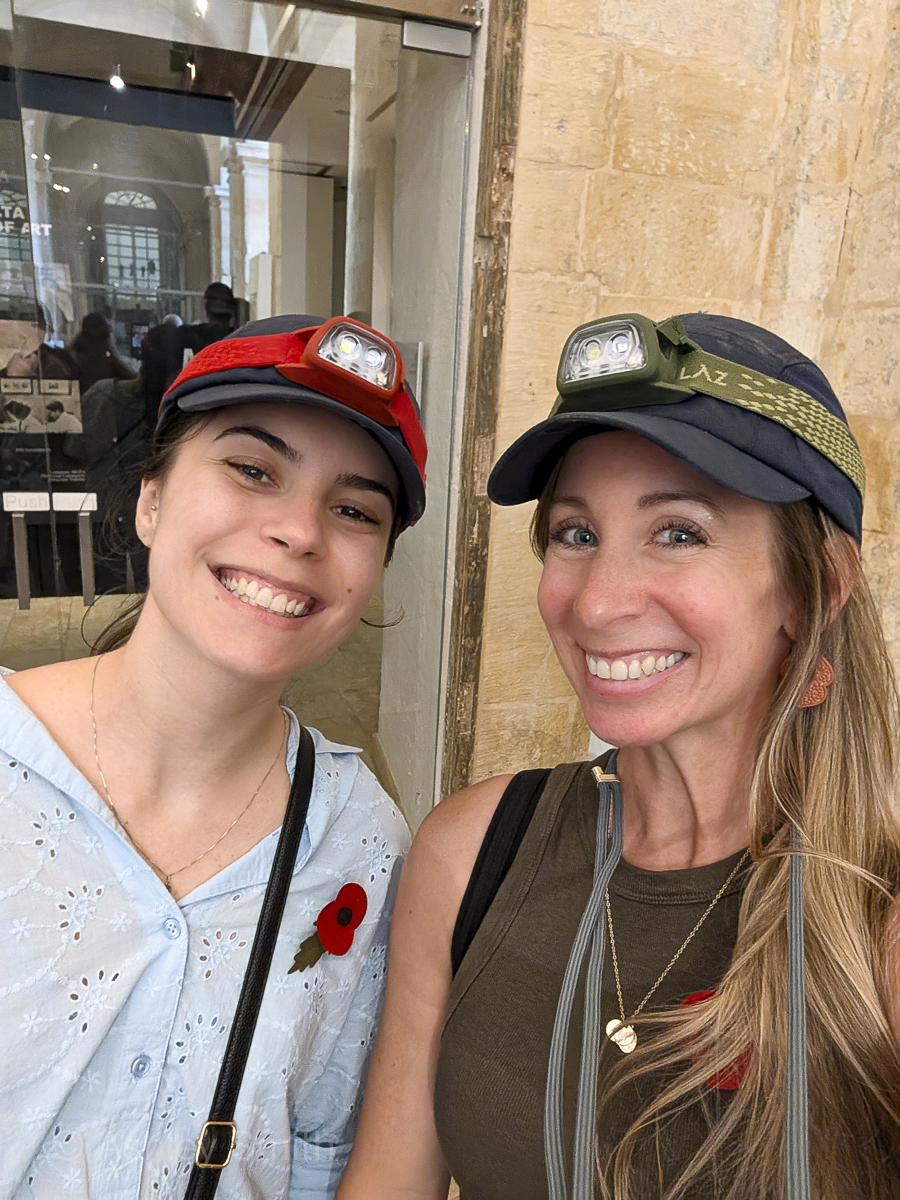
For another interesting tour of Malta’s WWII air raid shelters, check out Underground Valletta. Don a helmet and headlamp and head down deep under the busy center of Valletta. You’ll enter right next to St. John’s Co-Cathedral and venture down to the centuries-old city cisterns and the WWII shelter complex that surrounds it.
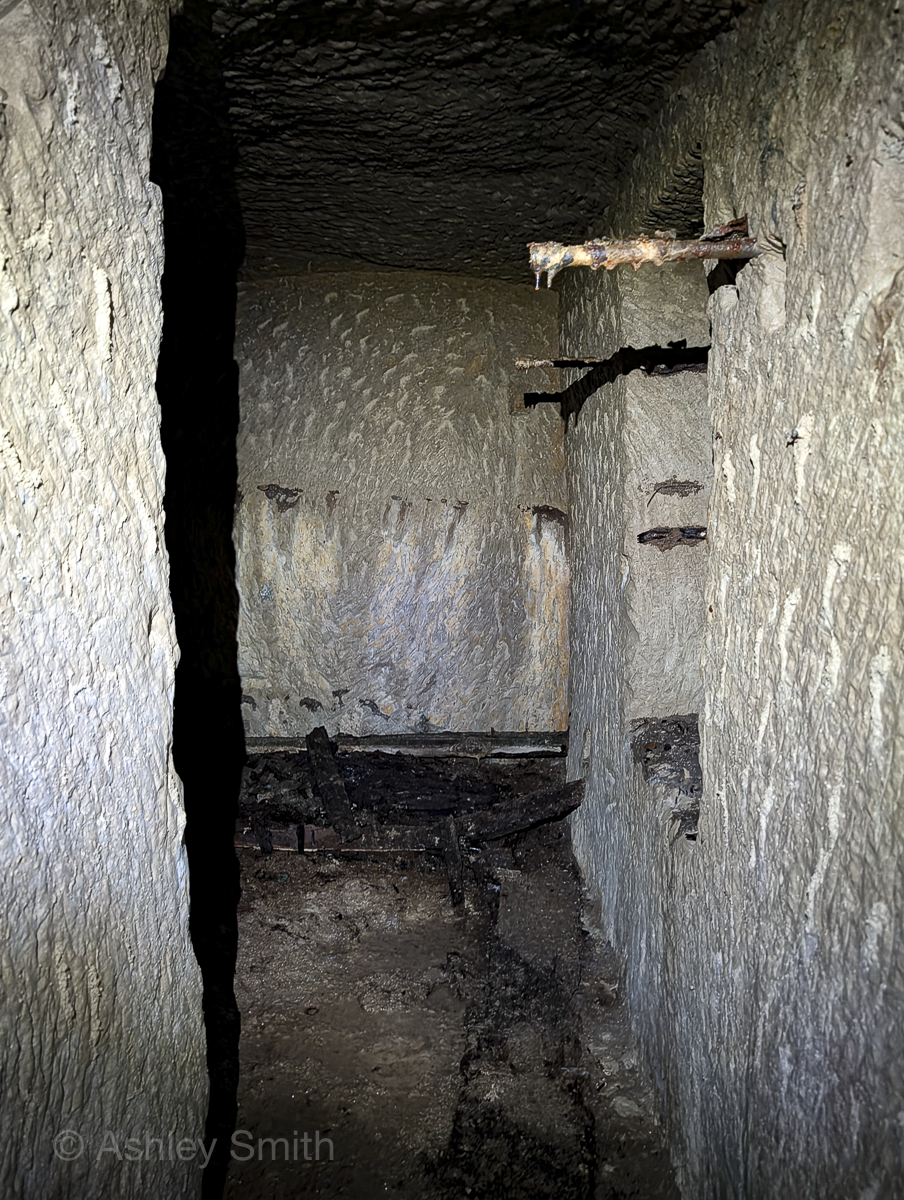
The complex here is a great example of the air raid shelters constructed in populated city centers (and how dreadful these experiences must have been). Despite being a considerably damp environment, a lot of original history has been preserved here. Through the wartime graffiti, decorative tiles, and limestone carvings, you can get a real sense of how the people who sought refuge here tried to make it as habitable and, dare I say, homely as possible.
15. Mosta Dome shelters
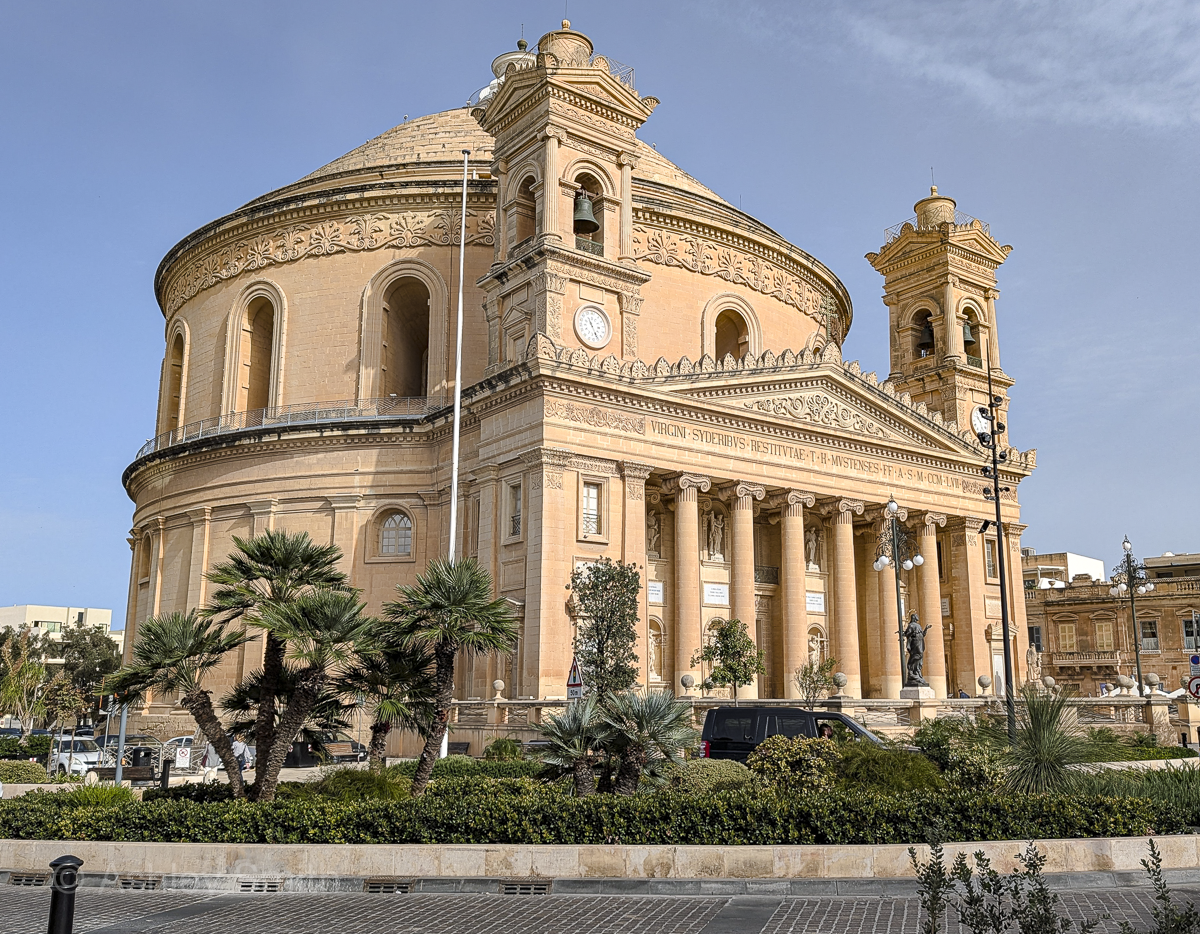
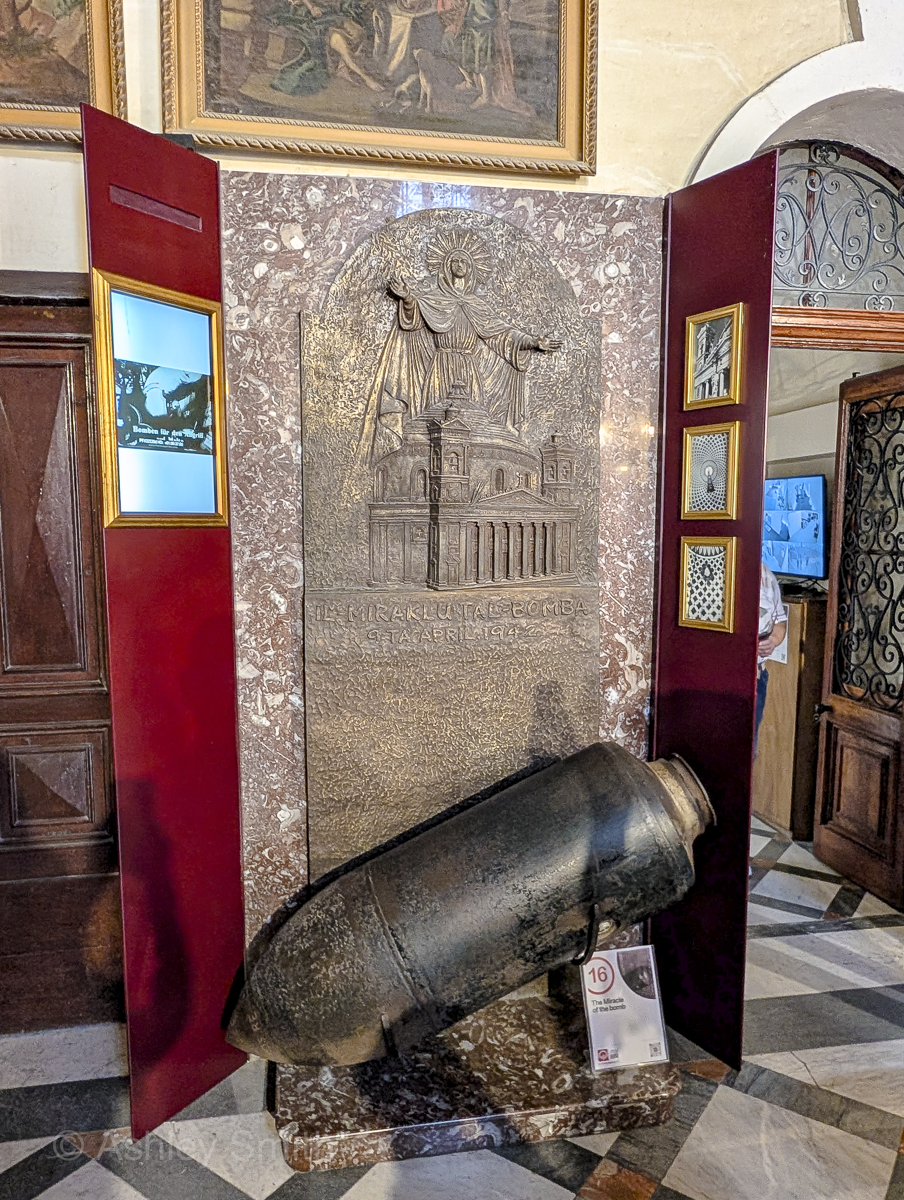
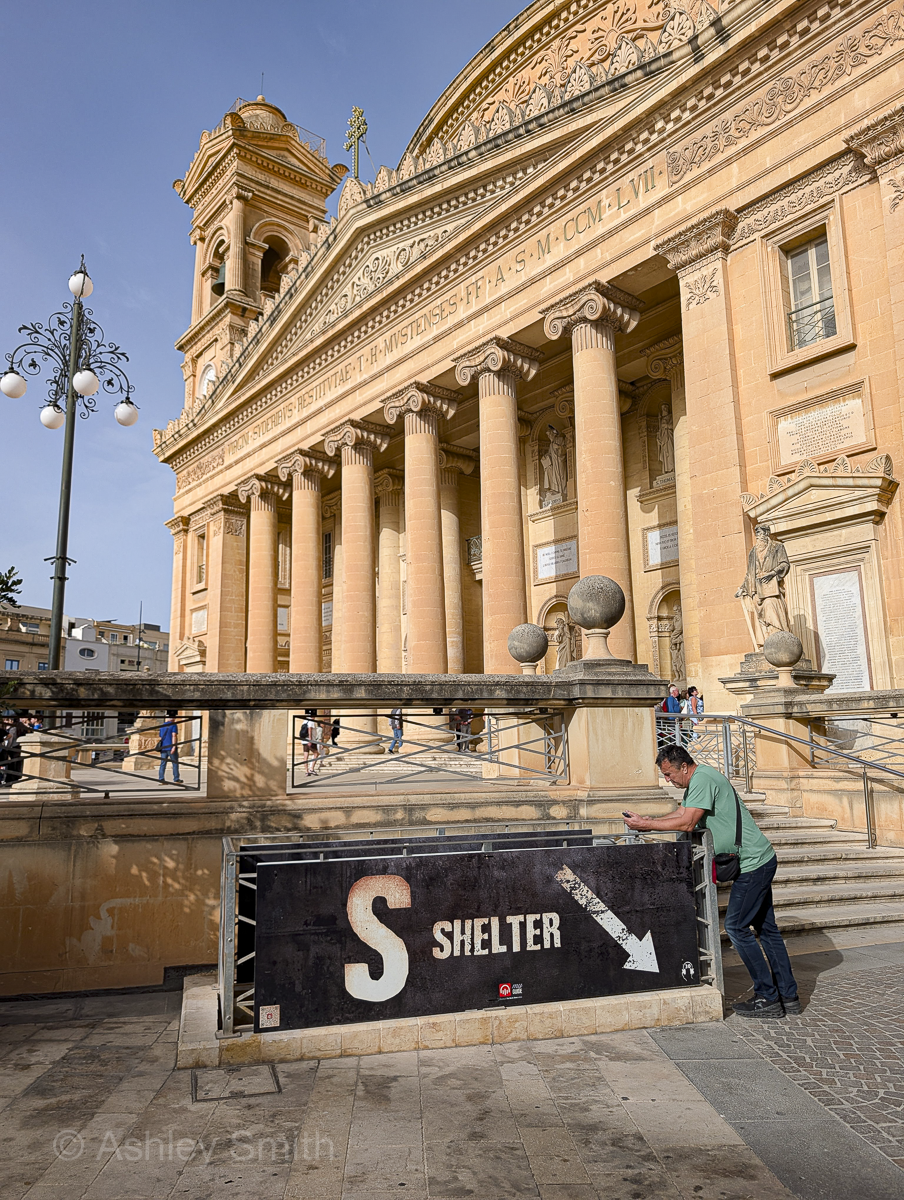
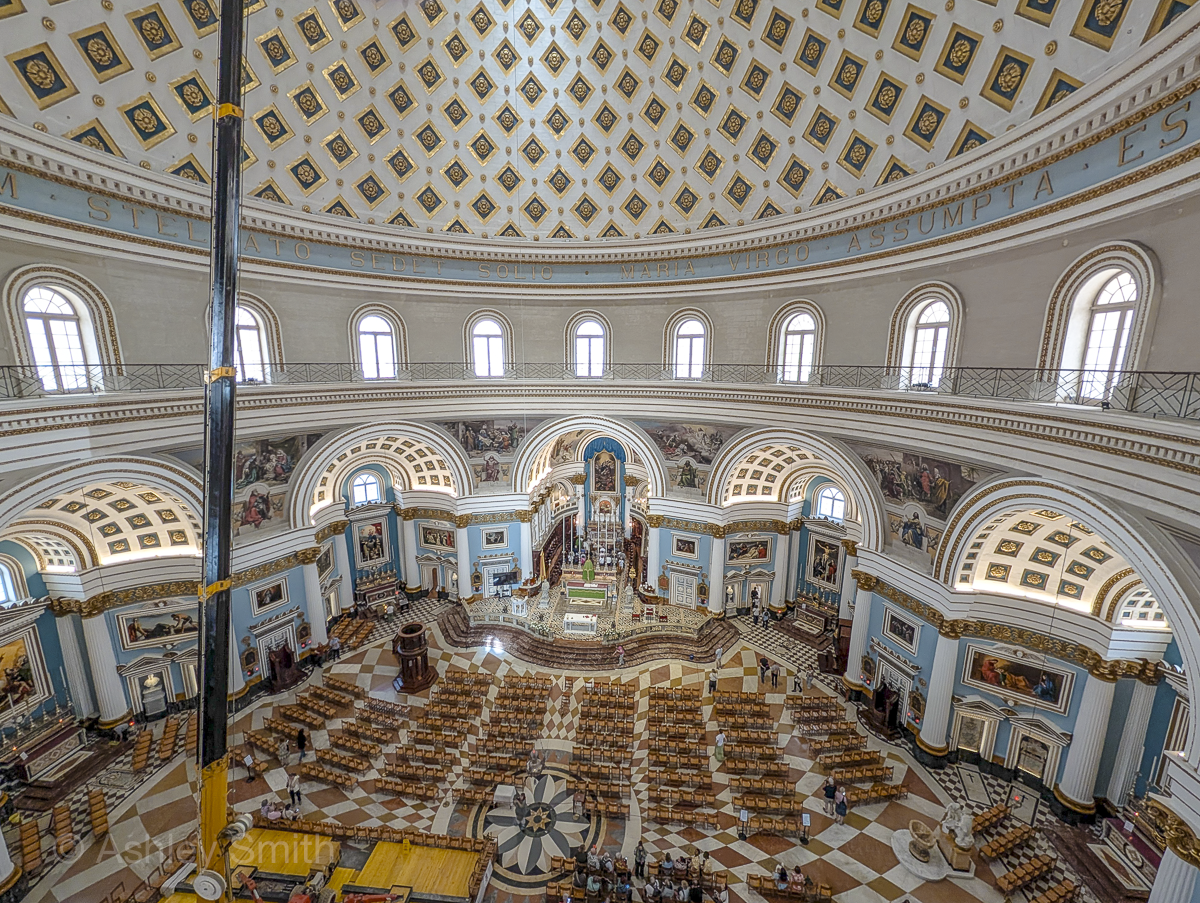
The Mosta Rotunda is well worth a visit in general, but especially for WWII history buffs. One thing this massive Roman Catholic church is known for is the miracle that occurred here on April 9, 1942. During an air raid that morning, a Nazi plane dropped a bomb that pierced the famous dome and crashed into the church. Miraculously, the bomb didn’t explode, no one was killed, and the church survived.
Like many other churches and public sites around Malta, the Mosta Dome also has its fair share of underground WWII air raid shelters that are open to visitors.
16. Wignacourt Museum WWII shelters
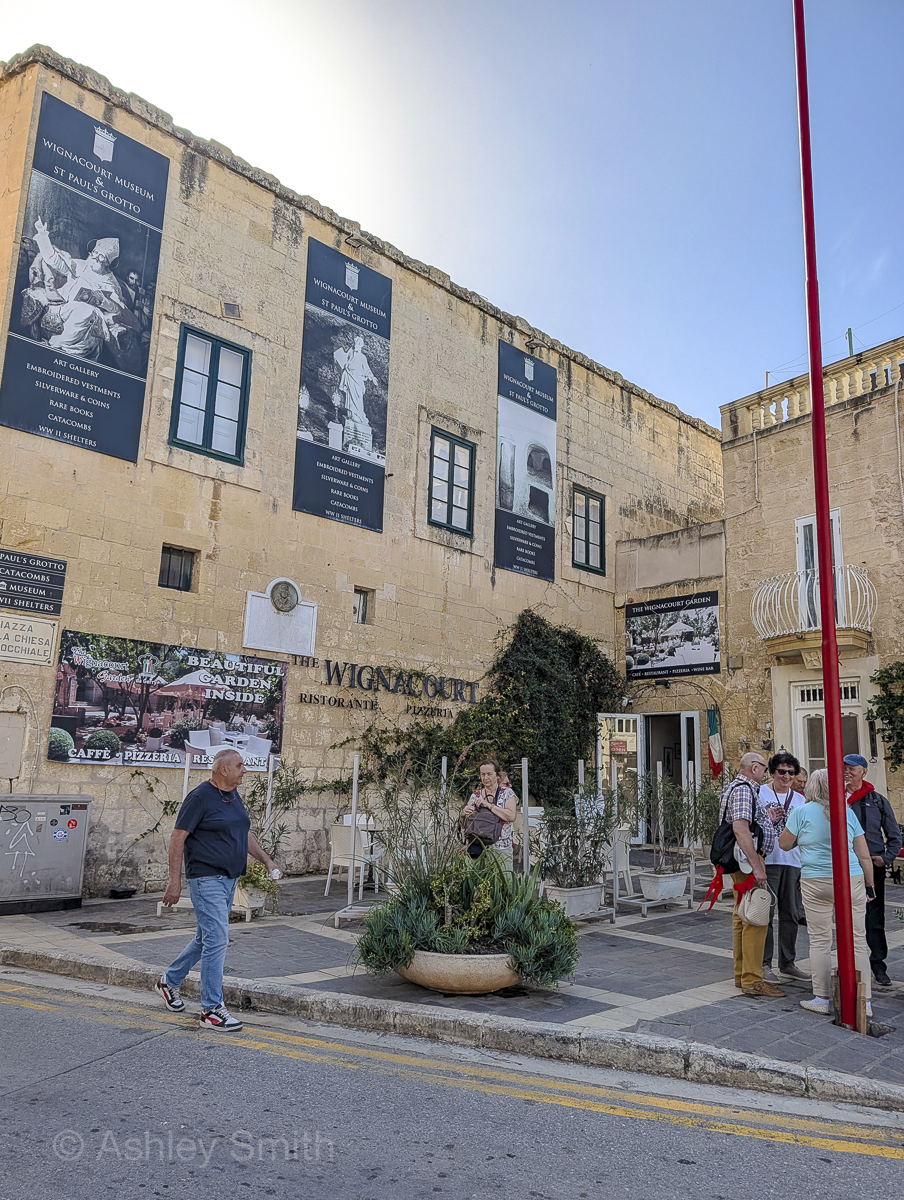
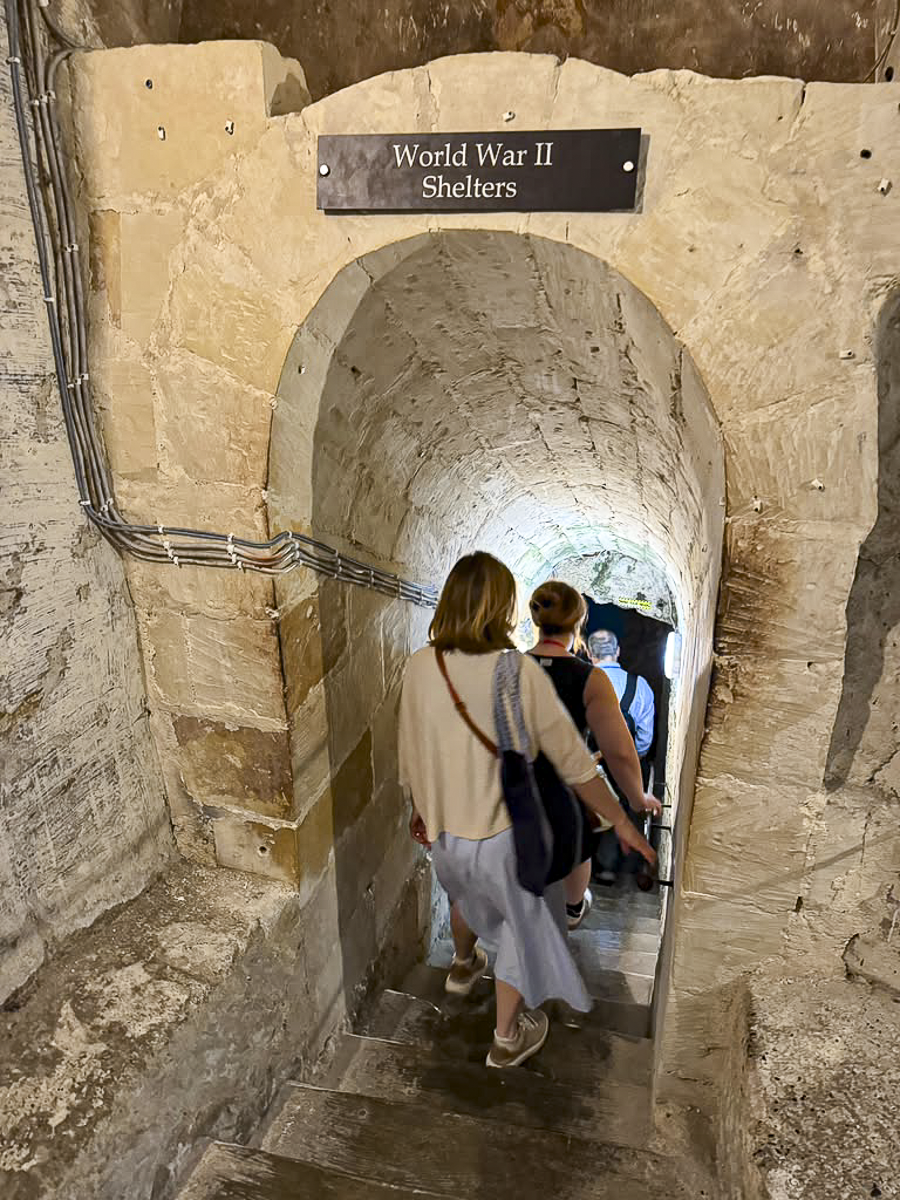
The Wignacourt Museum in nearby Rabat also boasts its own WWII shelters as well. Though mostly known for its St. Paul’s Grotto, you can also head down to see its 50-room air raid shelter complex. You’ll probably notice a difference between the ones in Valletta and the ones outside of Valletta in terms of look, feel, and size. (To me, these have a more “prehistoric” vibe than the others. Or maybe I’ve just spent too much time underground lately.)
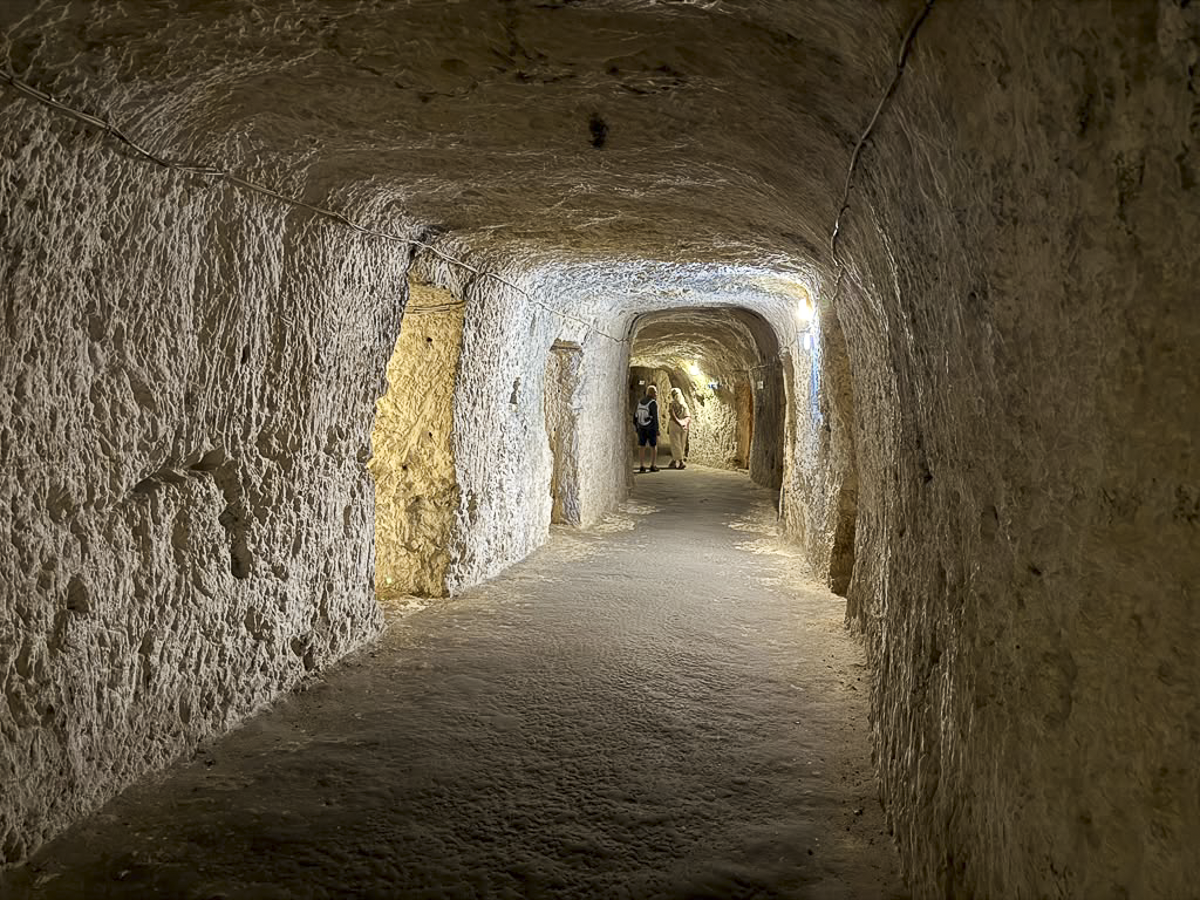
17. Rabat Citadel shelters
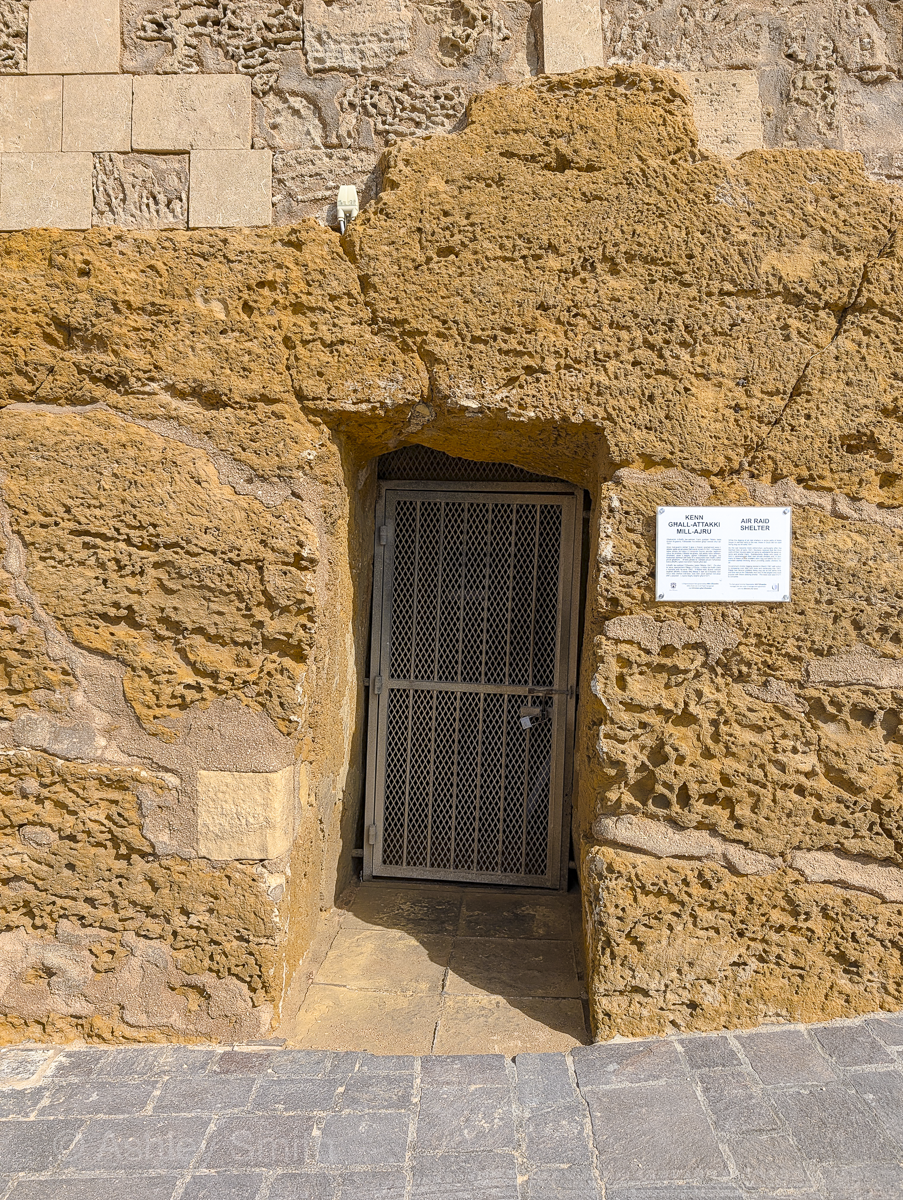
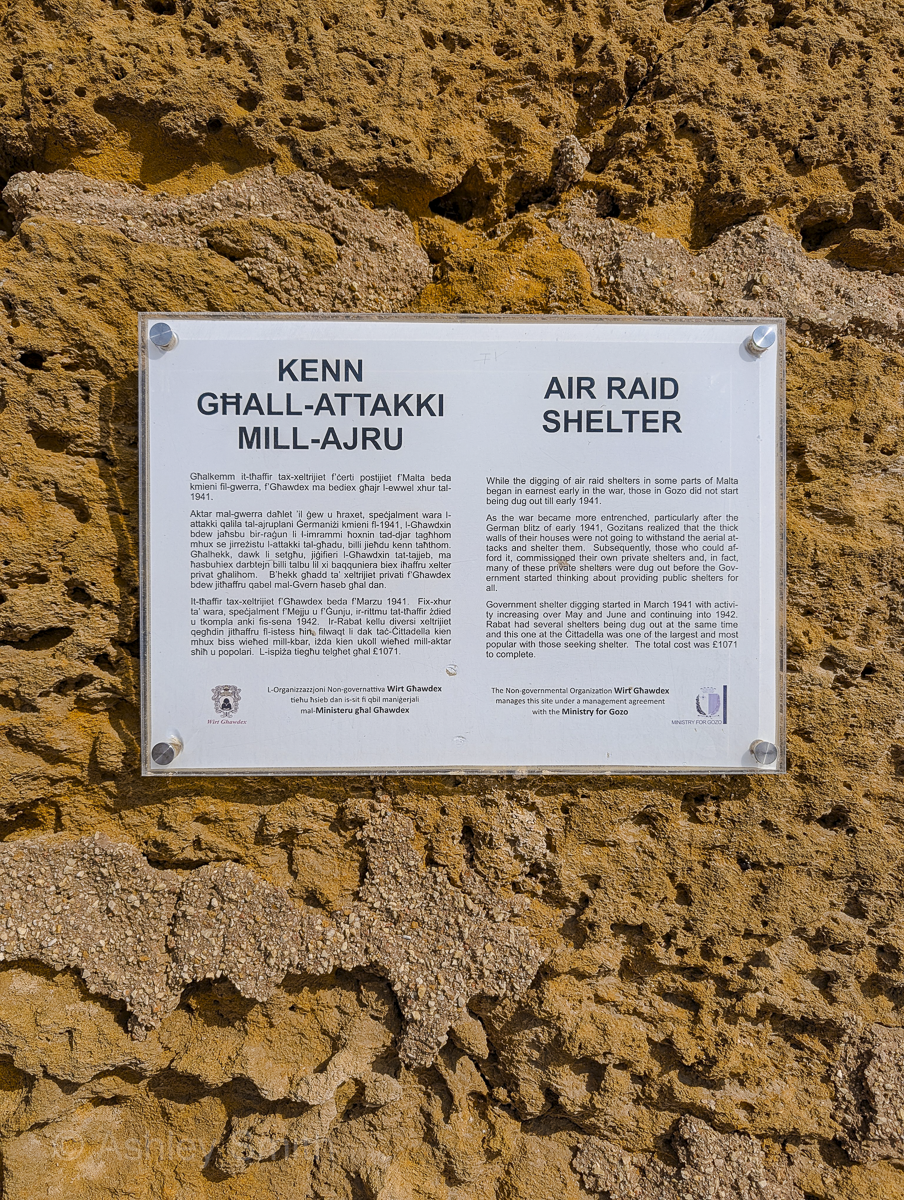
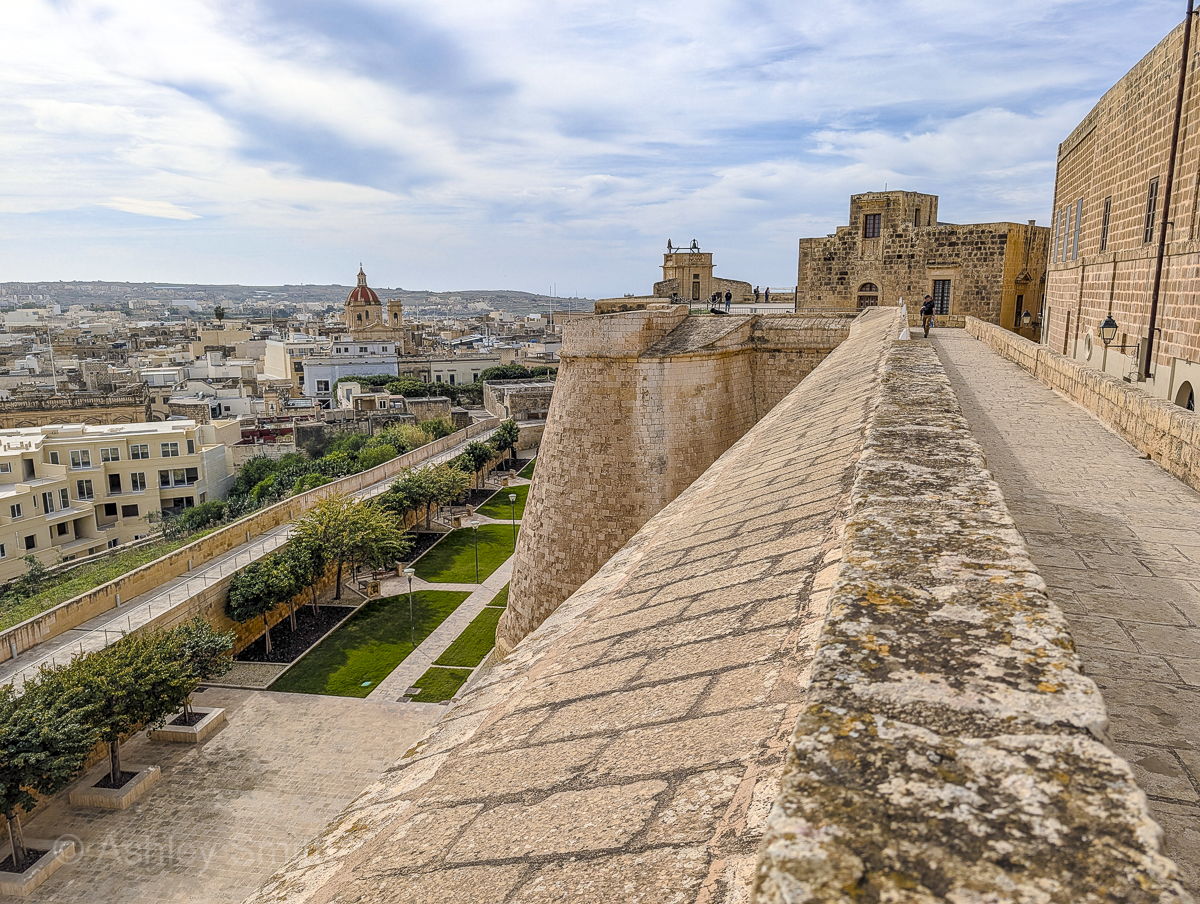
The Rabat Cittadella is a walled city that dates as far back as the Bronze Age (3000 BC!), with its modern look taking shape in the 1500s. In addition to the many prehistoric and medieval things to see here, you can also visit its WWII air raid shelters. Located mostly beneath its outer bastions, the shelters will probably be the first thing you encounter here.
Unlike the many other shelter sites, the ones here are quite small and limited to just about five rooms. Still, you can (and should) visit them on certain days when volunteers are available.
Other WW2 sites in Malta
Besides the sites mentioned above, Malta has tons more WWII historical sites that don’t fit cleanly into any other category. Here are some more to add to your itinerary:
18. Mosta Dome
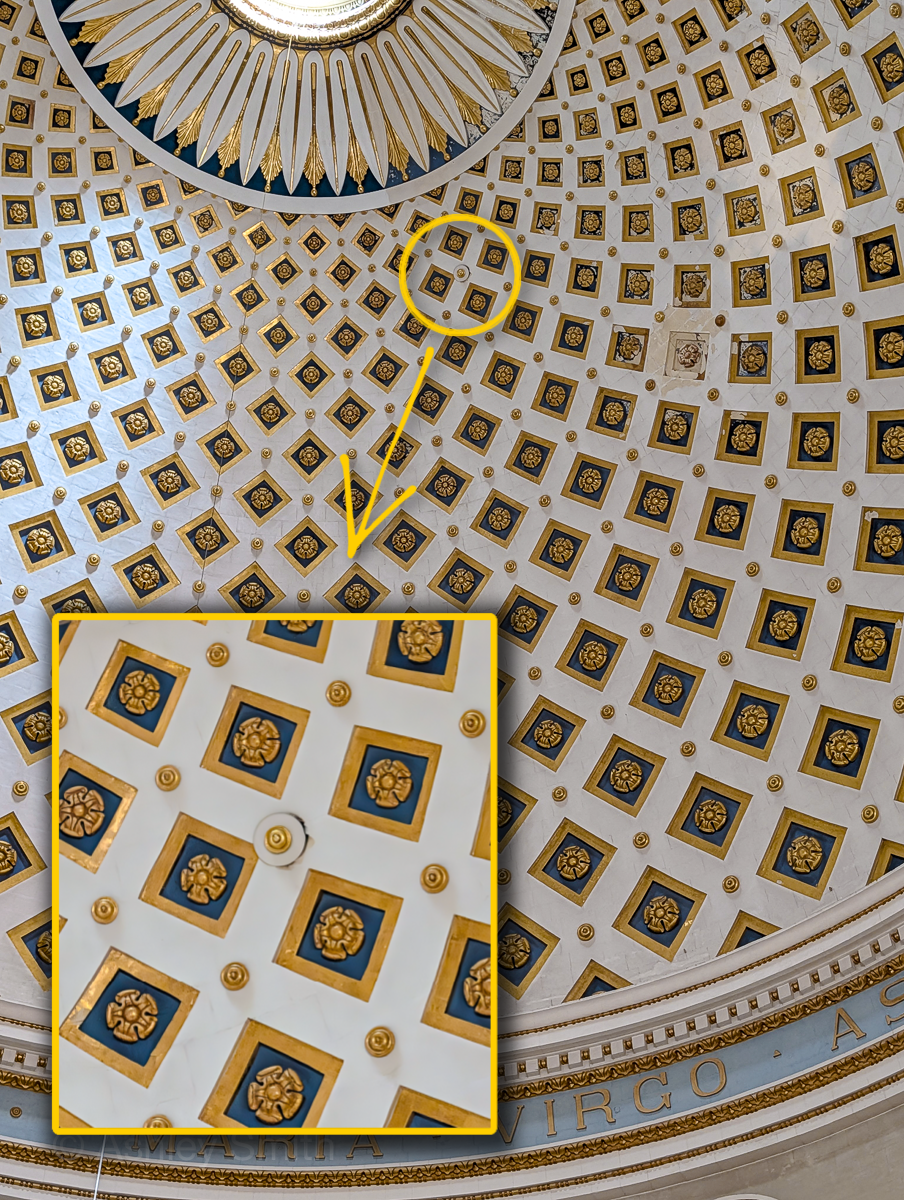
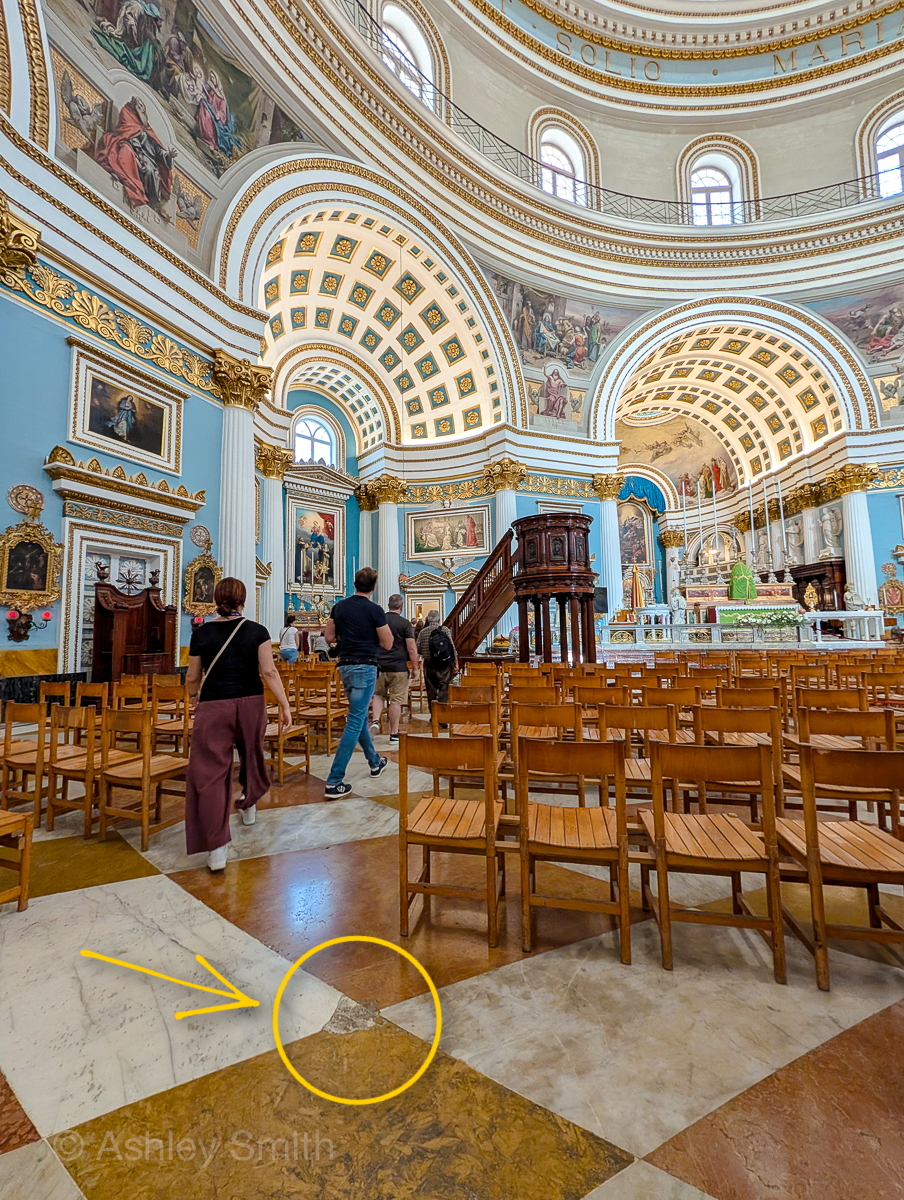
I’m including the Mosta Dome here too because its WWII history is more than just the shelters beneath it. I mentioned the miracle that occurred here, and you can still see the evidence of this today.
Look up inside the dome and the exact spot where the bomb fell is marked by a slightly raised protrusion. Over towards the left side of the building, you can also see some damaged floor tiles where the bomb eventually landed. Inside the small gift shop is also a replica of the bomb as well as an informative video about the incident.
19. Churchill Monument
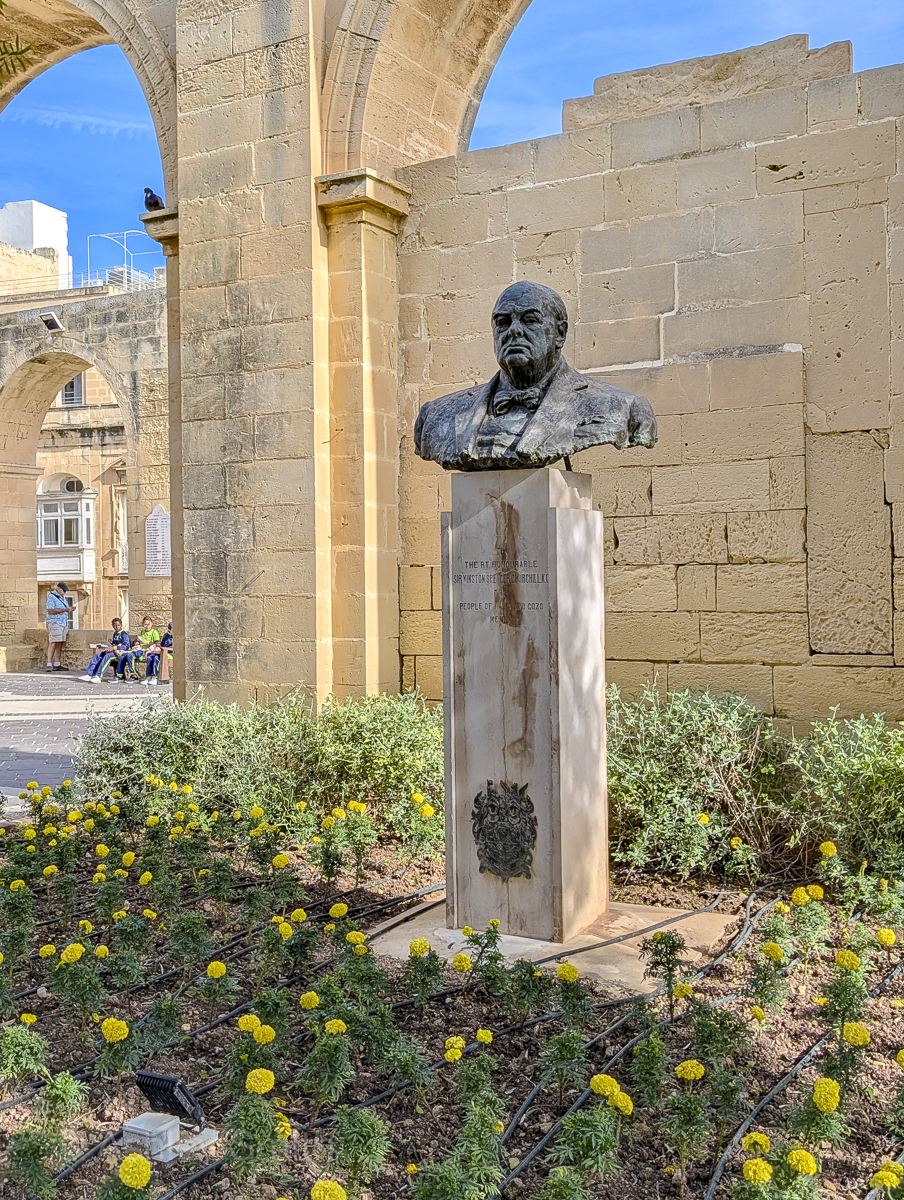
At the eastern edge of the Upper Barrakka Gardens you’ll find a bronze bust of Winston Churchill–a monument to him from the people of Malta.
20. Inquisitor’s Palace
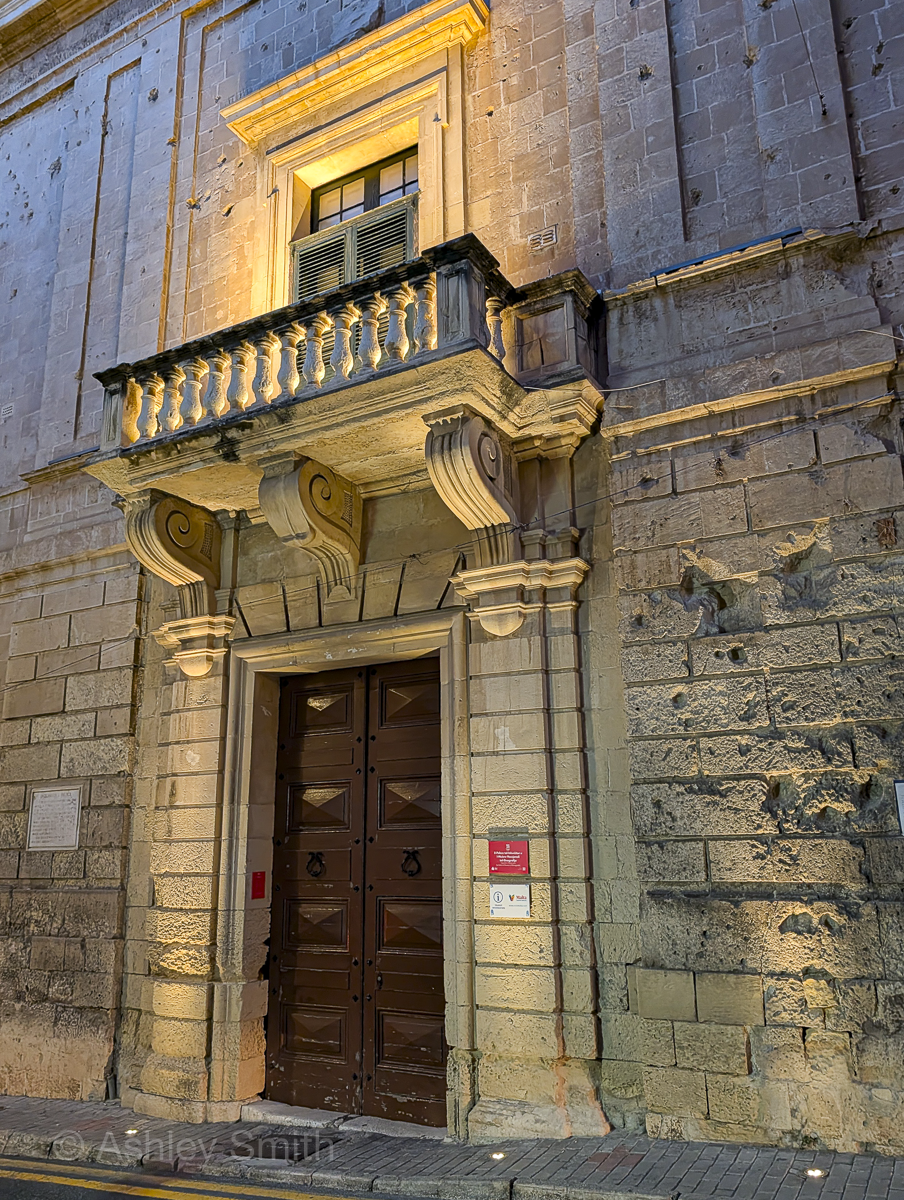
Over in Birgu you can visit the Inquisitor’s Palace—the medieval palace, courthouse, and seat of the Maltese Inquisition. But before you enter, take a good look at the façade where you can see tons of leftover shrapnel damage from the countless bombing raids.
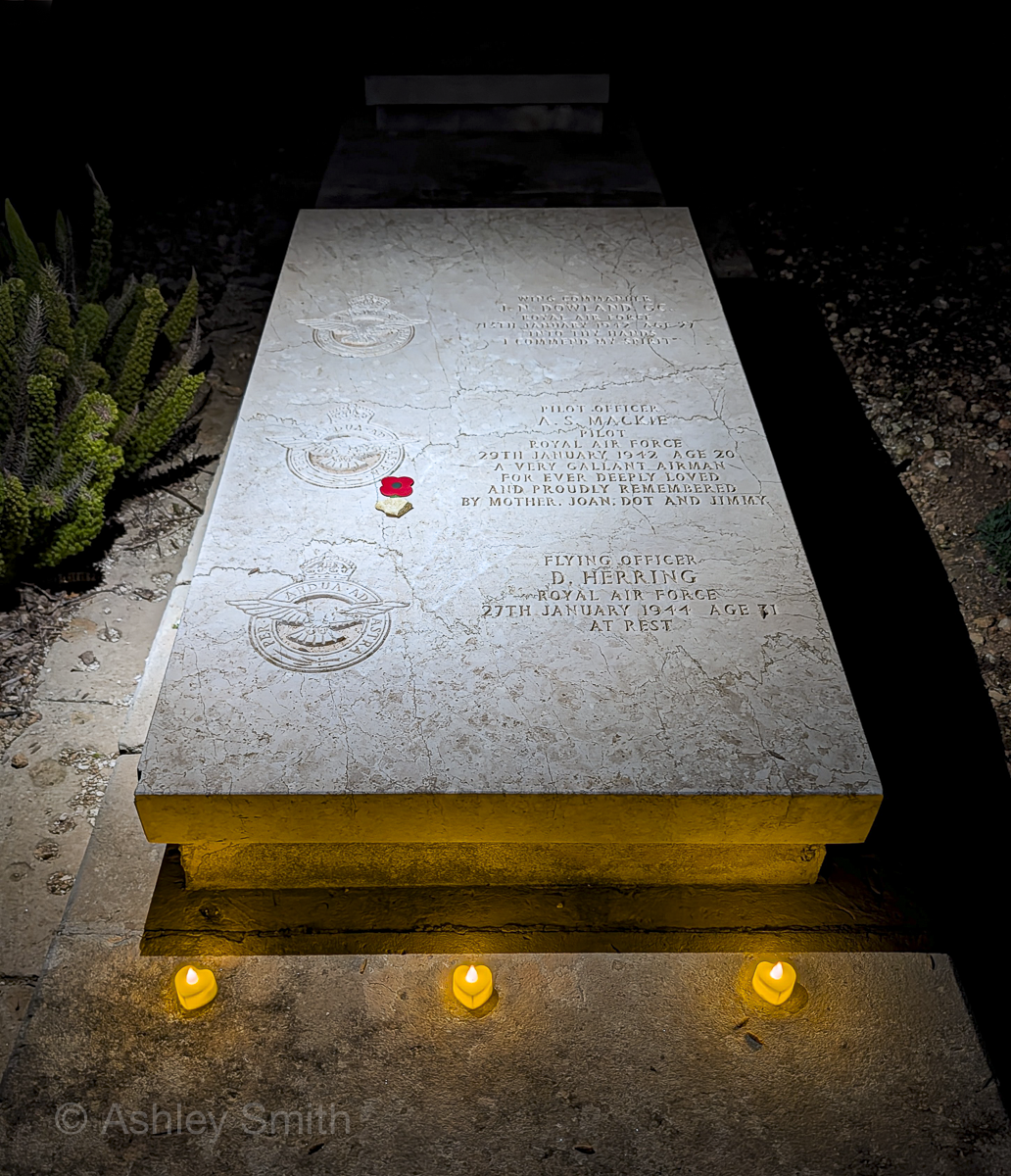
21. Kalkara Naval Cemetery
Kalkara Naval Cemetery is a Commonwealth military cemetery. Of the more than 2,600 graves here, 719 of those are from World War II.
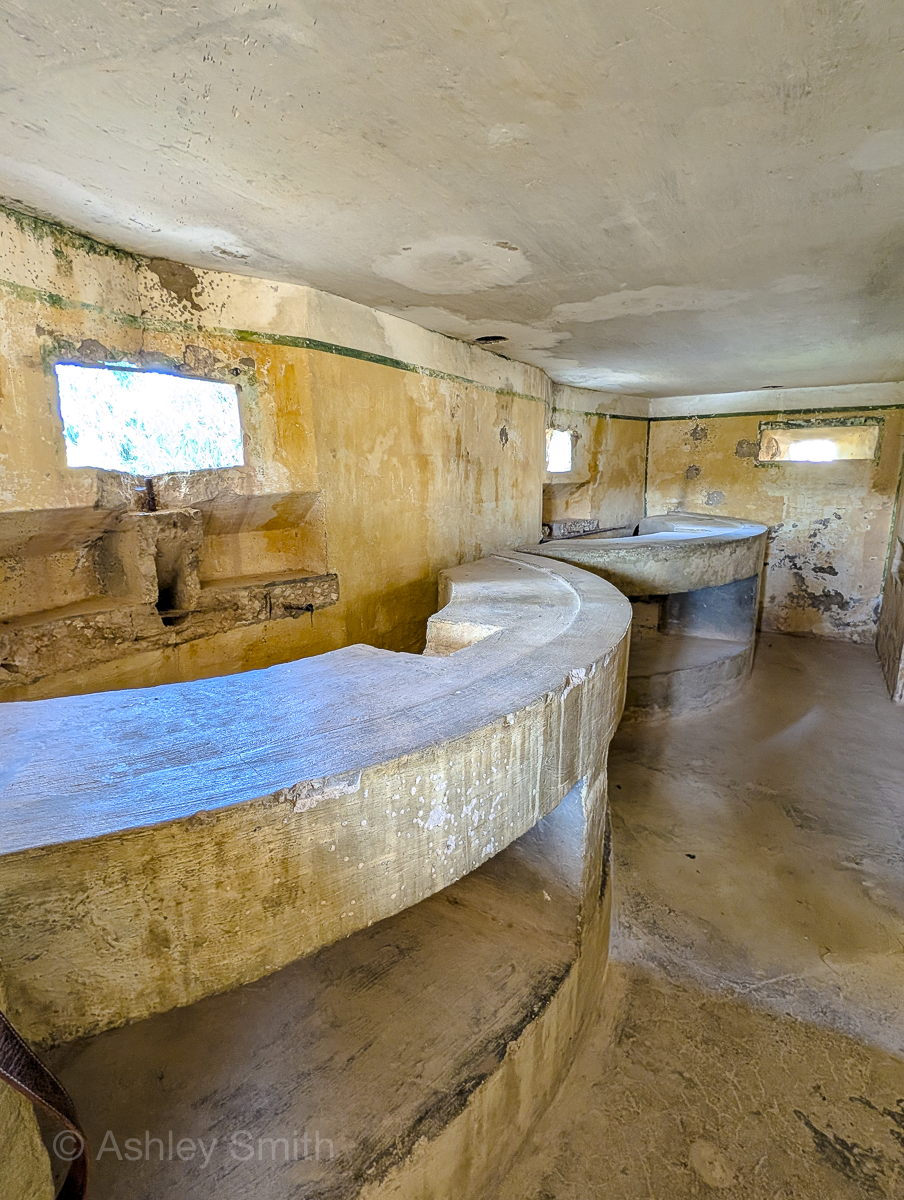
22. WWII pillboxes
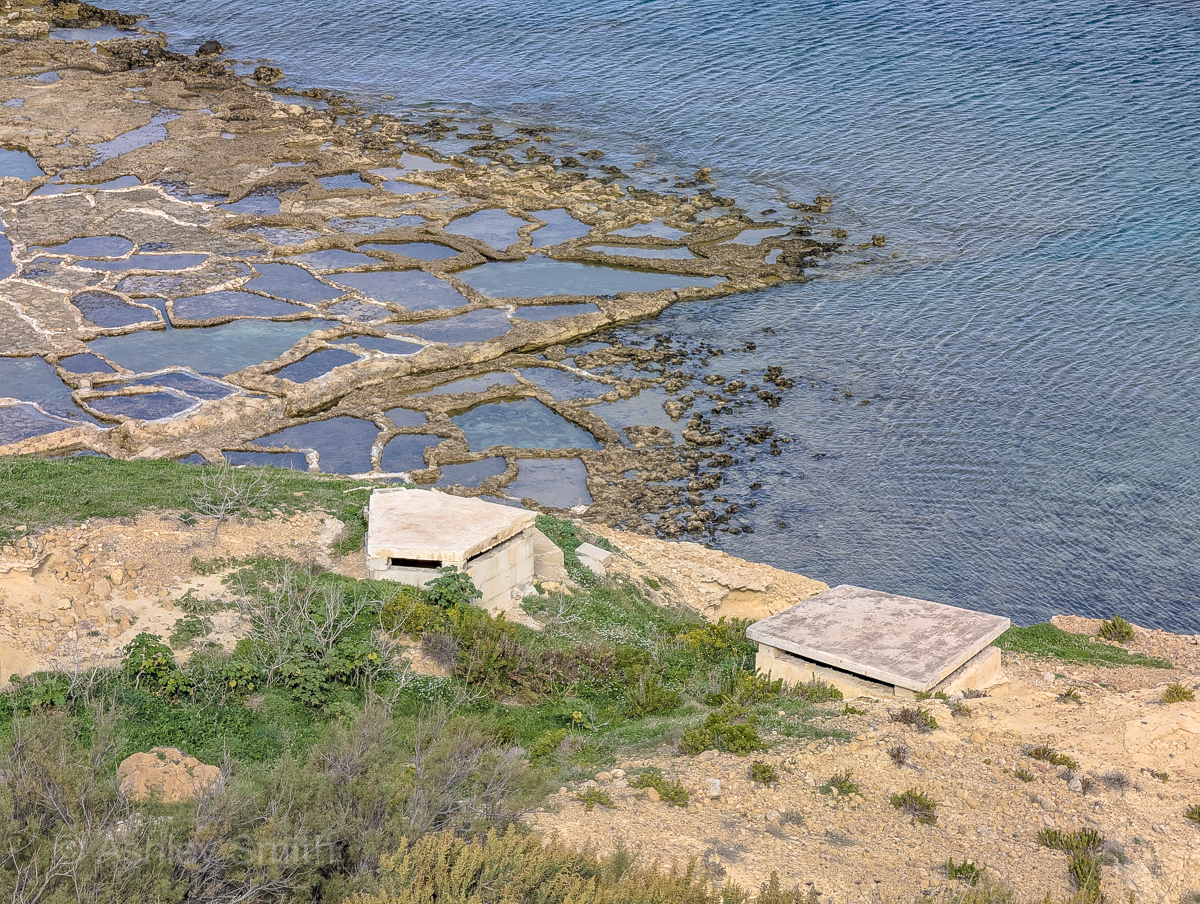
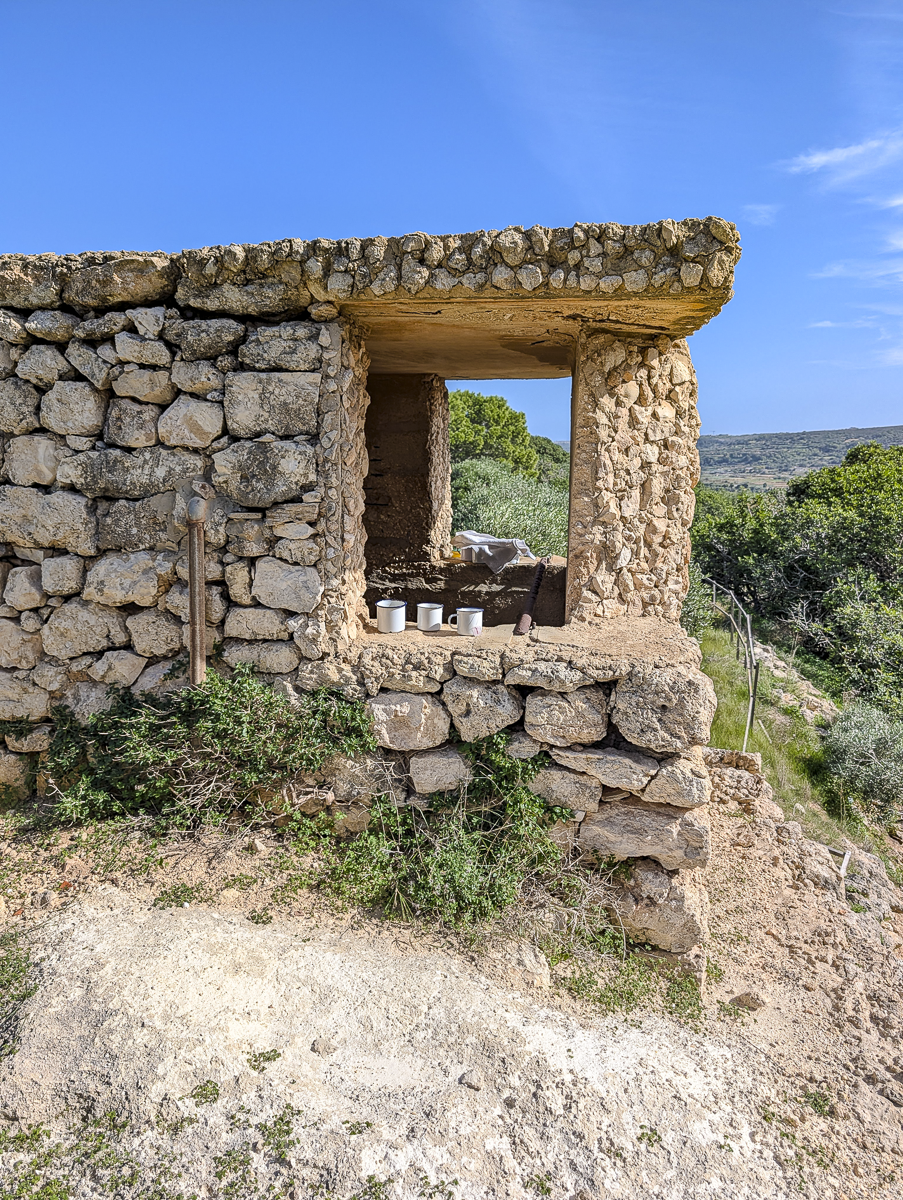
Given Malta’s significant location, it was crucial that it have the proper defenses in place. In addition to the many forts here, the British military also constructed hundreds of pillboxes on the Maltese islands to aid in the country’s defense. These simple concrete bunkers could hold a handful of infantrymen and be armed with rifles, machine guns, and grenades. Though they’re most often found along coastlines, they could really be built anywhere that warranted defending.
While none of these are effectively “open” for tourist visits, you can still find them all over the islands. Keep your eyes peeled while you’re out driving through the countryside, along the coast, or taking the ferry between islands and you’ll probably see some. (But keep in mind the whole point of these is to be inconspicuous.) I’ve pointed out where you can find a few of them on the map at the top of this page.
Need to know: Since they’re not officially maintained, explore any pillboxes you find with caution. Also remember that many of these are now located on private property.
24. Church of St. Lawrence
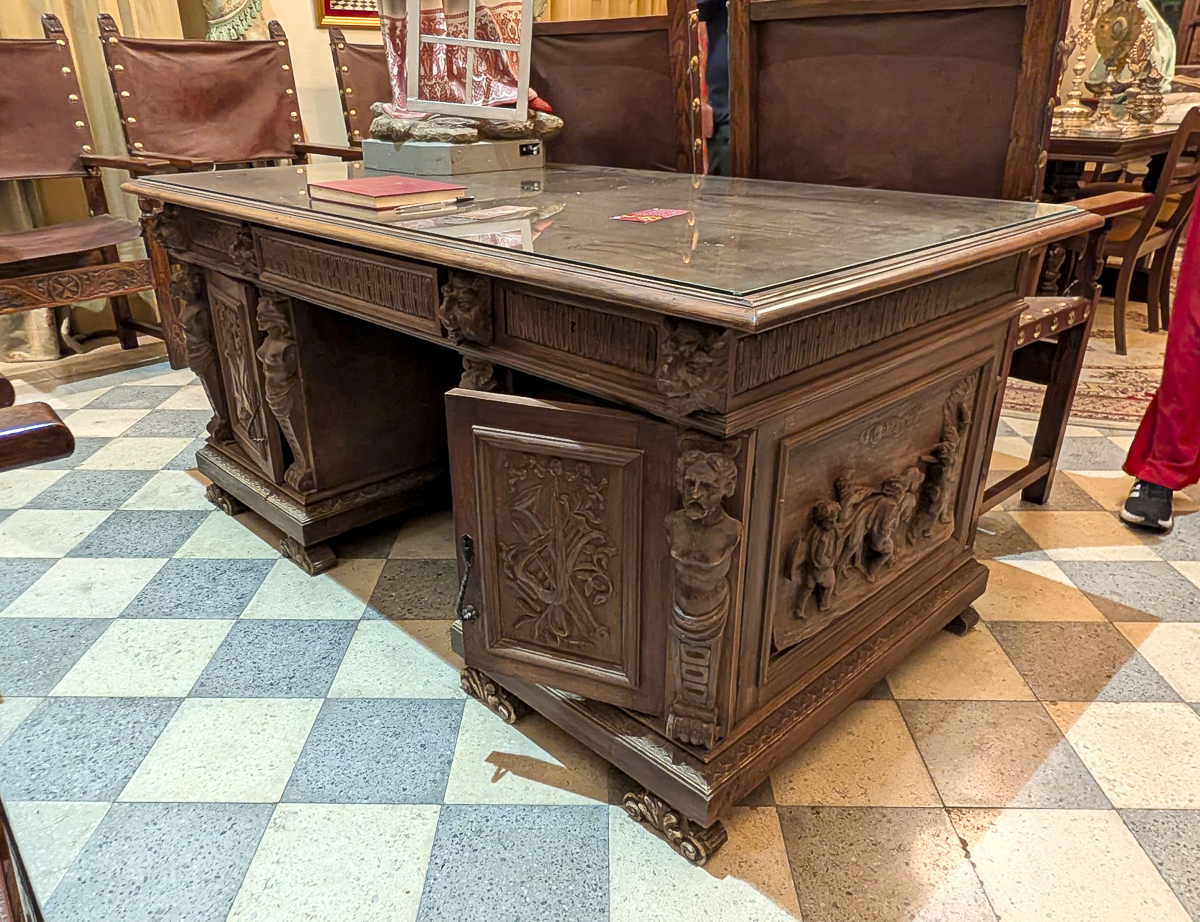
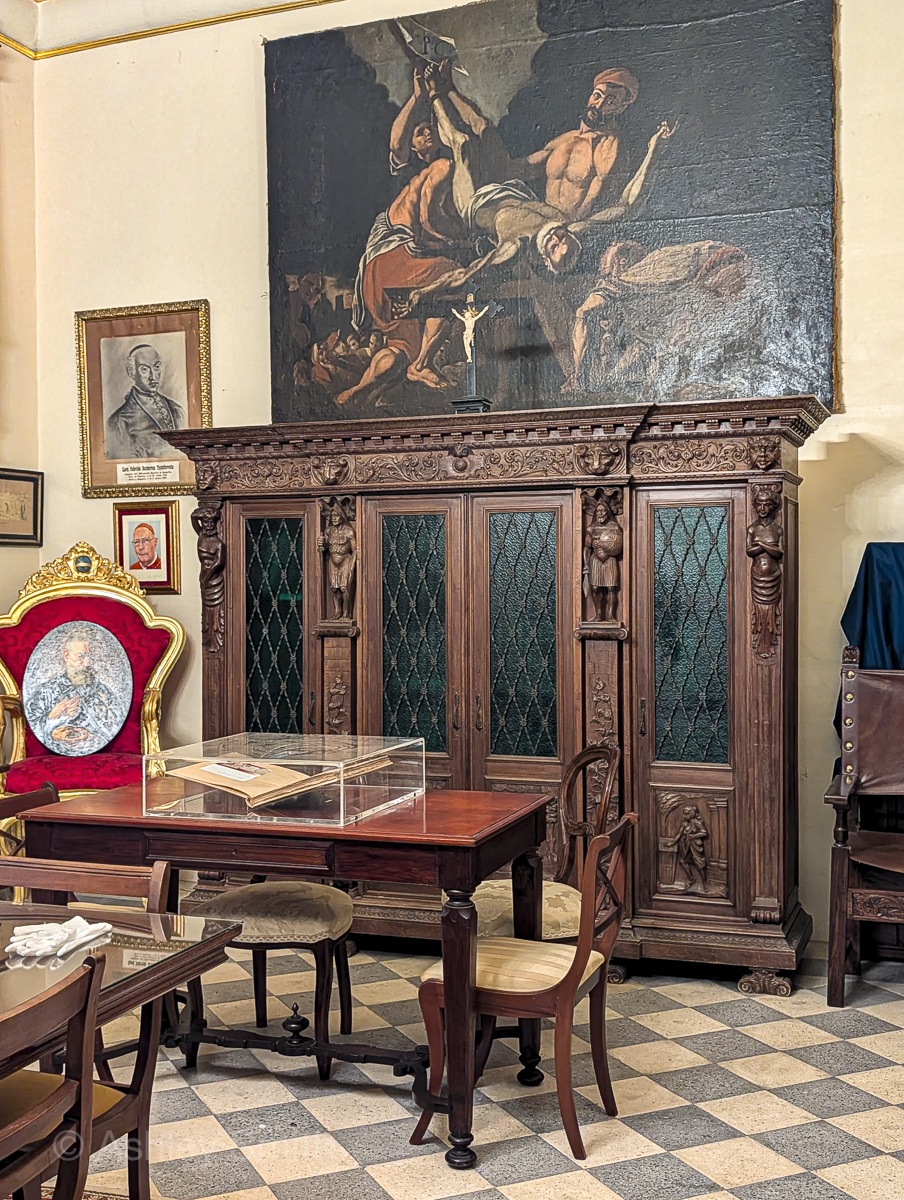
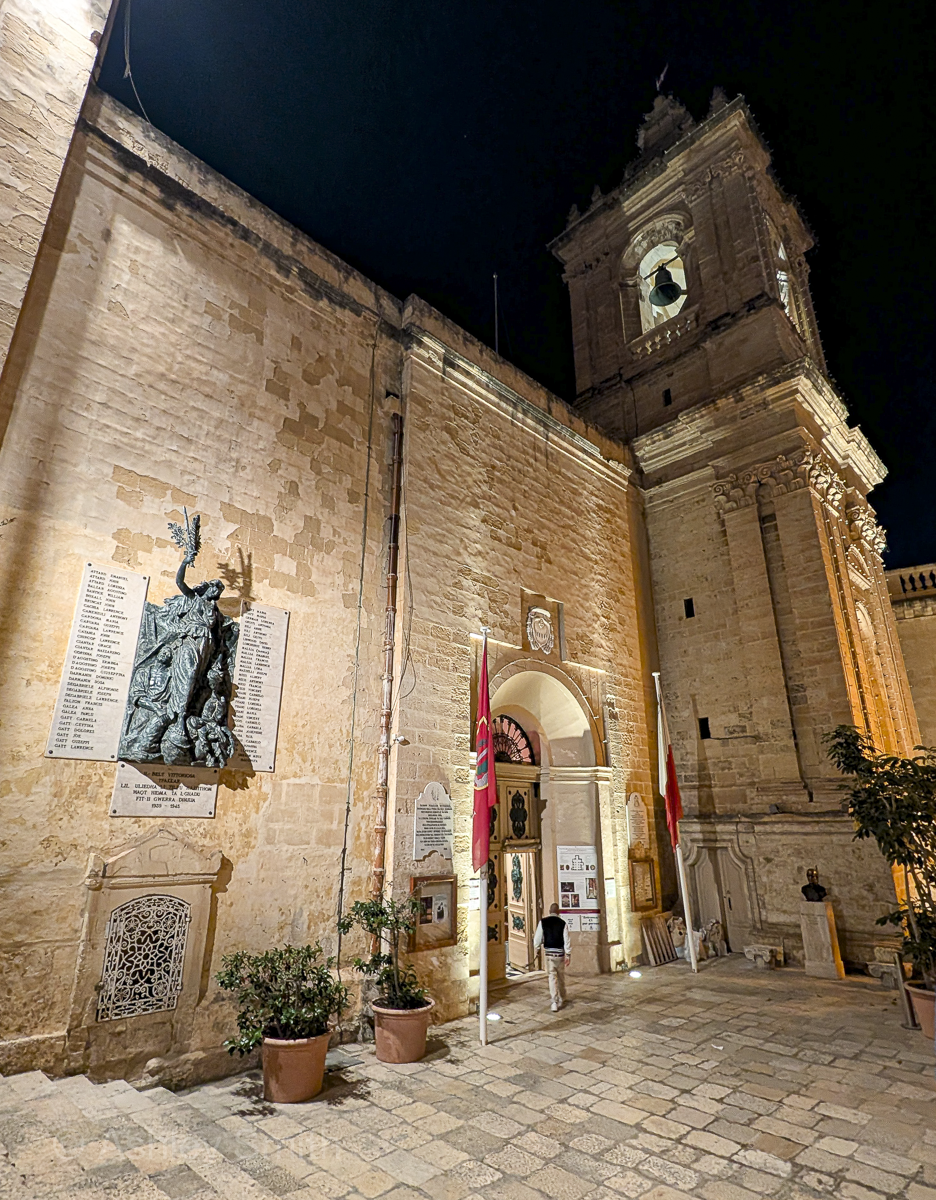
Over in Birgu is the Collegiate Church of St. Lawrence. Besides being repeatedly damaged and rebuilt during and after the war, this church is a treasure trove of priceless art and historical artifacts. All the other noteworthy religious and historical items aside (there are just too many to list!), the church’s Chapter Hall contains a couple of unexpected items: Mussolini’s personal writing desk and armoire, purchased at auction after the war and donated to the church.
At the St. Lawrence Church you can also find the Vittoriosa Parish Museum which has an even bigger stash of jaw-dropping items with a few seemingly random pieces of WWII history thrown in for good measure. This museum is open to the public but is currently undergoing some renovations so you may need to contact them directly for up-to-date hours. The Chapter Hall is currently not open to the public but is accessible on select “open days.” Again, contact them for more info.
Additionally, the exterior wall of the church near the main entrance holds a large memorial dedicated to those from Birgu (Vittoriosa) who died from “enemy action” in World War II.
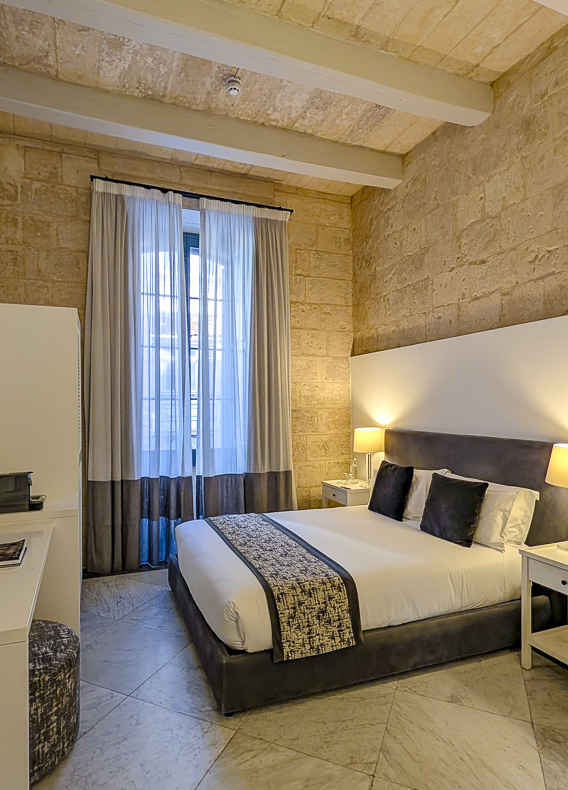
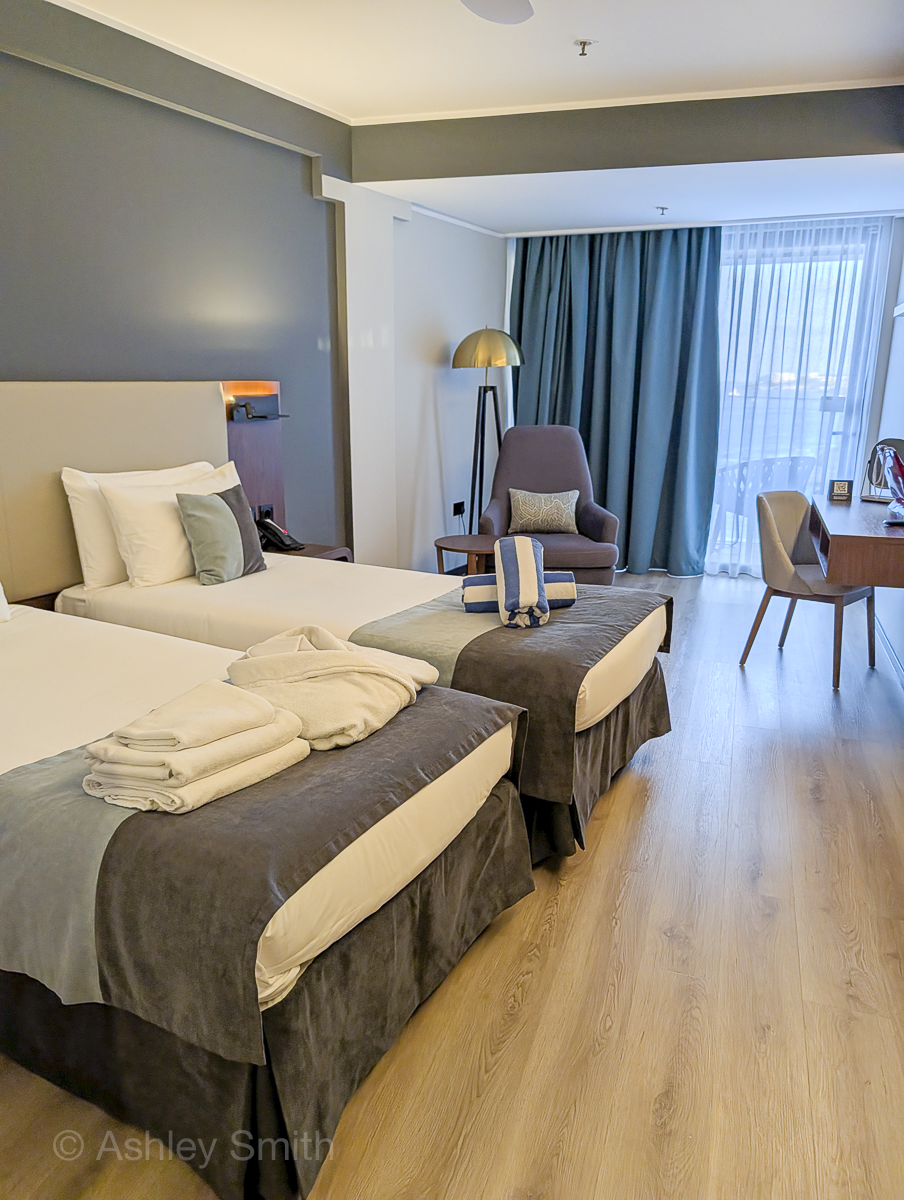
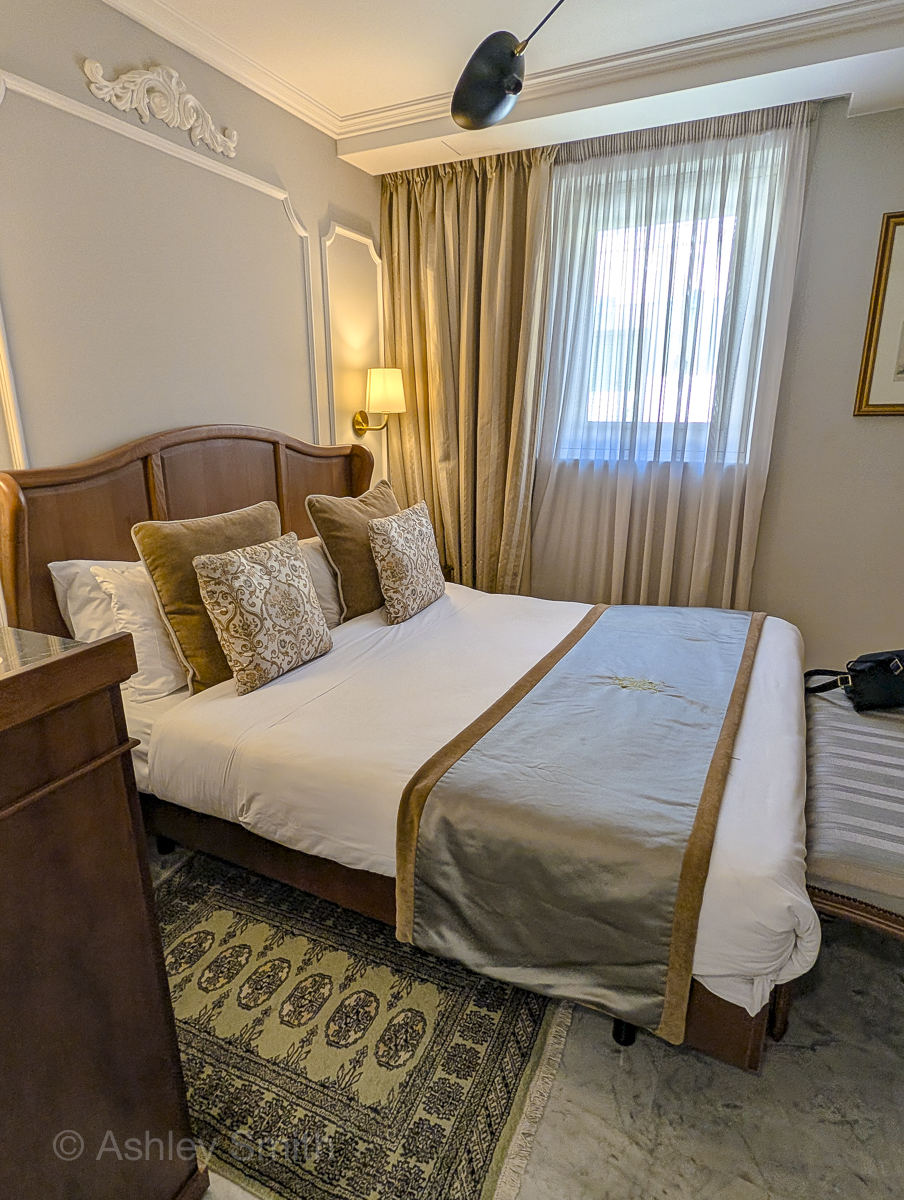
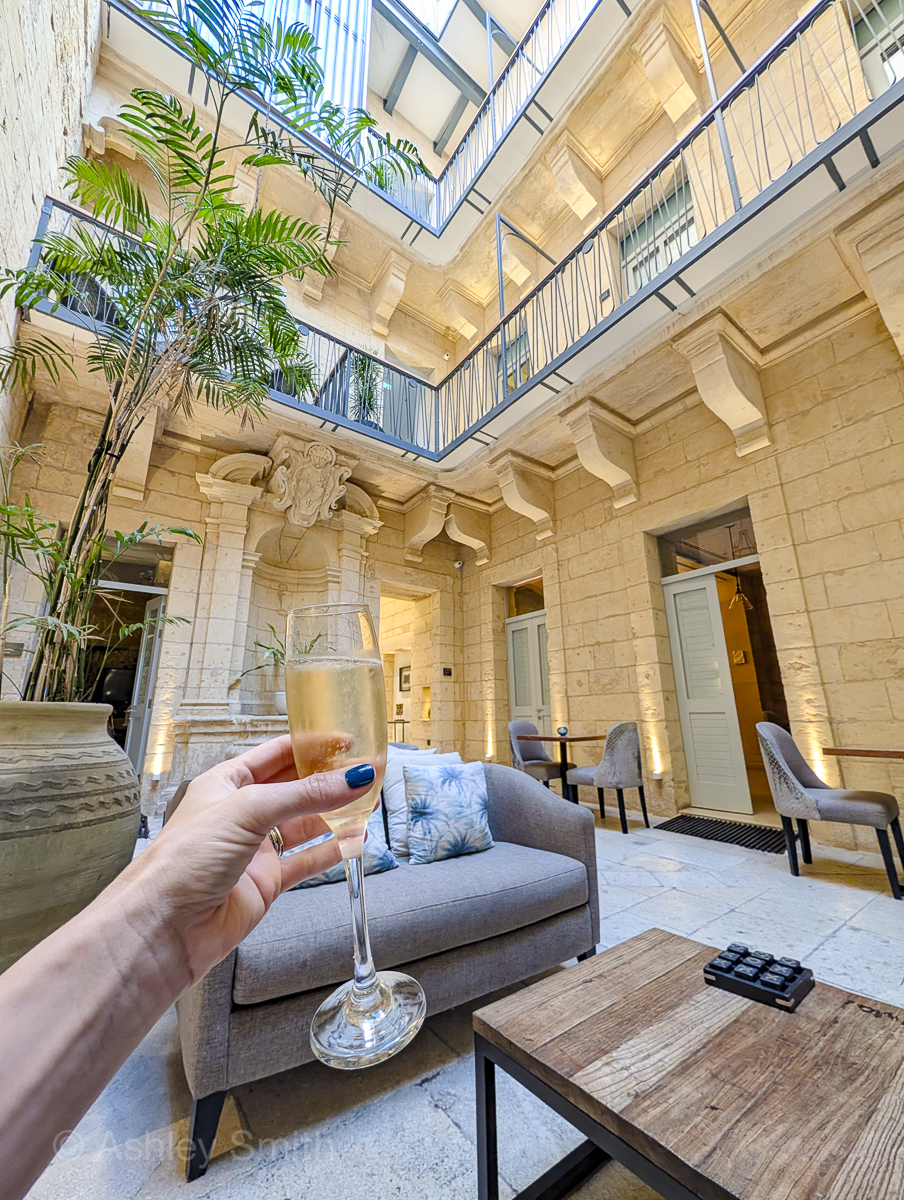
Where to stay in Malta
This country may be small but there’s no shortage at all of great places to base yourself. Here are the three hotels I stayed at on my November 2026 visit. (I loved all of them!)
I also visited and had meals at the Barceló Fortina Hotel in Sliema and the Radisson Blu at Golden Sands. Both of these are exceptional properties I wouldn’t hesitate to book for myself.
For all the rest, you can see all available Malta hotel options here.
More info for your visit to Malta
- Hotels: Find great places to stay on Booking.com (my go-to). Expedia and Hotels.com are worth checking too. VRBO is best for apartment rentals.
- Rental cars: Check out the best rental car deals here. (Though I highly recommend not renting a car here.)
- Local tours & activities: Check out all the great local options from Viator and Get Your Guide here.
- Don’t forget a Malta guidebook.
- Want more? See all my Malta posts here.
Like this post? Have questions about visiting any of these Malta WWII sites? Let me know in the comments below. Thanks for reading.

Save this info, pin these images: