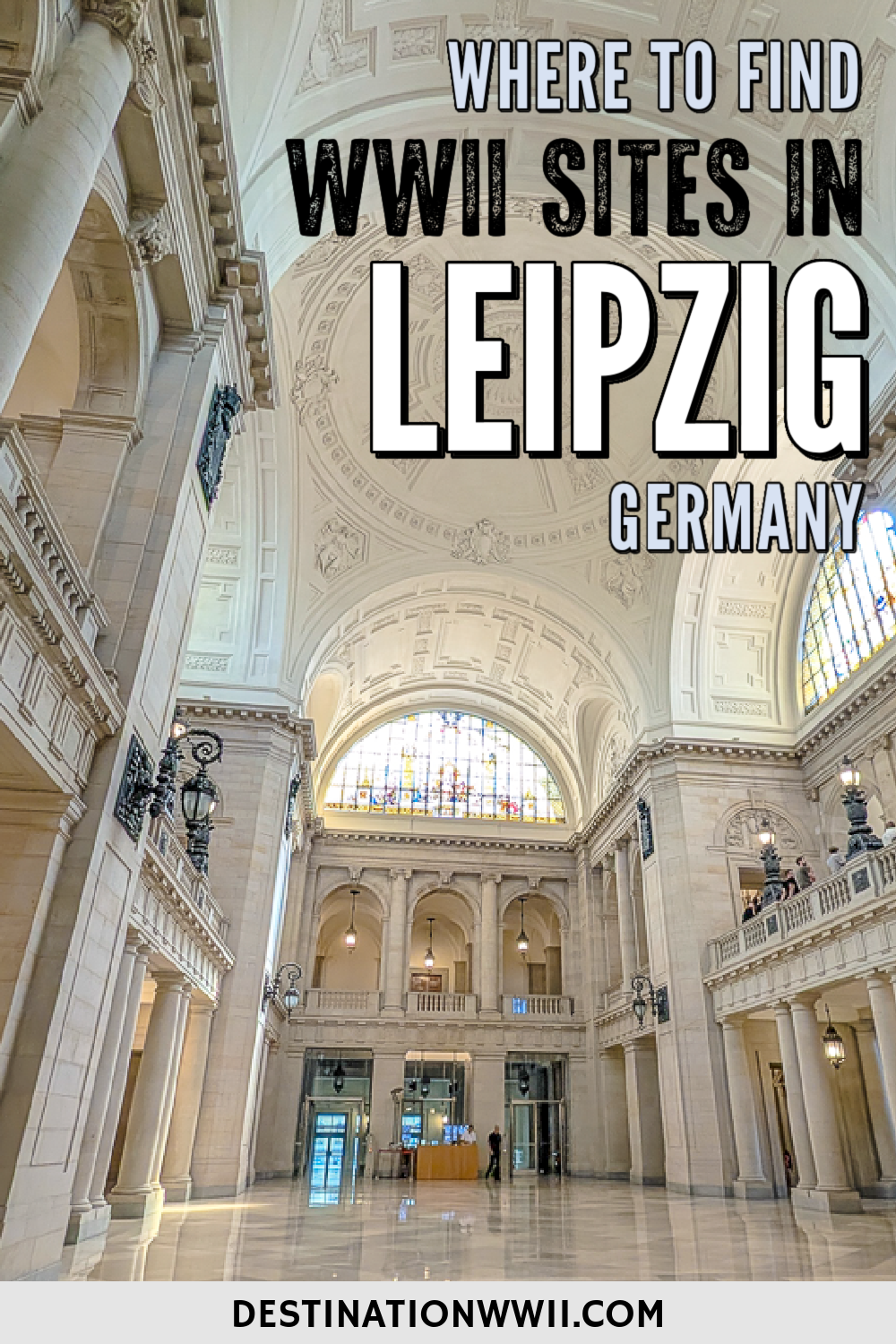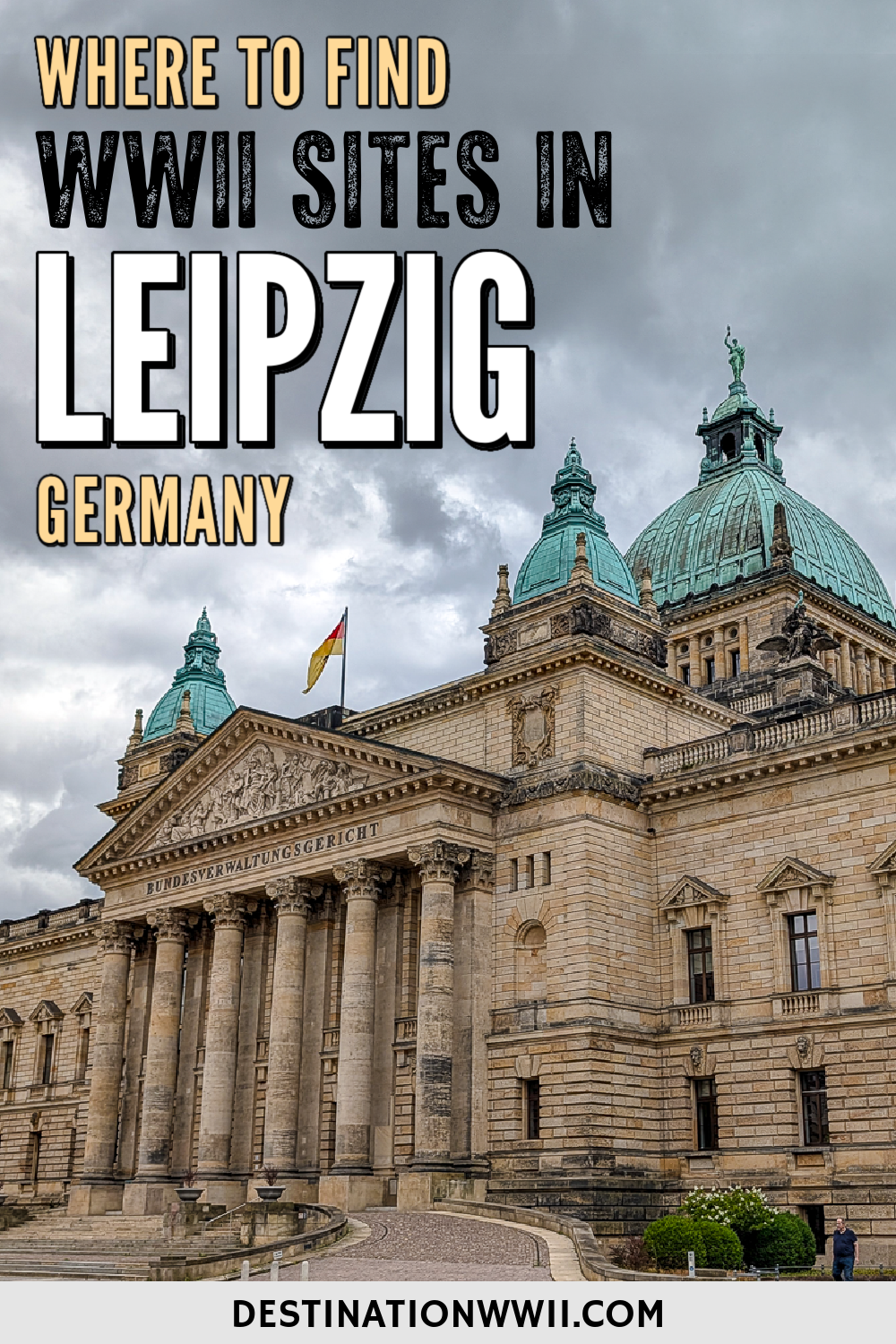

Finding myself with some extra time in Germany recently, I decided to fill that space with a few days in Leipzig. Admittedly, I visited Leipzig for a totally different reason. But, true to form, I decided to focus on the city’s World War II history while I was there anyway.
As it turns out, Leipzig played a major role in one of WWII’s most consequential events so there’s a good amount to see here. This post will show you all the best WWII museums and memorials you can visit in Leipzig. Enjoy!
Leipzig during World War II
Before and throughout World War II, Leipzig was a headquarters for some seriously significant military infrastructure. As such, there are several things worth noting about its time during the war. Here’s a brief rundown of the most important things you should know about.
Reichstag Fire Trial
On February 27, 1933, the Reichstag building in Berlin suffered an arson attack. The Nazis used this attack to fuel rumors (that they started) that Communist agitators were plotting against them. As a result, Hitler convinced Germany’s president to issue the Reichstag Fire Decree. This suspended all civil liberties like the rights to free speech and freedom of the press. It also effectively lifted all police restrictions. Basically, the Nazi regime could now arrest anyone they wanted and on any grounds. This was a big deal and essentially the event that opened up the Nazi regime to proceed untethered.
While many historians believe the Nazis intentionally set the fire themselves (because of how convenient it all was), the Nazis actually did arrest someone for this crime—Marinus van der Lubbe, a Dutch construction worker. Whether or not Van der Lubbe actually did commit this crime is still debated, but that didn’t matter at the time. The Nazis needed a patsy.
Well, a few patsies. Even though Van der Lubbe claimed to have acted alone, Hitler decided he must actually have been a part of a wider conspiracy. Thus, the additional arrests of Ernst Torgler (Chairman of the Communist Party of Germany at the time) as well as Georgi Dimitrov, Blagoy Popov, and Vasil Tanev–three men a random waiter said he saw talking with Van der Lubbe at a café.
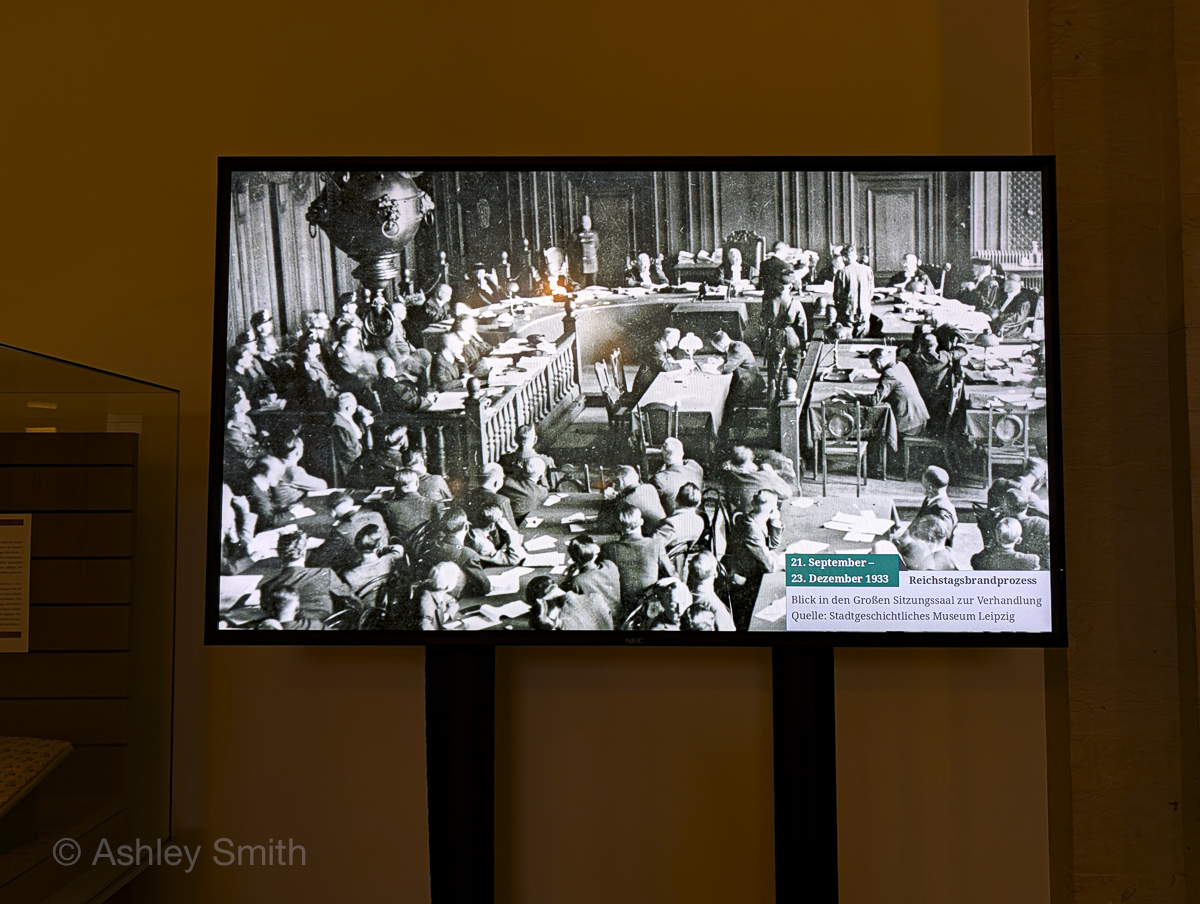
The trial of these four men (aka the Reichstag Fire Trial) took place from September 21 to December 23, 1933 at the Reich Supreme Court in Leipzig. [More on this topic below.]
Also check out: WWII sites in Berlin you shouldn’t miss
Kristallnacht & Jewish deportation
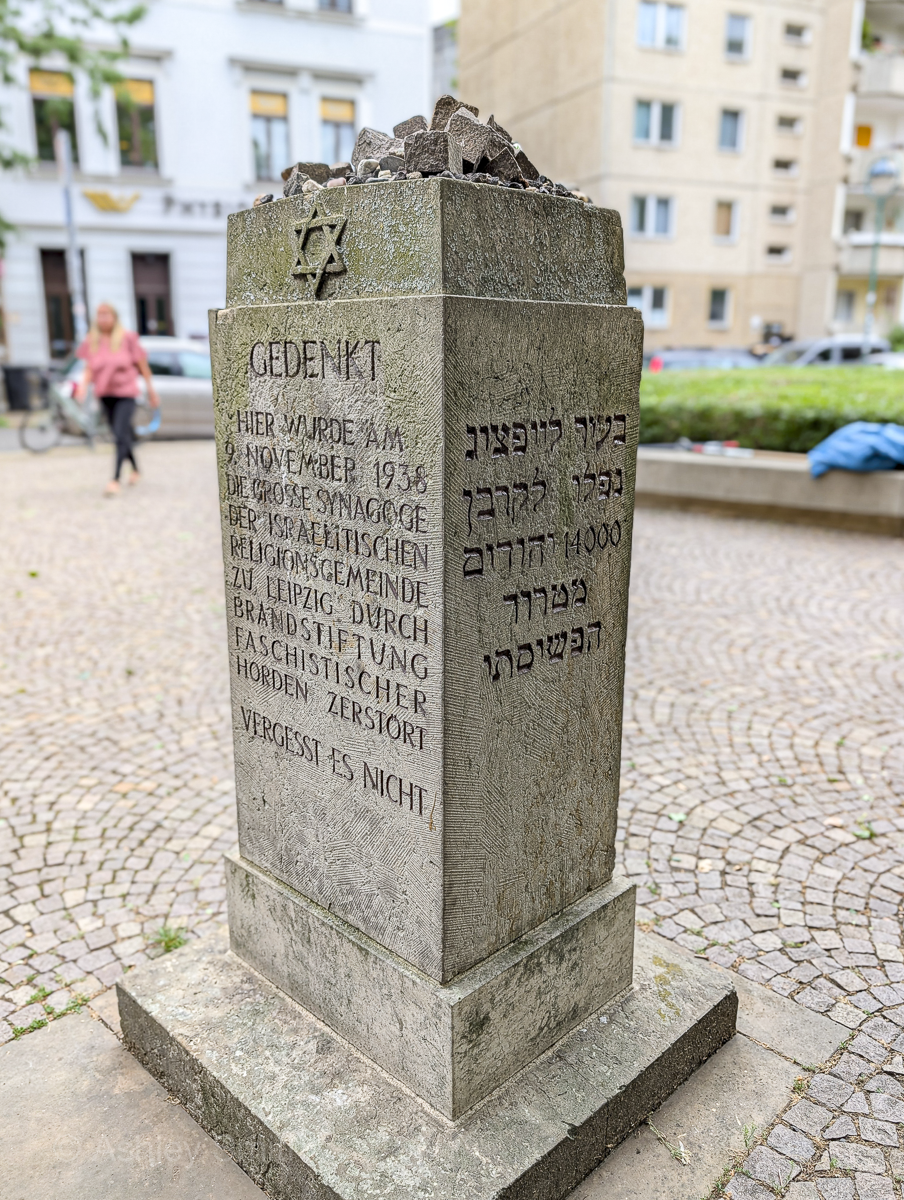
As in countless other German cities, Leipzig’s Jews also suffered from the violent events of Kristallnacht (Nov 9-10, 1938). Jewish-owned businesses were destroyed, the city’s synagogues were looted and blown up, homes were robbed, thousands were arrested and tortured.
Throughout the war, Leipzig’s Jews suffered as much as, if not more than, other Nazi-occupied cities. The harsh discrimination they faced in the wake of the Nuremberg Laws quickly devolved into their deportation to concentration and extermination camps like Theresienstadt and Auschwitz. Of the city’s prewar Jewish population of around 11,000, only a relative few survived.
Forced labor camps
Leipzig was a major hub for armaments production during the war which demanded a large workforce. Ergo, Leipzig was also the home of several subcamps of the Buchenwald concentration camp. These camps alone imprisoned more than 8,000 men, women, and children whom they used as slave labor, mostly for HASAG operations. (Hugo Schneider AG, one of the largest armaments companies in the Reich.)
One of these camps became the first and largest women’s subcamp. Within just five months of its opening, it had grown to more than 5,000 women forced laborers, the first of which had come from Ravensbrück. (HASAG preferred “employing” women over men because the SS charged them less for women prisoners, among other reasons.)
I think it goes without saying that hundreds of these forced laborers didn’t survive. Nazi authorities held regular “selection” processes to filter out those they deemed sick or otherwise unfit for work. More than 500 of these prisoners were deported to Auschwitz, Ravensbrück, and Bergen-Belsen for extermination.
Allied bombing raids
In addition to being a headquarters for armaments production, Leipzig was also home to a major Messerschmitt factory. This made Leipzig an ideal target for Allied bombing raids. U.S. and British bombers flew hundreds of raids over Leipzig between 1943 and 1945.
Though Leipzig suffered far less death and destruction than its neighbor Dresden, Allied bombers still destroyed an estimated 40-60% of the city. This included both industrial facilities and residential areas. Some of the factories hit suffered only minor setbacks, but the Messerschmitt factory never fully recovered.
Liberation of Leipzig
Leipzig was liberated by American troops in April 1945, but not before one last round of fighting. U.S. troops of the 2nd and 69th Infantry Divisions entered Leipzig and faced fierce resistance but ultimately drew the surrender of German troops.
U.S. authorities turned the city over to the Soviet Red Army as per pre-agreed-upon occupation zones.
Map of WWII sites in Leipzig
This map contains all the WWII sites in Leipzig I mention in this post. To save this map: Click on the star ⭑ next to the map’s title to save in your Google Maps. To use this map: When you get here, open Google Maps on your phone, click “Saved” at the bottom, then click “Maps.”
WWII museums in Leipzig
There are only a few small WWII museums here in Leipzig, but all are worth visiting.
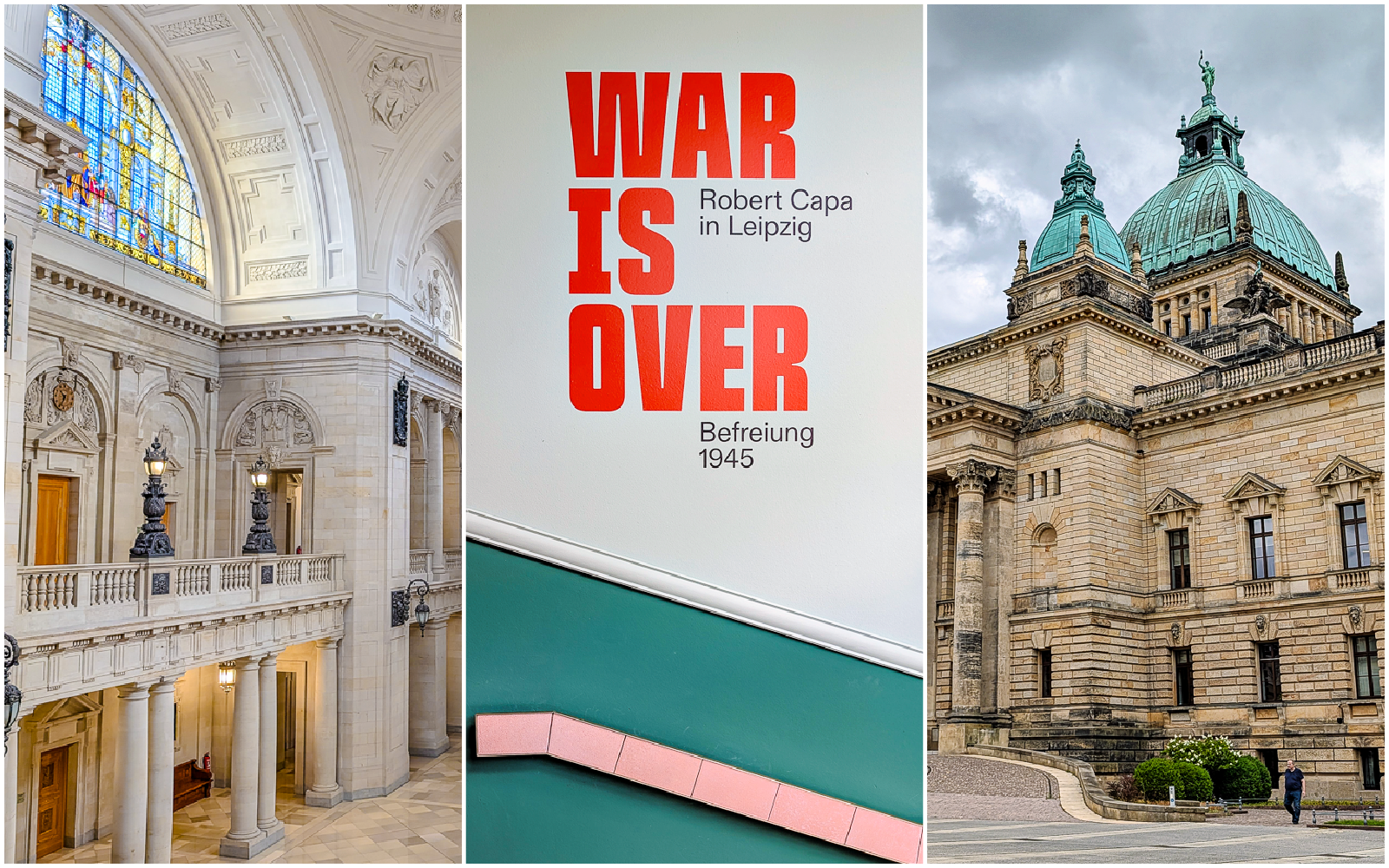
1. Palace of Justice (former Reich Supreme Court)
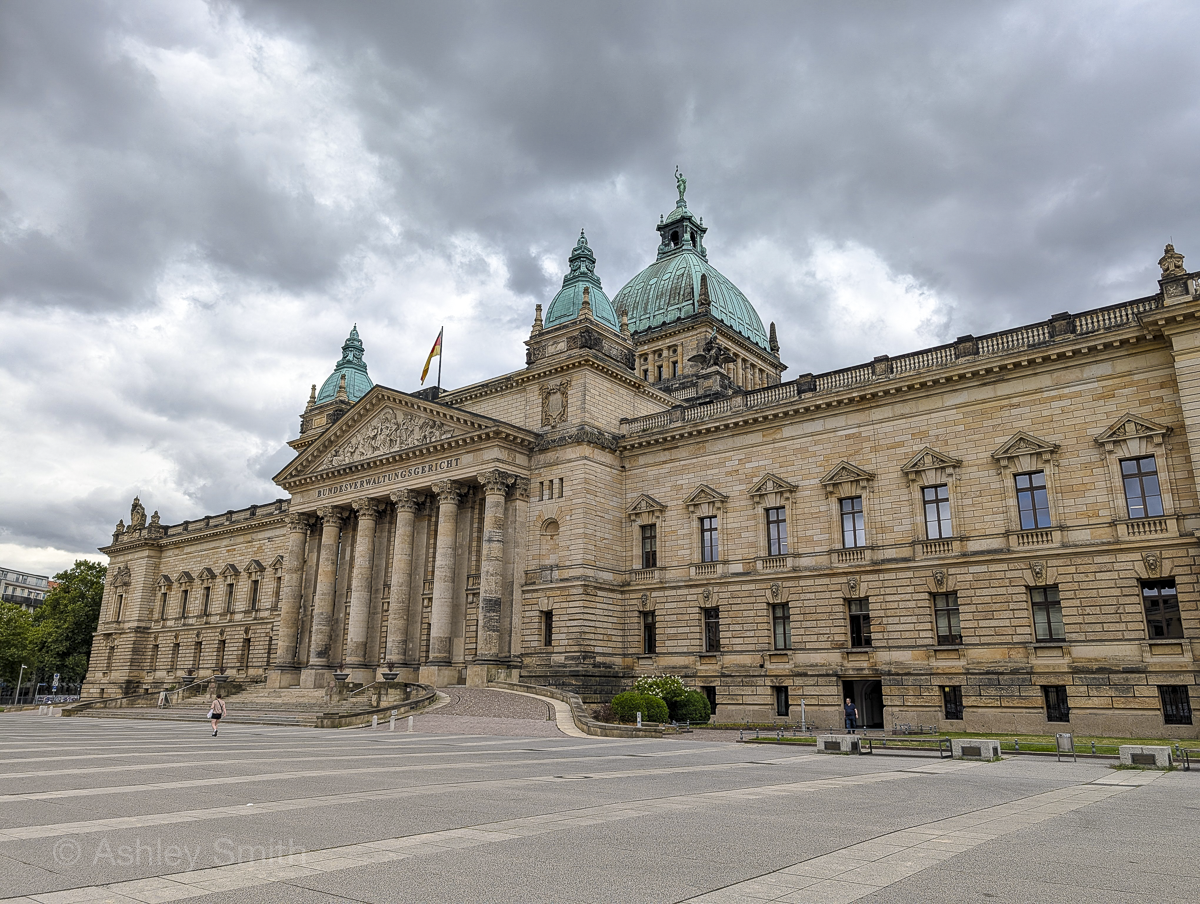
What’s now known as the Federal Administrative Court is Germany’s supreme administrative court and deals mostly with administrative law cases (like zoning issues and other sleepy topics). But during the war years this building housed the Imperial Court of Justice and was the highest court in the Reich for civil and criminal matters.
What this means is that it “judged on its own initiative in accordance with the principles of National Socialism.” In other words, it judged civil and criminal cases against the Nazi idea of “One Reich – one law; one people – one spirit,” as its president Dr. Erwin Bumke put it.
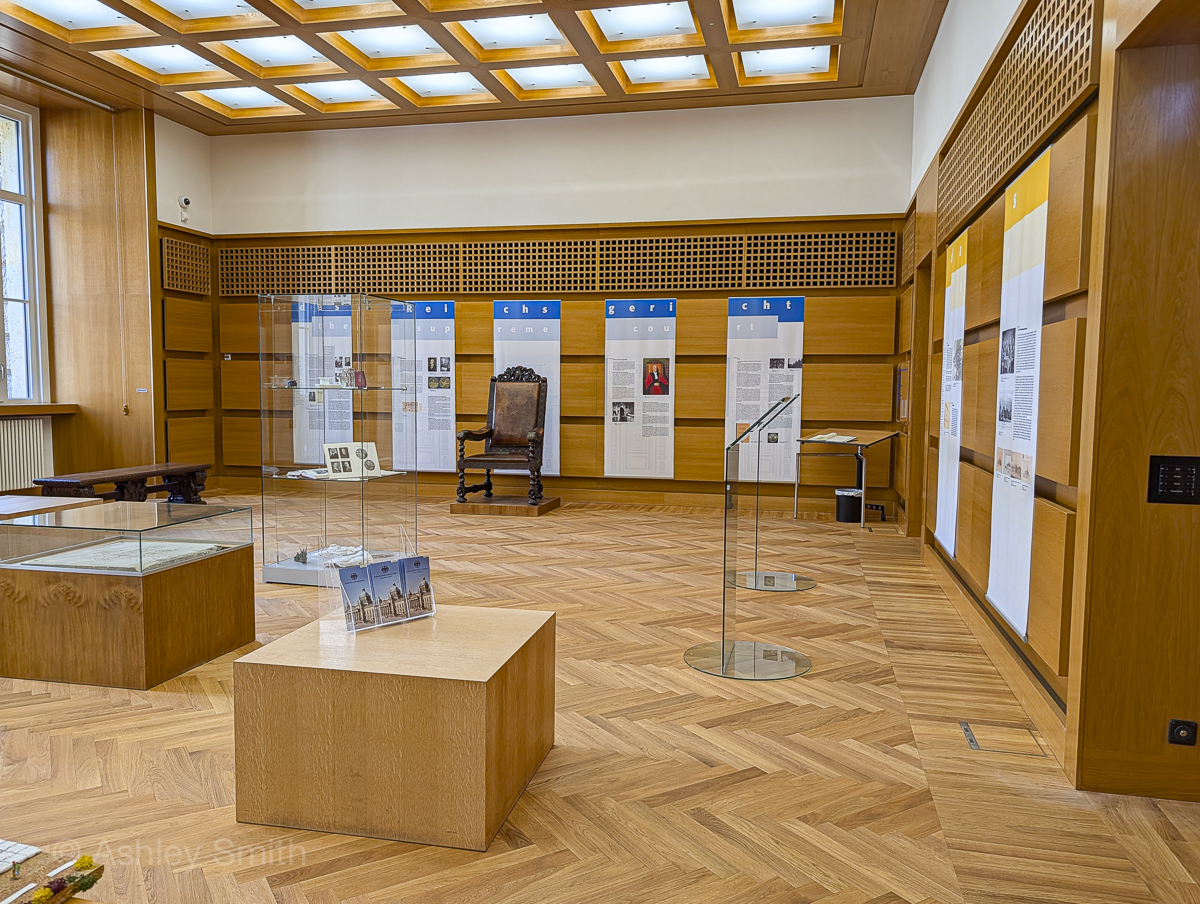
Here at the Palace of Justice, you can visit a small museum inside one of the former courtrooms. This exhibition details the history of this building and its use as a Nazi court. Most of the panels here are presented in German only, so be sure to have your translator app ready. The Palace and the museum are free to visit.
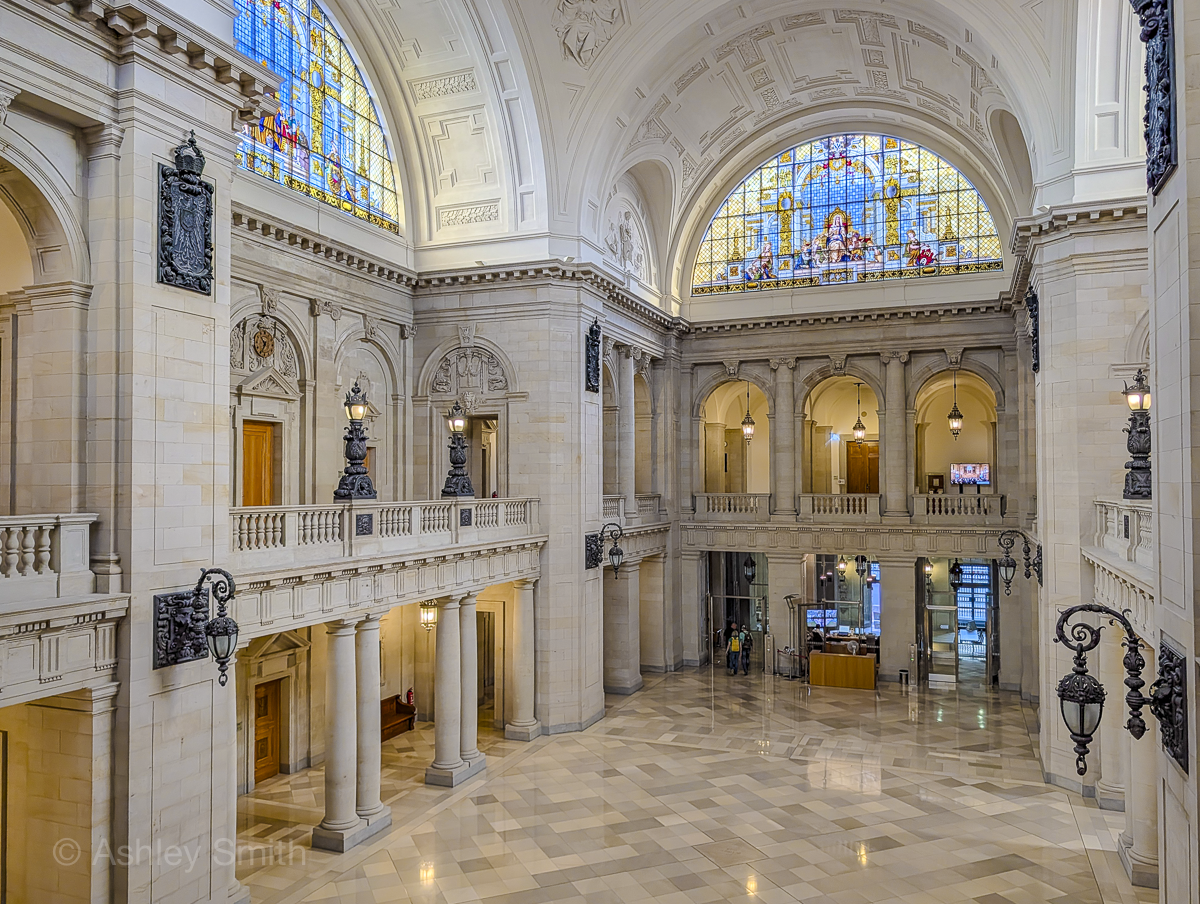
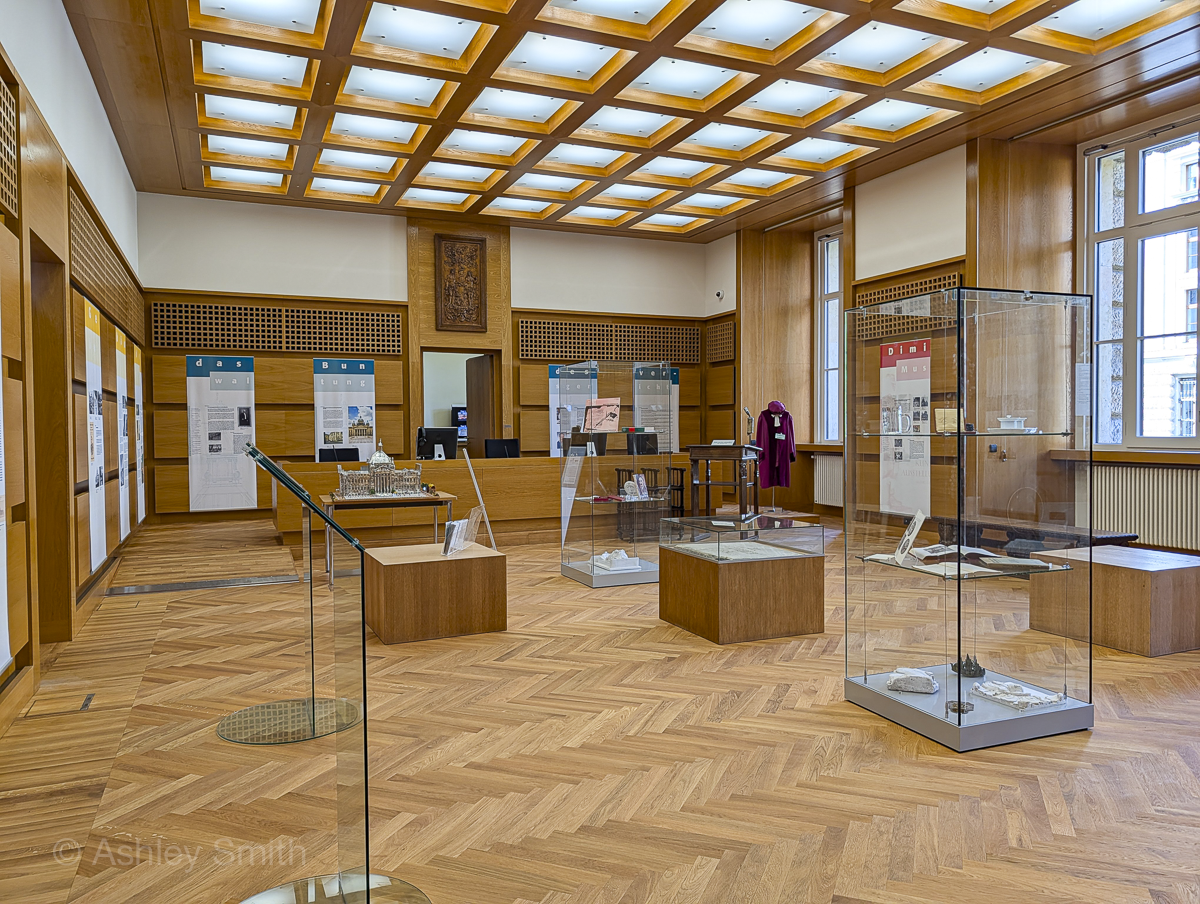
I’d also like to give a personal shoutout to everyone who works here because they were all the nicest! It was a quiet day at the courthouse and one of the security guards saw me taking photos and asked if I’d like to see some historical rooms. YES PLEASE!
He then treated me to a private VIP tour of this building’s most historic spaces and told me all kinds of interesting stories. I am so grateful to have met him! Another guard at the entrance welcomed a chat and gave me some great recommendations of things to see and do in town. This was such a delightful visit.
Reichstag Fire Trial
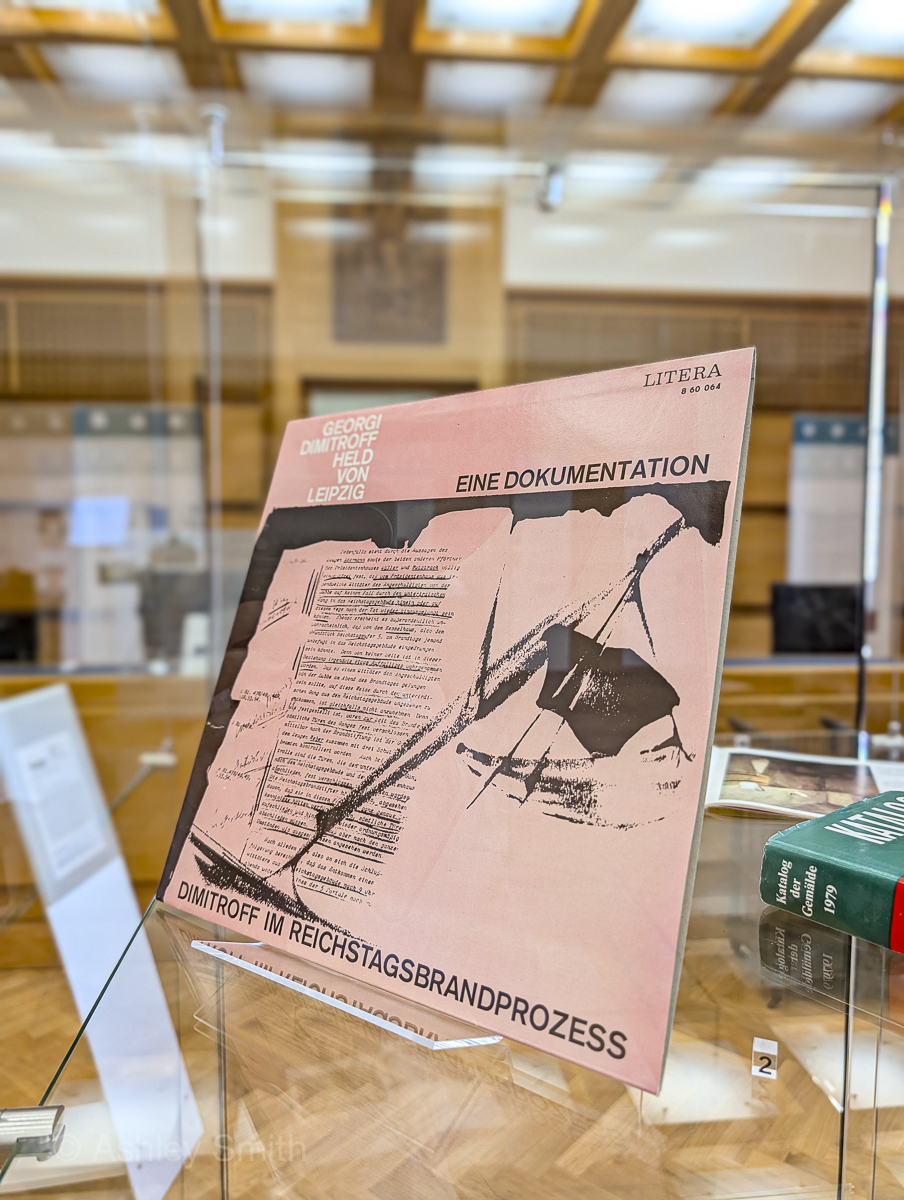
Among the many cases tried here, the most famous was the Reichstag Fire Trial—the criminal trial of Marinus van der Lubbe and the three other men suspected of perpetrating the Reichstag Building fire. Charged with arson and attempting to overthrow the government (according to Hitler and his “sign from Heaven”), Van der Lubbe was found guilty and sentenced to death. The other three men were acquitted due to lack of evidence.
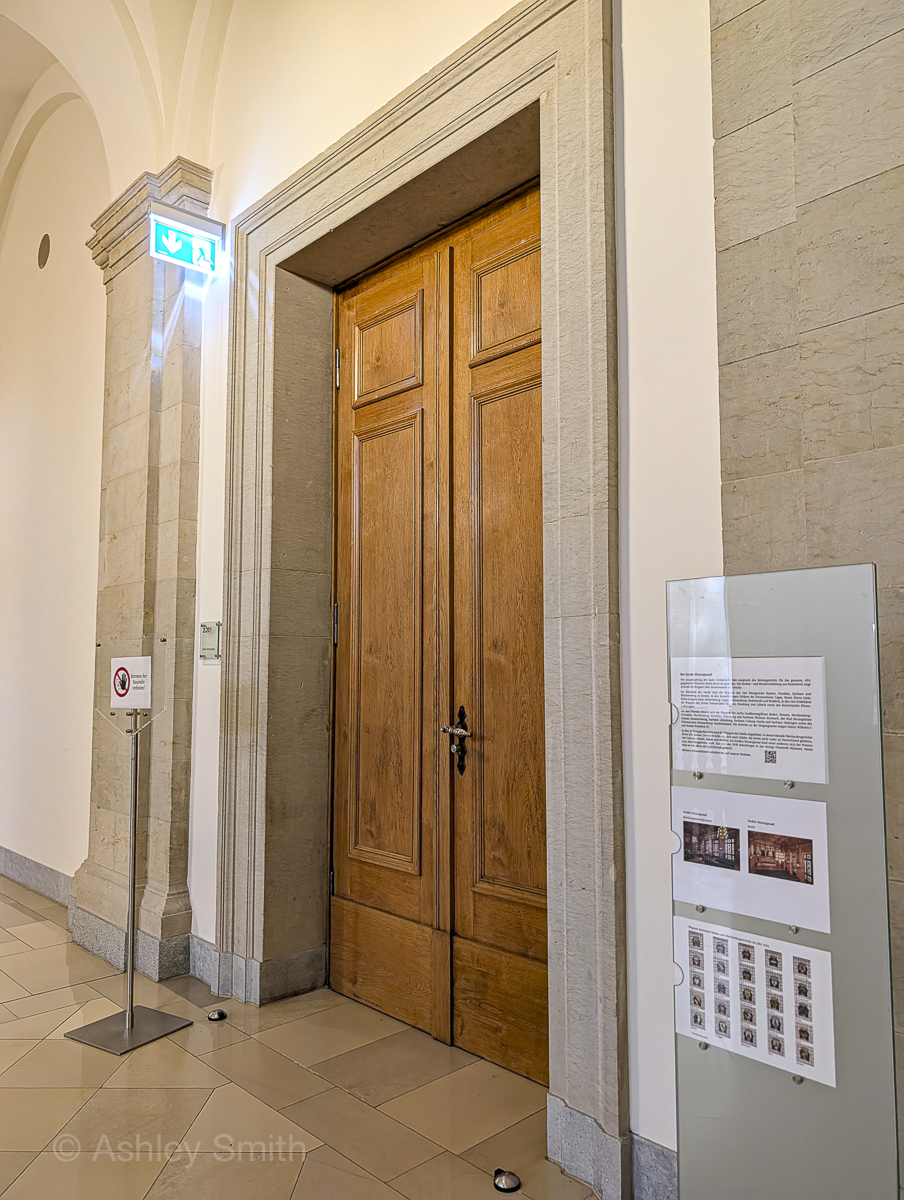
The courtroom where this widely publicized and highly propagandized trial took place is still an active courtroom today. (Unfortunately for me, it was undergoing some construction during my visit in July 2026 so I couldn’t go inside. But as of October 5, 2026 it has reopened so definitely take a peek inside!)
2. Capa-Haus Museum
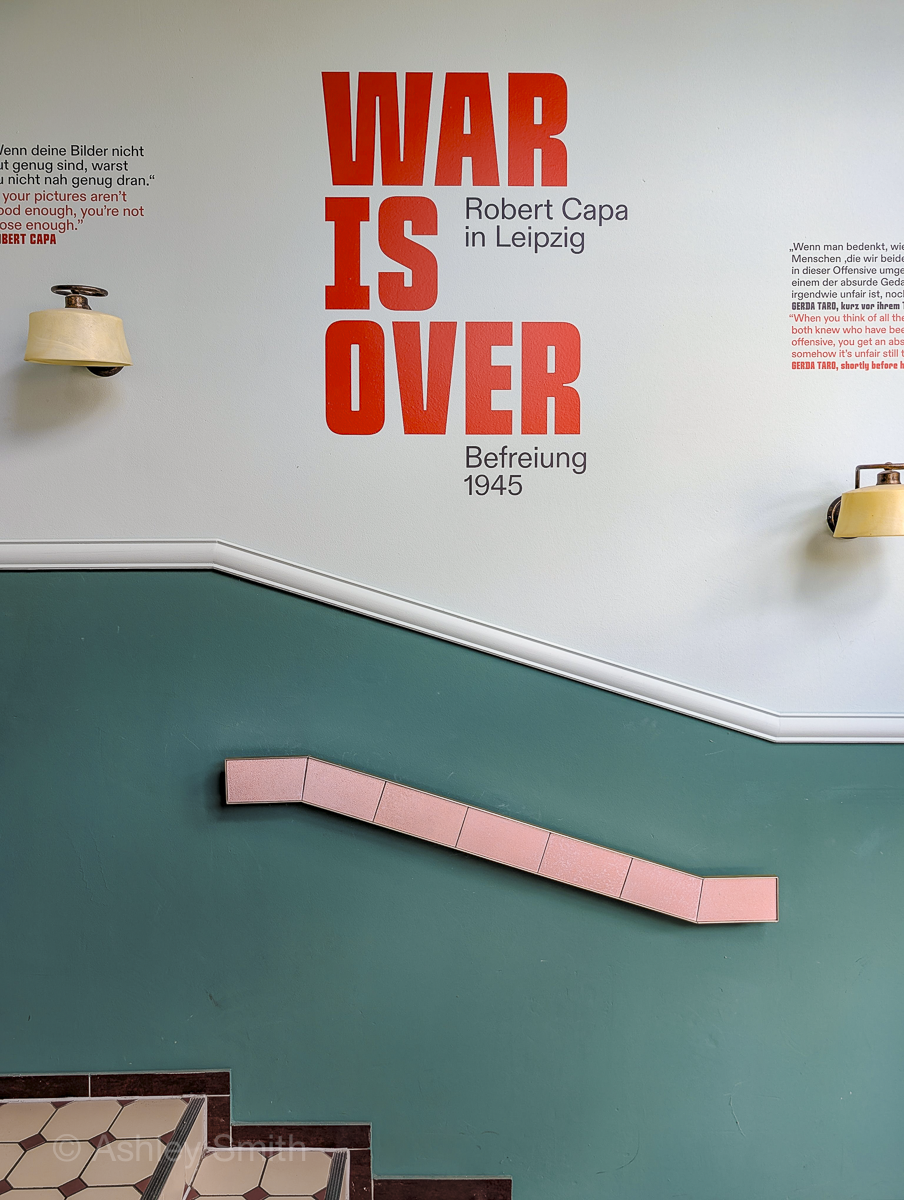
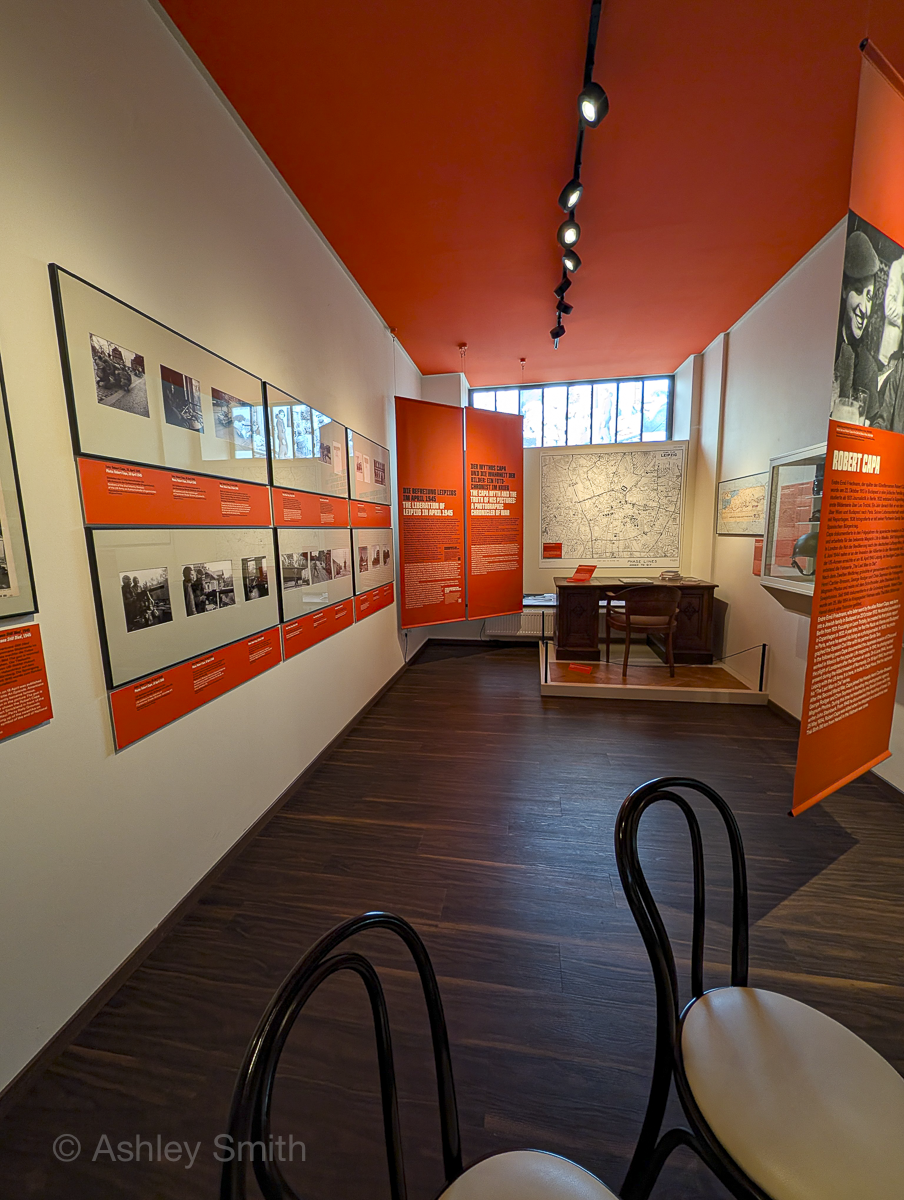
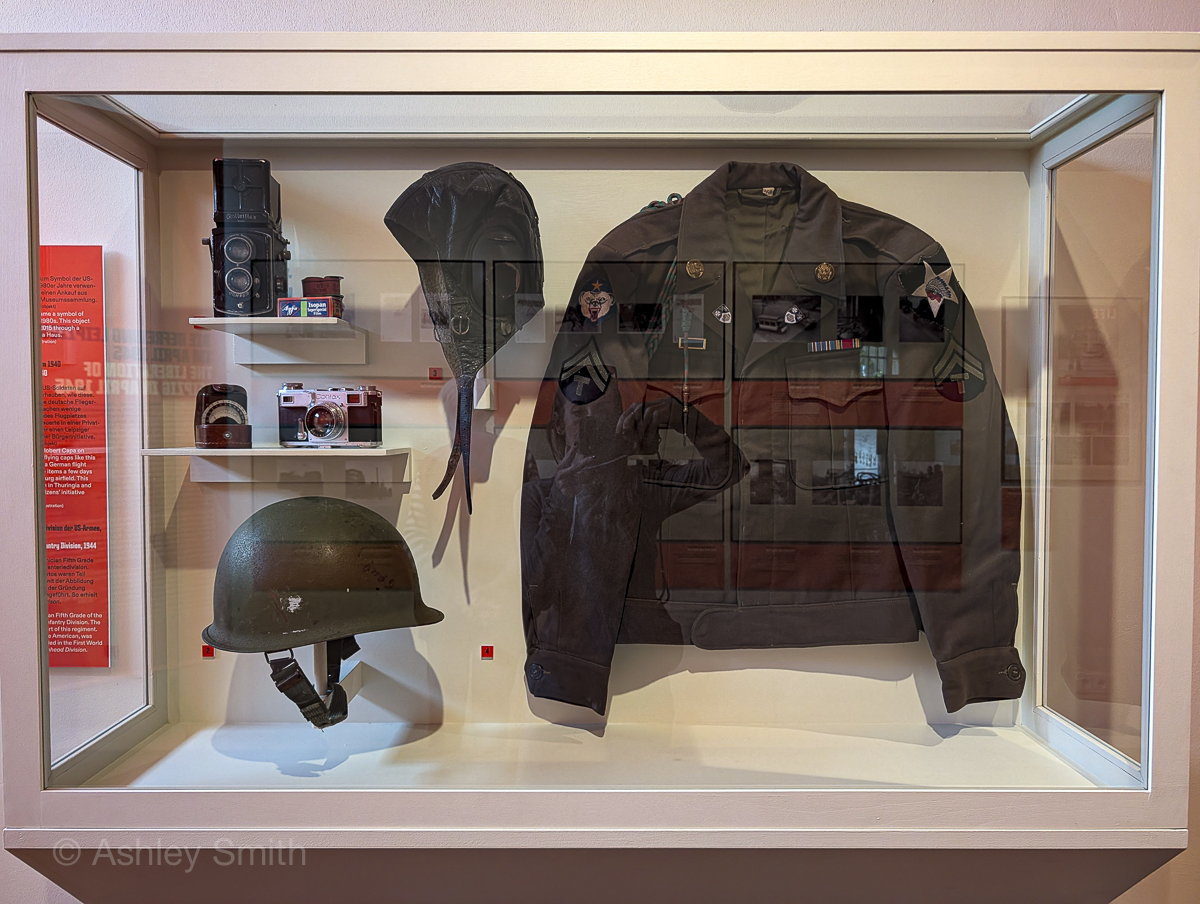
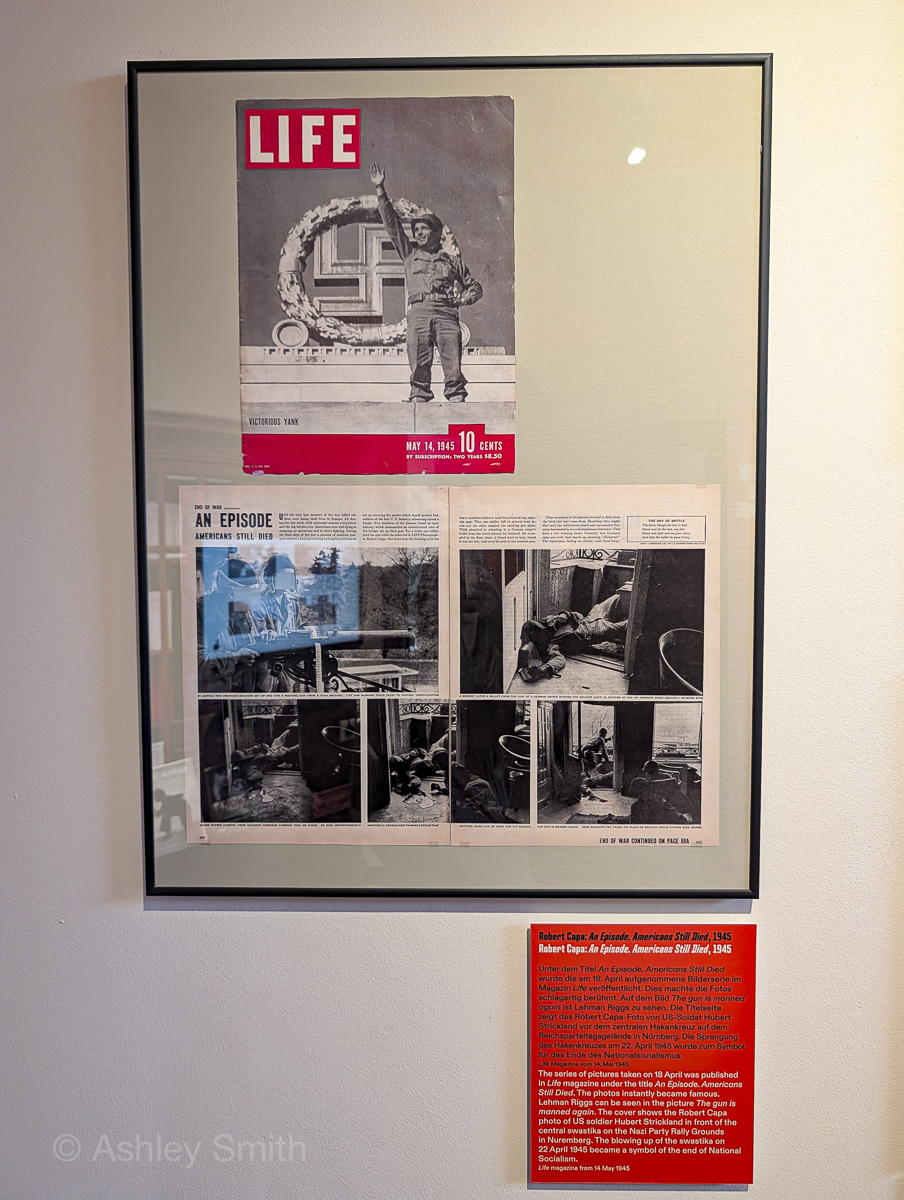
In April 1945, photojournalist Robert Capa entered Leipzig alongside Allied troops. From the building today known as the Capa House, he took a now-famous series of photos titled “Last Man to Die.” This museum focuses on this photo series and the events that surrounded them.
The museum is small but does a great job of telling the story of Robert Capa as a war photographer and how these photos came to be. It includes some informational panels on his life and work as well as some original artifacts. Admission is free.
3. Stadtgeschichtliches Museum Leipzig
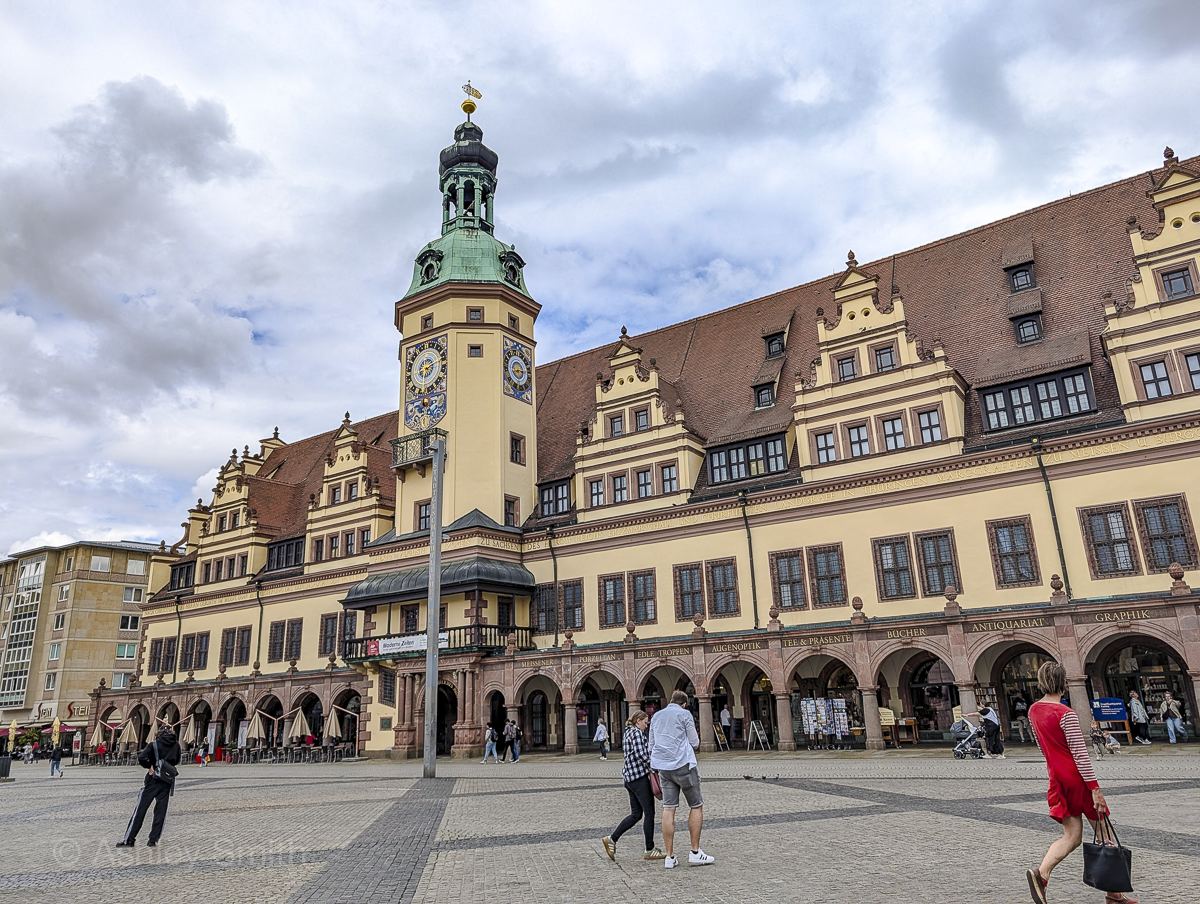
The Leipzig City History Museum covers the history of Leipzig from the Middle Ages to the present day across several permanent and temporary exhibitions. So naturally, the World War II era is included here. For that, you’ll want to head to the exhibition titled: “Modern Times: From Industrialization to the Present Day.”
WWII memorials in Leipzig
And here are some interesting WWII monuments and memorials around Leipzig worth visiting if you can.
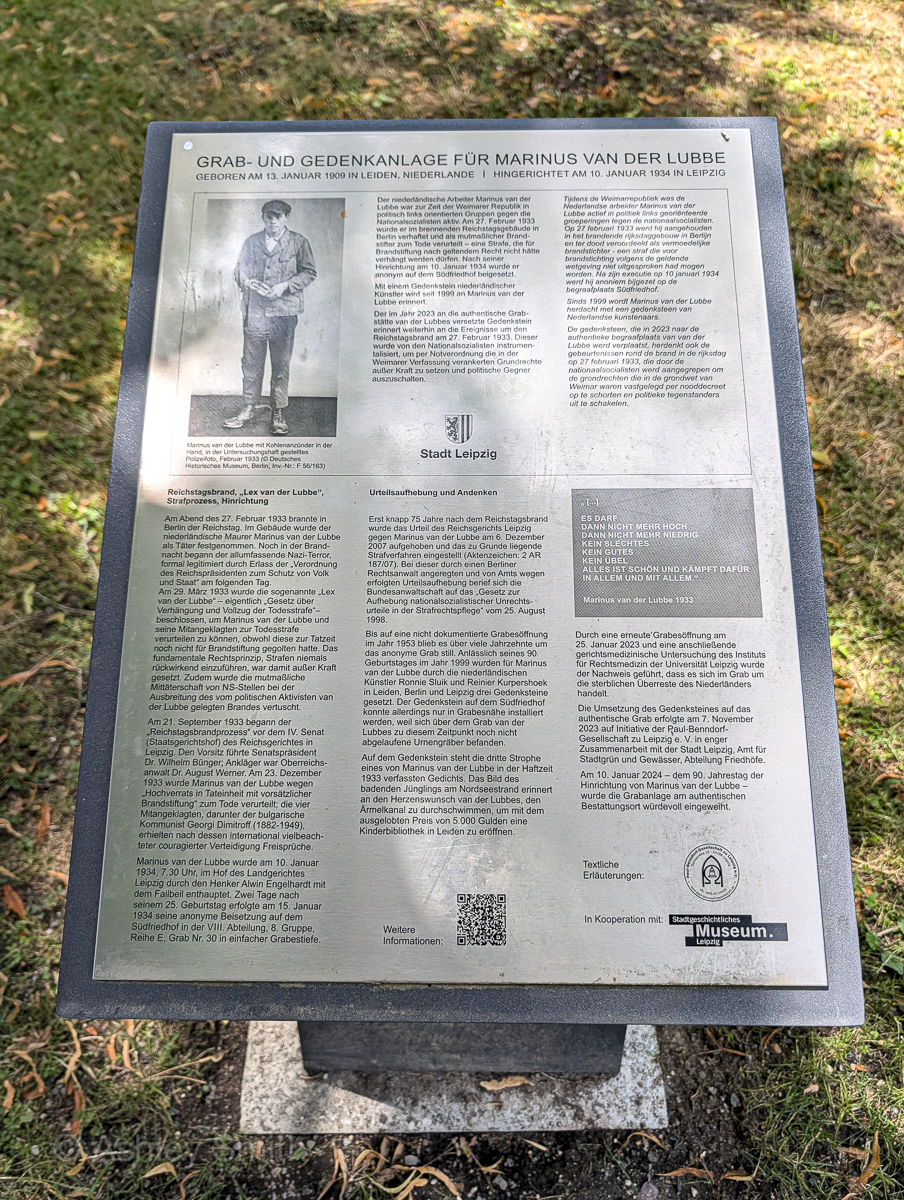
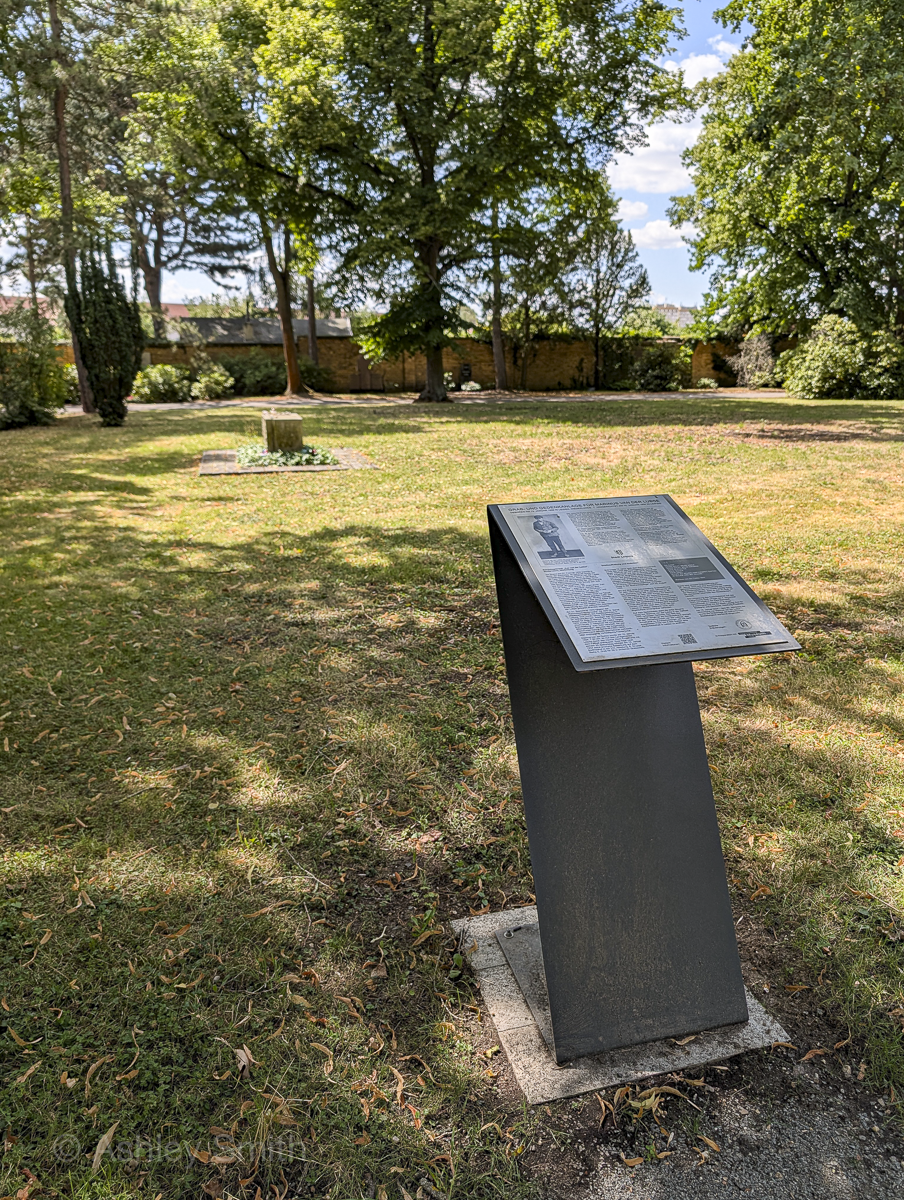
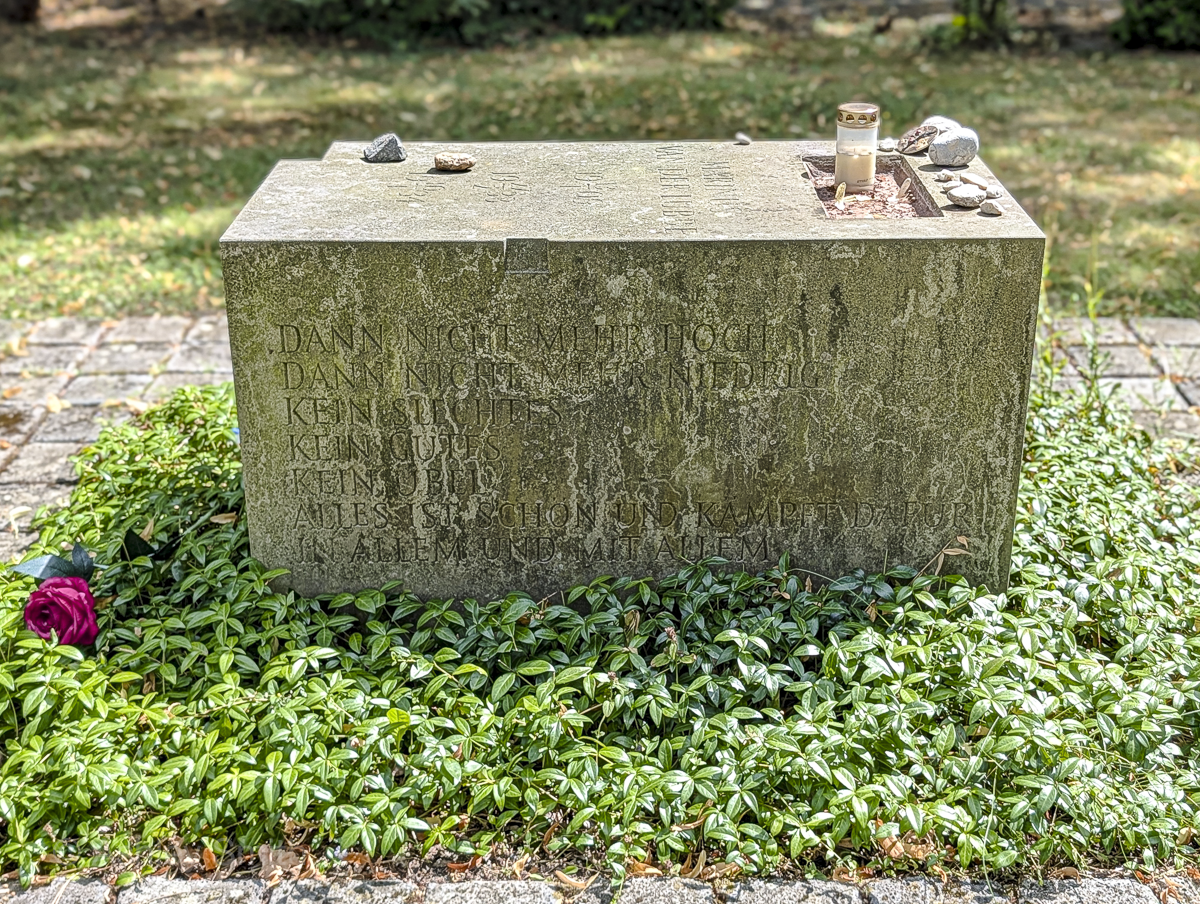
4. Marinus van der Lubbe gravesite and memorial
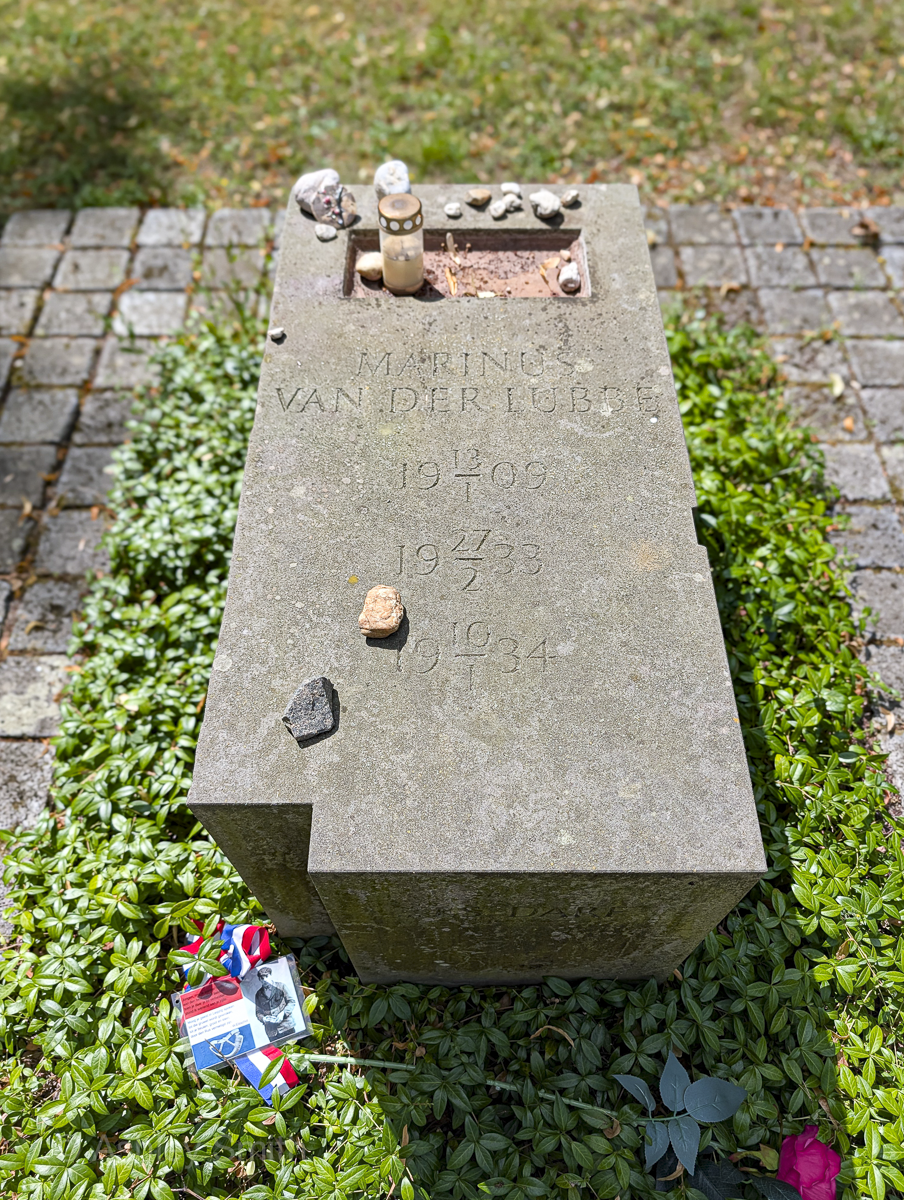
Sentenced to death for the Reichstag Fire, Marinus van der Lubbe was executed on January 10, 1934 (beheading by guillotine). He was buried in an unmarked grave here at Leipzig’s Sudfriedhof. In 2023, his remains were exhumed in an effort to collect new evidence to support his innocence. He was reburied and given a proper grave marker which you can visit today.
Exhumation aside, Van der Lubbe’s conviction had already been overturned in 2008 on the pretext of a 1998 law that allowed for the pardon of those convicted of crimes by Nazi courts (since Nazi “law” was anything but just). He was granted a full (though merely symbolic) pardon.
Finding his grave was quite challenging since there are no signs and information on it is hard to come by. But after much searching, I was able to locate it. I’ve included its exact location on the map at the top of this post.
5. Synagogue Memorial
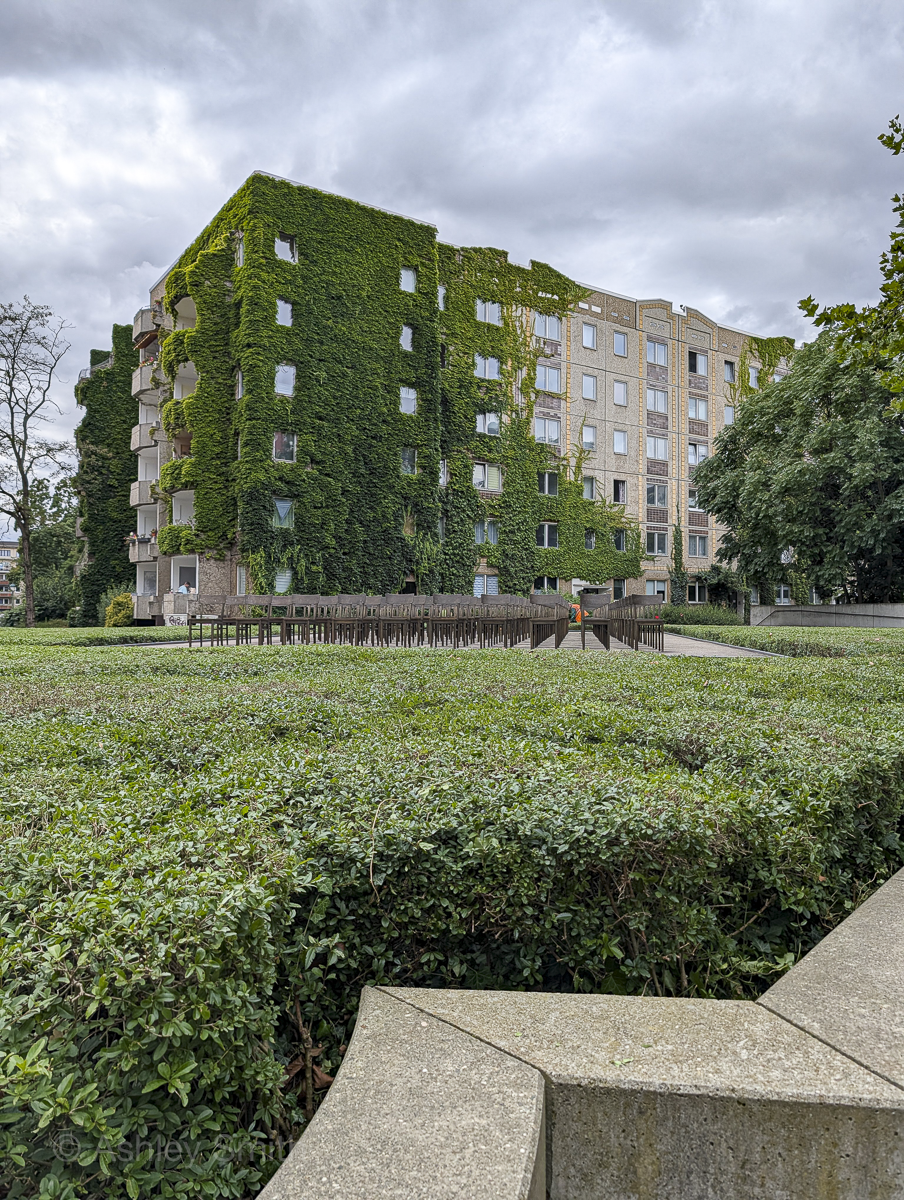
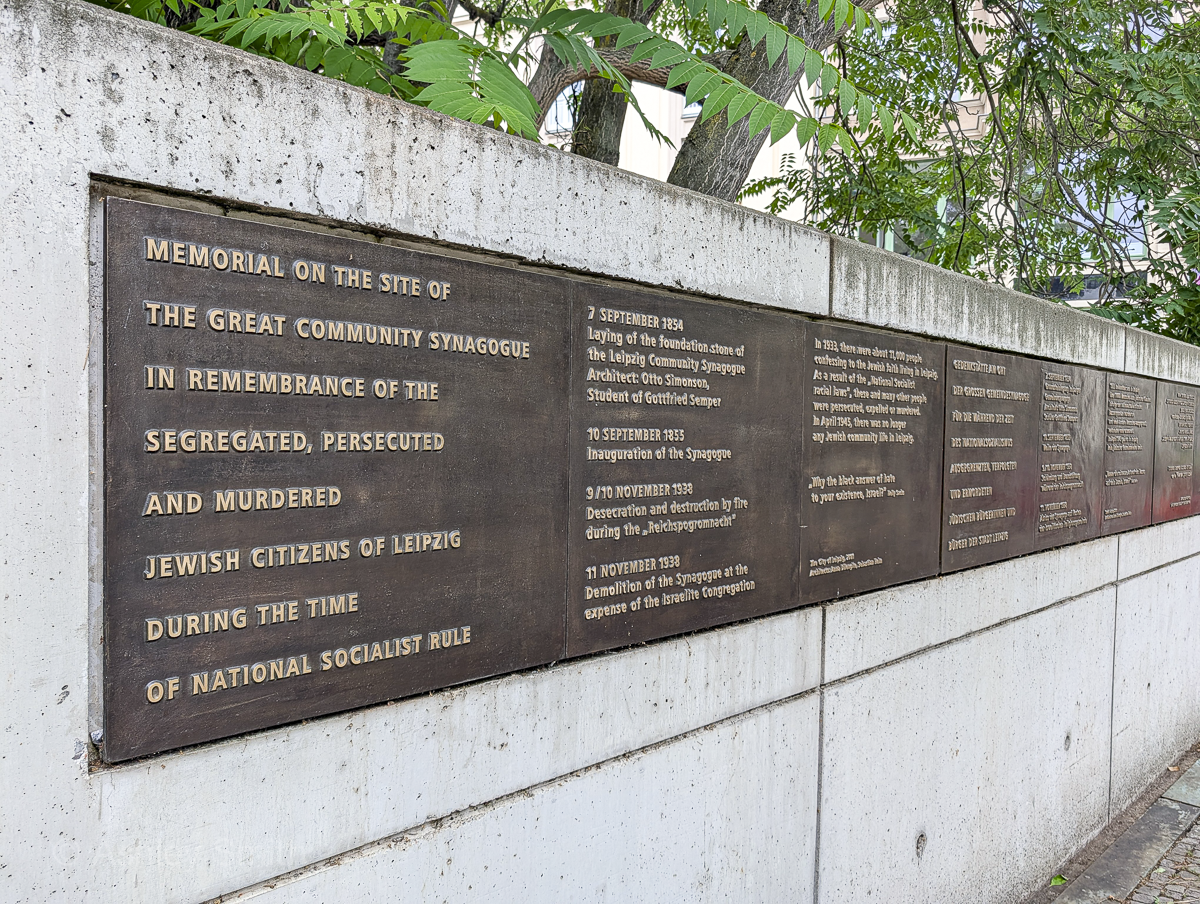
On the former site of Leipzig’s Synagogue (destroyed during Kristallnacht) now stands a poignant memorial. “…in remembrance of the segregated, persecuted, and murdered Jewish citizens of Leipzig during the time of National Socialist rule.”
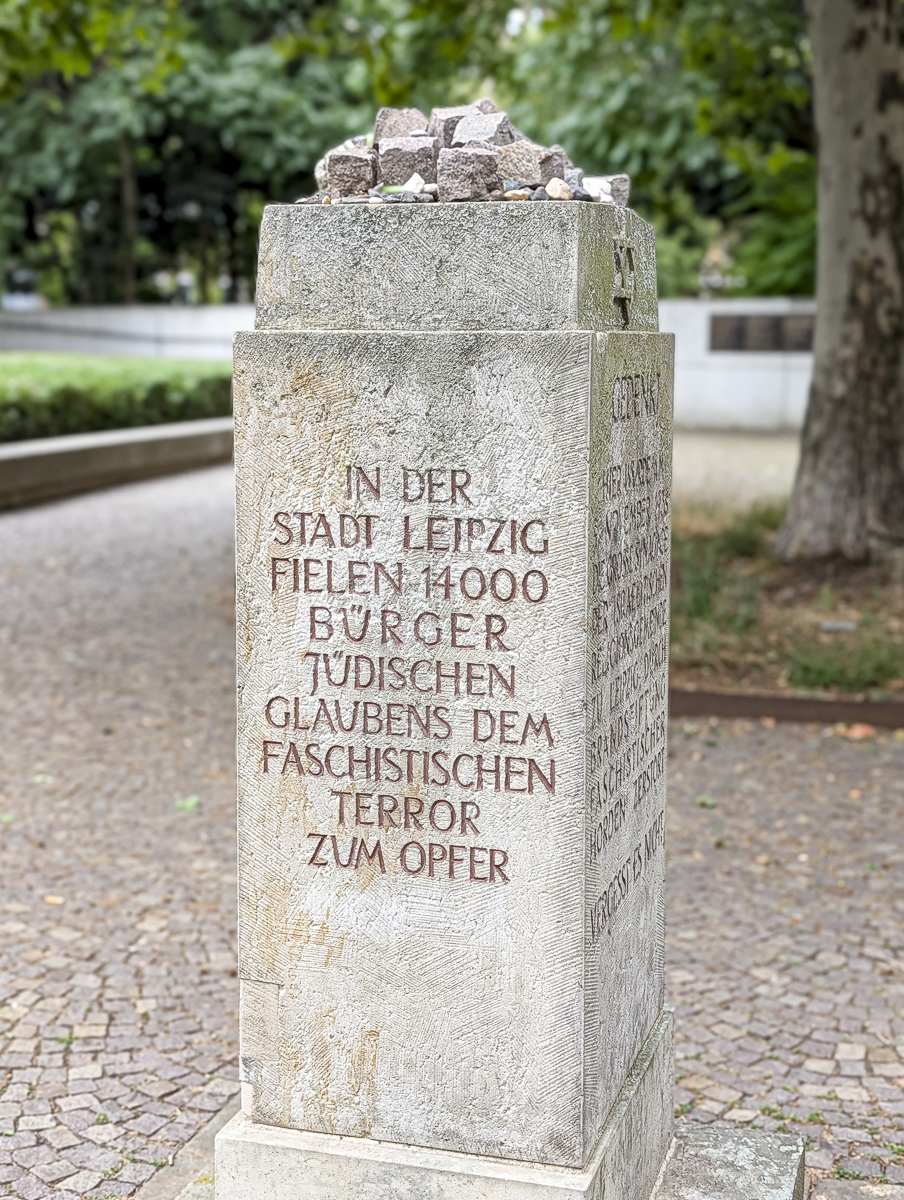
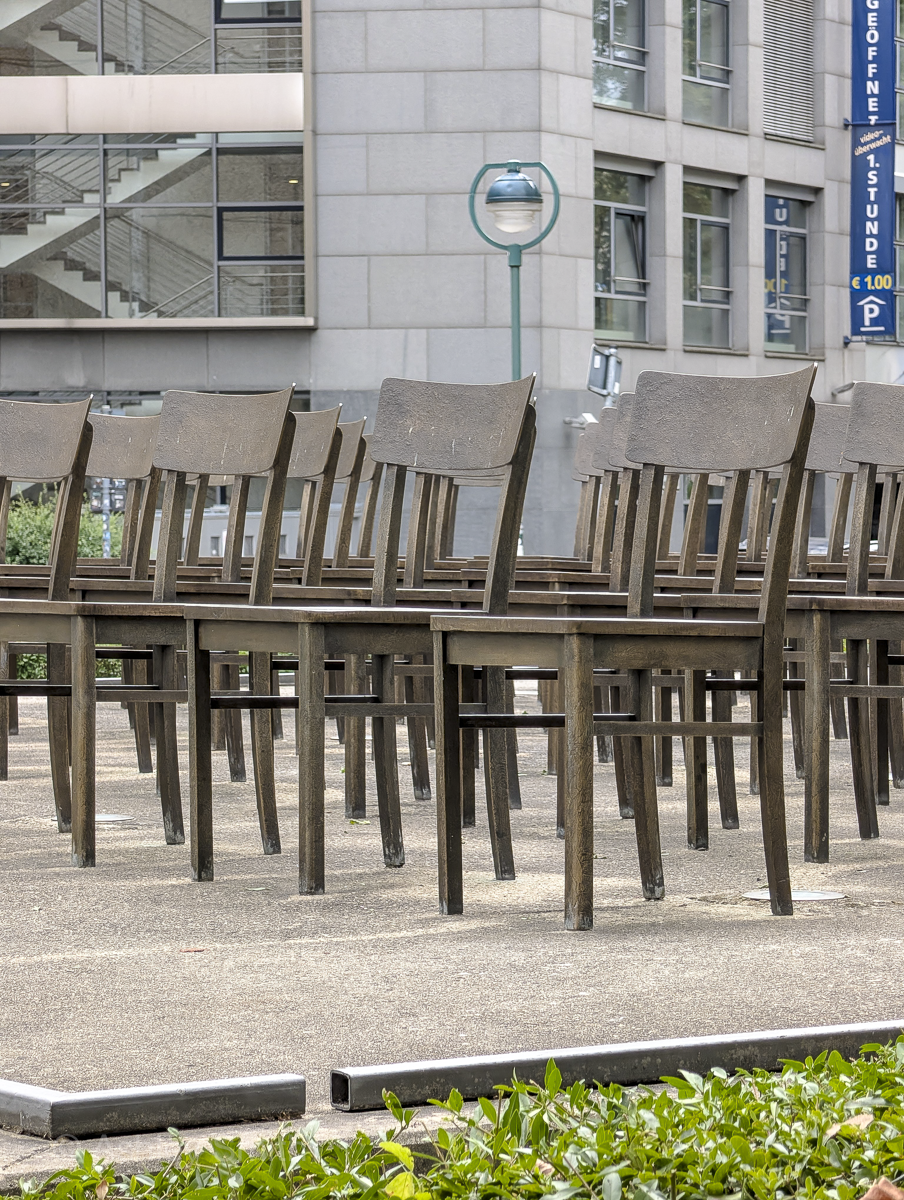
The memorial incorporates the sculptures of 140 empty bronze chairs, each one representing 1,000 Jews who once worshipped here. (Much like the one in Kraków, Poland.) The wall behind it includes memorial panels in English, German, and Hebrew. There’s also a memorial stone next to it.
6. Bamberger Family Memorial
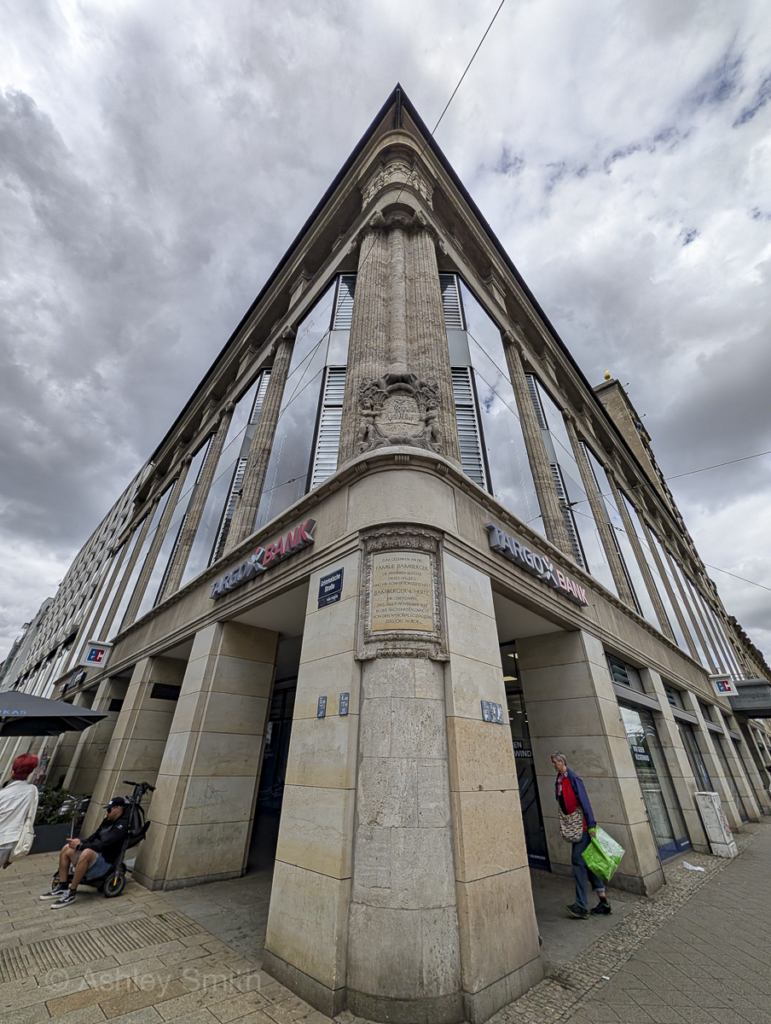
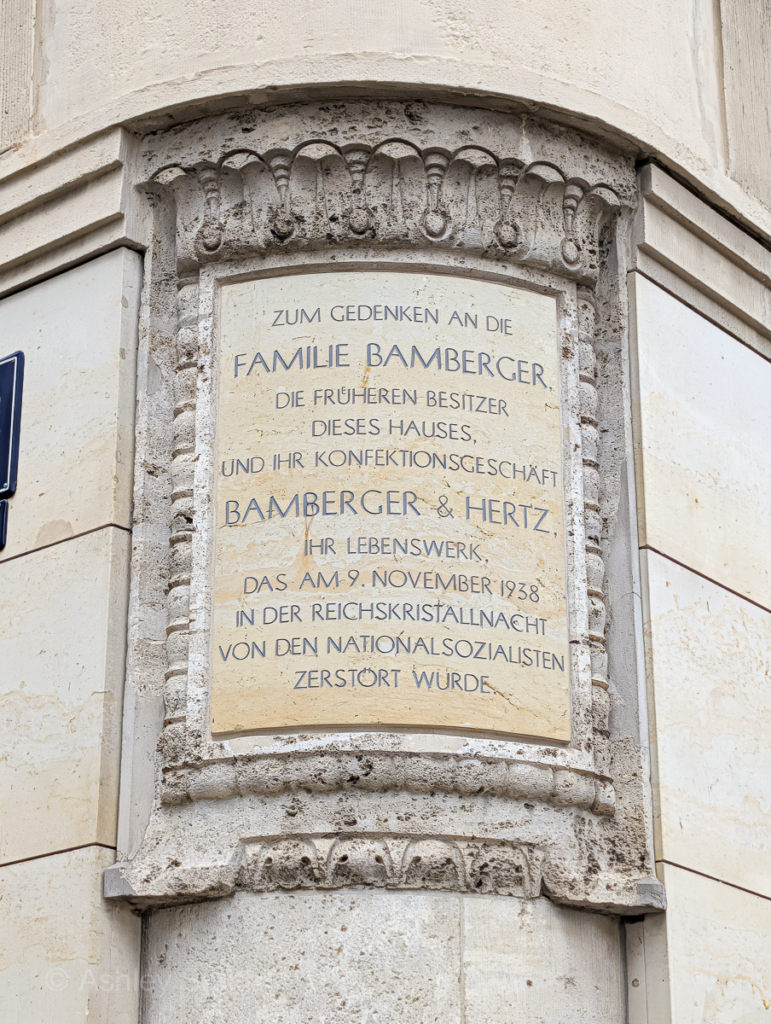
Over in the big shopping area of town, you can find the Bamberger Family Memorial on the corner of the building at the Targo Bank. Prior to the war, this building housed Bamberger & Hertz—one of Germany’s largest department store chains, owned by the Jewish Bamberger family.
On the night of November 9/10, 1938 (Kristallnacht), Nazi rioters set this building on fire and destroyed the store. This memorial honors the family’s memory.
7. Polenaktion Memorial
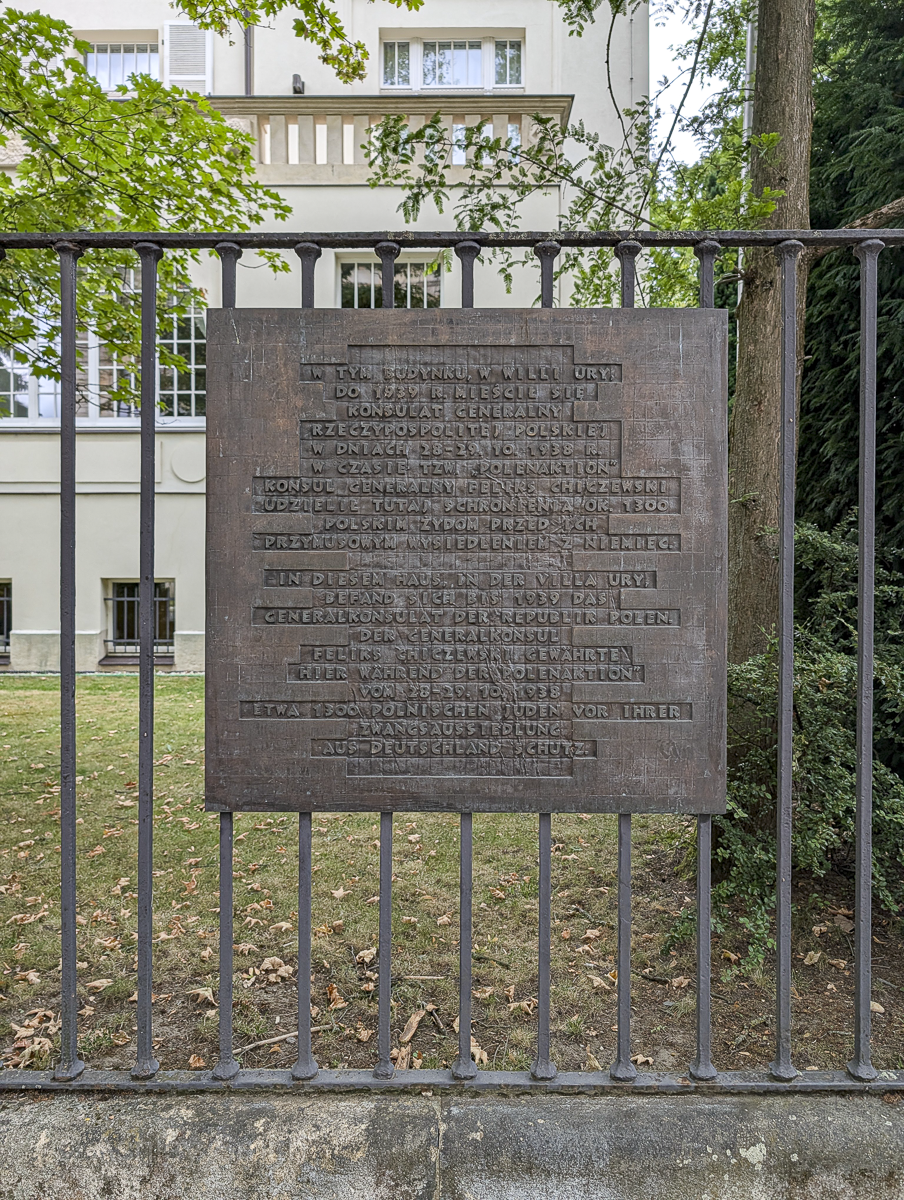
Around the corner from the Palace of Justice, there’s a small memorial plaque affixed to the iron fence along the sidewalk. Prior to 1939, the building behind it served as the Consulate General of Poland. As the plaque reads (in Polish and German): “During the “Polenaktion” of October 28-29, 1938, Consul General Feliks Chiczewski provided protection here to approximately 1,300 Polish Jews prior to their forced expulsion from Germany.”
The “Polenaktion” of October 1938 was a coordinated effort to arrest and deport around 17,000 Polish Jews living in Reich territory. Led by none other than evil incarnate himself Reinhard Heydrich, this was the first mass-coordinated deportation of Jews out of Germany.
Amidst the chaos of Polenaktion, Feliks Chiczewski took in Jews who’d come to the consulate for help and provided them with shelter, food, and a safe haven from arrest. He was able to coordinate their ongoing safety and even issue them new papers that would prevent their expulsion.
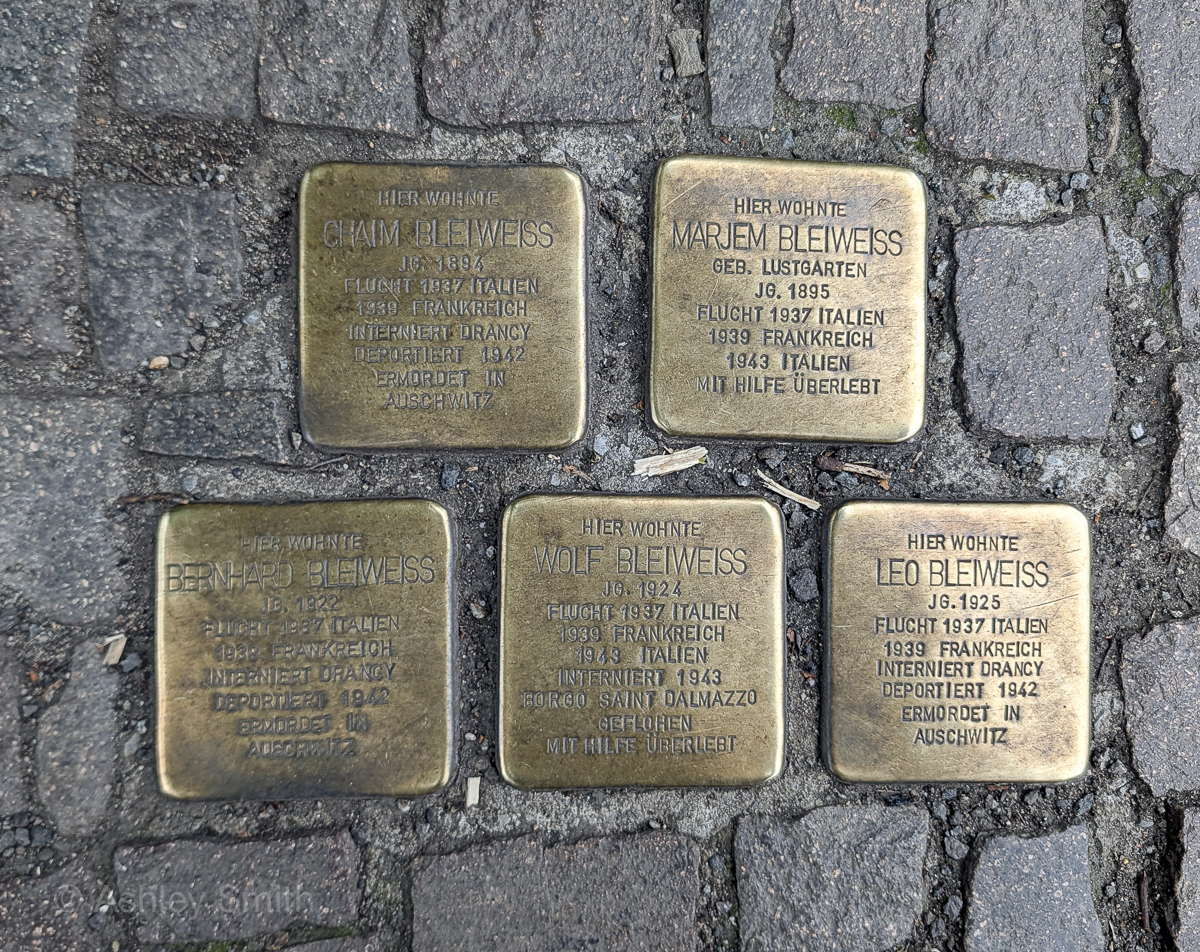
8. Stumbling Stones
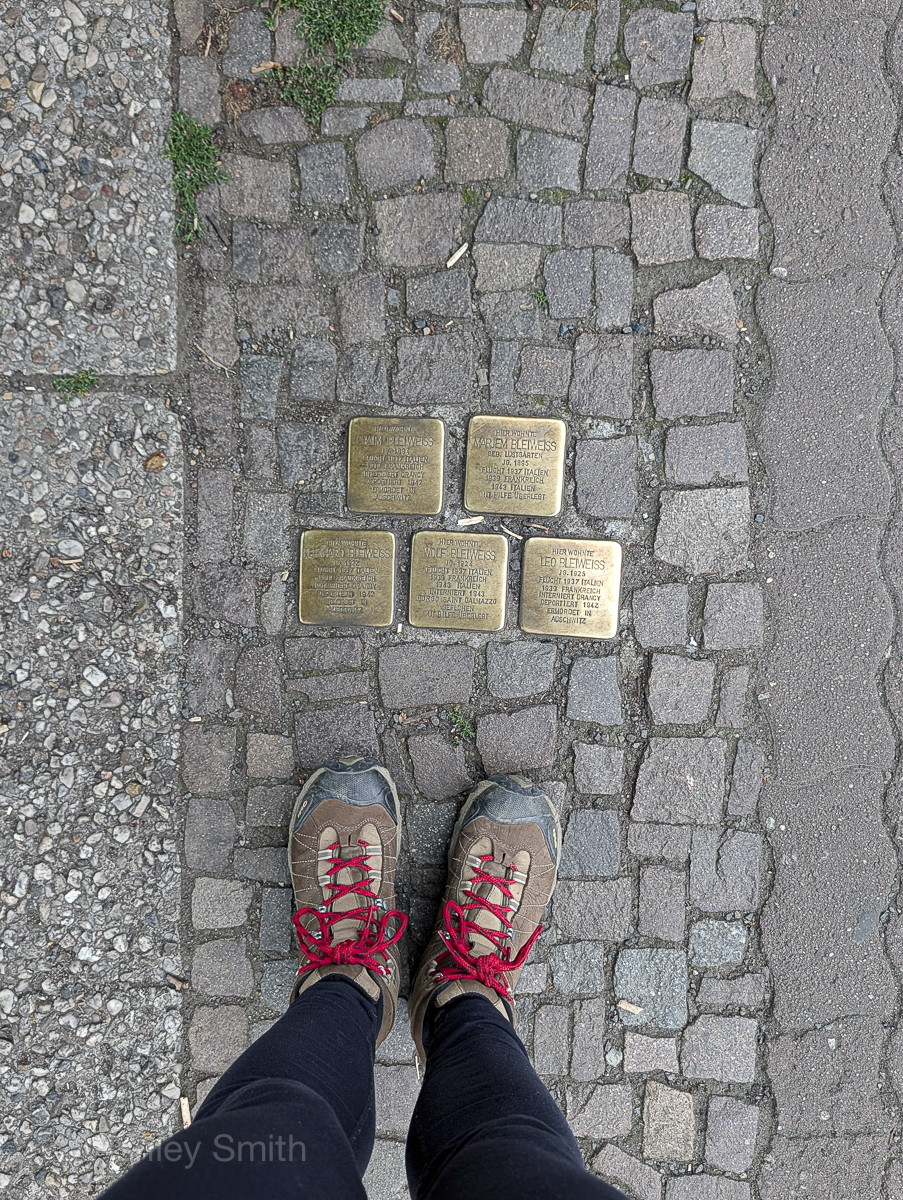
Like in most other German cities (and well into the whole of Europe beyond), you can find stumbling stones scattered around Leipzig. These small brass cobblestones are placed in the ground outside a Holocaust victim’s last known residence (or other such place where they last felt free). They typically contain the person’s name and birthdate along with their fate and death date (if known).
I’ve marked a few of them on the map above, but you can find the full list of Leipzig stumbling stones along with personal biographies here.
For much more on the topic of Stolpersteine check out my guide to Europe’s stumbling stones here.
Additional Leipzig WWII resources
For more on World War II in Leipzig and some of these related topics discussed above, here are some great books to check out:
Where to stay in Leipzig
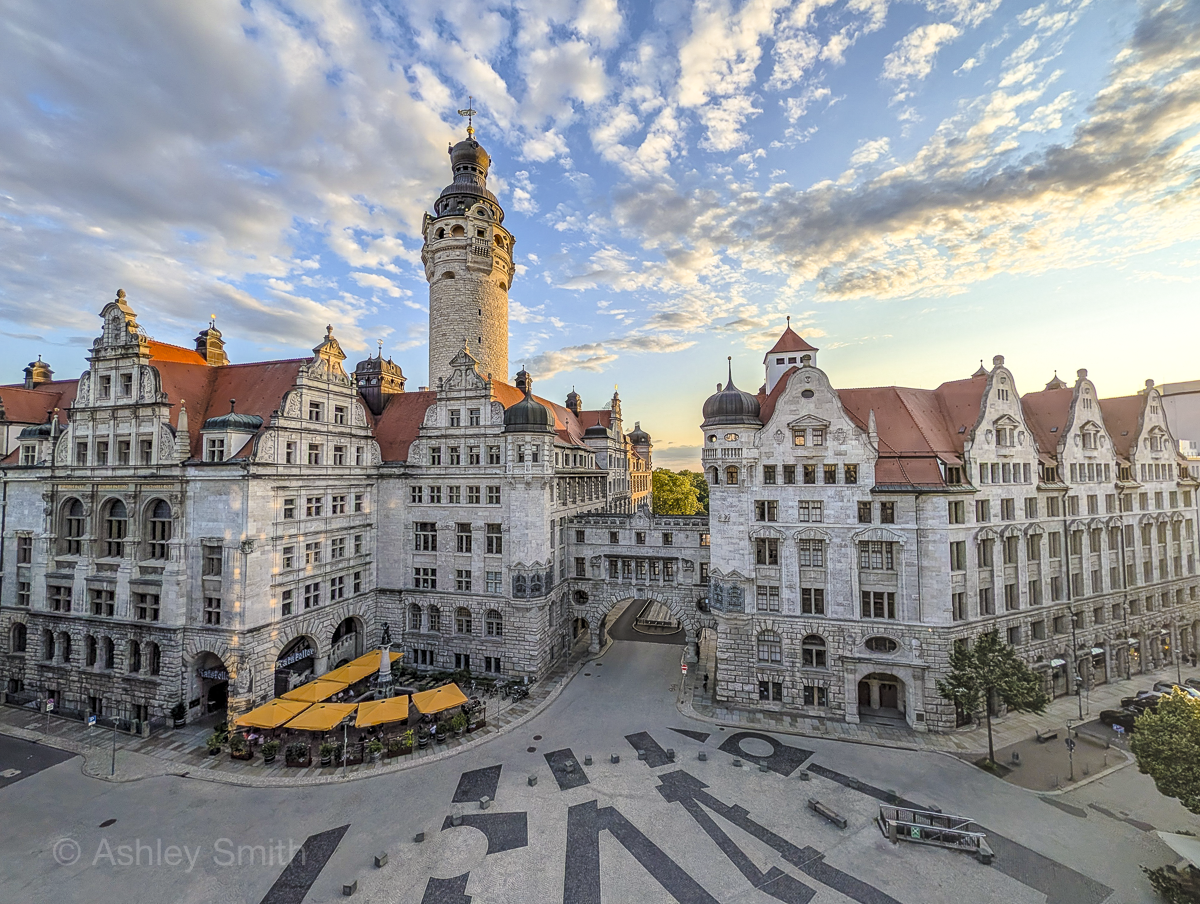
Because Leipzig is such a large city, you won’t have a problem finding a great place to stay when visiting. Here are a few good hotels to get your search started:
See all of Leipzig’s hotel options here.
More info for your visit to Germany
- Hotels: Find great places to stay on Booking.com (my go-to). Expedia and Hotels.com are worth checking too. VRBO is best for apartment rentals.
- Rental cars: Check out the best rental car deals here.
- Local tours & activities: Check out all the great local options from Viator and Get Your Guide here.
- Don’t forget a Germany guidebook and this must-have Germany customs and culture guide!
- Want more? See all my Germany posts here.
Like this post? Have questions about visiting any of the WWII sites in Leipzig? Let me know in the comments below. Thanks for reading.

Save this info, pin this image: