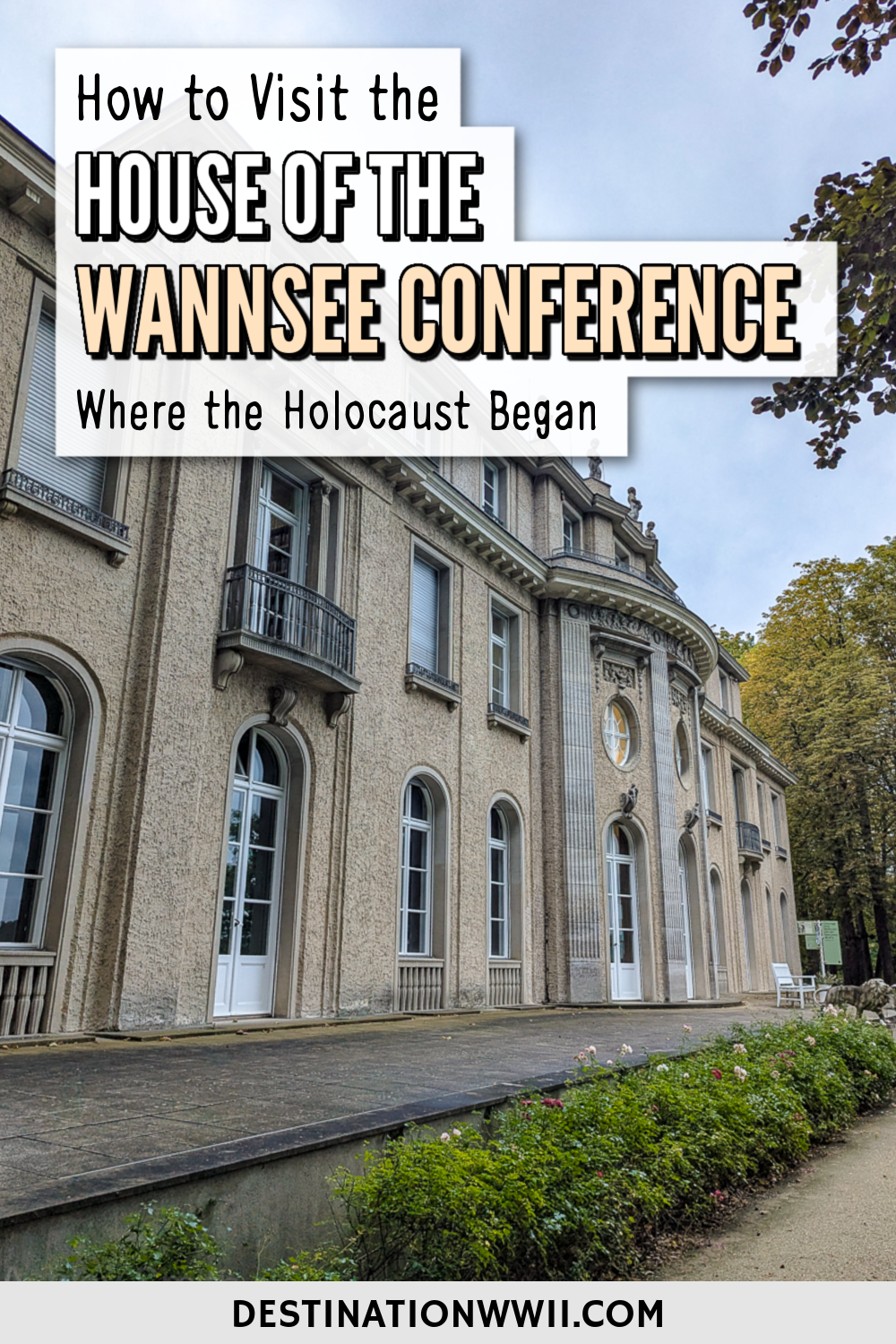

When visiting Berlin, a trip to the House of the Wannsee Conference is a must if you have a little extra time. It’s a short trip outside the city but is an undeniably significant location worth seeing for yourself. What happened here at this beautiful lakeside mansion in a span of only 90 minutes changed the course of history forever.
This post covers what you need to know about it and how you can visit it yourself.
About the Wannsee Conference
The Wannsee Conference was a meeting of 15 Nazi officials to plan out the systematic extermination of Europe’s Jews—the “Final Solution.” The purpose of this conference was essentially for these 15 Nazi and SS leaders to coordinate their respective departments so the whole “undertaking” ran smoothly.
The Wannsee Conference took place on January 20, 1942 and lasted just an hour and a half.
The beginning of the Holocaust
When I say that the Wannsee Conference was the “beginning of the Holocaust,” I want to make it clear that I specifically mean that this was the event that jumpstarted the systematic, coordinated, methodical, and (above all else) mechanized extermination of the Jews.
I also want to make it clear that, ultimately, the Holocaust did not start with gas chambers, as many are led to believe. It started long before that with labeling certain groups as “others” and the discrimination that followed. It began with things like public humiliation, banning books, taking over the media in order to shape the narrative, and taking rights away from particular groups of people. (Similar to what the US is doing to its immigrant and trans populations.)
It was all of these things (and more) that eventually snowballed into the government coordinating an official plan to ship Europe’s Jews (and others) to Poland where they could be quickly, easily, and cheaply murdered.
The conference at Wannsee took what had been a relatively haphazard idea and shaped it into a factory-ready plan.
Who was at the Wannsee Conference?
The conference was requested by SS-Obergruppenführer Reinhard Heydrich—director of the Reich Security Main Office and Deputy Protector of Bohemia and Moravia. He reported directly to Heinrich Himmler. Heydrich is often referred to as the “Architect of the Final Solution” and the “Butcher of Prague,” among other nicknames.
Resistance fighters assassinated him in Prague a few months later as part of Operation Anthropoid. He was the highest-ranking Nazi to be assassinated during the war.

Also in attendance
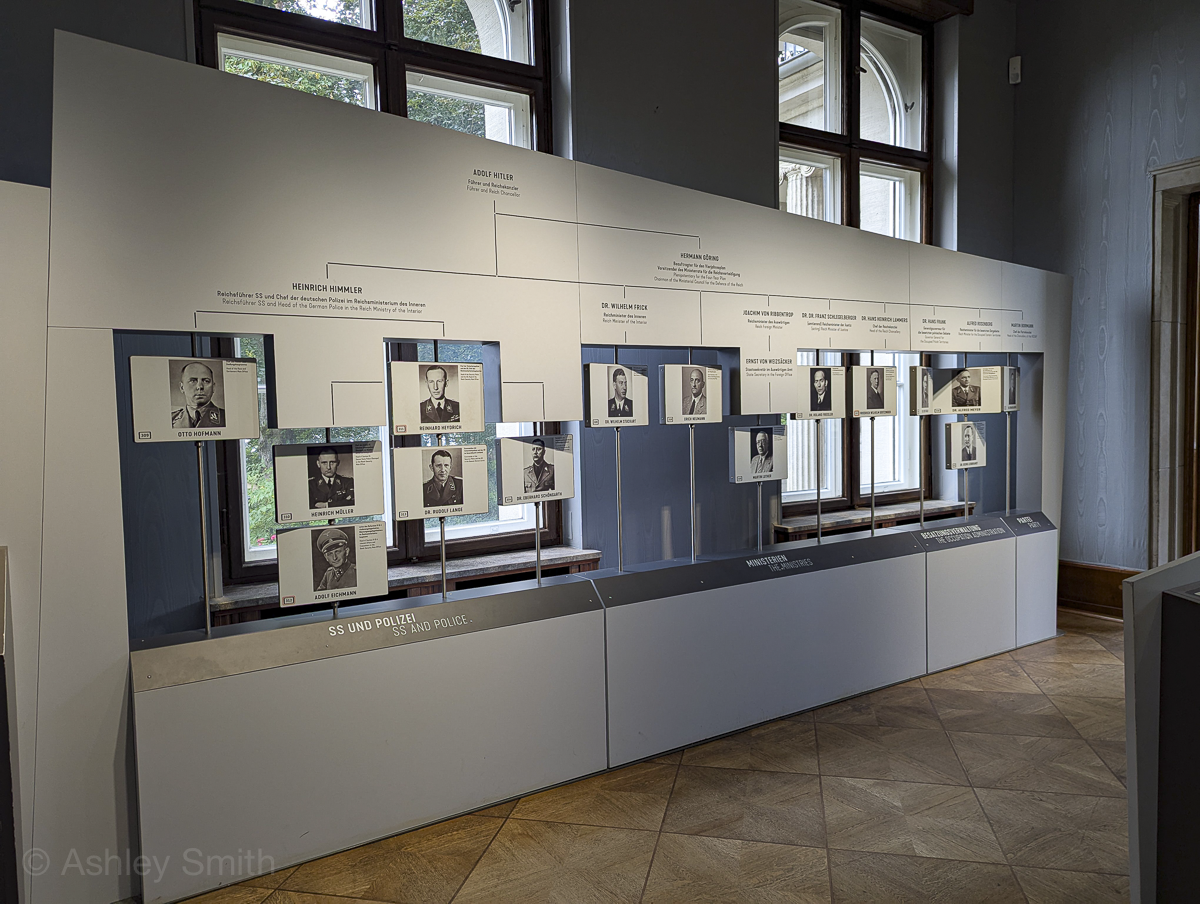
Where the Wannsee Conference took place
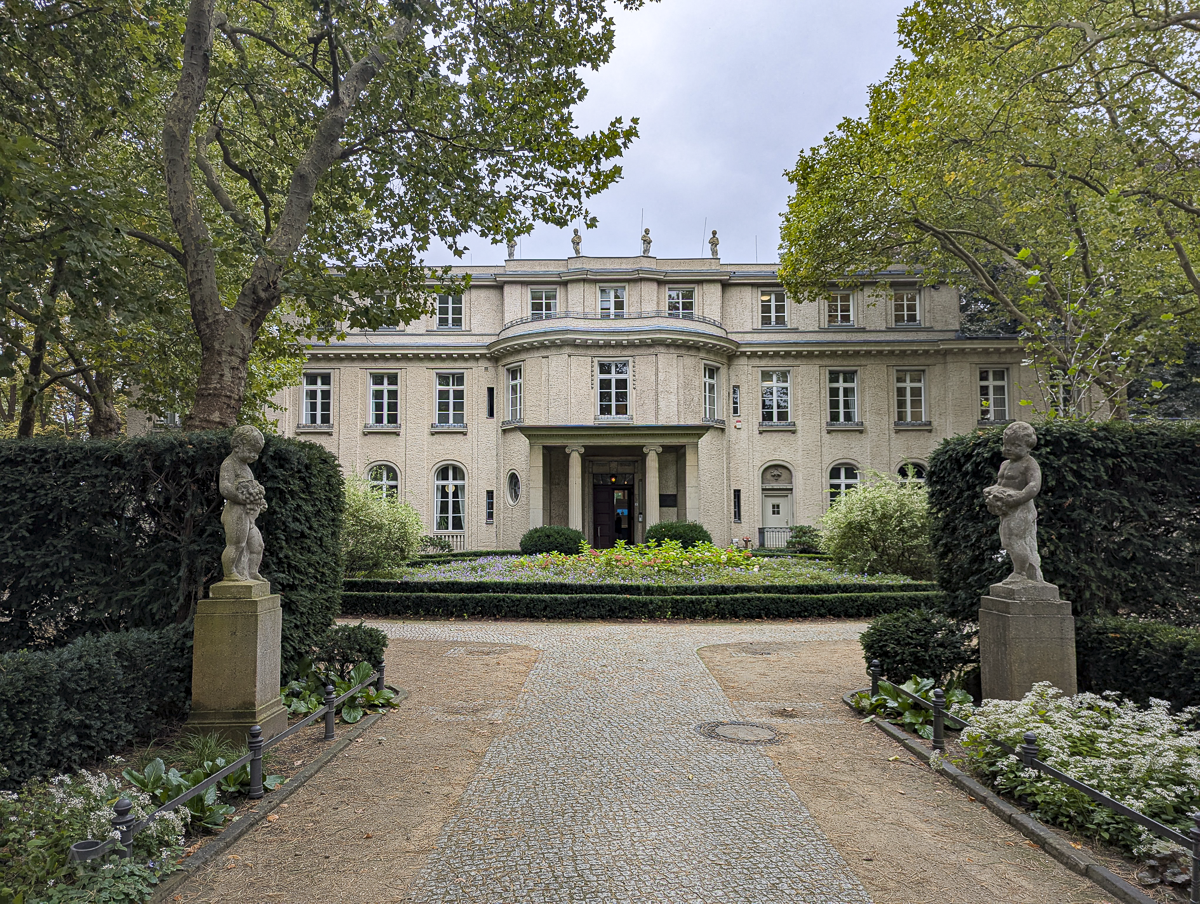
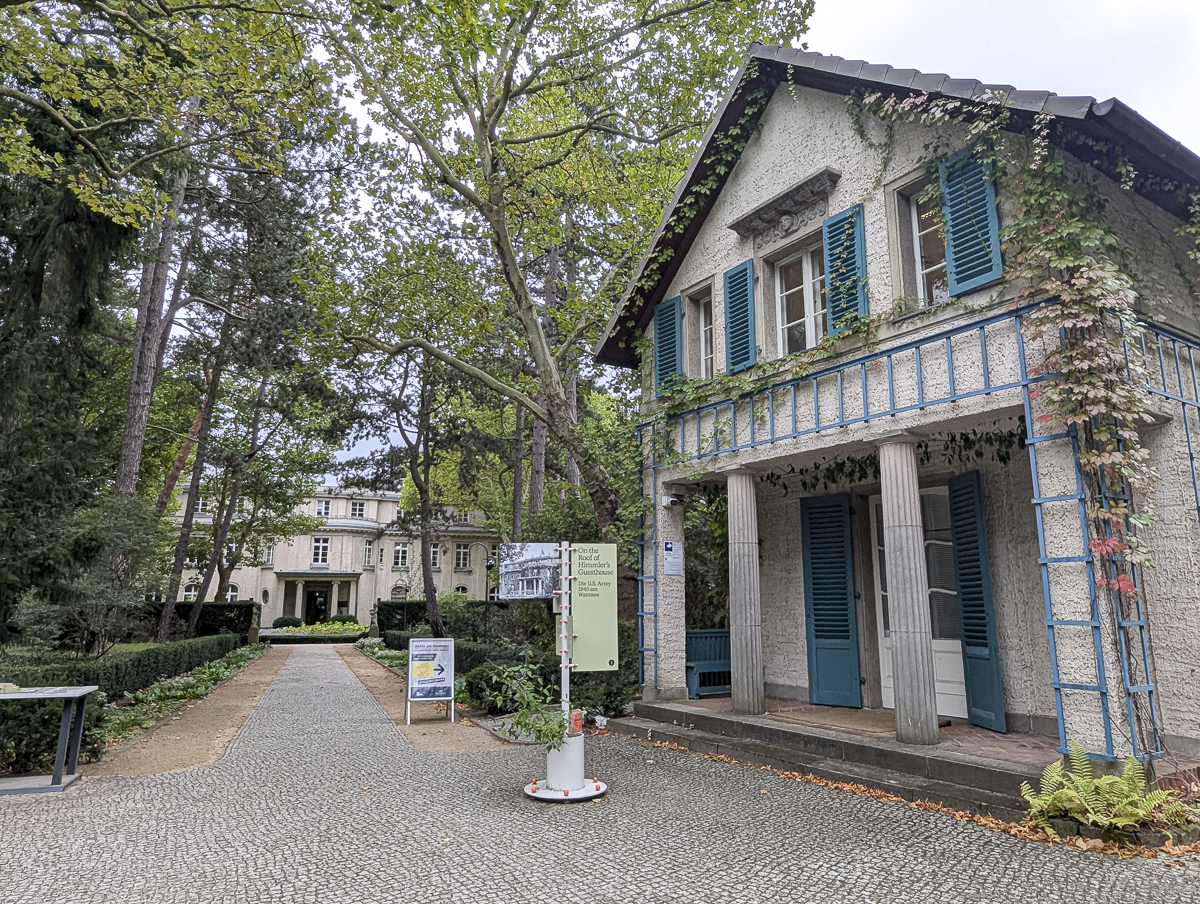
The Wannsee Conference took place at a lakeside villa in the Berlin-area suburb of Wannsee. (Today, it goes by House of the Wannsee Conference or Wannsee Villa.) Before the war, the villa at Am Großen Wannsee 56-58 was owned by Friedrich Minoux, a German industrialist, Nazi financier, and all-around right-wing scumbag who tried to bribe the regime for a cabinet position.
The Nazis convicted him of record-setting fraud instead, sent him to jail, and forced him to sell them his fancy villa. He died from starvation after the Allies liberated him from prison at war’s end. Exactly no one mourned this loss.
Using money they stole from Jews, that they then funneled through a real estate front called Stiftung Nordhav, Reinhard Heydrich and his SS purchased the villa in 1940. It was to be set aside as a meeting center, guest house, and personal vacation retreat.
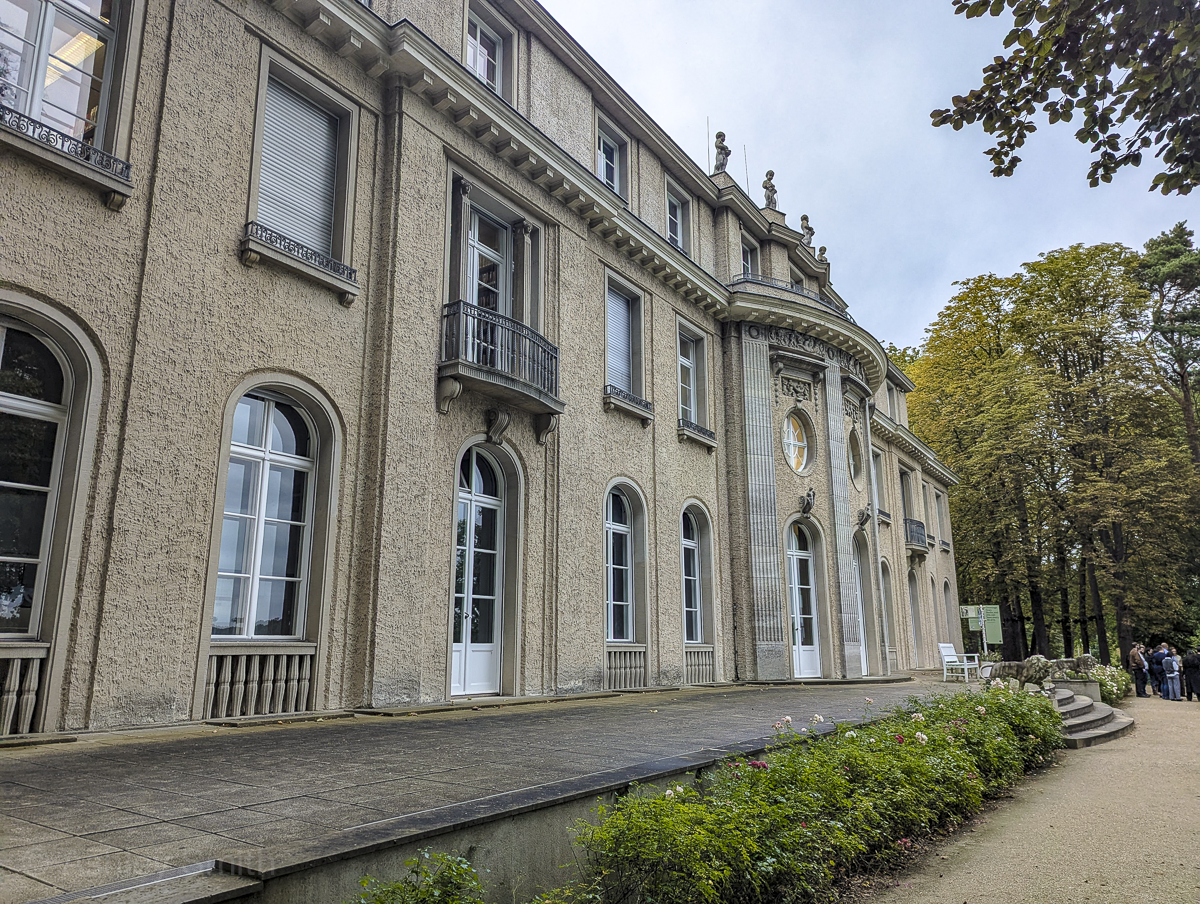
The Wannsee villa after the war
After the war, the now-West-German villa once again became a private residence before the state took possession of it soon after. From 1947 to 1989, it served as an education center and a youth hostel.
Joseph Wulf
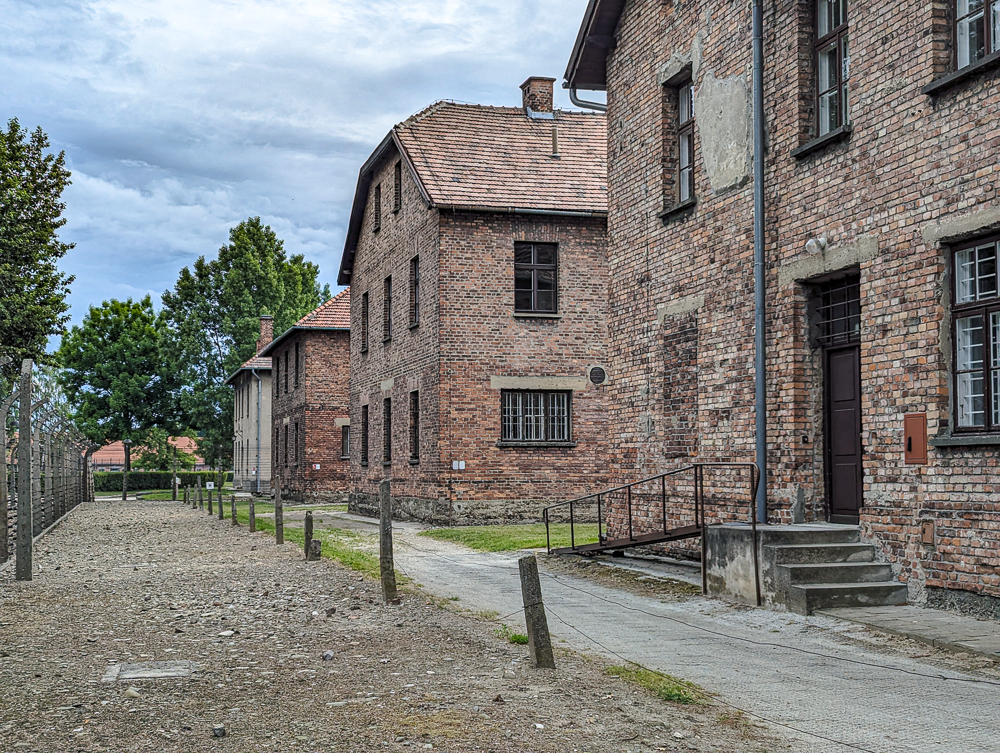
The idea of turning the Wannsee villa into a memorial museum was first proposed in 1965 by Joseph Wulf, a historian, author, and Auschwitz survivor. Born in Germany and raised in Poland, Wulf was sent to Auschwitz (from the Kraków Ghetto) in 1943. On January 17, 1945, the SS attempted to liquidate the camp and forced its prisoners on a death march. An estimated 15,000 prisoners died on the death marches from Auschwitz, but Wulf survived.
After the war, Wulf dedicated his life to exposing Nazi crimes and unapologetically sharing the truth of the Holocaust. He co-founded the Central Jewish Historical Commission and published several books on the subject where he sugar-coated nothing. Among his many works, he also wrote a song called “Sunbeams” which you can hear in the Oscar-winning film Zone of Interest.
The Wannsee villa memorial
In 1965, Wulf first proposed the idea of turning the Wannsee villa into a Holocaust memorial, museum, and research center. The next year, he co-founded the International Document Center Organization for the Study of National Socialism and Its Consequences through which he continued to campaign for the villa’s transformation.
Unfortunately (but unsurprisingly), the German government at the time was not interested in this idea at all. They “didn’t have the money”, the building was still being used as a school, and of course there were some politically-motivated reasons as well. In 1971, Wulf decided to abandon this project as a result.
Feeling as though his life’s work, his 18 books on the crimes of the Third Reich, and his efforts to preserve the Wannsee villa as a memorial were all for nothing, Wulf committed suicide on October 10, 1974. As he explained: “You can document everything to death for the Germans. Yet the mass murderers walk around free, live in their little houses, and grow flowers.” [source]
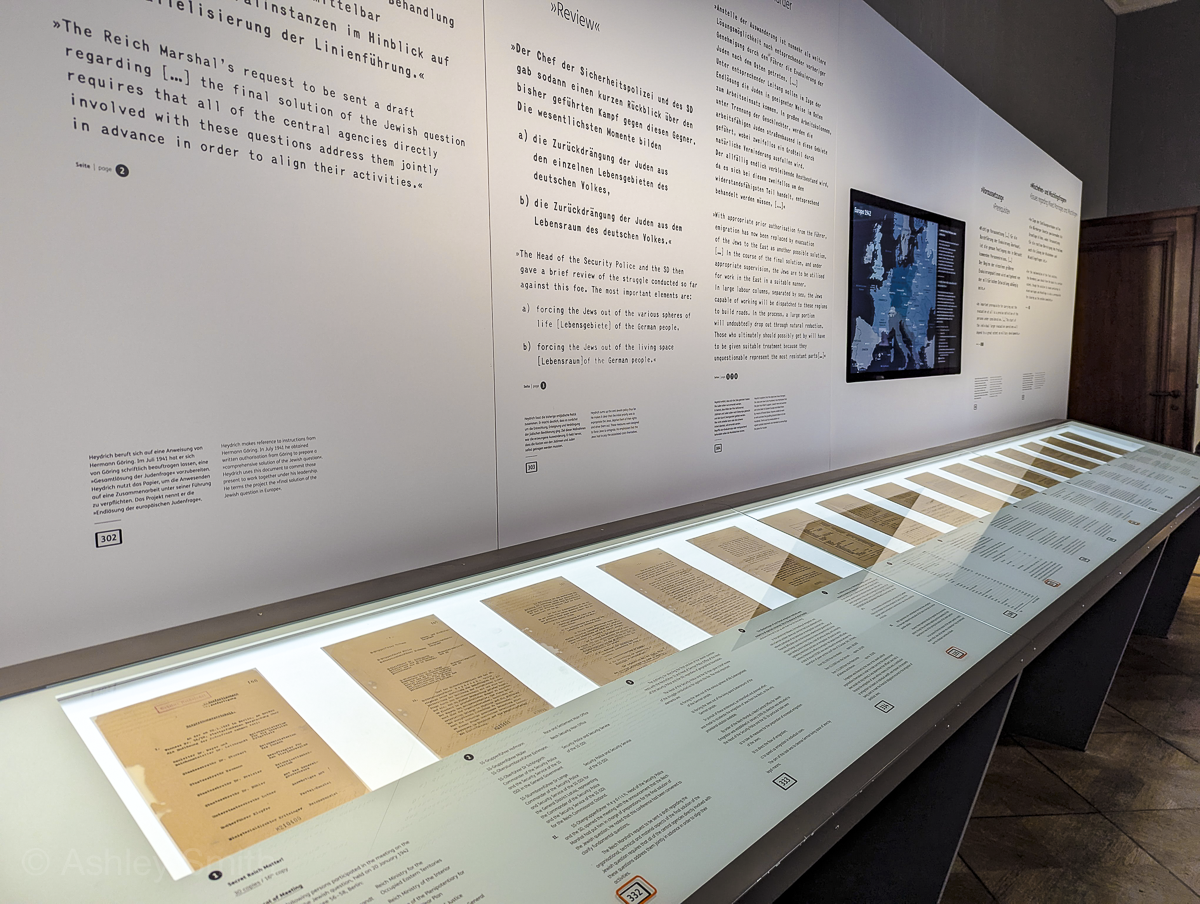
The Wannsee villa today
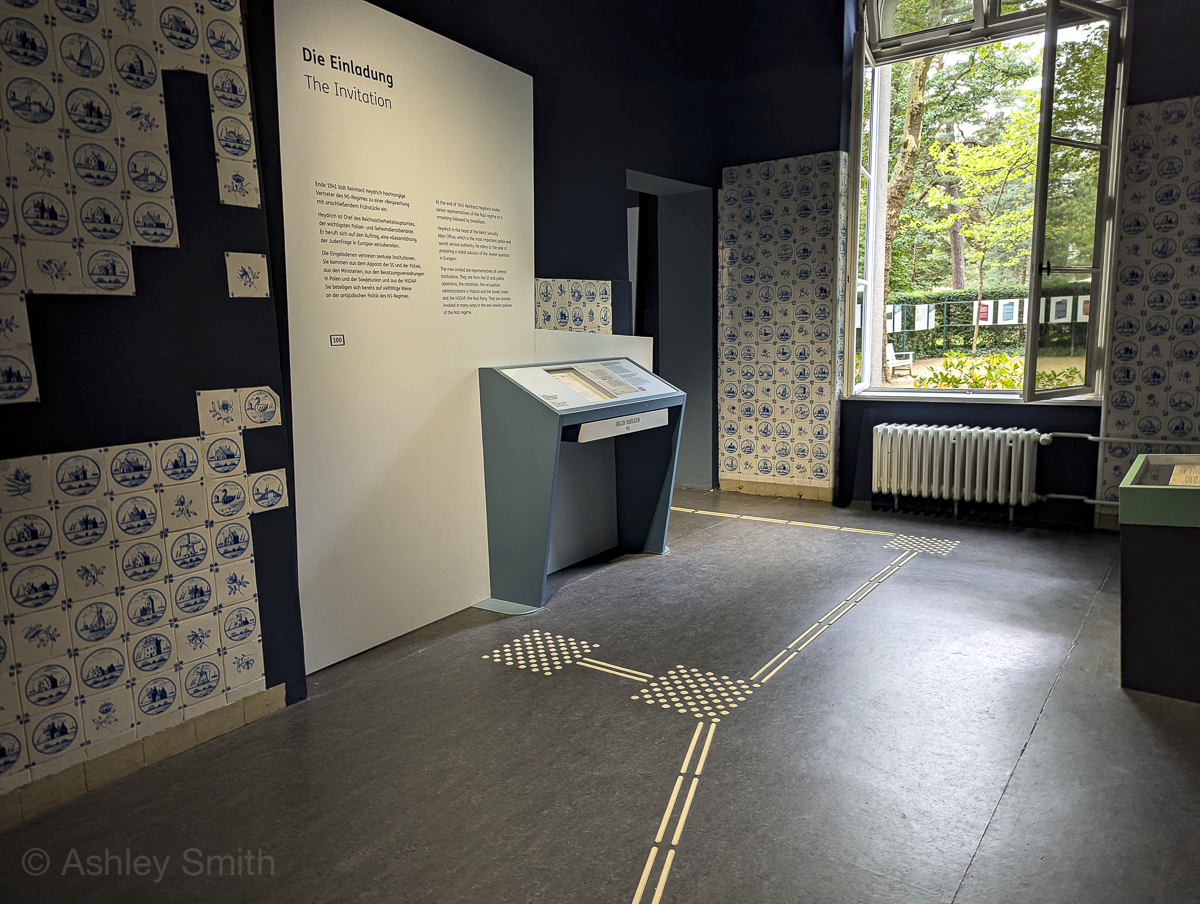
It wasn’t until September 1986 that the German government finally decided to transform the villa at Wannsee into a memorial site. The building was vacated, renovated, and then reopened as a documentation center and memorial on January 20, 1992—50 years to the day from the Wannsee Conference.
The memorial and educational site at the House of the Wannsee Conference named its library in honor of Joseph Wulf. It contains thousands of books and other reference materials on Nazism, anti-Semitism, and more.
What to see at the House of the Wannsee Conference
When visiting the House of the Wannsee Conference today, you can:
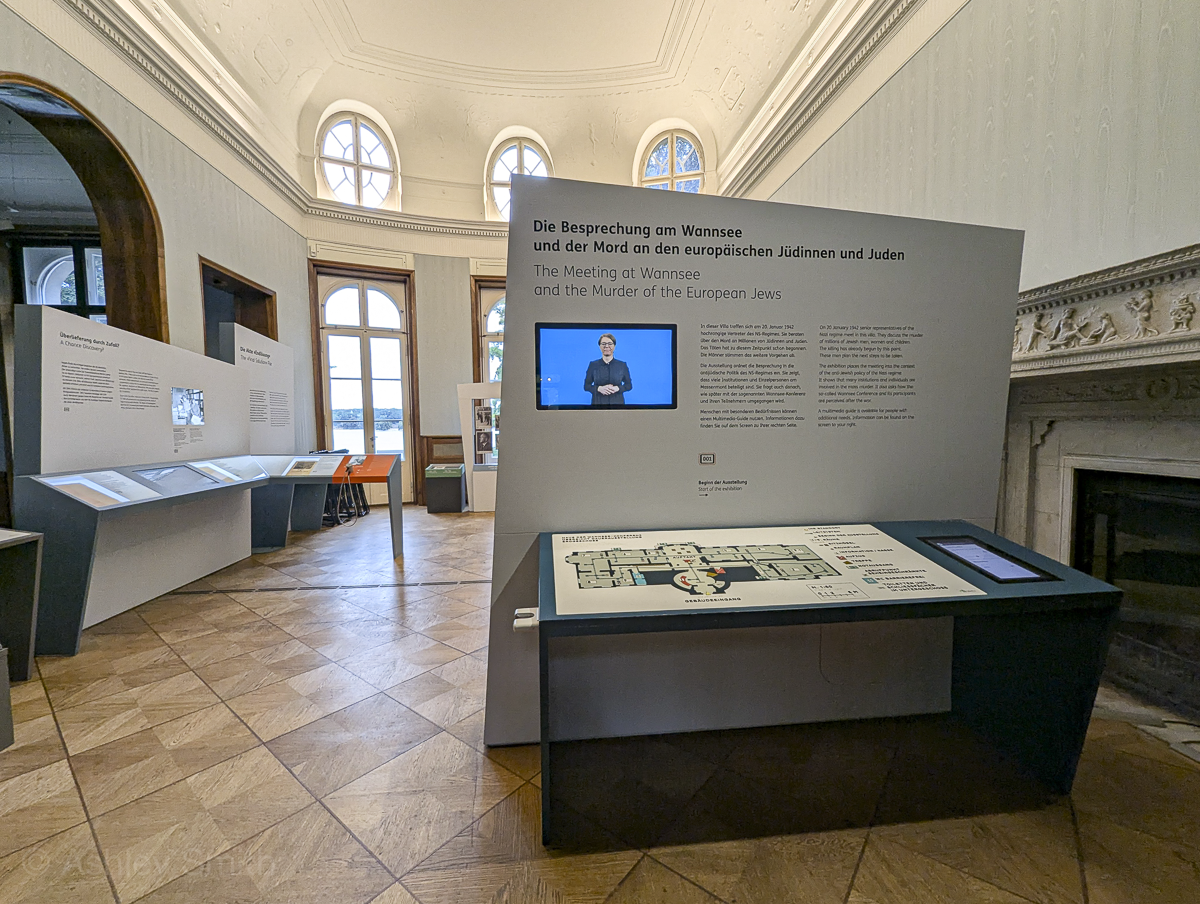
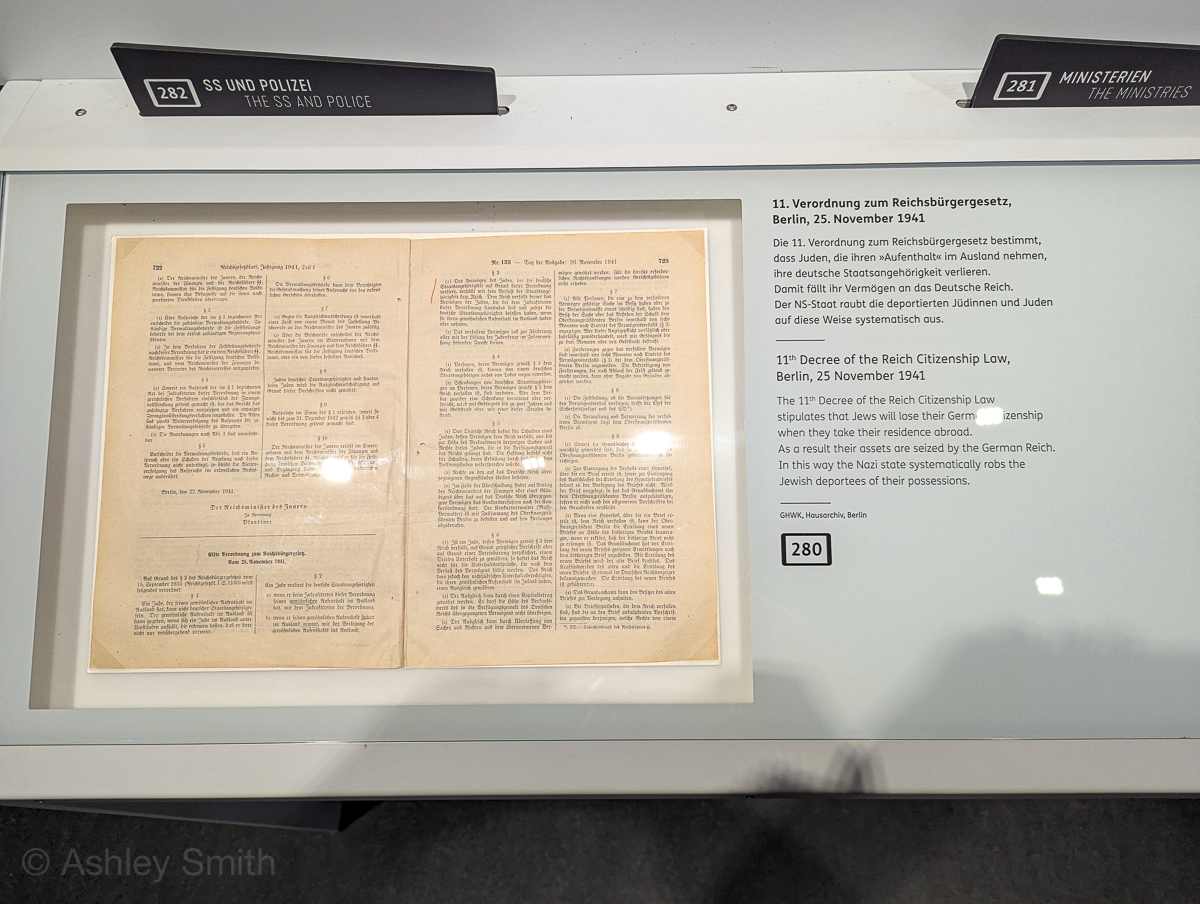
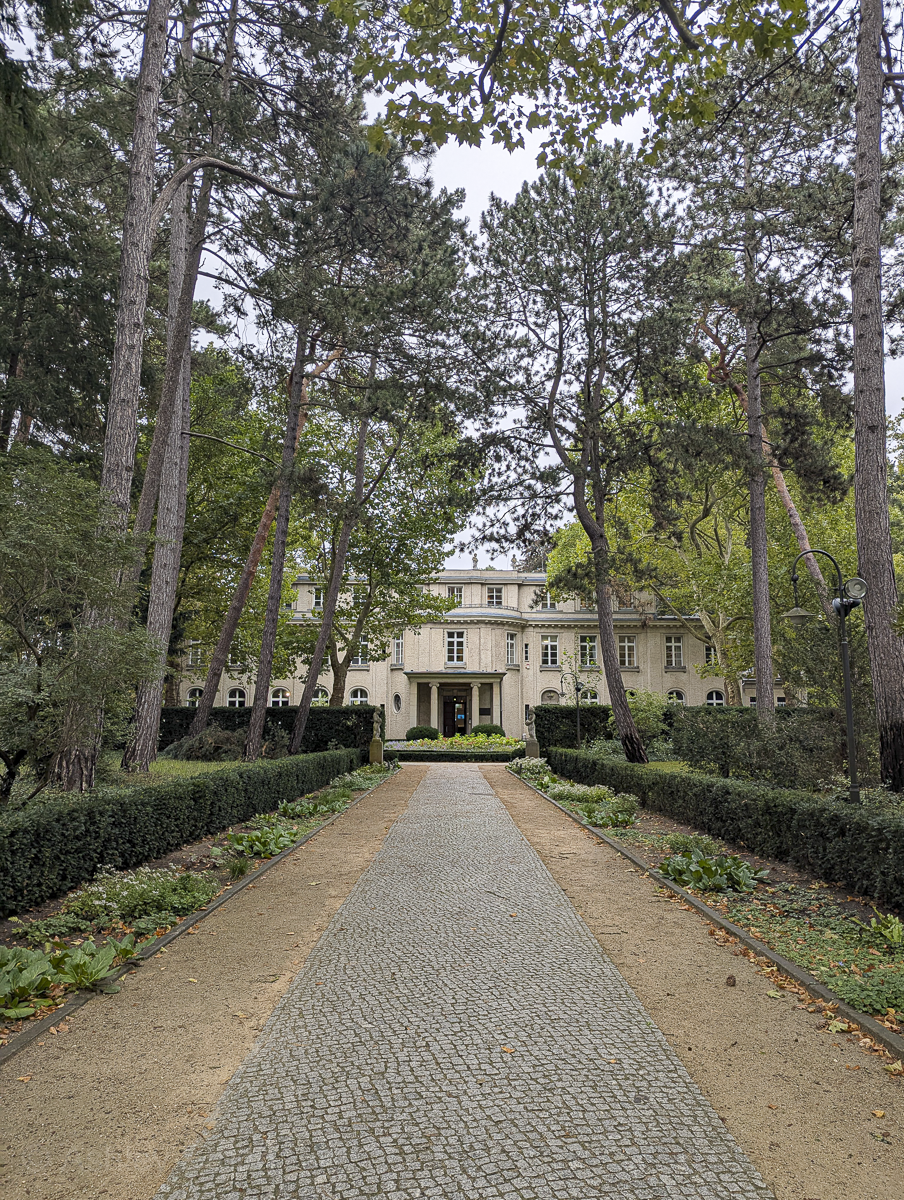
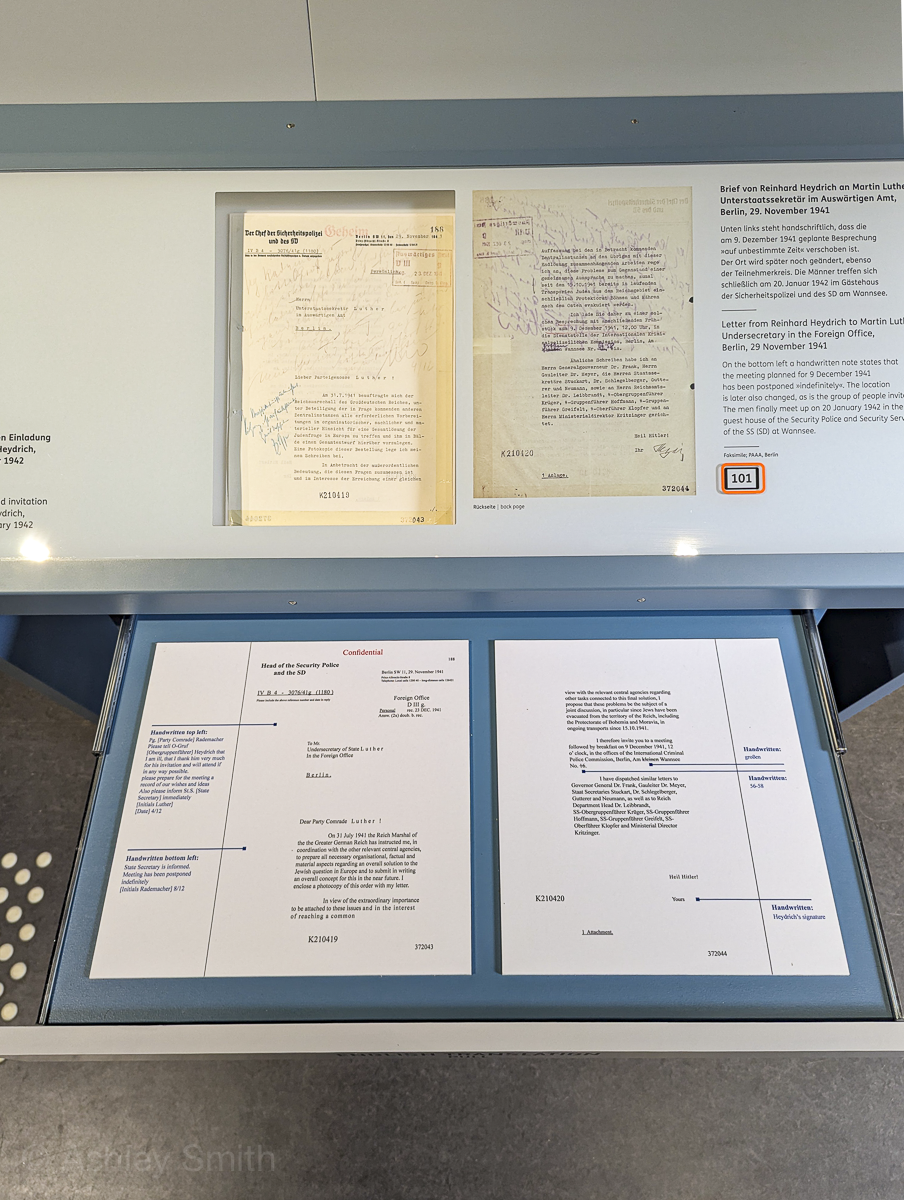
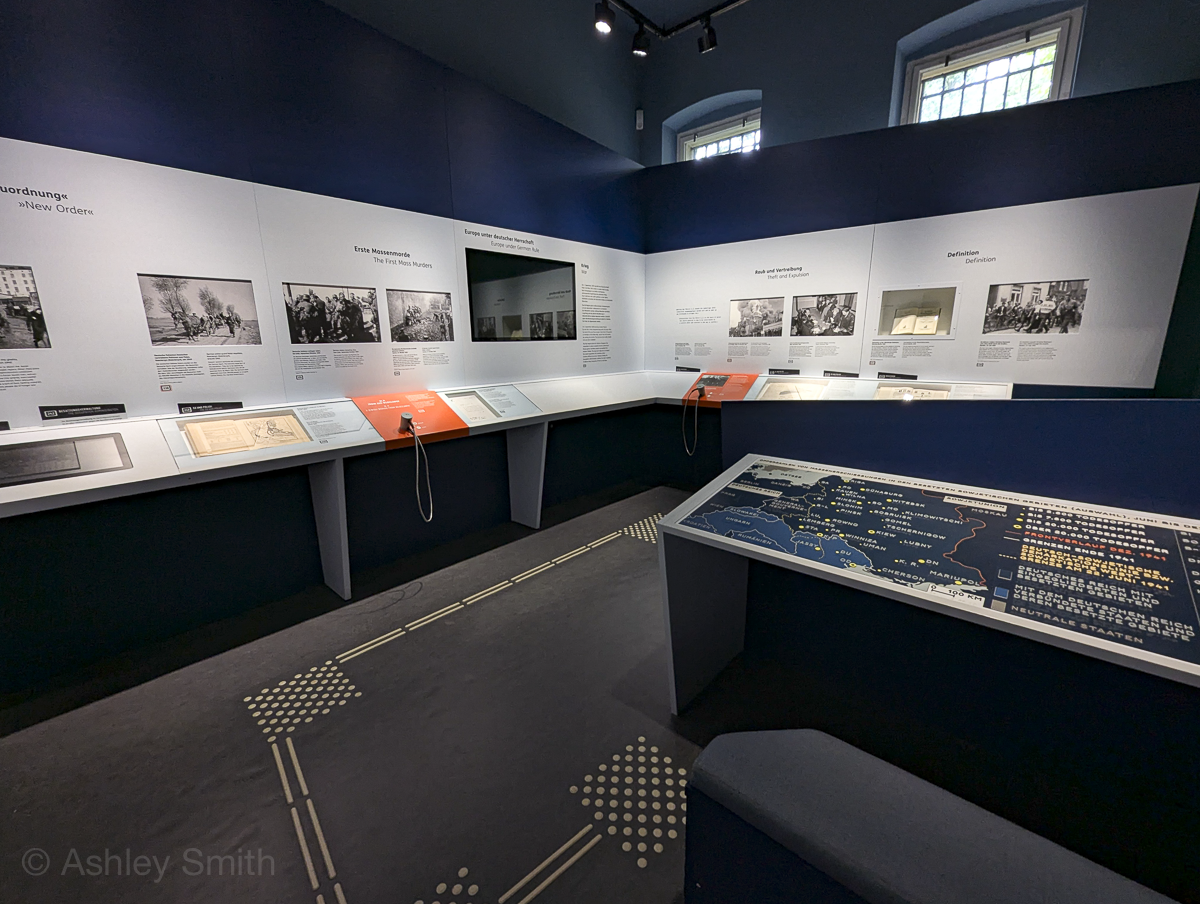
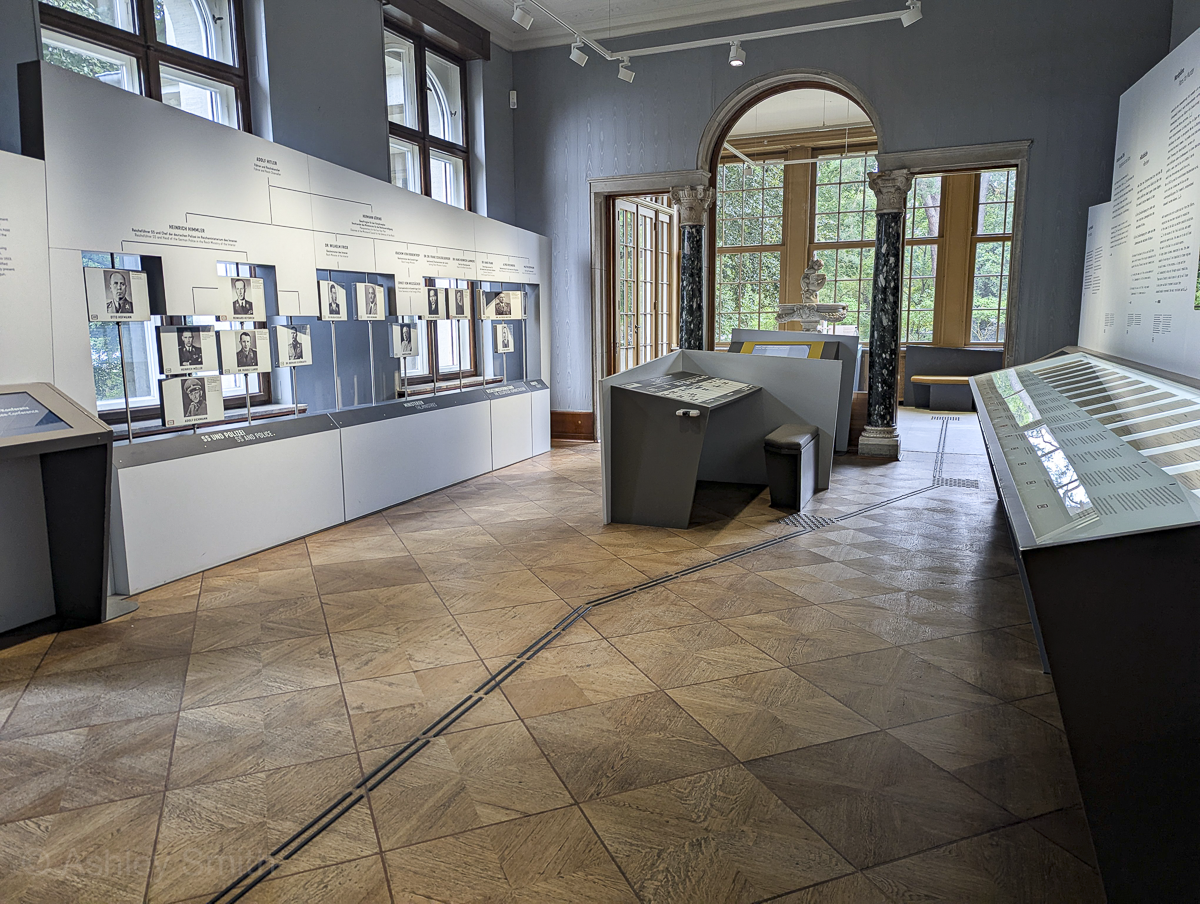
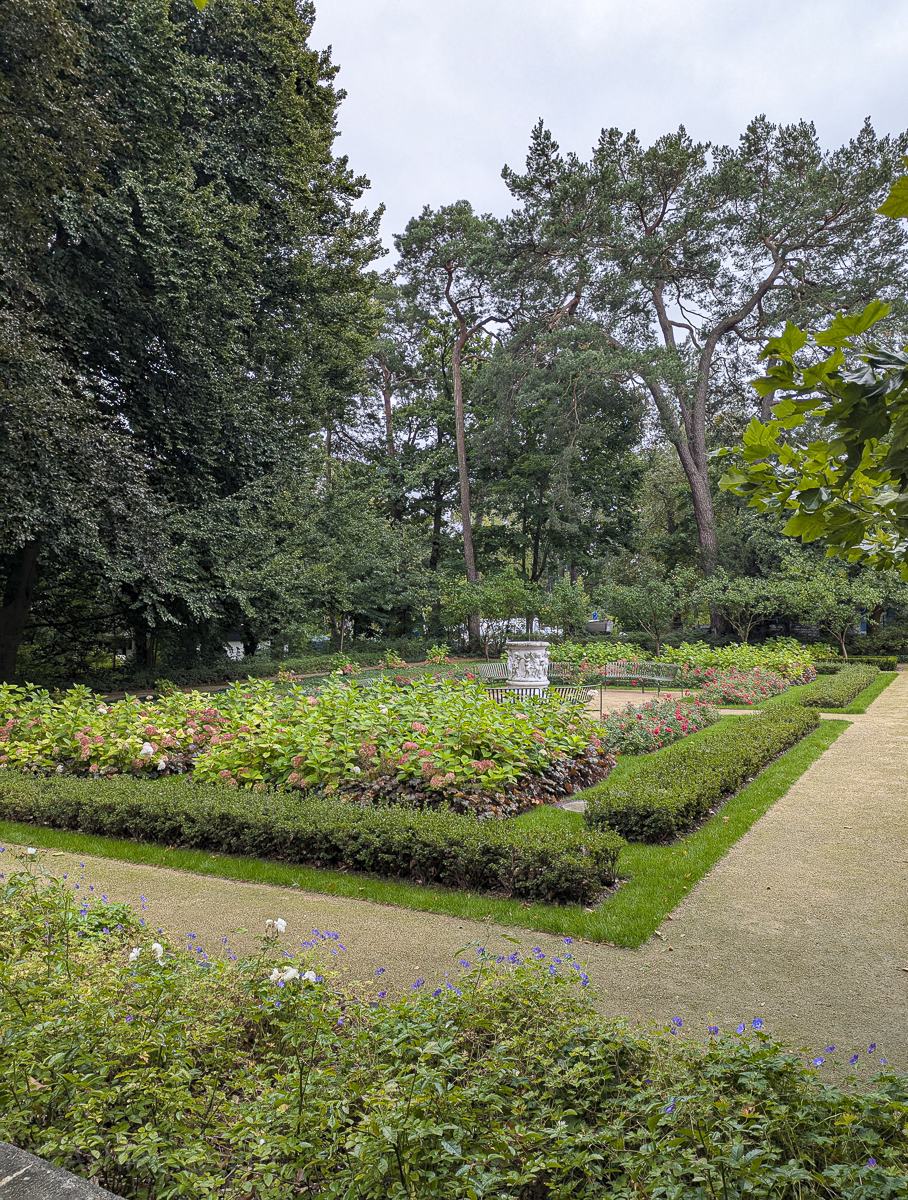
The permanent exhibit spans nine rooms of the building’s interior. It focuses on the history of exclusion and how that led to the Wannsee Conference and the Holocaust. It includes a section with descriptions of each of the 15 conference attendees as well as original historical documents. The panels in the exhibit present the information in both German and English.
How to visit the House of the Wannsee Conference
Visiting the House of the Wannsee Conference is absolutely worthwhile if you find yourself in Berlin with some extra time. Traveling to the Wannsee villa from Berlin (by train), seeing the exhibits, and returning to Berlin afterwards takes about three hours. Here’s how to get here:
- From Berlin city center, you can take either the S1 train (in the direction of “Wannsee”) or the S7 train (in the direction of “Potsdam Hbf”). Get off at the “Wannsee” stop. Here’s a map of the Berlin S-bahn lines so you can plan. From Berlin Hauptbahnhof, expect this part to take about 25 minutes.
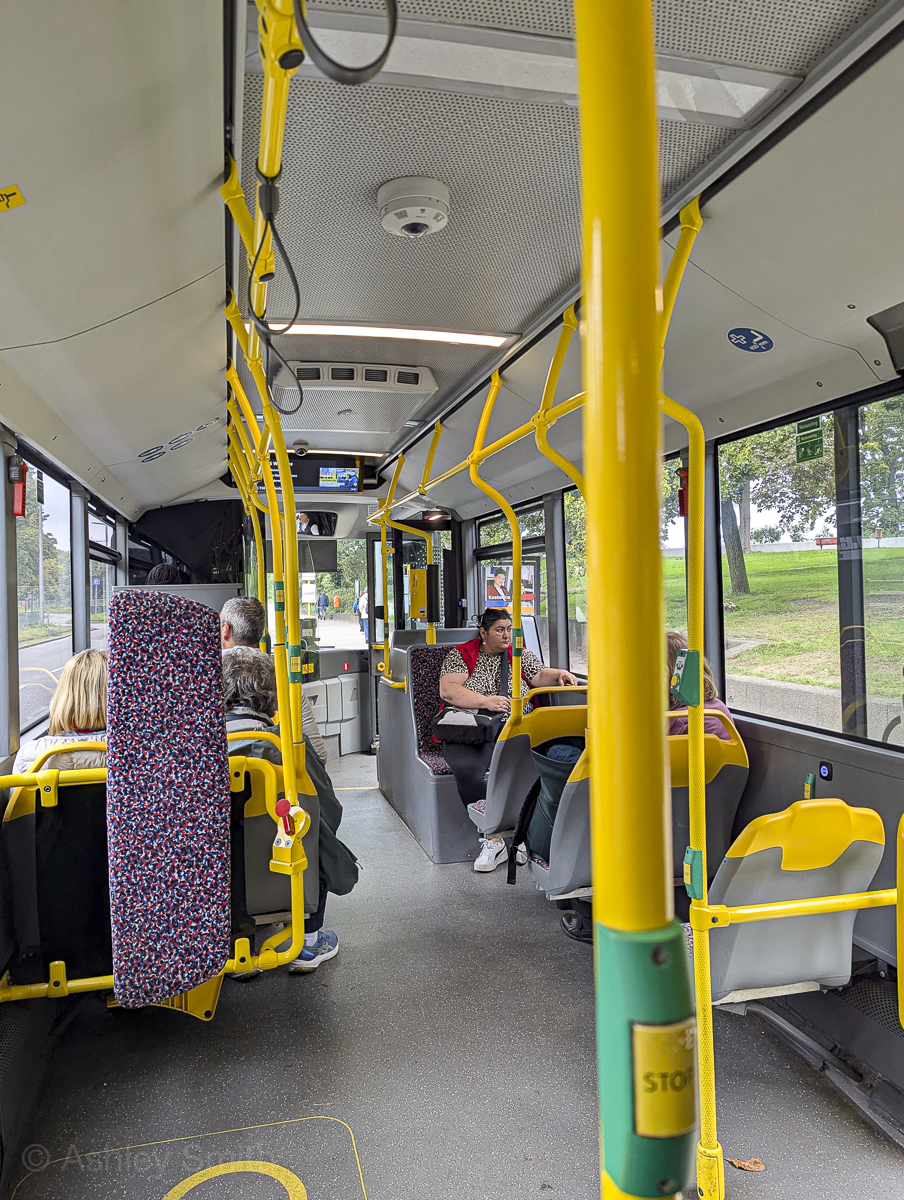
- From the S-bahn station at Wannsee, exit the station and cross the street to the bus stop. Take bus 114 (in the direction of “Heckeshorn”) and get off at the Haus der Wannsee-Konferenz stop. This part takes about 6 minutes and the bus will drop you just outside the entrance gates to the villa.
To return to Berlin:
- Outside the entrance gates, get back on bus 114 (in the direction of “S Wannsee”).
- From the Wannsee S-bahn station, take either the S1 (in the direction of “Oranienburg”) or the S7 (in the direction of either “Wartenburg” or “Ahrensfelde”).
What ticket to buy to visit the Wannsee villa
To visit the House of the Wannsee Conference from Berlin, you’ll want to purchase tickets that cover fare zone AB. (You may see it written like: “Tarifgebiet A-B”.) This will cover you for both train and bus travel. As far as which ticket to get, you have several options which include:
There are a lot more options to choose from, especially if you’ll be visiting with other people. (Because then you can get a “group” ticket to save even more money.) See the many ticketing options here or skip all that and just pick up a Berlin Welcome Card here.
How to visit the Wannsee House by car
If you have your own rental car, you can just as easily visit the House of the Wannsee Conference. If traffic cooperates, the trip will take about the same amount of time as the train (around 3 hours).
Once in Wannsee, there’s a parking area just next to the bus stop outside the villa’s entrance. Look for the Zum Heckeshorn 27 Parkplatz on your map.
If you need one, book your rental car here.
What you need to know for visiting the Wannsee villa
Now that you know how to get here, here’s what else you need to know for your visit:
- Admission: Free
- Hours: With the exception of a few holidays, the Wannsee House is open year-round, 7 days a week, from 10am to 6pm. (See website for closed dates.)
- Tours: Guided tours are available for groups of 10 or more (with prior reservation)
- Accessibility: Both the house and garden museum exhibits are barrier-free / wheelchair-friendly
- Website: For more details, see the official website at www.ghwk.de
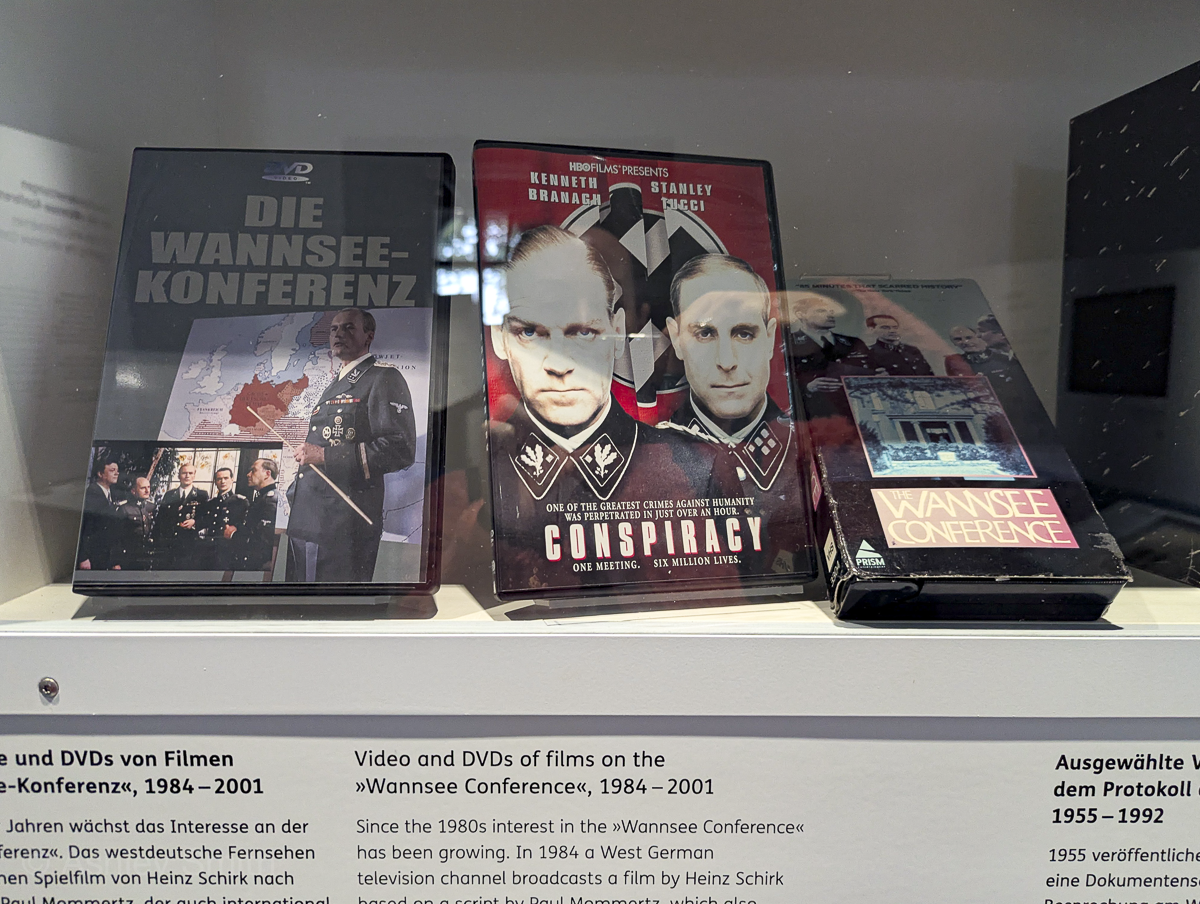
Books & movies on the Wannsee Conference
The Wannsee Conference is a fascinating, albeit sickening, brief moment in history that had an immeasurable impact. If you’d like to learn more about it to prepare for your visit to the Wannsee villa, check out this list of great books and movies on the subject:
More info for your visit to Berlin
- Hotels: Find great places to stay on Booking.com (my go-to). Expedia and Hotels.com are worth checking too. VRBO is best for apartment rentals.
- Rental cars: Check out the best rental car deals here.
- Local tours & activities: Check out all the great local options from Viator and Get Your Guide.
- Don’t forget a Germany guidebook and this must-have Germany customs and culture guide!
- Want more? See all my Germany posts here.
Like this post? Have questions about visiting the House of the Wannsee Conference? Let me know in the comments below. Enjoy Germany!

Save this info, pin this image: